9 Most Eccentric Towns in Wisconsin
Wisconsin is a state closely associated with farms, cheese, and state parks. Many towns in the state follow this historic agenda. But sometimes, a town breaks the mold, either due to circumstance or effort, and oddities begin to surface. A massive penny marks a community fundraiser that never faded. Winter traditions involve toilet seat throwing and minnow races because someone tried it once, and the town agreed it worked.
The most eccentric towns in Wisconsin did not set out to be strange. Their quirks grew slowly, stayed useful like the sculpture garden of Fountain City, or meaningful, such as the Sputnikfest in Manitowoc, and became permanent. That is what makes them worth noticing.
Reedsburg

Reedsburg’s eccentric identity comes from its relationship with microbes. Each fall, the town hosts Fermentation Fest, a community-driven event centered on wild fermentation, local food systems, and traditional preservation methods. Organized by the Wormfarm Institute, the festival includes kraut-making workshops, sourdough demonstrations, cider pressing, and talks on soil health. It is hands-on and instructional rather than a celebratory spectacle. Residents show up with jars, not costumes.
The festival is rooted in the work of the Wormfarm Institute, which operates year-round just outside town. Visitors can explore public art installations and attend open workshops focused on sustainable agriculture and rural culture. You learn why fermentation matters in cold climates and how it connects to farming traditions in Sauk County. Afterwards, take a hike along the 400 State Trail, which runs directly through Reedsburg and extends roughly 22 miles.
Mount Horeb

35 minutes from Madison, Mount Horeb leans into its identity of being the ‘Troll Capital of the World’. Along Main Street, more than a dozen carved wooden trolls stand outside shops, bakeries, and public buildings. This is not a seasonal installation. The trolls are permanent and locally maintained, drawing from the town’s Norwegian heritage. Each sculpture has a name and story, turning an ordinary walk into a scavenger-like experience without feeling commercial.

That same heritage is grounded in food culture at the National Mustard Museum. The museum holds over 6,000 mustards from all 50 states and more than 70 countries. Displays explain regional mustard styles, seed types, and production methods. Visitors can sample varieties at the tasting bar, which is included with admission. And from there it's easy to reach the Military Ridge State Trail, which passes directly through town and stretches roughly 40 miles between Madison and Dodgeville. The crushed limestone surface supports walking and biking, and the Mount Horeb segment is flat and shaded. Access points are clearly marked, making short or long outings equally manageable.
Manitowoc

Manitowoc’s claim to weirdness arrived from space. In 1962, debris from the Soviet satellite Sputnik 4 fell onto a city street. Rather than distance itself from the incident, Manitowoc built a tradition around it. Sputnikfest marks the event with science talks, costume parades, and public displays that treat the moment with humor and curiosity.

The history is anchored locally at the Wisconsin Maritime Museum, located along the Manitowoc River. The museum covers Great Lakes shipbuilding and naval history, including the USS Cobia submarine, which visitors can tour in full. Alternatively, the Rahr-West Art Museum features American and European works in a domestic-scale setting of a 1890s building. The city’s waterfront is also accessible and functional. Manitowoc Riverwalk follows the river as it meets Lake Michigan, with paved paths, benches, and fishing access.
Phillips

Phillips does not announce itself loudly. Its most unusual landmark sits quietly in a wooded clearing just outside town. Wisconsin Concrete Park is the life’s work of Fred Smith, who built more than 200 concrete sculptures here by hand over several decades. Bottles, wrenches, hubcaps, and stones are pressed into cement to form musicians, animals, towers, and abstract figures.
That same unhurried rhythm carries into the rest of Phillips. Elk Lake Park, located near the middle of town, is used consistently rather than seasonally. The lake includes a public swimming area, shaded picnic shelters, and a paved walking loop that locals use for short walks. In winter, the frozen lake becomes an informal gathering space for ice fishing and community events. Recreation continues a few blocks away at Phillips Golf Course, a nine-hole municipal course built directly into the town’s landscape. Fairways run alongside residential streets and tree lines, keeping the pace relaxed and accessible from April to October.
Fountain City

Fountain City’s most distinctive experience sits above the river on open land. Prairie Moon Sculpture Garden & Museum spreads large-scale sculptures across a bluff overlooking the Mississippi. The works are constructed from metal, stone, and salvaged materials, many exceeding human height. Weather and light change how the sculptures read throughout the day.
The Legendary Monarch Public House, operating since the late 1800s, serves as a long-standing community anchor with river-facing windows, original furnishings, and brewed-in beers. Nearby, the Merrick State Park offers short trails, undeveloped riverbanks, and observation areas for waterfowl in a 300+ acre space.
Chilton

77 miles north of Milwaukee, Chilton became regionally known through a project that outgrew its origins. North Pole Christmas Village, a Troy Campbell creation, occupies multiple large agricultural buildings on a rural property outside town. Inside, visitors move through themed rooms featuring motorized holiday scenes, synchronized lighting, mechanical figures, and sound design arranged in a continuous indoor route. The experience is weather-independent and designed for all ages, which explains its steady attendance of more than 50,000 visitors each season.
Outside the holiday season, Chilton functions as a county service town with clear recreational anchors. Hickory Hills Country Club operates as an 18-hole golf course just outside town. The course is integrated into rolling farmland and residential edges, keeping play relaxed rather than competitive. Additionally, Morrissey Park keeps open lawns, playground equipment, ball diamonds, and paved walking paths used by residents for short walks and casual recreation.
Fish Creek

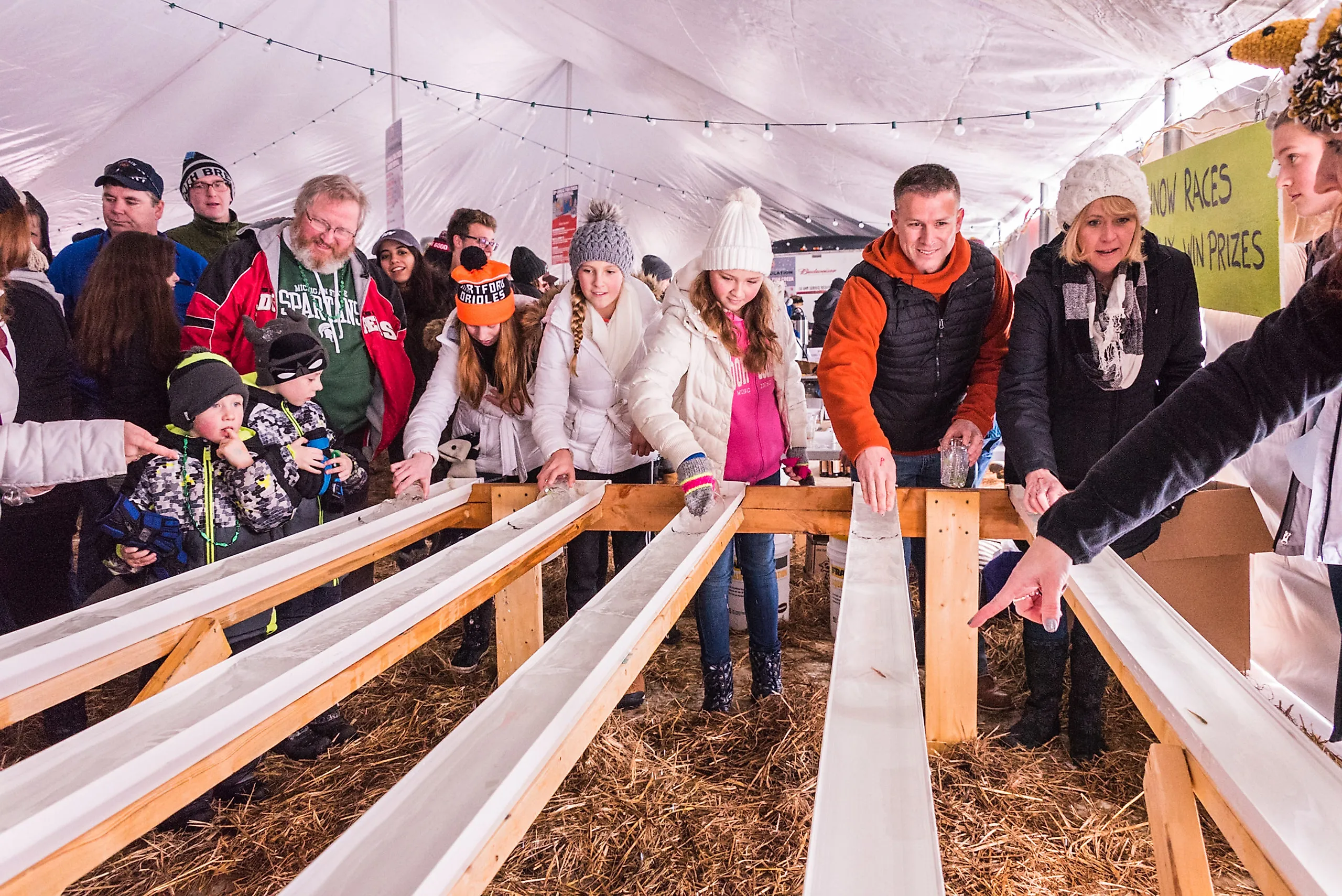
Fish Creek’s weirdness surfaces in winter through Winterfest, a multi-day community event held each February. Two of its most recognizable traditions are the Toilet Seat Toss, where decorated toilet seats are thrown across a frozen bay to raise funds for local causes, and Minnow Races, which use clear, water-filled tracks to race live minnows while spectators place small bets. Both activities are tightly organized, overseen by volunteers, and designed to draw residents outdoors during the slowest season.

Outside festival days, Peninsula State Park borders the town and shapes daily movement. The Eagle Trail, a two-mile loop, climbs limestone bluffs and offers views of Green Bay without technical difficulty. The park also includes shoreline access, bike paths, and historic structures, like Eagle Bluff Lighthouse. Water access remains central, with the Fish Creek Marina providing boat slips, kayak launches, and a protected harbor within walking distance of shops and homes. Meanwhile, Peninsula Players Theatre has been the oldest continuously operating professional summer theater in the United States since the 1930s. Performances take place in an open-air setting surrounded by cedar forest, with audiences encouraged to arrive early and walk the grounds.
Woodruff

The identity of Woodruff is tied to a single object with an unusually specific backstory. The World’s Largest Penny stands roughly 15 feet tall and weighs over 17,000 pounds, made of concrete to mark a remarkable local fundraising effort. In the early 1950s, physician Dr. Kate Pelham Newcomb encouraged students at Arbor Vitae-Woodruff School to collect pennies to fund a new community hospital. The campaign, known as the Million Penny Parade, saw more than 1.7 million pennies sent in from 48 states in just over 100 days; the display of the pennies and subsequent media attention helped secure sufficient funds for construction. People stop, look, take a photo, and move on.
A short walk from the Penny, the Dr. Kate Newcomb Museum occupies the doctor’s former clinic, putting focus on her life, her rural medical practice, and how the penny fundraiser unfolded. Memorabilia includes original letters, photographs, and a video presentation about the Million Penny Parade. Another distinct local attraction is the Art Oehmcke State Fish Hatchery, one of the few continuing hatcheries in Wisconsin. It raises and stocks muskellunge, northern pike, walleye, and other game fish into lakes throughout the state. Visitors can walk through educational displays that explain hatchery operations, watch outdoor ponds, and learn about the lifecycle of fish important to the Northwoods’ ecology.
Trempealeau

Trempealeau makes its point immediately. At the center of town stands the Giant Catfish Statue, a fiberglass channel catfish mounted near the main roadway. It is not abstract or stylized. The statue is literal, oversized, and unapologetic. It exists to announce what matters here. That clarity carries into Catfish Days, a long-running summer festival built around river fishing culture. Activities include a community fish fry, live music stages set up near the village core, family games, and fishing-related contests tied to local waters.
River access remains functional the rest of the year at the Trempealeau Village Boat Landing. The landing provides direct entry to the Mississippi River backwaters for fishing boats, kayaks, and small craft. Immediately adjacent to the village, Perrot State Park rises sharply from the river plain. Trails such as Brady’s Bluff Trail climb steep terrain and reach exposed overlooks above the Mississippi. The elevation gain is significant over a short distance, making even brief hikes feel substantial. Locals often use partial sections rather than full loops.
The most eccentric towns in Wisconsin are memorable because their oddities are still visible and active. A giant penny still marks a community fundraiser. A full indoor Christmas village draws families every winter. A concrete sculpture park remains open without gates or tickets. River towns keep oversized fish statues and fishing festivals instead of replacing them. These details were never redesigned or toned down. They stayed because locals accepted them as normal. That is what makes visiting these towns feel genuine rather than staged.