8 Quietly Charming Towns In Montana
Most visitors head to Glacier or Yellowstone, eyes fixed on the horizon. In between those landmarks, Montana's character shows up in smaller communities strung along long highways and river valleys. These are places where Main Street still has original brick storefronts, and a local museum might display a dinosaur bone found just a few miles away. You don’t need a reservation to find a good spot by the river or a seat at the corner diner. Life moves at a pace that leaves room to actually look at the mountains instead of just driving past them. From the sapphire deposits of Philipsburg to the historic levees of Fort Benton, these eight towns offer a grounded look at everyday life in the American West.
Philipsburg

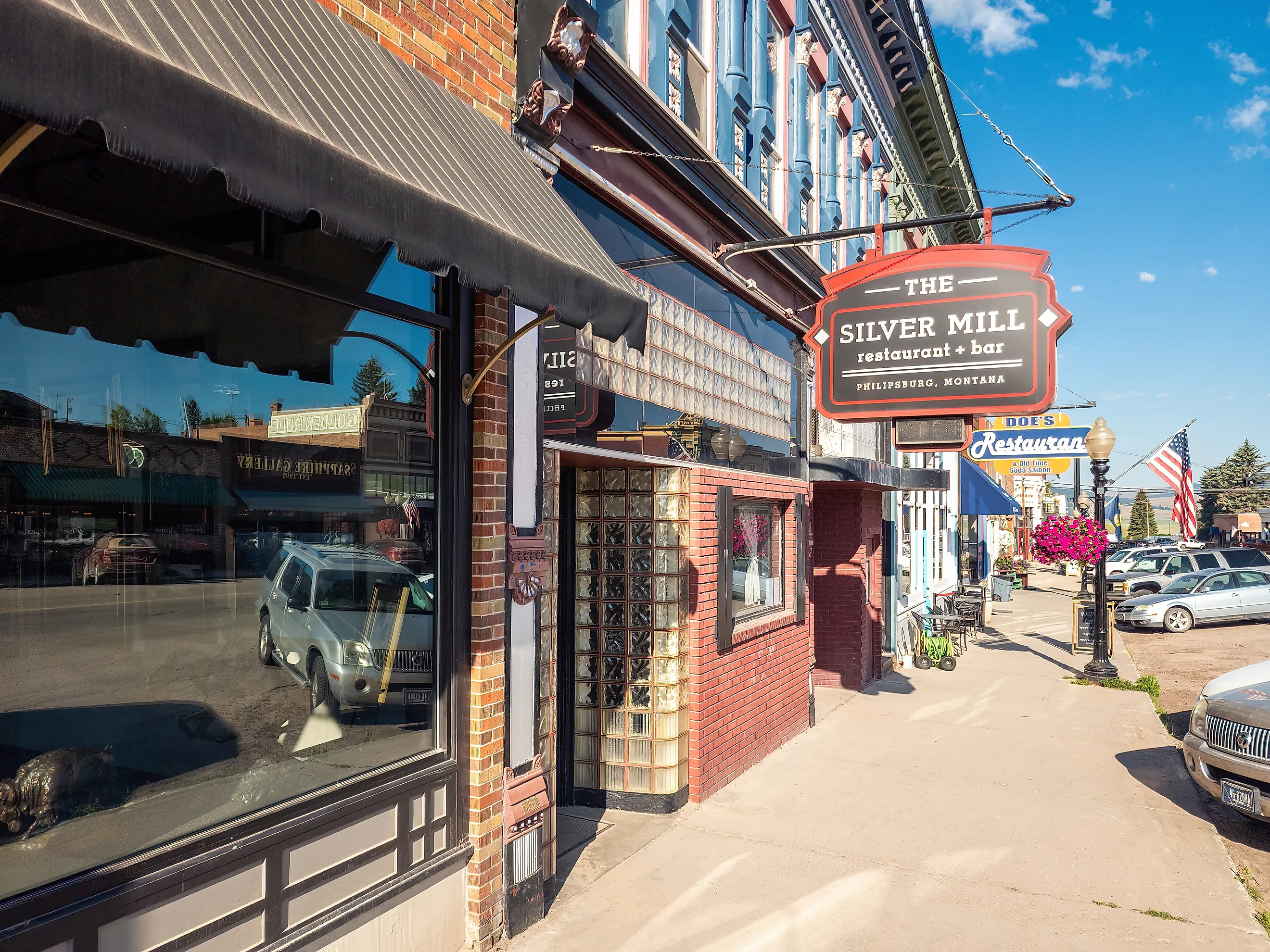
Philipsburg still reflects its 1890s silver boom most clearly along Broadway Street, where pastel-painted Victorian facades line a compact downtown set against the Flint Creek Range. Walking the block brings you past The Sweet Palace, where the smell of vanilla drifts onto the sidewalk as saltwater taffy is pulled and wrapped by an antique wrapper.

Just across the street, Philipsburg Brewing Company occupies the former First National Bank, and the original vault remains (near the bar) as Haybag Hefeweizen is poured. For a slower stop, the Sapphire Gallery offers a hands-on reminder of the town’s mining roots, letting visitors sift gravel in search of raw Montana sapphires.
Red Lodge

Red Lodge started as a coal mining center in the 1870s, where the legendary mountain man "Liver-Eatin'" Johnston once kept the peace as a deputy. The brick buildings on Broadway Avenue remain from the 1890s, but they now host welcoming shops instead of saloons. The Pollard Hotel is the most famous of these structures, maintaining oak-paneled parlors that hosted Buffalo Bill Cody and Calamity Jane.

A few doors down, the Montana Candy Emporium displays thousands of varieties of nostalgic sweets in an old mercantile building. Travelers often stop here before driving the Beartooth Highway, a high-altitude road that leads into Wyoming. Red Lodge Ales provides a spot to relax afterward with a Bent Nail IPA.
Fort Benton

Fort Benton’s layout still reflects its role as the head of navigation on the Missouri River in the 1860s. Front Street runs parallel to the water, lined with 19th-century buildings that once supported the territory’s busiest commercial hub. The Grand Union Hotel, opened in 1882, continues to operate as the oldest operating hotel in the state, serving meals in a dining room restored to its Victorian design. From there, the Historic Levee follows the river to the statue of Shep, the dog remembered for waiting at the train station for his owner. Nearby, the Old Fort Benton site preserves reconstructed wooden blockhouses where fur traders once exchanged buffalo robes for supplies.
Choteau

Choteau holds a special place in science history because paleontologists supplied the first strong evidence that dinosaurs fed and cared for their young at nearby Egg Mountain. The Old Trail Museum, which operates seasonally from Memorial Day (last Monday in May) and closes Labor Day (first Monday in September), explains this connection with displays of real fossils and a full-size dinosaur model outside the entrance. Travelers often stop at Freezout Lake Wildlife Management Area during migration seasons to see thousands of snow geese cover the water. La Mia Cucina is a good stop on Main Avenue for a latte and a cinnamon roll inside a log cabin. In the winter, Teton Pass Ski Area provides access to the Rocky Mountain Front for skiing without the crowds of big resorts.
Ennis

Ennis began in 1863 when William Ennis built a homestead to feed freight drivers hauling gold from nearby Virginia City. This supply stop grew into a ranching hub that maintained its western appearance, with false-front buildings. Trout statues decorate the sidewalks, a clear sign that the Madison River attracts anglers from all over to catch rainbow trout. Willie’s Distillery uses Montana grains to distill moonshine and bourbon in a small tasting room. Just a short walk away, Burnt Tree Brewing cooks wood-fired pizza to pair with their local ales. The Madison Valley History Museum preserves the area’s agricultural past with a collection that includes an old blacksmith shop and a pioneer cabin.
Stevensville

Stevensville’s story begins in 1841, when Jesuit missionaries established what became Montana’s first permanent settlement. That history remains centered at St. Mary’s Mission, where the original log chapel still stands alongside the pharmacy used by Father Ravalli. The town itself is small and walkable, with Blacksmith Brewing Company serving Brickhouse Blonde Ale and often hosting live music on the patio. Just beyond the commercial area, the Lee Metcalf National Wildlife Refuge opens into wetland trails where whitetail deer and osprey are commonly seen.
Hamilton

Hamilton exists because Copper King Marcus Daly needed massive amounts of timber to shore up his mines in Butte, so he built a sawmill and this planned settlement to support it in the 1890s. His influence remains at the Daly Mansion, a 24,000-square-foot summer estate where visitors can tour the 25 bedrooms and the trophy room. Its downtown serves as the modern commercial hub, lined with brick buildings and local restaurants. Nap’s Grill is a staple here, famous across the valley for its thick burgers and heaps of fries. After lunch, Bitter Root Brewing offers a place to relax with a Huckleberry Honey Ale. Just on the edge of the commercial district, the Bitterroot River provides easy access for anglers to cast for trout.
Lewistown

Lewistown started in the 1880s as a trading post on the Carroll Trail, a freight route connecting the Missouri River to Helena. The arrival of Croatian stonemasons in the early 1900s gave the settlement a distinct look, leaving behind sturdy sandstone buildings still there to date. The Central Montana Museum, which opens in warmer months, highlights this heritage and displays a full-scale replica of a Torosaurus skull. For a unique ride, the Charlie Russell Chew Choo takes passengers on a dinner train journey across trestles and through a half-mile tunnel while they eat prime rib. Locals gather at Big Spring Creek, a clear trout stream that winds right through the center of the community and offers excellent fishing just steps from downtown. Elk Pine Meadows allows golfers to play nine holes with views of five different mountain ranges.
Where Montana’s Past Is Still Lived
Montana is famous for its national parks, but the real history of the state lives in these smaller communities. You can see the legacy of the silver boom in the painted buildings of Philipsburg and the influence of the fur trade at Fort Benton. From the dinosaur fossils in Choteau to the candy counters in Red Lodge, these stops offer more than just good views. They provide a direct look at the miners, ranchers, and merchants who built the West.