7 Montana Towns Where Time Stands Still
Montana, an eye-catching singly landlocked state in the Western US’ Mountain West subregion, first inhabited by various indigenous peoples for thousands of years and later by homesteaders, miners, gold prospectors, and railroad executives, has a treasure trove of small towns where time seems to have come to a standstill. Snuggled between the high mountains, productive river valleys, expansive Northern Plains, and major rock formations are pretty locales that preserve the euphonies of the days gone by. From the deep mission-era beginnings of Stevensville to the boardwalks and old-time saloons of Virginia City, each of these seven towns expertly fuses vintage architecture, frontier heritage, and a slow-moving pace of life, telling tales of Montana as it was in earlier times.
Virginia City

Flanked by the Tobacco Root Mountains in the north and the Gravelly Range in the south, Virginia City is an exceptionally well-preserved Gold Rush town that boomed right after the discovery of gold in the Alder Gulch in 1863, making it the territorial capital of the state from 1865 to 1875. With the depletion of easily extracted placer gold, the town’s population declined, but thoughtful preservation has kept its Victorian-era character intact. Designated a National Historic Landmark, the Virginia City Historic District encompasses the entire town, including prominent age-old properties like the Madison County Courthouse.

Embark on a stagecoach ride through downtown, observing the original boardwalks, the Bale of Hay Saloon, and storefronts that feel frozen in time. Pay a visit to the Thompson-Hickman Museum, built in the 1920s and housing artifacts from the Chinese era, rare guns, postcards, photographs of Virginia City from the 1860s, and various other interesting memorabilia. Continue your quest for the area’s mining-era heritage with a scenic ride on the Alder Gulch Shortline Railroad, which operates seasonally between Virginia City and Nevada City, Montana. Finally, seize a chance to witness live melodramas and vaudeville-style performances of the Virginia City Players at the Virginia City Opera House.
Miles City

The administrative center of eastern Montana’s Custer County, Miles City, located at the meeting of the Yellowstone and Tongue Rivers, began as a frontier military outpost with Fort Keogh’s establishment in 1877, and gradually developed into a leading cattle market and railroad center. Take a self-guided walking tour of the Downtown, delving into Miles City’s eventful past at the Historic Montana Bar that has been continuously serving its patrons since 1908, and is considered one of Montana’s best preserved historic bars, decorated with steer heads on the walls, dark booths, original Italian tile floor, and solid cherry wood tables. Also on Main Street is the 1899 Olive Hotel, which has pristinely preserved much of its 1800s style in its unique lobby and lounge.
Sightseers must survey the privately financed Range Riders Museum on the 1876 Fort Keogh cantonment site, comprising 13 buildings, making it the area’s most extensive western museum. Some conspicuous buildings in the complex are the Pioneer Memorial Hall, Bert Clark Gun Collection, Fort Keogh Officers’ Quarters, and the One-Room School. The WaterWorks Art Museum (formerly Custer County Art & Heritage Center) spotlights the town’s cultural roots and regional art via the enormous photography collections.
Butte

Primarily settled in 1864 as a mining community on the Continental Divide in the northern Rockies, Butte gained prominence as one of the American West’s largest copper boomtowns in the late 19th and early 20th century, earning the moniker “The Richest Hill on Earth.” Wander the streets of the Uptown Historic District, one of the nation’s largest historic landmark districts, which has over 6,000 contributing properties, such as the Copper King Mansion (currently a bed and breakfast), the Covellite Theatre & Uptown Lounge, and the Push Saloon/Silver Dollar Saloon.

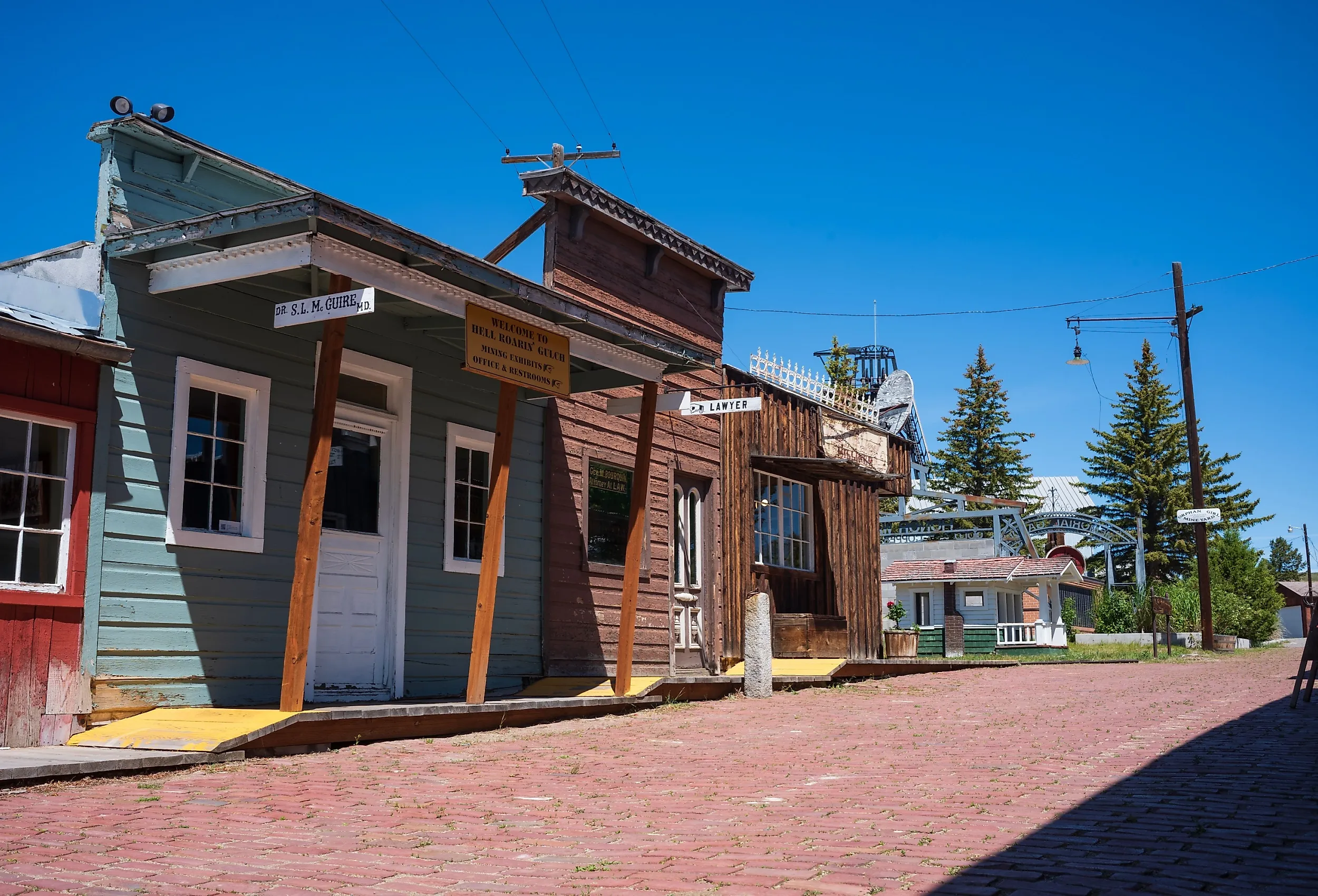
At the World Museum of Mining on the Orphan Girl Mine yard, learn more about Butte’s mining heritage through underground mine tours and exhibits that provide a glimpse into the lives of miners. Every year, from mid-May to mid-September, head to the Berkeley Pit Viewing Stand for an unconventional view of the gigantic open-pit mine.
Stevensville

Set in the panoramic Bitterroot Valley, the ancestral home of the indigenous Bitterroot Salish people, Stevensville is formally recognized as Montana’s foremost permanent non-native settlement. Colonized by Jesuit Missionaries in 1841, following a request from the native tribe, this Ravalli County town is a wonderland for retro buffs. Drop by the Historic St. Mary’s Mission and explore the different buildings in the mission complex, including a chapel with an attached dwelling, a Salish artifacts-filled cabin, a souvenir shop, a research library, a visitor center-cum-museum, an art gallery, and a columbarium, all of which remain open from April to October for public viewing.
Spend some time scrutinizing the local history exhibits at Stevensville Historical Museum, and visit the Fort Owen State Park on the town’s northern outskirts, which is often called the ‘cradle of Montana civilization.’ Addedly, watch the wild fauna, inspect the 1885-built Whaley Homestead, and hike the two nature trails and a paved, wheelchair-accessible trail, all at the proximate Lee Metcalf National Wildlife Refuge.
Fort Benton

Nicknamed “The Birthplace of Montana,” Fort Benton is the state’s oldest continuously occupied settlement, founded at the outset as a fur trading post named Fort Lewis on the Upper Missouri River. With the abandonment of Fort Lewis due to the decline of the fur trade, and its subsequent renaming to Fort Benton, the old fort is now a part of the Fort Benton Museums & Heritage Complex, where history geeks can check out the Missouri River Breaks Interpretive Center, Starr Gallery of Western Art, and the Museum of the Northern Great Plains that documents the lives of homesteaders in the vast Montana plains for the last hundred years.

At the adjacent Museum of the Upper Missouri, browse the sundry exhibits on the region between 1860 and 1887, which have helped earn Fort Benton the sobriquet “the toughest town in the West.” Extending along Front Street is the Fort Benton Historic District, which includes within its limits the 1888-built Fort Benton Bridge, a levee along the banks of the river, the Fort Benton Engine House/Old City Hall, and the iconic Grand Union Hotel.
Helena

Montana’s capital and the center of administration of Lewis and Clark County, Helena, situated close to the Missouri River at the eastern foothills of the Continental Divide, was founded on October 30, 1864, after a group of prospectors struck gold in a gulch off the Prickly Pear Creek. The limitless wealth from the early gold discoveries in the area helped turn Helena from a remote mining camp to a prosperous community, aside from shaping its grandiose structures and perpetual political significance. Take a walk through Helena’s Main Street (named ‘The Last Chance Gulch’ by some first miners) that features a pedestrian walking mall, women’s clothing stores like Cobblestone Clothing, and art galleries like Mountain Sage Gallery.

Additionally, tour the magnificent Montana State Capitol overlooking the Prickly Pear Valley, renowned for its spectacular artworks and a captivating rotunda at the heart of the building. Not to be missed is the ornate Cathedral of Saint Helena, highlighting 230-foot twin spires inspired by Vienna’s Votivkirche church.
Lewistown

Located precisely in the state’s geographic center by the spring-fed Big Spring Creek and ringed by five island mountain ranges, Lewistown is the Fergus County shiretown, having its roots as an 1880s gold rush site and as the Montana Railroad’s eastern terminus. With the passage of time, the town developed as an agricultural community and Central Montana’s cultural and economic center. The availability of good building stone encouraged pioneer Croatian stone masons to construct excellent structures that form the central feature of Lewistown’s six historic districts.
Travel back in time at the Central Montana Historical Museum in Downtown Lewistown, perusing Native American art & artifacts, fossils, medical equipment, items from a Norden bombsite, and memorabilia from the homestead era. Enjoy a historic dinner train experience aboard the Charlie Russell Chew Choo as it makes its way through the mountains and prairies, providing live music, western entertainment, and a full-course prime rib dinner. Just a short drive from Lewistown is the Bear Gulch, one of Montana’s immaculate pictograph and petroglyph sites, showcasing shield-bearing warriors, a remarkable collection of processed bison and elk bones, and designs illustrated by Native Americans.
From Helena’s gold rush roots and political ambitions to the Missouri River flowing past steamboat-era landmarks in Fort Benton, the aesthetic communities in Montana hold staggering history that still echoes throughout its epic countryside. In today’s accelerated lifestyle, these time-honored towns offer more than just splendid settings; they invite one and all to pause, nose around, and experience history, leaving inerasable impressions as well as making them worthy spots to visit in all seasons.