8 Mississippi Towns Where Time Stands Still
Mississippi is a state known for its slow-paced lifestyle. While many states have embraced industrialization, several places in Mississippi have remained unchanged for hundreds of years. The state is also known for its agricultural production, which dates back several thousand years, when Native American tribes dominated the area. Thanks to the rich Mississippi soils, abundant plant growth is common. In addition, Mississippi is also home to an array of mature trees. Oaks, sycamores, magnolias, and pecans decorate the landscape, adding to the lush greenery. Along with the area's warm climate and diverse flora, Mississippi has several towns that are frozen in time.
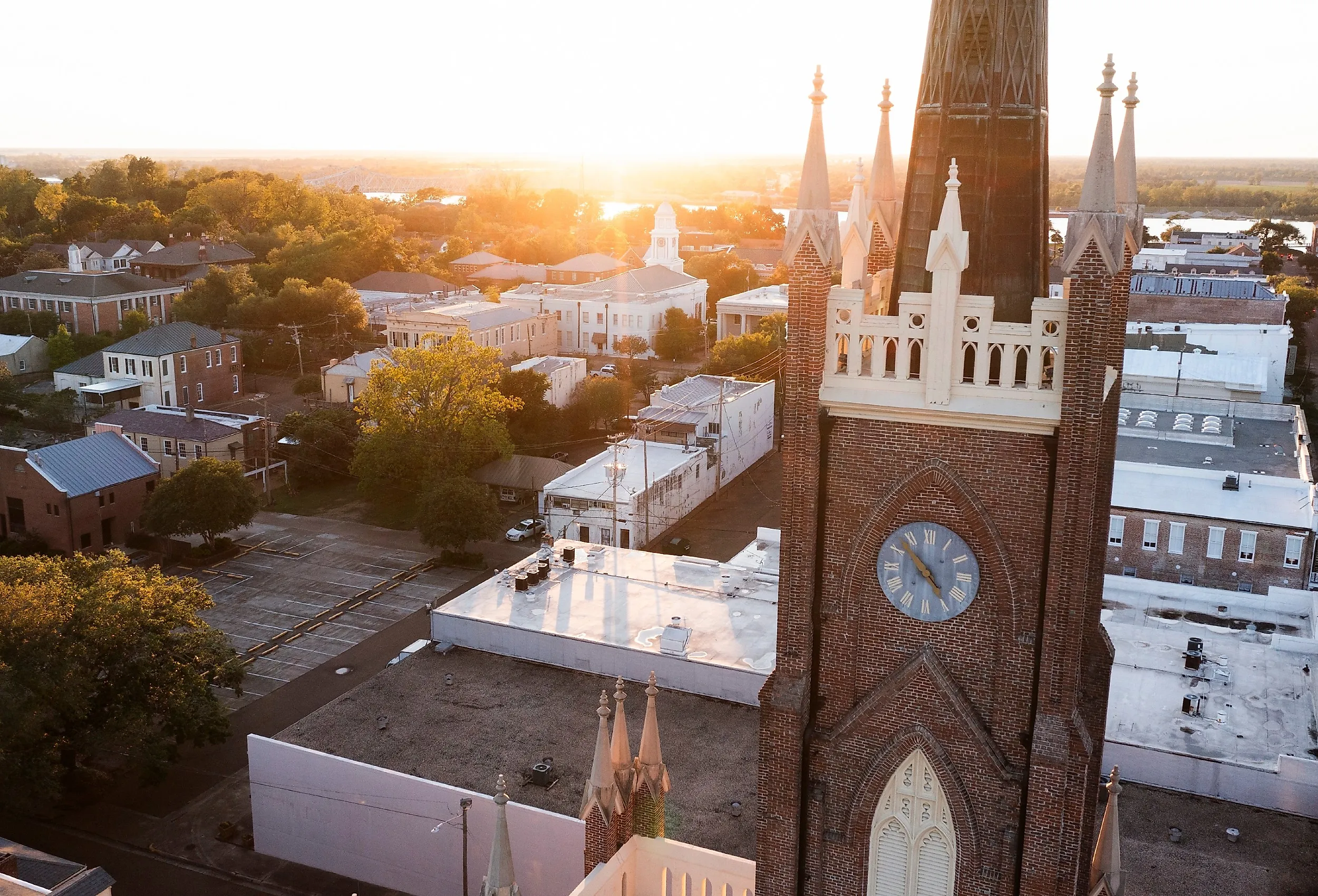
Natchez

Located in Adams County, Natchez was a prominent city during Mississippi's antebellum years. In the past, it was the home of many cotton planters and the Mississippi River trade. Today, there are several historical homes in the city that have remained unchanged, including the Rosalie Mansion and Gardens, the Dunleith Historic Inn, and the William Johnson House.
Completed in 1823, the Rosalie was the home of Peter and Eliza Little. It was used as an orphanage by the Littles and the second owners, the Wilsons. The home is now a museum containing many preserved artifacts depicting the era. Patrons can tour the home and visit the gift shop.
The Dunleith Historic Inn transports you back to the mid-1800s, with the 40-acre estate having the original carriage house, dairy barn, poultry house, and brick dependency. Built in the Greek Revival style, the house now operates as a historic inn and event venue in Natchez, with guest rooms, a restaurant and bar, and tours available to visitors.
The William Johnson House is where history comes alive. The home was owned by William Johnson, a free African American man, who gained the respect of the people of Natchez. He authored one of the longest diaries by an African American from the pre-Civil War era, detailing daily life in the 1800s. Visitors are welcome to tour the house seven days a week.
Aberdeen

Known as one of the busiest Mississippi ports of the 19th century, Aberdeen is located along the Tombigbee River. Cotton was the town's main commodity for a long time, and the remains of historical structures can be seen throughout the city. These factors have helped Aberdeen remain a fixture of the past.
The Old US Post Office and Courthouse is a two-and-a-half-story building designed in the Victorian Romanesque style. The building was completed in 1887 and served as a post office, federal court, and US government offices until 1974.
Another timeless feature in Aberdeen is the Old Aberdeen Cemetery, which captures the city's history. The cemetery dates back to 1838, includes several monuments, and is the resting place of many Civil War soldiers. Open year-round, the cemetery allows self-guided tours from dawn to dusk.
Aberdeen also has many historical homes, including The Magnolias. Built in 1850 for a planter and physician, the house is designed in classic Greek revival architecture. Today, it serves as a museum with daily tours and as a wedding venue.
Holly Springs

Holly Springs is near the Tennessee border in Marshall County. In the 19th century, it was home to several cotton plantations until the Civil War. After the war, freedmen continued to work in the town as sharecroppers and tenant farmers.
The history of enslaved and freed African American men and women is on view at the Ida B. Wells-Barnett Museum. The museum is dedicated to the study of African American history and culture, and offers several programs. These programs include family, children, and grandparent programs as well as community and multicultural programs. The museum is open to visitors six days a week.
Historical buildings, such as Walter Place, capture the town's undisturbed nature. Designed in the Greek revival and Gothic style, the mansion was the home of Colonel Harvey Washington Walter. The house once housed the family of Union General Ulysses S. Grant and served as a hospital during the 1878 yellow fever epidemic.
Outdoor tranquility is abundant in Holly Springs. A trip to the Strawberry Plains Audubon Center is a timeless experience, with many structures remaining unchanged for decades. Visitors can bird and butterfly-watch among the antebellum Davis House and sharecropper homes.
Raymond

Located in Hinds County and the main campus of Hinds Community College, Raymond is a town where time stands still. The city has a rich history, including the Battle of Raymond during the Civil War in 1863 and several historical landmarks.
Little Big Store, located in the historic Raymond Train Depot, offers an abundance of nostalgia. From old-time records, posters, and magazines, the building was constructed around 1889 and is open to shoppers on select days each week.
The McNair Plantation/Brady House is another timeless spot in Raymond. The house was built around 1835 and expanded in 1850. It is a classic example of the rare "dogtrot" form, which was popular in Mississippi during the 19th century. The house can be viewed from Mississippi Highway 18.
Listed in the National Register of Historic Places, the Hinds County Courthouse is preserved in time. Built in 1857, the two-story stucco building has a hipped roof and porticoes. The courthouse is an architectural beauty that is still in use today.
Stonewall

Named after Confederate Army General Stonewall Jackson, the town of Stonewall was an industrial hub for cotton between 1868 and 2002. The town is next to the Chickasawhay River and has a population of 1,058 residents.
Stonewall is also home to lasting structures such as Romona's Mill House. The house is one of the oldest homes built by the Stonewall Manufacturing Company around 1872. The Colonial three-columed portico was designed in the Greek Revival style and was the home of Wayne and Romona Schrimpshire. The home is off Highway 513 and is easily recognized by its columns.
Millstone, a Victorian-era bungalow, was built around 1898 and is part of the National Register. The house holds many of its original architectural features, leaving it locked in time. The house also holds many antiques and heirloom pieces from the past.
The Stonewall Cemetery is another time capsule that offers a glimpse of the town's history and is the resting place of residents dating back to 1890. The cemetery is located at Stonewall and Clarkco Road.
Woodville

Known as one of the state's oldest towns, Woodville is located near the Louisiana border. The town has a rich history and plenty of Southern charm. The Historic District is a step back into the past and includes the Historic Planters Building. The Davis Larkin Company of Chicago completed the building for a group of men interested in purchasing property to build a store. Today, it serves as an event venue.
Another historical hotspot in Woodville is the Rosemont Plantation. The plantation dates back to 1810 and was the home of Jefferson Davis's parents. The home stayed in the Davis family for several generations before being purchased by new owners. Today, visitors can tour the home, grounds, and the Davis family cemetery.
A visit to Woodville would not be complete without a stop at Praise Da Lard Cracklins, where patrons can enjoy a classic cuisine of cracklins. The eatery sells both skin and meat cracklins, as well as cracklin cornbread.
Laurel

Located in Jones County, Laurel has a population of 17,508 residents. In the past, the town was a hotbed of the lumber industry because of its location in densely forested areas.
Visitors can revisit the 1800s at the Landrum's Homestead & Village. The old-fashioned historic village features over 80 buildings, including a blacksmith shop, schoolhouse, and chapel.
The historic downtown is an unchanging view of days gone by. Homes such as White Oak on North Fifth Avenue transport travelers back to the early 1900s, with an Italianate Renaissance Revival building.
Nostalgia comes alive with a visit to the Scotsman General Store & Woodshop. Inside, patrons will find an open woodshop where items such as cutting boards, Lazy Susans, and cake stands are manufactured.
Port Gibson

Port Gibson is located in Claiborne County and is bordered by the Mississippi River on the west. The first settlers of Port Gibson were the French in 1729. The city was established in 1788 by Samuel Gibson, a cotton plantation owner. Today, the town is a manufacturing hub of flooring and plastics.
Many places in Port Gibson are frozen in time, including the A.K. Shaifer House. The house once served as the headquarters of General John A. McClernand and a Union hospital during the Civil War. The house's walls bear scars from missiles fired during the Battle of Port Gibson.
Outdoor enthusiasts can follow pathways along the Natchez Trace Parkway that have been used for over 10,000 years. The 444-mile recreational road passes through three states and was used by Native Americans, European settlers, and soldiers. The Sunken Trace Hiking Trail in Port Gibson is ageless, taking visitors back to the early 1800s, when walking these trails meant fighting mosquitoes, heat, disease, and swollen rivers.

The towering columns and carved capitals of Windsor Ruins are a historical gem of Port Gibson. The site of the former Windsor plantation preserves 23 standing columns and five partial columns that survived the 1890 fire, a haunting sight. Visitors can photograph a piece of history and take a walk on the grounds.
Mississippi is truly a state filled with many hidden gems where time stands still. The lack of rampant industrialization has helped these towns remain frozen in time. From the quiet mansions of Natchez to the ruins of Windsor plantation, the state is an excellent place to view unchanged history. A visit to these small towns can transport any traveler into bygone times.