8 Idyllic Small Towns In Massachusetts To Visit In 2026
Skip the crowds and Massachusetts gets a lot more fun. In Shelburne Falls, you can stroll through a garden planted across an old bridge over a river. In Rockport, you can eat fried clams two steps from the lobster boats. In Provincetown, you can climb a granite tower for a view that runs all the way to Boston, then wander a beach at sunset. These are the small towns, all under 20,000 people, where the Main Streets are pretty, the harbors and hills are close by, and you never have to fight for a parking spot. Eight of the best are below. Here is where to point the car in 2026.
Concord

No American town of 18,000 has punched above its weight quite like Concord. In 1635, English settlers pushed inland and founded the first colonial town in New England that wasn't hugging the coast. A hundred and forty years later, on April 19, 1775, militiamen and British regulars met at the Old North Bridge, and the volley fired there became the "shot heard round the world" that opened the Revolution. You can still walk out to the bridge, which is quieter now, with the Concord River sliding underneath. Then came a second act, in a different key. In the mid-1800s Concord grew into the center of American letters, and you can stand inside the proof at two houses: Orchard House, where Louisa May Alcott wrote "Little Women," and the cabin site at Walden Pond, where Henry David Thoreau spent two years testing whether a person could live deliberately. Revolution and literature, both born on the same few square miles. That is a lot for one small town to hold.
Rockport

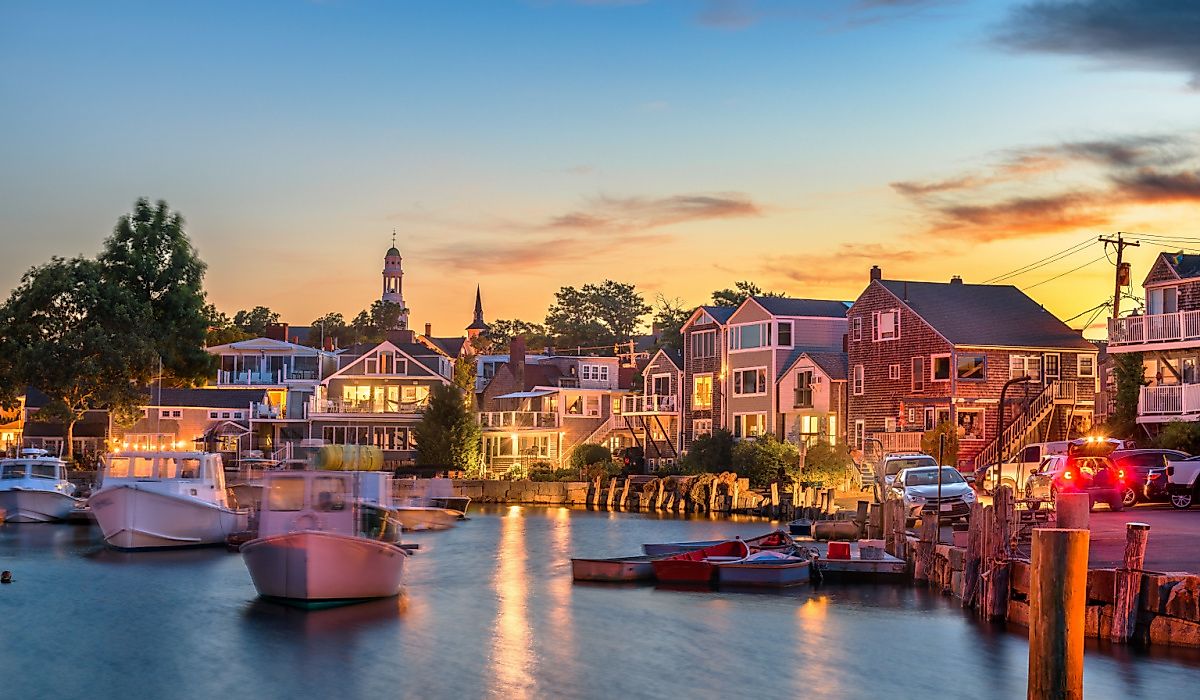
Rockport comes by its name honestly. For most of the 19th century the people of this Cape Ann town of under 10,000 quarried granite and hauled fish, and after the split from Gloucester in 1840 they kept right on doing both. What drew a new crowd was the light. Painters started coming for the way the sun hit the harbor, and by the early 1900s Rockport had grown into one of the most important artist colonies in New England. The proof still stands on the water: a weathered red fishing shack called Motif No. 1, so often painted and photographed that it may be the single most reproduced building on the American coast. Out at Halibut Point, the old quarry sits right at the ocean's edge, a straight drop of granite into blue water. Bearskin Neck packs the galleries and the seafood onto one narrow spit of land. The working harbor and the artists have shared the same view for over a century, and neither has given ground.
Stockbridge

Norman Rockwell painted Stockbridge because Stockbridge looked like the America he wanted to draw. He lived here the last 25 years of his life, and if you have ever pictured a cozy New England Main Street at Christmas, there is a good chance you were picturing his version of this one. The Norman Rockwell Museum holds the world's largest collection of his original work, nearly a thousand paintings and drawings, on a 36-acre campus above the Housatonic River, with his actual studio moved to the grounds. The town's story runs deeper than the paintings, though. It began in the 1730s as a settlement tied to the Mohican people, whose descendants are now the Stockbridge-Munsee Community in Wisconsin. A few minutes away, the sculptor Daniel Chester French built Chesterwood, the summer studio where he modeled the seated Lincoln for the Lincoln Memorial. And at Naumkeag, a Gilded Age mansion sits in 48 acres of terraced gardens you can wander for an afternoon. For a town under 5,000 people, an unusual amount of American art got made here.
Lenox

Every summer the Boston Symphony Orchestra packs up and moves to a lawn in Lenox. That is the shorthand version of this town, and it is mostly right. Settled in the mid-1700s, Lenox became a Gilded Age resort where wealthy families built enormous "cottages" in the Berkshire hills, and when the fortunes faded, later owners reopened many of the estates as cultural institutions. Tanglewood, the orchestra's summer home, is the famous one, where people spread blankets and listen to some of the finest orchestral music anywhere under the open sky. Just up the road is The Mount, the estate that the novelist Edith Wharton designed for herself down to the gardens, an early and rare case of an American woman shaping her own grand house. When you have had your fill of culture, the Parsons Marsh Reserve has a boardwalk trail that runs out over the wetland to a quiet overlook. For all the grand estates, Lenox stays welcoming, which is the best kind of sophistication.
Provincetown

Everyone learns that the Pilgrims landed at Plymouth. Fewer learn that they landed at Provincetown first, five weeks earlier, dropping anchor here in November 1620 and signing the Mayflower Compact in the harbor before sailing on. The 252-foot Pilgrim Monument, built between 1907 and 1910, marks the spot and stands as the tallest all-granite structure in the United States. The climb to the top is a workout of ramps and stairs, and the reward on a clear day is a view all the way to Boston. Since then this town at the very tip of the Cape has become one of the most creative and open-hearted places in the country, an artist and LGBTQ haven where Commercial Street stays busy with galleries, shops, and restaurants well into the evening. Walk out to Herring Cove Beach at the right hour and the sunset does most of the work. Nowhere else in Massachusetts mixes deep history and easy freedom quite like this.
Shelburne Falls

Here is the story that sums up this whole list. In 1908 a trolley company built a concrete bridge across the Deerfield River to haul freight. When trolleys went out of fashion and the bridge fell idle, the local women's club decided in 1929 that an empty span was a waste of a good view, hauled in soil, and planted a garden on it. Nearly a century later the Bridge of Flowers still blooms from April through October, and after a $3.2 million repair it reopened in 2025 looking better than ever. That is Shelburne Falls in one gesture: a small western Massachusetts mill village where people make beautiful things out of leftover ones. Just downstream, the Glacial Potholes are smooth round basins that the last ice age ground into the riverbed, some of them wide enough to swim in. The rest of the village fills up with glassblowers, artisan studios, and cafes along a river that has drawn people here since the mill days.
Newburyport

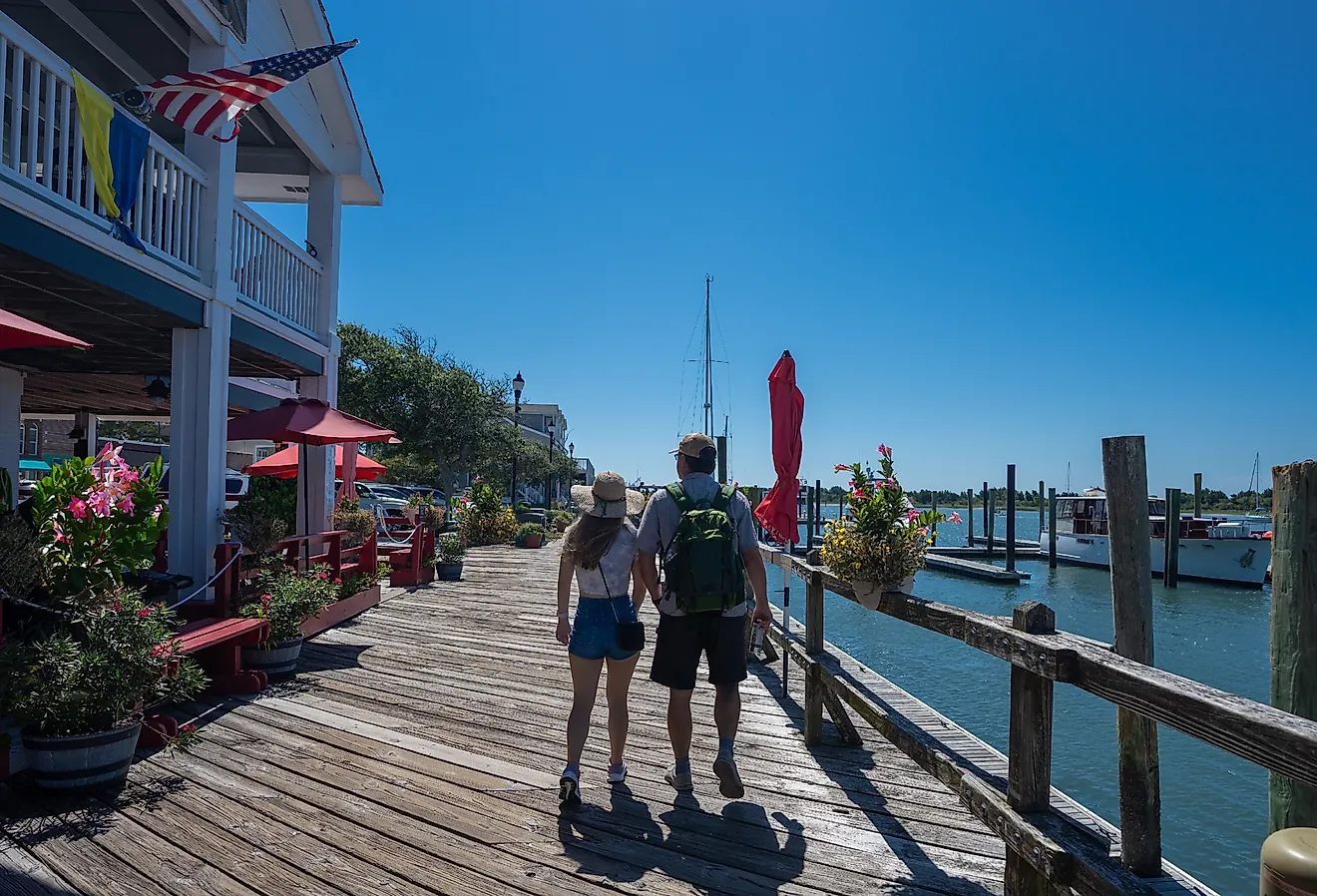
Fire almost erased Newburyport. The Great Fire of 1811 leveled the wooden heart of this North Shore seaport, and rather than rebuild the same way, residents came back in brick. That decision is why Market Square and the surrounding streets still hold some of the finest Federal-style architecture in New England, block after block of red brick and clean lines that survived because they were built to. The town grew rich on shipping in the 18th and early 19th centuries, and you can trace that trade at the Custom House Maritime Museum, set in a granite building where duties were once collected, now full of rotating exhibits on the sailors who worked the Merrimack. The waterfront boardwalk runs right along the river, lined with benches, and on a warm afternoon watching the boats come and go is a genuinely good use of an hour. Thirty-five miles north of Boston, Newburyport is proof that a working harbor and a walkable downtown never really go out of style.
Great Barrington

Great Barrington has a knack for going first. In 1886 it was one of the first towns anywhere lit by alternating current, the electrical system that went on to power the modern world. It is also the birthplace of W. E. B. Du Bois, the scholar and civil rights leader, and locals have never been shy about claiming that history while building something new. This southern gateway to the Berkshires has a population around 7,000 and a downtown that shopkeepers and restaurateurs keep freshening up every few years. The centerpiece is the restored Mahaiwe Performing Arts Center, where you can catch concerts, films, and live theater in a hall that dates to 1905. When you want the outdoors, Monument Mountain rises just north of town, and the summit trail climbs to a quartzite ledge with a long view over the valley, the same ridge where Herman Melville and Nathaniel Hawthorne once hiked and talked. Down by the river, the Housatonic Flats Reserve has a flat, easy loop through meadow and wildflowers. History, arts, and a mountain to climb, all in one Berkshire town.
Small Towns, Long Memories
What ties these eight together is not scenery, though there is plenty of that. It is care. The people of Newburyport rebuilt in brick after the ashes cooled, the fishermen and painters of Rockport worked the same harbor for a century, and a few determined gardeners in Shelburne Falls made a dead bridge into the thing everyone now drives out to see. Concord looks after the ground where a country and a literature both began, and the residents of Provincetown still honor a landing that most of the map forgot. None of it survives by accident. Go in 2026 and you are not just visiting pretty places. You are seeing what happens when people decide, one town at a time, that the good things are worth keeping.