7 Towns in Wisconsin That Have The Best Main Streets
Wisconsin has more small-town main streets that have held their character than most travelers expect. Mineral Point's downtown was the first historic district in Wisconsin listed on the National Register, in 1971. Cedarburg's limestone streetscape runs along Cedar Creek 20 miles north of Milwaukee. Ripon holds the Little White Schoolhouse where an 1854 meeting set the founding of the Republican Party in motion. Sturgeon Bay still works a shipbuilding canal between Green Bay and Lake Michigan. These are seven Wisconsin main streets worth driving for.
Mineral Point

Mineral Point in Iowa County in southwest Wisconsin was the first community in Wisconsin to place its downtown on the National Register of Historic Places, in 1971. The town was settled in the 1830s by Cornish hard-rock miners who came for the lead deposits in the surrounding Driftless Area, and the limestone-and-sandstone buildings they constructed (locally called "Cornish miners' cottages") still anchor High Street and Shake Rag Street. The Pendarvis Historic Site at the south end of town preserves a row of restored 1840s Cornish miners' houses as a state historical museum.
The Driftless Area itself is the geographic distinction: this part of Wisconsin was bypassed by the last glaciation, leaving steep ridges, deep valleys, and cold-water streams that produce a different landscape from the flatter glaciated Midwest. The downtown today runs a working arts community on top of the historic buildings, with the Shake Rag Alley Center for the Arts hosting workshops and the Mineral Point Opera House (1914, restored) running year-round performances.
Cedarburg

Cedarburg sits 20 miles north of Milwaukee on Cedar Creek, a tributary of the Milwaukee River that runs right through the downtown. The town was founded in the 1840s by German immigrants who built the Cedarburg Mill in 1855 (still standing on Bridge Road) and the limestone-and-fieldstone buildings that line Washington Avenue. Cedarburg's downtown is on the National Register and includes more than 100 individually listed historic structures.
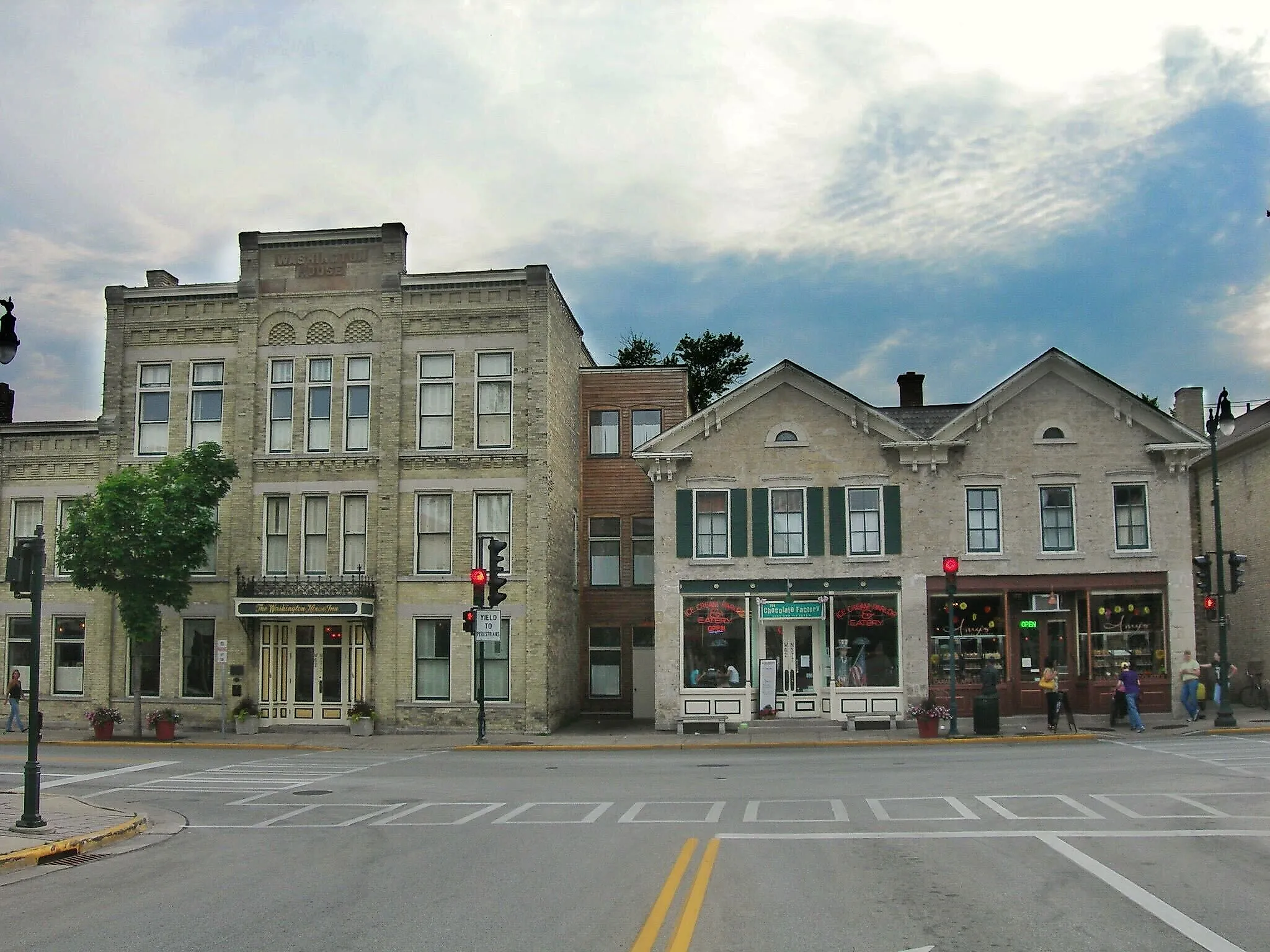
The Washington House Inn at the corner of Washington and Center, built 1886 of cream city brick (the pale yellow Milwaukee-area brick made from local clay), still operates as a B&B. Cedar Creek Park covers the creek-side green space in town, with the historic Cedar Creek Settlement winery and shops at the south end. The Cedarburg Cultural Center on the central square runs year-round exhibitions and concerts.
Hayward

Hayward sits in Sawyer County in the Wisconsin Northwoods, on the Namekagon River about 4 miles east of the Chequamegon-Nicolet National Forest. The Namekagon, a 101-mile tributary of the St. Croix River, is part of the federally designated St. Croix National Scenic Riverway. The Hayward Lakes area covers more than 200 freshwater lakes within an easy drive.
Hayward's Historic Main Street (Wisconsin Highway 27 through downtown) runs the antiques shops, fishing-tackle retailers, and outdoor outfitters that serve the regional recreation economy. The town hosts the American Birkebeiner each February, the largest cross-country ski race in North America (about 13,000 skiers across the 30-mile and 50-kilometer courses). The National Fresh Water Fishing Hall of Fame on Hall of Fame Drive is the local landmark, with the famous four-and-a-half-story muskie sculpture visible from the highway.
Ripon

Ripon, in Fond du Lac County in east-central Wisconsin, holds the Little White Schoolhouse on Blackburn Street. The schoolhouse was the site of a March 20, 1854 anti-Kansas-Nebraska Act meeting where local residents agreed to form a new political party to oppose the expansion of slavery. Whether Ripon or the July 6, 1854 Jackson, Michigan convention is the actual "founding" of the Republican Party is a question historians still debate; both towns claim it. Either way, the Ripon meeting was a documented early step toward the party that elected Lincoln six years later.
The downtown along Watson Street runs Italianate commercial buildings dating from the 1860s and 1870s. Ripon College, founded 1851 as Ripon Female Seminary, anchors the local higher-education economy. Vines and Rushes Winery on County Road E south of town runs as a regional draw, with a pizza-and-wine sit-down menu in a restored barn.
Stoughton

Stoughton sits in Dane County about 20 miles southeast of Madison, with a population of about 13,500. The town has the largest concentration of Norwegian-American heritage in southern Wisconsin, dating to its 1840s founding by Norwegian immigrants. The annual Syttende Mai (Norwegian Constitution Day) festival each May 17 weekend is the largest such celebration outside of Norway in the Midwest.
The Stoughton Opera House on Fourth Street, built in 1901 as part of the original city hall, has been restored as a working 470-seat performance venue with strong acoustics and an active concert calendar. The downtown along Main Street runs early-20th-century commercial buildings, with Grasshopper Goods, several Norwegian-import shops, and the Stoughton Historical Society as fixtures. Lake Kegonsa State Park 5 miles south of town covers the local outdoor option.
Sturgeon Bay

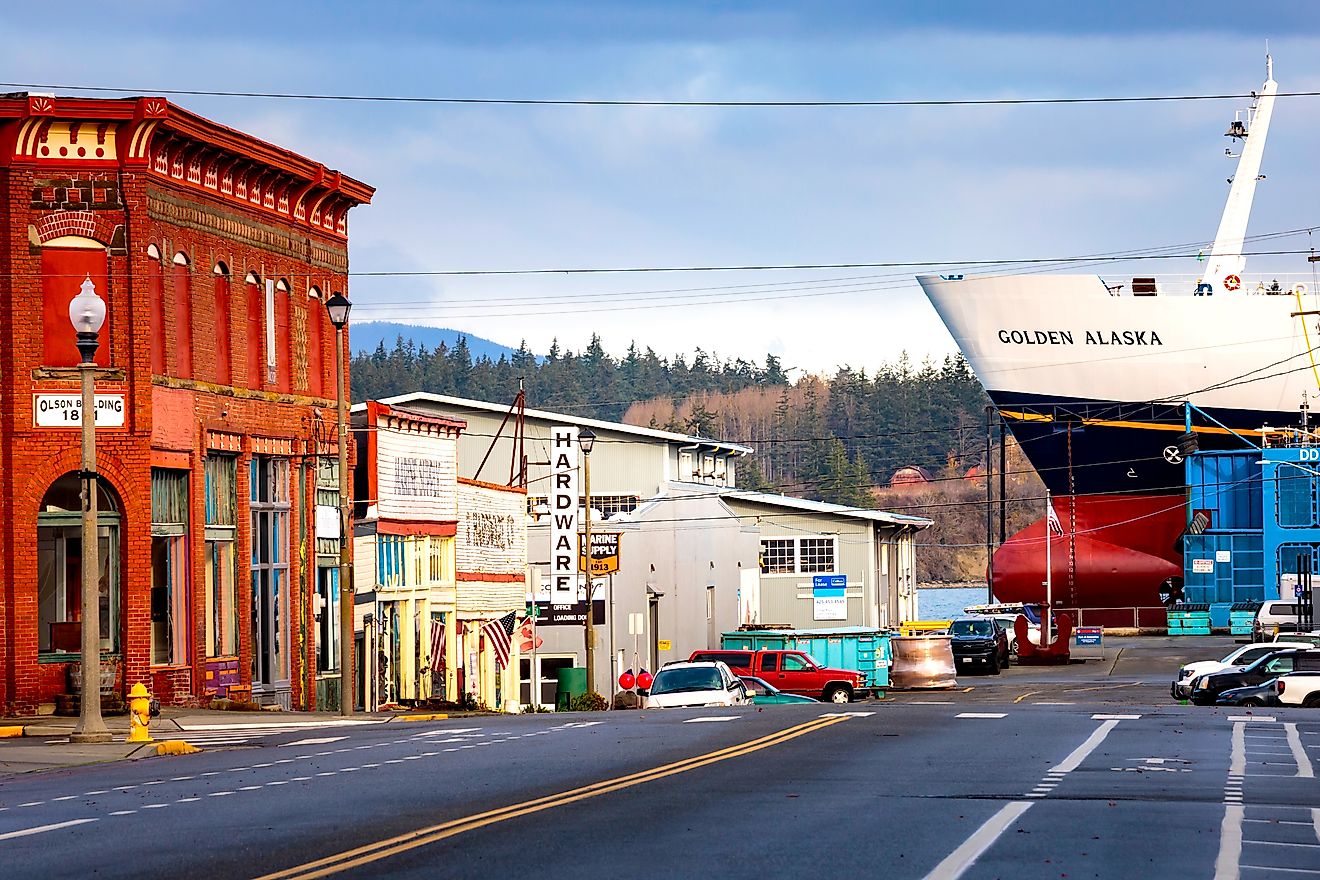
Sturgeon Bay sits on the Door Peninsula about midway up the peninsula, with a working shipbuilding history dating to the 1850s and the man-made Sturgeon Bay Ship Canal (completed 1881) cutting through the peninsula to connect Green Bay to Lake Michigan. The canal saves ships the 100-mile trip around the northern tip of Door County and is still in active use today.
The Door County Maritime Museum at the foot of Madison Avenue runs a strong regional collection covering Great Lakes shipping, with an observation tower at the top with views of the canal, the shipyards, and Sturgeon Bay itself. The Sturgeon Bay Ship Canal Lighthouse (1899, on the Lake Michigan end of the canal) and the Sturgeon Bay Canal North Pierhead Light (1903) are both visible from the canal walk. Sturgeon Bay is Door County's largest city at about 9,600 residents, and the main commercial center for the entire peninsula's tourism and recreation economy.
Burlington

Burlington sits at the confluence of the White River and the Fox River in Racine County in southeastern Wisconsin, with a population of about 10,900. The Burlington Liars Club, founded in 1929 by two local newspaper reporters, runs an annual contest to choose the year's best original lie submitted from anywhere in the world. The winner gets a small certificate and a brief moment of national press.
The downtown along Chestnut and Pine Streets runs the working commercial core. The Kane Street Historic District on the north side of the river covers a residential block of Victorian-era houses on the National Register. Brightonwoods Orchard north of town runs apple and pear picking each fall. Richard Bong State Recreation Area, 10 miles southwest, covers 4,500 acres of restored prairie and forest on a former never-completed Cold War-era airbase site.
What Ties the Seven Together
Each main street earns its place differently. Mineral Point has the 1971 first-on-the-Register designation and the Cornish architecture. Cedarburg has the cream-city brick streetscape and Cedar Creek running through. Hayward has the Northwoods recreation economy and the American Birkebeiner. Ripon has the Little White Schoolhouse and the Italianate downtown. Stoughton has the Norwegian heritage and the 1901 Opera House. Sturgeon Bay has the canal and the maritime infrastructure. Burlington has the river confluence and the Liars Club. Geographic spread covers the southwest, southeast, Northwoods, and Door Peninsula. The state has no shortage of preserved working main streets; these are seven worth a stop.