7 One-of-a-Kind Small Towns in Arizona
Traveling through Arizona, you're likely to stumble upon small towns that are utterly unique. Beyond major cities and national parks, these communities operate in ways rarely seen elsewhere in the United States. In some towns, animals traverse freely through downtown streets. In others, staircases take the place of roads, or a single landmark shapes the town’s national identity. Each town on this list stands out for a defining feature that is impossible to replicate and hard to find outside Arizona. Let's explore seven one-of-a-kind small towns in Arizona, perfect for travelers who crave the quirky and unique.
Oatman

Oatman stands out as one of the only towns in the United States where wild burros roam freely through the streets. These donkeys descend from pack animals once used by miners during the town’s gold rush years. When mining faded, the animals stayed. Today, they wander through town at their own pace, stretch out in doorways, and regularly stop traffic.
The town’s mining-era appearance, with wooden sidewalks and weathered storefronts lining the main stretch, preserves the look and layout of an early twentieth-century mining camp. Oatman Hotel remains the most recognizable landmark, famous for its dollar-bill-covered interior and decades of travelers who passed through the Black Mountains. Just outside town, Sitgreaves Pass delivers one of the most dramatic stretches of Route 66 in the state, with sharp curves, steep grades, and expansive desert views that frame Oatman’s isolation and historic importance.
Bisbee

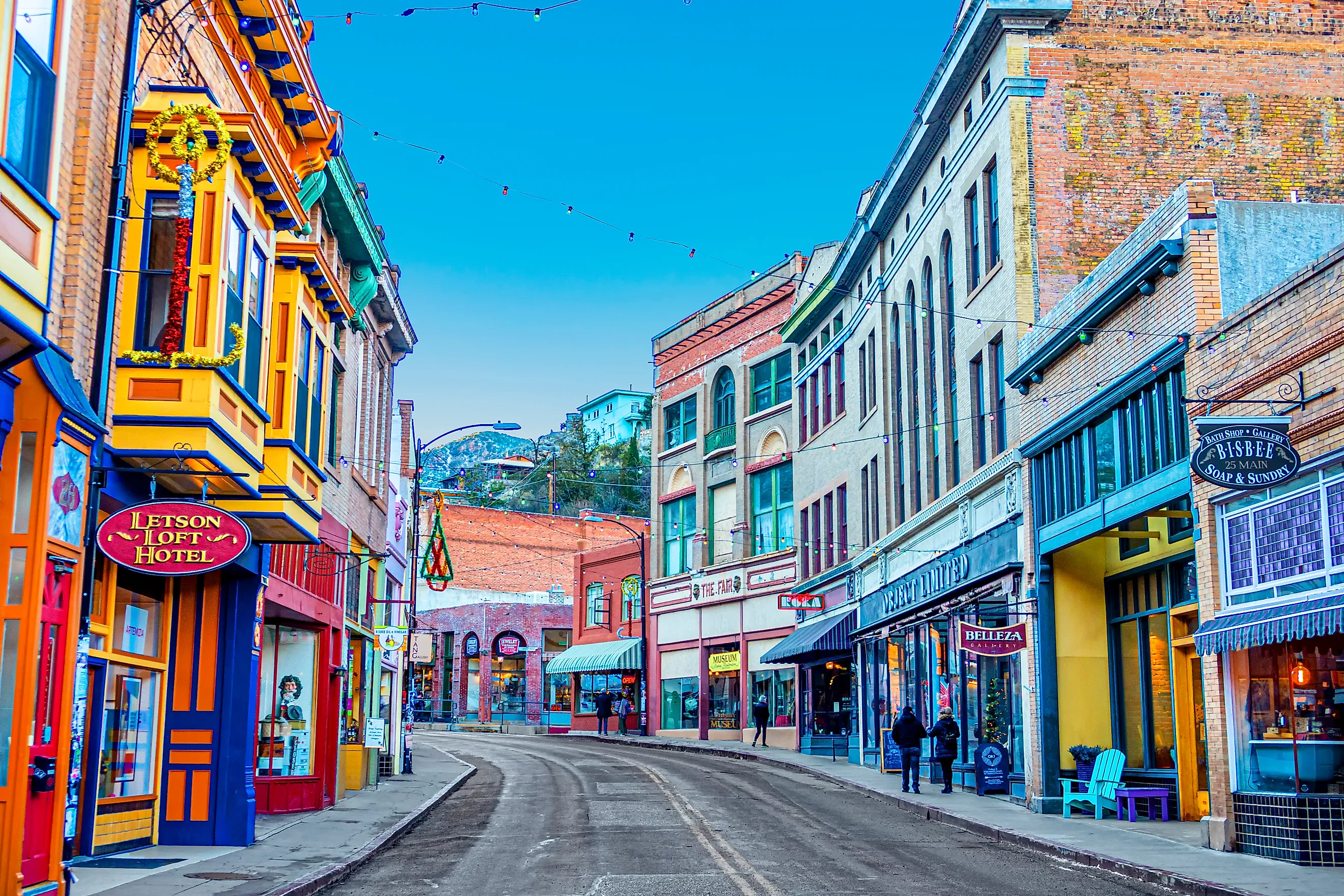
Bisbee is a town where staircases serve the same purpose as streets. In many neighborhoods, steps replace roads entirely, connecting homes stacked along steep hillsides above the historic district. This layout becomes immediately visible near Old Bisbee, where staircases branch off main roads and climb sharply into residential areas. The system emerged during the copper mining boom, when workers built lodging wherever the terrain allowed. Streets proved impractical on the slopes, so staircases replaced them and became permanent infrastructure. Today, hundreds of stairways cut through the town, and mail carriers still walk them daily, a practice that sets Bisbee apart from most towns in the country.
Bisbee’s mining roots are evident, with the Copper Queen Mine Tour taking visitors underground through original tunnels that once powered the local economy. Above ground, the Bisbee Mining & Historical Museum documents the town’s rise as a major copper producer and its eventual transition after mining declined. Each year, the community hosts the Bisbee 1000 Great Stair Climb, an annual running event and festival. This unique 4.5-mile course is one of the most challenging runs in the country, featuring nine historic staircases, totaling over 1,000 steps, connected by winding roads through the scenic old town.
Page

Page sits beside one of the highest concentrations of slot canyons in the United States. The best-known of these formations is Antelope Canyon, a winding corridor of smooth rock where sunlight filters through narrow openings and shifts across the canyon walls throughout the day. Access to the canyon is managed by the Navajo Nation, with guided tours in place to protect both the fragile landscape and the people moving through it.
Just south of town, Horseshoe Bend reveals the Colorado River making a near-perfect curve around a towering rock formation. The overlook is only a short walk away, yet the view feels vast and sudden, making it one of the most photographed river scenes in the Southwest. Nearby, Glen Canyon Dam tells a different story, one rooted in modern infrastructure. The massive concrete structure reshaped the region and led directly to the town’s creation in the 1950s. Beyond the canyons and dam, Lake Powell stretches across the desert with flooded side canyons, sandstone cliffs, and long stretches of open water. The lake’s shoreline begins just minutes from town, making boating, kayaking, and shoreline hiking part of everyday life.
Seligman

Seligman enjoys its heritage as the quintessential Route 66 town. After Interstate 40 bypassed the town in the 1970s, residents refused to let their connection with the Mother Road disappear. Instead, they embraced it fully, preserving the original intent, and today, Seligman operates less like a town beside Route 66 and more like a town powered by it. Classic cars line the street on most days, parked outside small shops and cafés that lean into mid-twentieth-century Americana. Original neon signs and hand-painted storefronts remain in place, creating a streetscape that reflects how Route 66 once looked across the Southwest.
The most recognizable stop is Delgadillo’s Snow Cap Drive-In, a seasonal roadside fixture known for its hand-built structure, playful service, and long history of serving travelers. The drive-in sits directly along the old highway and helped anchor the town’s renewed identity. In May, hundreds of vehicles converge in Seligman for the Route 66 Fun Run to drive a 140-mile section of the famed roadway.
Supai

Supai operates unlike any other town in Arizona. Accessible only by foot, horseback, or helicopter, the village sits at the base of the Grand Canyon within Havasupai tribal land. There are no connecting roads. Everything that enters or leaves Supai arrives by pack animal or air, a reality that shapes daily life in ways few towns in the United States experience.
The town’s defining feature lies just beyond the village. Havasu Falls pours vivid blue water over red rock ledges, creating one of the most recognizable waterfall scenes in the country. The color comes from the mineral-rich flow of Havasu Creek, which runs through the canyon year-round and anchors both the landscape and community life. Farther downstream, Mooney Falls plunges into a narrow canyon, accessible only by a steep descent with chains and carved passageways through the rock. Havasupai Lodge provides the only lodging in the village. Permits strictly limit the number of visitors each day, helping protect the land, water, and way of life that define the area.
Chloride

Chloride holds the distinction of being Arizona’s oldest continuously inhabited mining town. Today, it attracts retirees and visitors drawn to its yard art and large-scale murals painted directly onto natural rock faces. A short drive from the historic town center, these works rise from a rugged desert hillside, turning the landscape into an open-air gallery. Known as the Chloride Murals (aka the Purcell Murals), the paintings depict historical and symbolic scenes tied to the region’s past. Their placement shapes the experience. Set against untouched desert terrain, the murals appear unexpectedly from bare stone, adding to this unique art form.
Chloride itself retains the bones of its nineteenth-century mining days. Original buildings still line the main street, including the Chloride Historical Society Museum, which documents the town’s early mining economy and its enduring presence after the boom faded. The Mineshaft Market continues to operate as a gathering place and supply stop, much as it has for generations.
Arcosanti

Arcosanti functions as a town, a design experiment, and a living classroom all at once. Conceived by architect Paolo Soleri, the community embraces the idea of "arcology," a fusion of architecture and ecology meant to reduce sprawl and concentrate community life. The buildings of the complex cluster tightly together, rising from the desert floor in curved forms that emphasize shared space. Much of the complex centers around the Apse structures, large concrete vaults that serve as gathering spaces and performance venues. Walkways, ramps, and open-air corridors connect living quarters, studios, and communal areas without traditional streets.
Art and craftsmanship remain central to daily life. The Cosanti Bell Foundry produces bronze and ceramic wind bells cast on site, using molds formed from the surrounding earth. Bell sales help fund ongoing construction and maintenance, making the artwork part of the town’s economy rather than decoration. Visitors can observe the casting process and see how design and function overlap.
Guided tours through the Arcosanti Visitor Center provide context for the project’s goals and ongoing challenges, explaining how residents live, work, and study within the structure. Few places in the United States exist primarily to test an idea about how people should live together, making it less a finished town and more a continuing experiment written into the desert itself.
Visit These Seven One-of-a-Kind Small Towns In Arizona
Arizona’s one-of-a-kind towns developed not from planning committees or tourism campaigns, but from circumstance. Mining booms, desert isolation, and experimental design left lasting marks that still shape how these communities function today. Together, these towns demonstrate how unusual conditions can produce memorable moments. For travelers willing to seek them out, these communities offer a clearer understanding of how the state’s past continues to shape its present.