8 Of The Most Captivating Small Towns In Tasmania
Tasmania is Australia's only island state with a long history dating back over 40,000 years. The Palawa people first lived there. In 1642 Dutch explorer Abel Tasman became the first European to see the island and called it Van Diemen's Land. The British arrived in 1803 and turned it into a penal colony. The conflict with Indigenous Tasmanians ran for decades.
In 1856 the island was renamed Tasmania. Over time it grew beyond its convict past and became known for its landscapes and creative communities. Today the island is known for its national parks and well-preserved historic towns. The food scene runs on fresh seafood and award-winning wines. Visitors come for the scenery and small towns full of character.
Ross

Ross is a quiet, historic town that was founded in 1812 as a garrison for soldiers. It later became an important stop for coaches traveling between Hobart and Launceston. Today, it is known for its well-kept colonial buildings and stories from Tasmania's convict past. The Ross Bridge, built in 1836, is one of the oldest stone bridges in Australia. It is covered with detailed carvings made by convicts. The Ross Female Factory is another key stop, as it once housed women prisoners and tells a tough part of the town's story. The Tasmanian Wool Centre has displays about the wool industry and a small shop with local products. And do not leave without trying a scallop pie from the Ross Bakery. It is made in a wood-fired oven and has become a must-try for visitors passing through.
Stanley

Stanley is a small coastal town in north-west Tasmania, settled in 1825 by the Van Diemen's Land Company. It was once a busy fishing and shipping hub, and today, it is known for its quiet character and ocean views. The most well-known spot in Stanley is The Nut, a flat-topped volcanic rock that rises steeply above the town. You can hike up or take a chairlift to the top for ocean views. Visit the Highfield Historic Site, an old colonial house that tells the story of early settlers. For a relaxing evening, head to Godfreys Beach, where you can often spot little penguins returning to shore. Do not miss the Stanley Heritage Walk, which takes you past cottages and historic buildings that date back over a century.

Richmond

Richmond is a small town with a big history. It was set up in the early 1820s as a convict settlement and still holds onto that past. The Richmond Bridge, built by convicts between 1823 and 1825, is the oldest in Australia and still open to traffic. The town also has the oldest Catholic church in the country, built in 1836. Richmond is easy to explore on foot, and there is plenty to see. The Old Hobart Town Model Village shows what Hobart looked like in the 1820s, in miniature. Richmond Gaol is one of the oldest prisons in Tasmania and gives a close look at what convict life was like. For something more relaxing, the area has boutique wineries. The Coal River Valley nearby is known for its cool-climate wines, especially Pinot Noir and Riesling.

Evandale

Evandale is a small historic town in northern Tasmania, first settled in the early 1800s. It was once a farming community and still holds onto its old-world character. The town is known for its well-preserved Georgian-style buildings and quiet heritage streets. One of the main attractions is the nearby Clarendon House, a grand old mansion open to visitors. On Sundays, the Evandale Market is the place to be, full of antiques, handmade goods, and fresh produce. If you are around in February, do not miss the Penny Farthing Championships, where people race old-fashioned bicycles through town. It is as fun and strange as it sounds. Take a walk through the streets to see buildings that look like they belong on a movie set.

Bothwell

Bothwell is a quiet town in central Tasmania, settled in the 1820s by Scottish immigrants. You can still see the Scottish influence in the buildings and street names. It is best known for Ratho Farm, the oldest golf course in the Southern Hemisphere. Even if you are not into golf, the landscape is worth a visit. Right nearby is the Australasian Golf Museum, where you can learn about how golf became popular in Australia. Another spot to check out is the Castle Hotel, one of Tasmania's oldest pubs that is still serving drinks. Walk around town and you will come across more than 50 historic buildings from the early 1800s, churches, homes, and shops that have not changed much in over 150 years. Bothwell is small, but it is packed with interesting stories and easy character.

Oatlands

Oatlands is a small town in Tasmania, founded in 1821 as a military post and farming area. It is known for having the largest number of colonial sandstone buildings in Australia, many of which are still standing today. One of the main attractions is the Callington Mill, a windmill from the 1800s that still grinds flour. You can also visit the Oatlands Gaol and Court House, both built by convicts and open to explore. For a relaxed stroll, take the Heritage Walk to see over 150 historic buildings along the way. Just outside town is Lake Dulverton, a calm and quiet place perfect for birdwatching or a picnic.

Cygnet

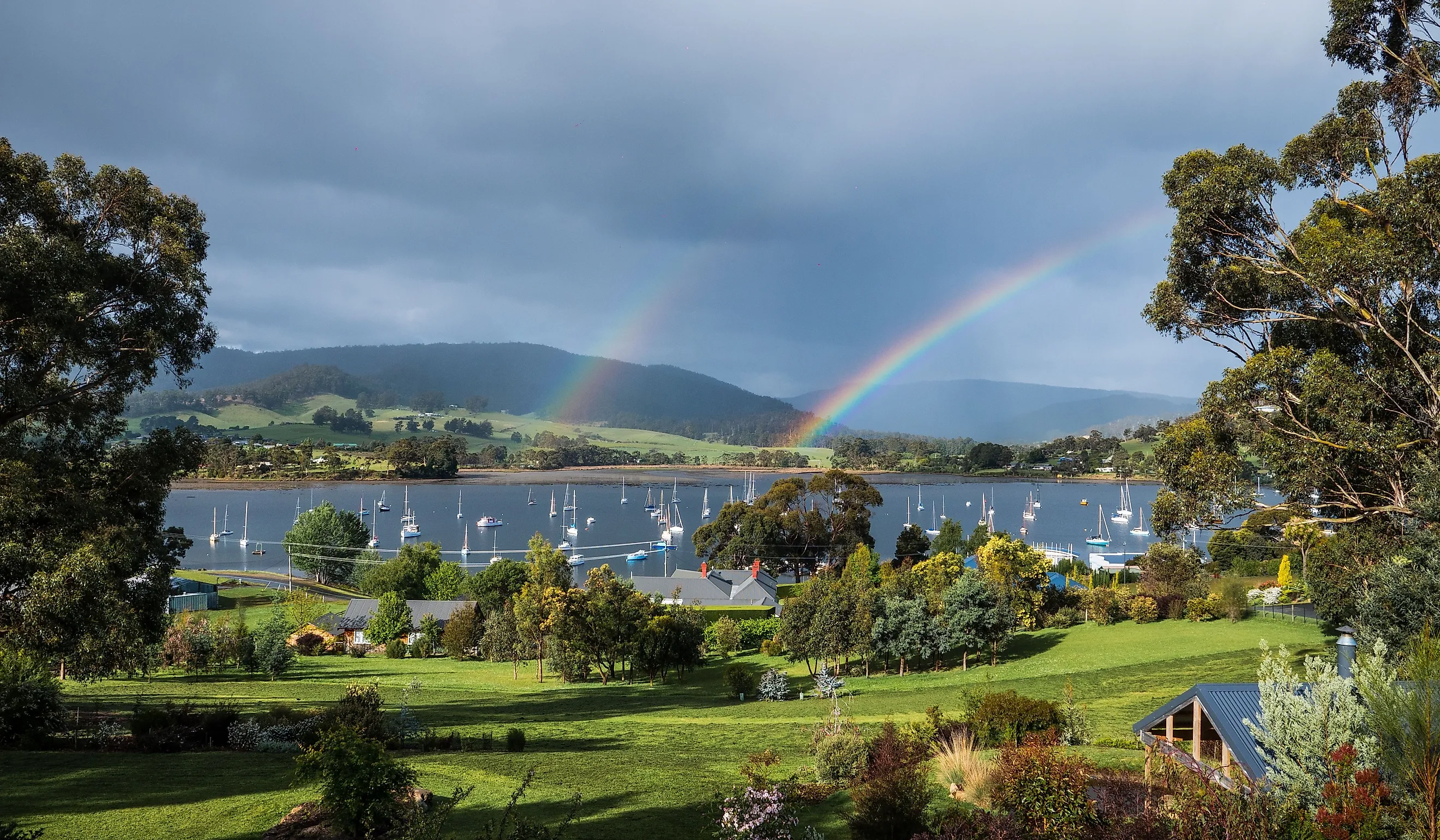
Cygnet is a small town in southern Tasmania that was first settled in the early 1800s for timber and farming. Over time, it has become known for its arts scene, organic farms, and alternative lifestyle community. Visitors can explore Handmade in Cygnet, which features local artists and galleries. The Cygnet Market, held twice a month, is a great place to find fresh produce, handmade crafts, and live music. Fat Pig Farm, run by chef Matthew Evans, offers a unique farm-to-table dining experience with homegrown ingredients. For those who love the outdoors, the nearby Huon River Cruises take you through the waters of the Huon Valley, with views of the surrounding countryside.
Derby

Derby started as a tin mining town in the late 1800s. After the mines shut down, the town slowed down too. But in recent years, it has become famous for mountain biking, bringing in visitors from all over. The Blue Derby Mountain Bike Trails are some of the best in the world, winding through rainforest. Even if you are not into biking, the scenery is worth a visit. The Derby Tunnel, a hand-dug passage from the mining days, is a cool spot to explore. Another interesting place is the Briseis Tin Mine Hole, a lake that formed after a mining disaster in 1929. For something unique, check out the Floating Sauna Lake Derby, a wood-fired sauna sitting on the lake, perfect for relaxing after a long day of biking or exploring.
An Island Of Many Stories
Tasmania's small towns are full of history, character, and views. Whether it is convict-built bridges in Ross, coastal views in Stanley, or mountain bike trails in Derby, each town has something special to offer. Richmond's old gaol, Evandale's quirky Penny Farthing race, and Oatlands' historic windmill bring the past to life, while Cygnet's markets and Bothwell's golf heritage add their own appeal. These towns may be small, but they are packed with stories, scenery, and plenty of reasons to visit.