7 Old-Timey Mining Towns In Idaho
Idaho covers about 83,600 square miles in the Pacific Northwest and is known for its mountains, forests, and deep river canyons. Long before outdoor recreation defined the state, mining shaped much of its early growth. In the 1860s, gold discoveries brought sudden change. The first major strike near Pierce in 1860 drew thousands of prospectors.
Camps appeared almost overnight and quickly turned into towns with saloons, hotels, stores, and mills. Silver and lead followed, especially in the Owyhee region and the Coeur d’Alene Mountains, pushing settlement farther into remote areas. Mining towns rose and fell with boom cycles. When ore was plentiful, railroads expanded, supply routes formed, and Idaho moved closer to statehood in 1890.
When mines ran dry, many towns emptied just as fast as they had grown. Today, “old-timey” mining towns are places where pieces of that era remain visible. You can still find wooden buildings, false-front storefronts, boardwalks, cemeteries, and abandoned mine sites. Some towns are preserved and active, while others stand as quiet reminders of Idaho’s mining past. With that, here are some old-timey mining towns in Idaho, United States.
Silver City

Silver City sits high in the Owyhee Mountains in southwestern Idaho. The town formed quickly after gold and silver were discovered in 1863 during the Owyhee gold rush. By the 1880s, Silver City had about 2,500 residents and nearly 75 businesses. It served as the Owyhee County seat for many years and became one of the most important mining towns in the region.

The area produced millions of dollars in gold and silver, and hundreds of mines were dug into the surrounding hills. About 70 historic structures, like the Silver City Cemetery, still stand today. You can stay overnight at the restored Idaho Hotel, walk past former saloons, and hike to nearby mine ruins like Silver City Mine. The War Eagle Mountain adds to the quiet, remote feel of the town.
Wallace

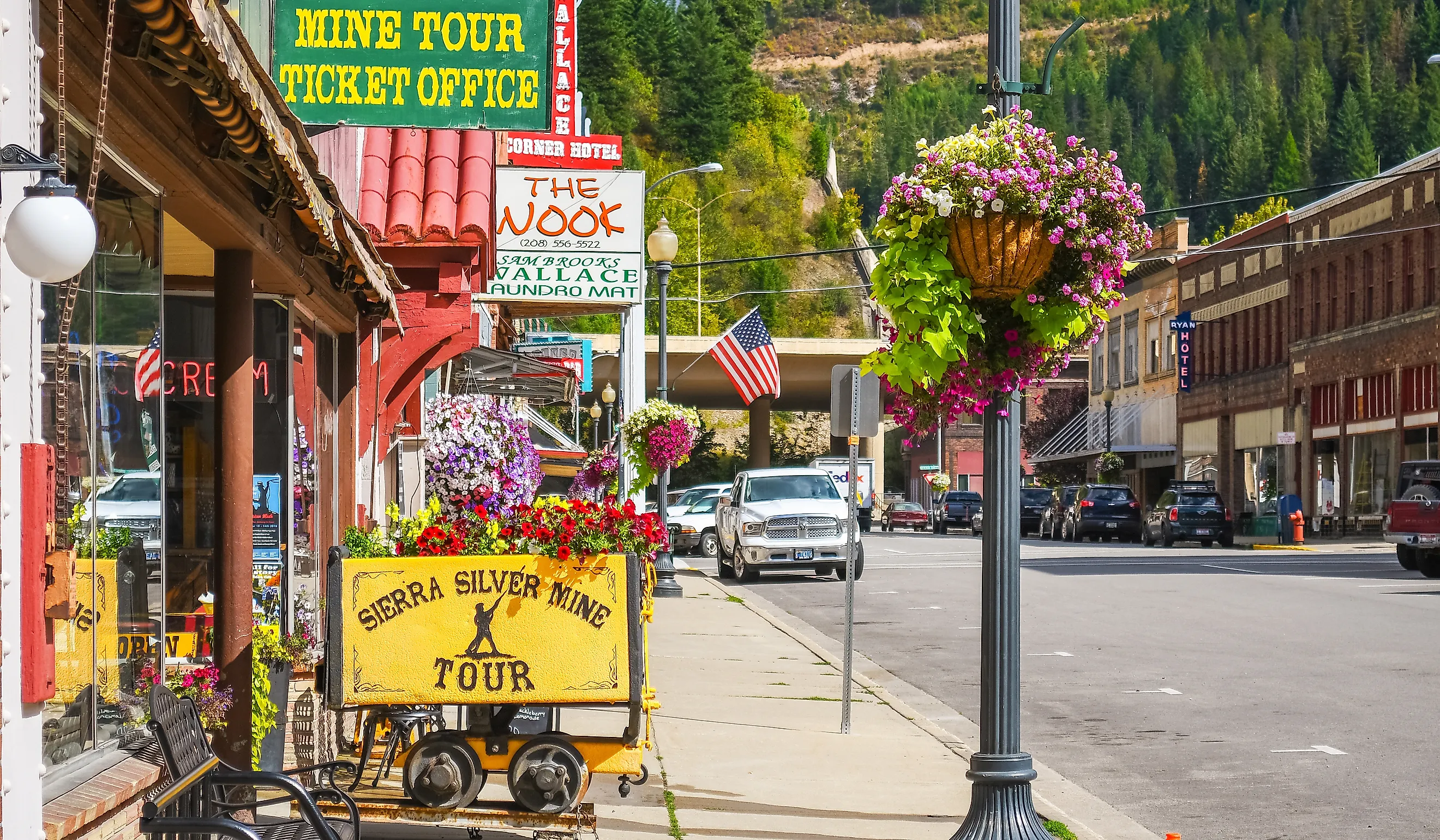
Wallace sits at the heart of Idaho’s Silver Valley and has a long mining past tied to silver and lead. Major discoveries in the 1880s turned the town into a booming mining center, earning it the nickname “Silver Capital of the World.” Today, the entire downtown is listed as a National Historic District, making it the only town in the country with that distinction.

You can go underground on the Sierra Silver Mine Tour, visit the Wallace District Mining Museum, or stop at the Northern Pacific Depot Railroad Museum. A walk through downtown passes brick buildings, old saloons, cafés, and small shops. Nearby mine roads now form a large trail system for biking, hiking, and winter sports.
Idaho City

Idaho City began as Bannock in December 1862 after gold was discovered in the Boise Basin. Within two years, the town grew to more than 7,000 residents and became the largest city in the Pacific Northwest at the time, even larger than Portland. Idaho City was packed with bakeries, stores, doctors, newspapers, mills, and saloons. Mining ran day and night during wet seasons.

Fires in the late 1800s destroyed many buildings, but several brick and wood structures like St. Joseph’s Catholic Church survived and still stand today. As placer gold declined, lode mining and later dredging kept the area active, though the population dropped sharply. Today, you can walk boardwalk-lined streets, tour the Boise Basin Museum, explore the old Idaho City Pioneer Cemetery, and relax in nearby hot springs.
Atlanta

Atlanta is one of the most remote historic mining towns in Idaho. Gold was first discovered here in 1863 by John Stanley and his group, but the location was so hard to reach that real mining progress took years. Early placer mining took place along the Yuba River, and by 1864, about one hundred miners were working the area.
Development remained slow because of rough terrain, long winters, and the lack of roads and mills. Large-scale mining did not succeed until after 1932, once transportation improved. Today, Atlanta has narrow streets, preserved cabins, a historic jail, and seasonal residents. You can check out Power Plant Campground and Flint Creek Trailhead, which serve as a quiet base for hiking, camping, and summer festivals near the Sawtooth Mountains.
Ketchum

Ketchum began as a mining and sheep town in central Idaho. Silver and lead discoveries in the late 1800s brought settlers to the Wood River Valley. The town became a supply base for nearby mines and was named after David Ketchum, a local trapper and guide. When silver prices dropped after 1890, mining slowed, but Ketchum survived by turning to sheep ranching and livestock.

In 1929, hot spring water was brought into town, and cabins and bathing facilities followed. A major change came in 1935 with the founding of Sun Valley Resort, which shifted the area toward tourism and outdoor recreation. Mining history still sits beneath its streets, while museums like Wood River Museum of History and Culture and the nearby preserved structures like Bonning Cabin tell the story above ground.
Bonners Ferry

Bonners Ferry started in the early 1860s when prospectors traveled north along the Wildhorse Trail after gold was found in British Columbia. In 1864, merchant Edwin Bonner built a ferry where the trail crossed the wide Kootenay River. The crossing kept his name, and the town later grew around it. By the 1880s, Bonners Ferry had become a busy hub. Railroads followed, including the Great Northern line in 1892.

Mining in nearby mountains and a strong lumber industry helped the town grow, even as buildings were raised on stilts to survive spring floods. Today, much of Main Street still reflects this early period. Visitors can explore the Boundary County Museum, walk along the Kootenay River, see historic brick buildings, visit the old ferry site, and explore the nearby Kootenai National Wildlife Refuge.
Bayhorse

Bayhorse is a remote silver mining town in Custer County, near the Salmon River. Prospectors first found gold here in 1864, but the town did not grow until rich silver and lead veins were discovered in the 1870s. The Ramshorn Mine sparked a rush in 1877, and Bayhorse quickly developed into a working mining camp. Mining peaked in 1888.

Fires, water shortages, and falling metal prices led to a decline. The smelter closed in 1889, and mining slowed until it ended in 1925. Today, Bayhorse is a state historic site within Land of the Yankee Fork State Park. Visitors can see the Gilmer and Salisbury Stamp Mill, stone ruins like the Wells Fargo Building, nearby charcoal kilns, and a quiet cemetery. Trails, river access, and mountain views make it a peaceful stop for history lovers.
Idaho’s old-timey mining towns tell the story of fast growth, hard labor, and sudden change. Walking through these towns makes the mining era feel close. Boardwalks, brick storefronts, cemeteries, and abandoned mills give a clear picture of daily life during Idaho’s early years. Some towns remain active, while others stay quiet and preserved. Together, they form a living record of how mining shaped Idaho’s settlement and growth.