7 Of The Quietest South Carolina Towns
Some Saturdays the cure is a tall coffee and a sidewalk that runs out before lunch. South Carolina has plenty of those. Georgetown sits at a working waterfront where the rivers feed Winyah Bay and Front Street still wears signs that haven't changed in decades. Edgefield quietly produced ten governors and a globally collected pottery tradition without making a fuss about it. Abbeville's Opera House has been raising the curtain since 1908 and Cheraw is where Dizzy Gillespie picked up his first horn. These seven towns share an unhurried rhythm and a habit of not trying to be anything other than what they are.
Cheraw

Cheraw has two claims worth knowing about. The first is that jazz legend Dizzy Gillespie was born here in 1917, and the town has not forgotten it. A bronze statue of Gillespie with his trademark bent horn stands on the Town Green, and a small display at the Cheraw Lyceum Museum tracks his career. The second is Cheraw State Park, where Lake Juniper offers a calm spot for fishing, boating, or walking under the pine trees on trails that ask very little of you.
From there, Old St. David's Church is worth the short trip. Construction began in 1770 and it was the last Anglican parish established in colonial South Carolina under King George III. The building still stands quietly on its grounds, ringed by a graveyard whose weathered stones tell their own version of the town's history. The Cheraw Historic District nearby holds plenty more buildings that have crossed the century mark, many of them still in use. If you want to push a little farther out, the H. Cooper Black Recreation Area opens up wide skies, horse trails, and good ground for birdwatching.
Georgetown

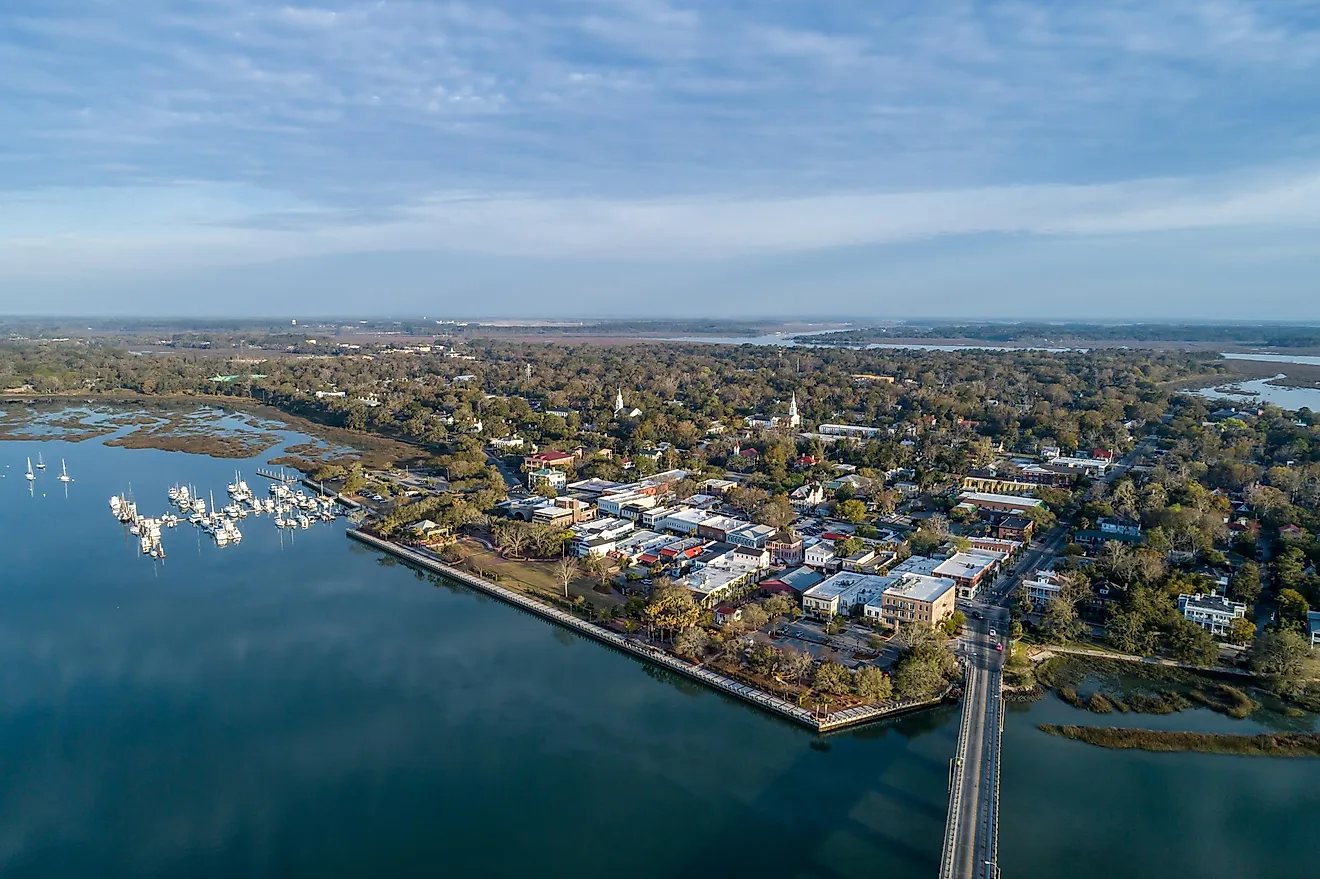
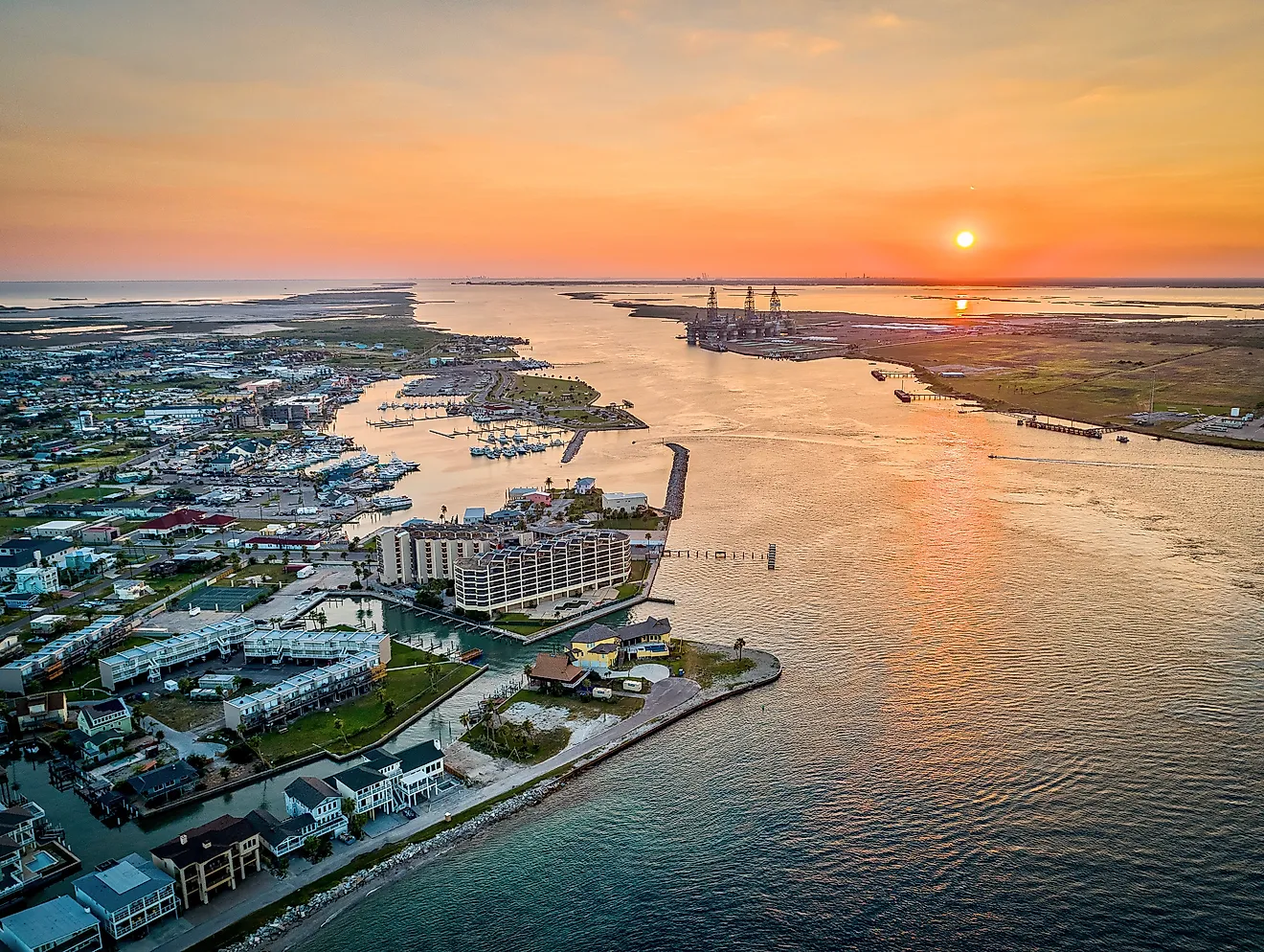
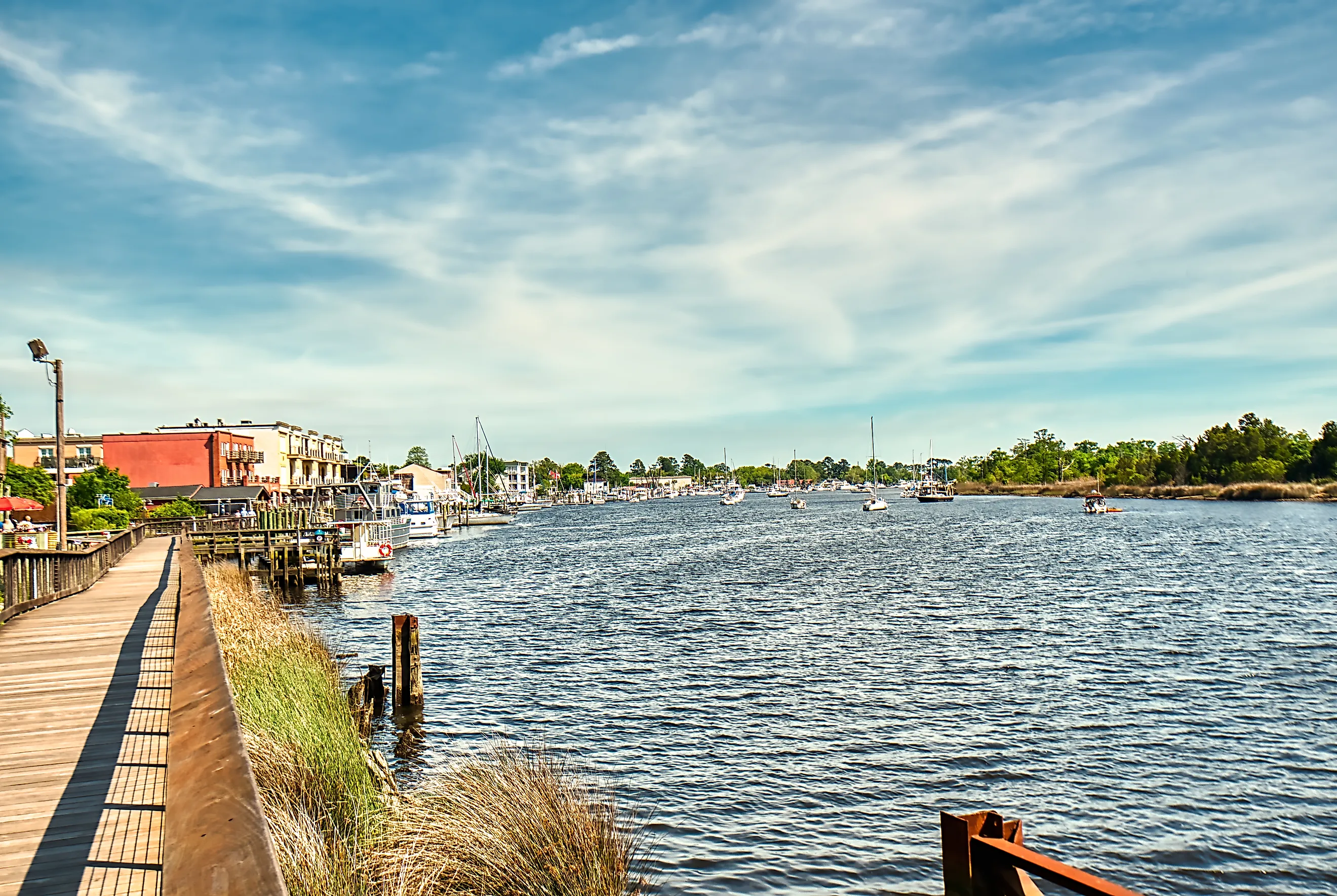
Georgetown sits on Winyah Bay, where four rivers feed the harbor before it opens to the Atlantic. It is one of the oldest towns in South Carolina, and the streets do not let you forget it. Brick buildings line Front Street with signs that have not been swapped out in years. Boats drift through the harbor at their own pace and the tide pretty much sets the rhythm of the day. It is a good place to land when the goal is to exhale.
Front Street is where most visits naturally happen. Thomas Café handles eggs and grits in the morning and a respected crab cake sandwich at lunch, all in a setting that feels lived-in rather than curated. The Rice Museum down the block walks through the region's rice-growing past and the broader story of Georgetown. Waterfront Books is the kind of shop you go in for one title and leave with three, with new, used, regional, and collectible stock on the shelves. A short stroll later you are on the Harborwalk, where the boardwalk hugs the Sampit River, pelicans cruise overhead, and benches face the water for whenever you are ready to sit a while.
Edgefield

For a town this small, Edgefield punches well above its weight. Ten South Carolina governors have called it home, and that political pedigree is still visible around every corner. The Edgefield Historic District is a good place to start, with old brick storefronts now housing shops and cafés that keep the square feeling alive rather than preserved. The Edgefield County Courthouse anchors the scene, and the Tompkins Library and Welcome Center is a smart first stop for context on the town's history and what to do with the rest of the day.
The Oakley Park Museum, set inside a grand 19th-century home, gives you a closer look at how a wealthy household lived back then, with period furnishings, books, portraits, and Civil War-era artifacts. Edgefield's other claim to fame is its pottery. The tradition started here in the early 1800s and is now considered one of the most significant in the American South, blending European forms, Asian alkaline-glaze techniques, and the labor and craftsmanship of enslaved African American potters whose work shaped the entire style.
Abbeville

Abbeville sits about twenty minutes east of the Georgia line, but it might as well be its own little world. The pace is unhurried, the streets are quiet, and people show up here precisely to drop out of whatever rhythm they came in with. Most visits start at Court Square, ringed by century-old buildings that house everything from a corner shop to a coffee joint with outdoor seating to the Abbeville Opera House, which opened in 1904 and was formally dedicated in 1908. Pull up a chair on the square and the afternoon kind of takes care of itself.
For a change of scenery, Lake Russell is a short drive away, with still water and air that feels miles from anywhere. Calhoun Falls State Park sits nearby, offering wooded trails and shaded spots along the shore. Both places carry the same easy quiet you feel in town. Bring a canoe or kayak if you want to get out on the lake, or keep things low-effort with a fishing pole, a hike, or a book in the shade.
Bennettsville

Tucked into the northeastern corner of the state near the North Carolina line, Bennettsville is the kind of place where the trees throw shade across the sidewalks and nobody seems in a particular hurry. Old homes line the wide streets, and most of the town still revolves around what has been there for generations. The Marlboro County Courthouse holds down the center with tall white columns and a clock that still keeps time. Stand in front of it for a few minutes and you will already have a feel for the town.
A short walk east on Main Street brings you to Magnolia on Main, a breakfast-and-lunch spot inside one of the historic downtown buildings. From there, the D.D. McColl House serves as both the city's visitor center and the launch point for a self-guided walking tour. The Marlboro County Historical Museum complex sits nearby and is worth setting aside an hour for. It includes the Jennings-Brown House, the Bennettsville Female Academy, and rotating exhibits packed with old photographs, documents, quilts, and the kind of local stories you do not find in textbooks.
Landrum

The foothills begin just past Landrum, and you can feel the land starting to lift as you drive in. East Rutherford Street is the main run through town, lined with old brick buildings and shops that keep dependable, unfussy hours. It is a good place to slow down without fully checking out. The Hare & Hound Pub is the local anchor, with cozy booths and food that delivers. The Guinness Beef Pie is the standout, though plenty of people just come for fries and a pint.
Down the street, the Landrum Antique Mall fills its long aisles with books, kitchen tools, framed photos, furniture, and the kind of small finds that turn an hour into three. Antiques and Consignments of Landrum is right nearby for more vintage browsing along the same stretch. Just outside town, Campbell's Covered Bridge crosses Beaverdam Creek with a short trail running alongside it. People show up to walk, take photos, or sit under the trees for a stretch of quiet that feels well earned.
McClellanville

Sitting on the coast between Charleston and Georgetown, McClellanville has built its identity around fishing and shrimping, and the working boats at Jeremy Creek still tell that story every morning. Most visitors start by wandering under the massive live oaks that stretch over the streets, branches draped with Spanish moss, and that alone sets the tone for the visit.
The downtown area is small but rewarding. Carolina Seafoods Inc. on Oak Street pulls fresh catches straight from the docks. The Village Museum keeps the town's story in good hands, with maps, ship logs, and even old oyster tongs on display. St. James-Santee Episcopal Church stands nearby, a cypress-shingled chapel built in 1890 that took over from the older Brick Church at Wambaw in the woods outside town. A short drive south brings you to the Sewee Visitor and Environmental Education Center in Awendaw, which acts as a solid introduction to the Cape Romain National Wildlife Refuge, with exhibits, trails, and information about the marshes, maritime forests, and barrier islands that define this stretch of the coast.
In Conclusion
These towns are part of what gives South Carolina its shape. They do not rush and they do not try to be more than they are. The quiet comes naturally. The places are reliable and the days stretch out without feeling empty. If that sounds like what you need, South Carolina has the spot. Just make sure you do not miss these quiet towns when you are there.