7 Nicest Small Towns In Sweden
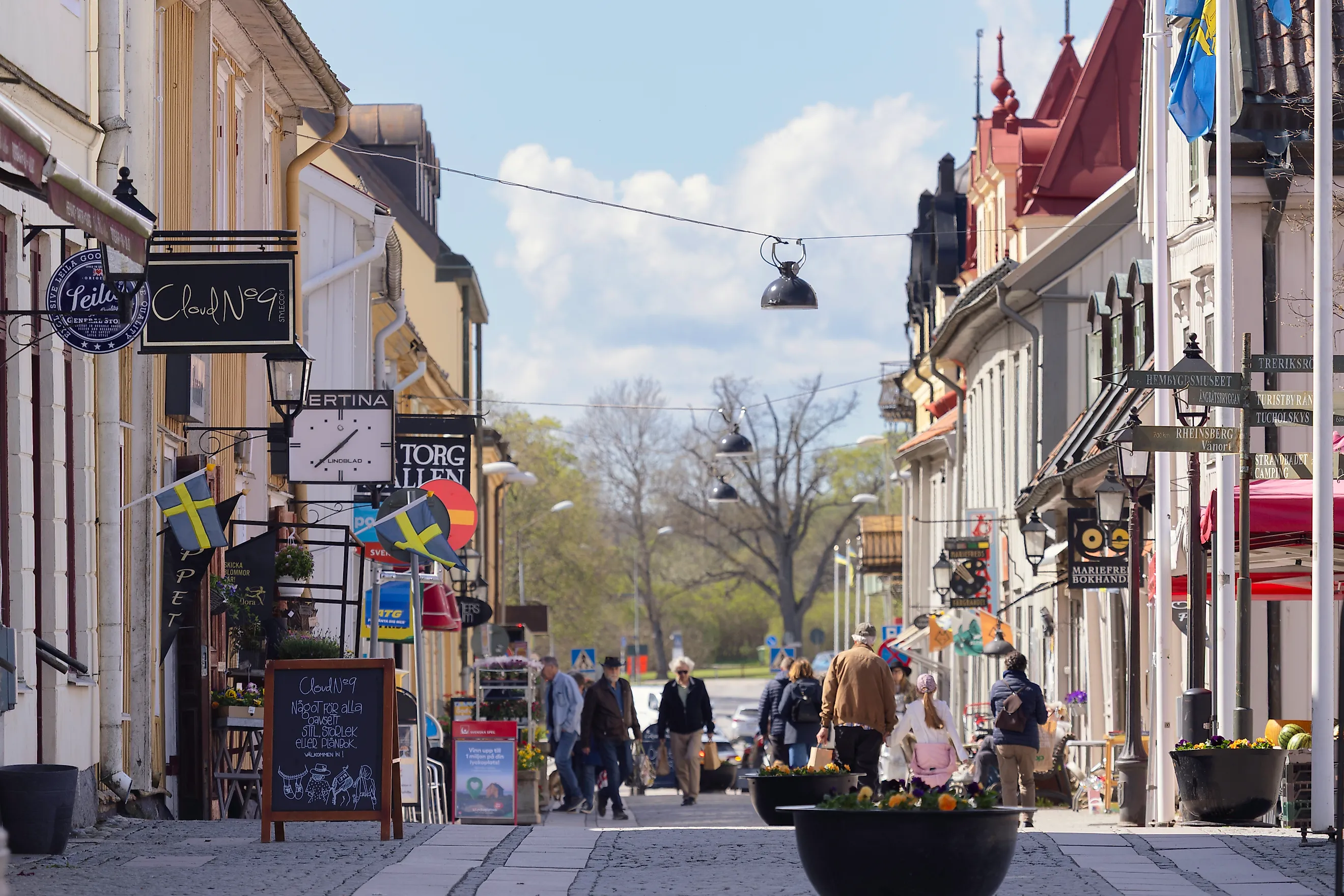
Sweden’s historical identity is found in small towns that trace back to the country’s earliest periods. From old Baltic outposts of the Hanseatic League in Visby to the royal waterfront setting of Mariefred, each of these places offers a look into the country’s architectural and political evolution. Here in the towns, royal stone fortifications and 10th-century runestones remain parts of everyday life. Some are defined by granite cliffs of the west coast or the red-brick ruins of Gotland. All together, this collection of destinations provides a clear record of Swedish heritage and includes seven of the nicest towns you can see in Sweden.
Visby

On the island of Gotland’s this town is half medieval fortress, half garden. Visby was an important port for the Hanseatic League traders back in the day, which explains why the stone wall circling the center has such an imposing look to it. But in the summertime, climbing roses dominate the town’s environment, popping up just about everywhere you look. Also, what really jumps out is the contrast between the town’s collection of church ruins and that bright Baltic Sea blue when you get off the ferry.
In town, start at the Ringmuren, the name for the stone walls that surround the town. It stretches about 2 miles and can be used to reach the Dalmansporten Gate and to see the town from a higher angle. For a dose of Viking history, the Gotlands Museum on Strandgatan is a must-see. It has these big carved stones with illustrated scenes, and they visually narrate stories from the Viking world. If you want something more atmospheric, go to the St. Karin ruins right on the main square. The roof has long since disappeared, so you will be looking at massive Gothic arches against the open sky.
Mariefred

This town gathers around a stretch of shoreline on Lake Mälaren where wooden houses painted mustard yellow and deep red sit beneath the towers of Gripsholm Castle. Sometimes, coal smoke scent drifts in the air from the region’s well-known steam engines. Gustav Vasa gave the order to construct the castle in 1537, and those strong red brick walls still dominate the waterfront. Inside the famous castle are galleries from Sweden’s National Portrait Collection, along with a small eighteenth-century theater in one of the round towers.
From the castle grounds, there is a walk into Hjorthagen. This area used to be a royal deer park, and now fallow deer often graze beneath the oak trees. The Rådhustorget is only a few minutes uphill, with cafés and the Callanderska Gården, which is a bakery recognized for its rye bread and cardamom buns. These are served inside an old wooden courtyard house. Close to the border of town, individuals can visit the Östra Södermanland Railway station, where steam engines are used to pull narrow-gauge trains through the countryside during summer weekends.
Sigtuna

While now the Swedish capital is Stockholm, Sigtuna was once the region’s de facto capital back around 980 AD. Sitting beside Lake Mälaren, from above the town looks like a well-painted miniature set, with tiny wooden homes dotting the landscape. Sigtuna was founded around 980 and is traditionally linked to King Erik the Victorious; later, Sweden’s first coins were minted here for King Olof Skötkonung.
When you visit, head to Stora Gatan, the country's oldest main street. Real character also comes from the town's stone ruins. The St. Olof’s ruins and their unique condition make it even more interesting than a perfectly preserved building. Walk past the marina toward the shore to find the runestones. There are over 150 in the area, several of which stand close to Mariakyrkan, carved with intricate designs and inscriptions dating back to the Viking Age.
Ystad

Right down on Sweden’s southern coast, brick church towers and half-timbered houses rise above a harbor that has handled Baltic trade for centuries. Medieval merchants played a big part in the town’s early growth, and the layout from that time still remains. Narrow streets go out from the main square, passing twisted buildings painted in soft yellow, red, and light blue. Fans of Scandinavian crime novels will know the town instantly. Henning Mankell chose it as his character Wallander’s stomping grounds, so readers can picture its cafes and streets perfectly.
Stortorget forms the center of things. There, St. Mary’s Church’s red-brick tower has sat above the square since the 13th century, and the bells sound off multiple times every day. You can walk over to the Greyfriars Abbey site, which was a Franciscan monastery and is now a museum. It sits amid gardens and lawns. Fans of Wallander often visit the Ystad Studios Visitor Center. There, props and recreated sets show how the TV series was made. If you want open space, travel east into Ystads Sandskog, a coastal pine forest that leads to beaches along the Baltic.
Vadstena

Vadstena sits beside the long blue sweep of Lake Vättern, where the water dominates the horizon at the edge of town. Pilgrims once arrived here from across Europe because of the abbey founded by Saint Bridget, turning this lakeside settlement into one of medieval Scandinavia’s most important religious centers. In spots all over town, the lake pops into view between buildings, with Sweden’s second-biggest lake stretching off into the distance.
The famous Vadstena Castle rises up from the edge of the lake, its round towers mirror themselves in the water right past the harbor. Now, this stone fortress features museum displays that break down how the place morphed from a royal powerhouse into its current usage over time. Take a quick walk inland, and you reach Vadstena Abbey Church, a brick building tied to Saint Bridget and years of pilgrimages. Just beyond the town center, the Vätternpromenaden path along the lake runs past reeds and small docks where sailboats tie up during the summer months.
Fjällbacka

Fishing boats crowd into the tiny harbor on Sweden’s Bohuslän coast, with a streak of red boathouses sitting right next to the docks. Just behind the water, Vetteberget climbs as a granite cliff, pretty much creating a firm wall at the very edge of the town. The village of Fjällbacka sits between this rock face and the Skagerrak sea. Many activities still focus on the marina, where working boats share space with visiting sailboats during the summer.
Right at the harbor edge, the town forms a row of eateries and cafes facing the docks. A staircase allows entering the Kungsklyftan, a narrow rift in the granite where huge boulders are wedged between cliffs. If you keep going, you will get to the top of Vetteberget to catch a killer view over the harbor and the islands. Next, you can grab a boat from Fjällbacka harbor and head for Väderöarna, splash off those wide rocks at Storö. If that does not sound like your kind of thing, stroll over to the Badholmen’s swimming spot just by the harbor, for a place to dip your toes in the ocean.
Trosa

Locals have dubbed this place the End of the World for ages, mostly because Trosa was the last stop on the road back in the day. Fishing was the big industry here for a long stretch. By the 1800s, though, the town began to quietly pull in tourists, and you can still spot the first town layout next to the river. Even after the Russian Pillage happened in 1719, those wooden villas and old piers kept hanging on as an important part of the local history.
Daily life stays centered on the riverbanks. Garvaregården, a 1700s heritage homestead in central Trosa, houses the Trosa City Museum, where exhibits cover local craftsmanship, fishing, and the town’s history. While boats depart from the harbor in the direction of the Södermanland archipelago, people can remain on land to follow the Kärleksstigen, or the Love Path. The trail goes through wooded hills and nears the gates of the Tureholm Castle before returning toward the river.
These towns show how Sweden’s past still shapes the present. Walk through Visby, and the medieval wall still guards the streets. Runestones in Sigtuna hang around right near the marina where people park their boats. Gripsholm Castle looms over Mariefred’s waterfront, towering and timeless. As you look out over Sweden’s lakes and shores, these spots definitely anchor the nation’s earliest stories to real life. So if a trip to Sweden has been on your mind, make sure to include these 7 towns on your list!