7 Most Relaxing Kansas Towns
Kansas is the heart of the Old West. Here, one can gaze out into the seemingly endless grasslands as the sun gradually sets over the plains, the cattle ranches, and the wildflowers. For all this, it's easy to sit back and relax in Kansas, especially in its small towns and communities. Lindsborg offers riverside bluff trails alongside Swedish art and culture. In Goodland, you can explore the heart of the prairie while also venturing to Mount Sunflower, the highest point in Kansas and located a short drive away. Lucas, meanwhile, is one of the quirkiest towns in the state, with grassroots (and recycled) artwork spread throughout the town. Let's visit the seven most relaxing towns in Kansas.
Atchison

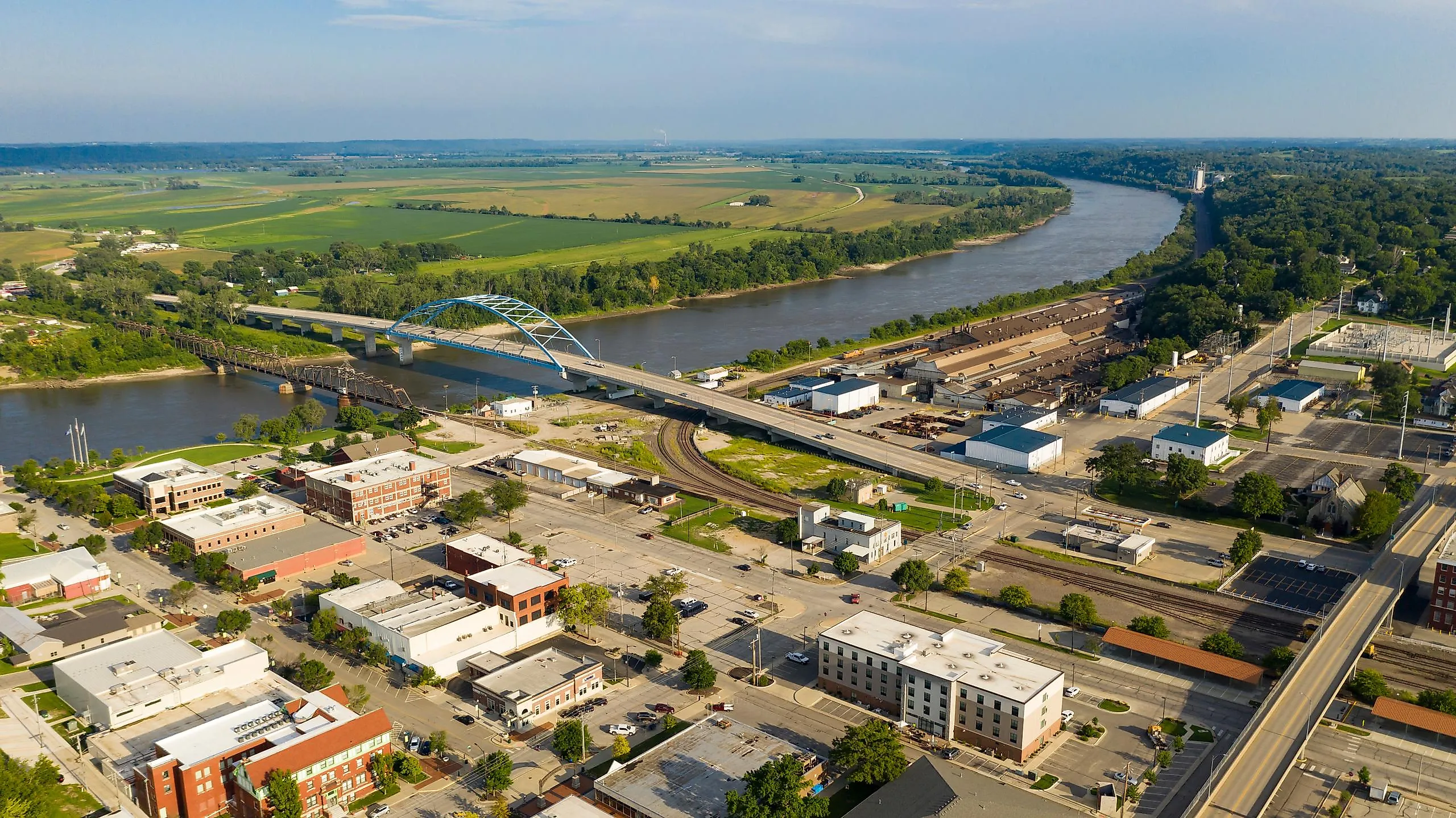
Something about Atchison has made folks reach for the skies, especially in the case of the town's most famous resident: Amelia Earhart. She was born here in 1897 and would spend her adult years on daring flights before disappearing in the Pacific Ocean. To this day, the fate of Earhart’s final flight remains unknown, but her legacy is preserved in Atchison at both her Birthplace Museum and the Hangar Museum, which features the last Lockheed Electra 10-E, the same type of aircraft she flew on her final journey.
Visitors to Atchison don't have to get on a plane to enjoy themselves; they can do it themselves by taking a stroll through the woods near the Missouri River at Jackson Park. They can also visit the villas in town, like the 1889 McInteer Villa, a late Victorian mansion built by an Irish immigrant. This villa is allegedly haunted and hosts ghost tours throughout the year.
Fort Scott

This small town on the border between Kansas and Missouri is named after Gen. Winfield Scott, a commanding general of the US Army from 1841 to 1861. Fort Scott combines agritourism with historic buildings going back to the early days of Kansas. The Fort Scott National Historic Site marks the spot of the 1842 military installation, and it tells the story of Kansas development and the infamous Bleeding Kansas period leading up to the Civil War, when pro- and anti-slavery forces clashed throughout the territory.
Fort Scott was also the childhood home of acclaimed photographer, filmmaker, and writer Gordon Parks, one of the most influential visual storytellers of the 20th century. Much of his work is housed at the Gordon Parks Museum in Fort Scott. Lastly, the town has several farms open for tours on modern farming techniques, such as beekeeping and orchard planting at the Shead Farm or dairy farming at Foster Dairy.
Lindsborg

Lindsborg is one of the few Swedish enclaves in America, founded by a group of Swedish immigrants in 1869. The name Lindsborg translates to Linden Castle, referencing the Swedish Linden trees. Throughout the town are historic places left behind by these immigrants and directly from Sweden. The Lindsborg Old Mill & Swedish Heritage Museum maintains several of these structures, including the 1898 Historic Flour Mill, 1870 Homestead Cabin, and the 1904 World's Fair Swedish Pavilion, featuring a Swedish manor house.
You can take a little piece of Sweden home with you at Hemslojd, which sells handmade Dala Horses, colorfully painted miniature horse figures. Just northwest of Lindsborg, you can hike up a bluff at Coronado Heights, which was named after a Spanish conquistador. Chain mail from a suit of armor was found at the site by a college professor in 1915. According to the Visit Linsborg website, visitors to the valley have also found Spanish coins and lead bars. There's a castle-like structure on the bluff that was built by the Works Progress Administration in the 1930s out of Dakota sandstone.
Goodland

Goodland is a small, proud community in the heart of the prairie. Its most notable feature is its wide open land and sky, visible on the Land and Sky Scenic Byway. This byway also provides access to the highest point in Kansas, Mount Sunflower, which rises to 4,039 feet and is located a short drive from Goodland.
Within the town of Goodland itself are prairie trails via the Goodland Topside Trails Project and the High Plains Museum that tells the story of the farming and railroad industry that shaped this region. The museum also features America's first patented helicopter, designed in the early 1910s by William J. Purvis and Charles A. Wilson. While you're out on the scenic byway, you'll want to stop to take a picture of the Big Easel, a tall replica of a Vincent Van Gogh painting of a sunflower.
Lucas

Lucas has a can-do attitude that is reflected in its quirky art installations. It's been called the Grassroots Art Capital of Kansas due to the self-taught artists here who make sculptures out of recycled materials. One such attraction is the "Garden of Eden," created by Samuel P. Dinsmoor starting in 1907, with concrete sculptures illustrating Biblical stories and Kansas life, often incorporating discarded or recycled objects.
Right next door to the Garden of Eden is Miller's Park, featuring Roy & Clara's Rock Sculpture Garden. Lucas supports its grassroots artists through its Grass Roots Art Center, with exhibits of offbeat folk art, and at the Switchgrass cooperative gallery, with 2,500 pieces of art available for purchase. Taking a drive outside of Lucas, you can see the vast landscape of Kansas and the limestone fence posts used by settlers via the Post Rock Scenic Byway.
Wamego

Just about everyone knows the line from the film "The Wizard of Oz" (1939) when Dorothy says to her dog Toto, "I've a feeling we're not in Kansas anymore." Wamego brings the magic of the film to life, while still being firmly in Kansas. The Oz Museum brightens up downtown Wamego with its bright green facade and rare Oz artifacts inside.
The museum has kept up with the times by expanding its collection to items from the Broadway musical "Wicked." Wamego also has multiple Toto statues spread throughout the town, painted in a variety of colors. One of the most colorful walks in Wamego is down the Yellow Brick Road, with murals inspired by "The Wizard of Oz." Beyond Oz, Wamego was a key stop on the Oregon Trail, some of which is preserved at the Oregon Trail Nature Park. You can get great views of the Kansas River Valley from the overlooks in the park. Then there's the century-old Dutch Mill in Wamego City Park and the lovely grounds that surround it.
Ellis

Ellis was founded in 1873 by the Kansas Pacific Railway for railroad workers. The company moved buildings right into the land, setting it up virtually overnight. Transportation has always been in the blood of Ellis citizens, as Walter Chrysler, the founder of Chrysler Corporation, could attest. His simple Midwest 1889 childhood home is open for tours through the Walter P. Chrysler Boyhood Home & Museum. The legacy of the railroad is housed at the Ellis Railroad Museum, with a gift shop, caboose, and other railroad artifacts. It shares the space with a vintage 1,650-piece doll display.
Ellis also contains the Cedar Bluff State Park, which was built around the Cedar Bluff Reservoir. Anglers come here to fish in the more than 14,000 acres of the reservoir, while swimmers go to the sandy beach. Even just driving through Ellis is worth it to see the Smoky Valley Scenic Byway, with its hazy sunrises and sunsets and vast fields of wildflowers.
Follow Your Yellow Brick Bliss
There's more than one scenic road you can take in Kansas, but all of them lead to quiet towns that offer a relaxing escape. The Land and Sky Scenic Byway will take you by countless sunflowers, even a painting of one by Van Gogh, while the Post Rock Scenic Byway will showcase how settlers used stone instead of wood. Of course, you can also go down a literal Yellow Brick Road in Wamego, honoring the long magical legacy of "The Wizard of Oz." No matter what road you choose to take in Kansas, you'll find peaceful places that honor the land, inventions, and people who lived here.