9 Towns In The Rockies That Were Frozen In Time
Across the Rocky Mountains, many towns still reflect the different periods that shaped the region. Some grew beside long-standing Indigenous communities, while others developed later as mining and railroad hubs in the nineteenth century. In Taos, the adobe buildings of Taos Pueblo and the central plaza show how the area has remained a cultural center for centuries. Glenwood Springs highlights a different chapter of Rocky Mountain history, with its large hot springs pool and the historic Hotel Colorado built in 1893. Towns like these preserve visible reminders of the people and industries that helped shape the mountain West.
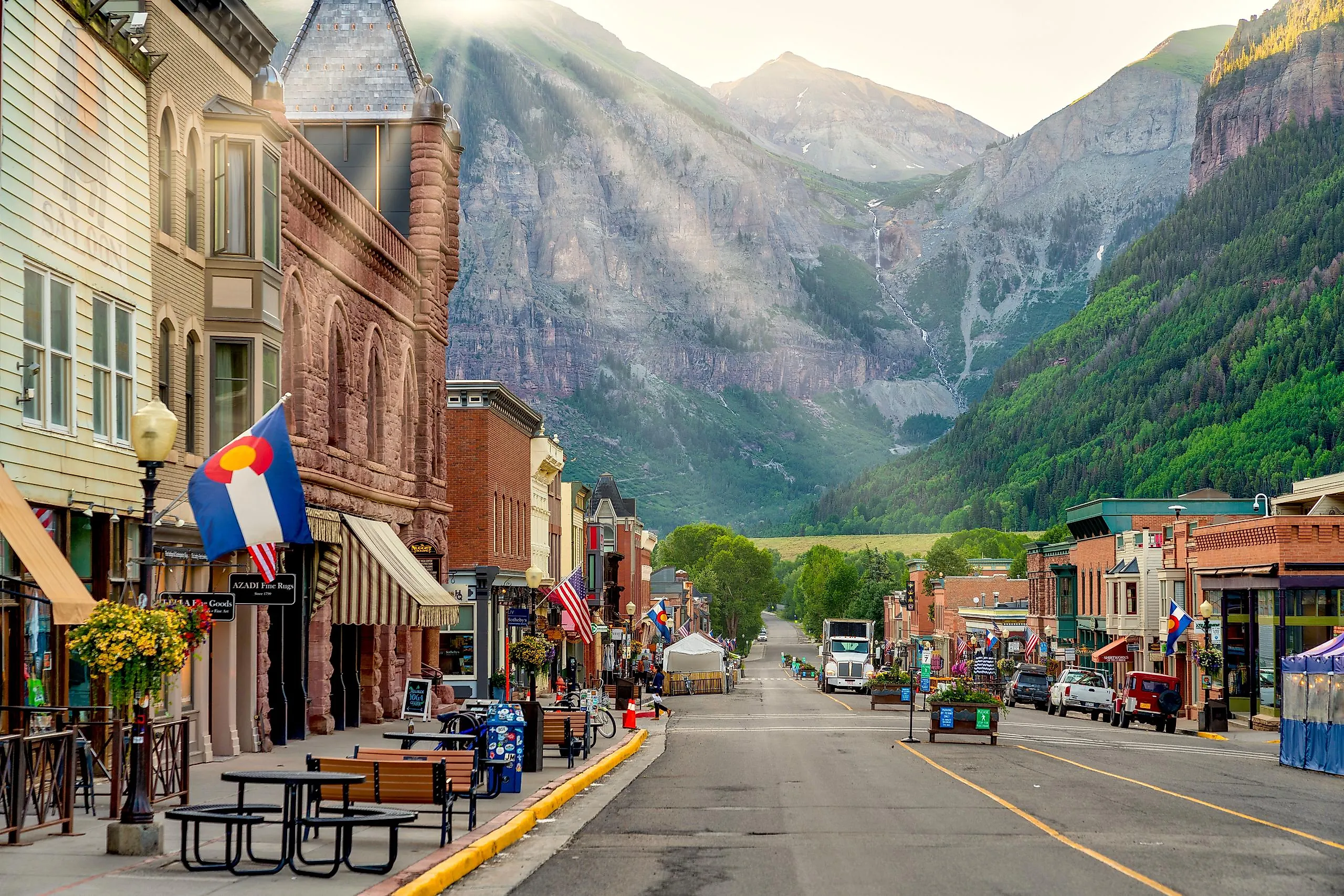
Telluride, Colorado

Telluride, famous for world-class skiing, was once a summer Ute Indian camp for centuries. Rich in San Juan Mountains' gold and silver, it grew around mining, including Sheridan Mines. Initially called Columbia, it was renamed Telluride in 1878. The railroad brought diverse immigrants. Attractions include Galloping Goose #4, a restored railbus that carried mail, passengers, and freight until the 1950s. In 1961, it was designated a National Historic Landmark District. The 1892 First National Bank Building, designed by James Murdoch in Romanesque style, stands at Colorado Avenue and Fir Street. With much to offer, Telluride is a great Rocky Mountain getaway.
Taos, New Mexico

The history of Taos spans many centuries, beginning with the Tiwa Indians who inhabited the land long before Spanish Captain Hernando Alvarado arrived in 1540. Taos was officially established as a Spanish village in 1615. Despite Spanish influence, the town is cherished for its Native American community, especially the Taos Pueblo, which features adobe dwellings inhabited for over 1,000 years. Recognized as a UNESCO World Heritage Site and a National Historic Landmark, the Taos Pueblo attracts visitors worldwide. The historic Taos Plaza, once a hub for local trade, now features restaurants, shops, and old mercantile stores. Art enthusiasts can visit the nearby San Francisco de Asis Mission Church, one of New Mexico’s most photographed sites, famous for its association with artists like Ansel Adams and Georgia O'Keeffe. This 18th-century church remains active. Taos offers rich historical sights and breathtaking natural landscapes, ensuring a memorable visit.
Estes Park, Colorado

Estes Park is a haven for both recreation and history enthusiasts, located near the breathtaking Longs Peak. The town features a variety of outdoor activities such as hiking, fly fishing, golfing, and biking. Its history is rich, with Native American tribes, homesteaders, artists, and entrepreneurs having called it home. Visitors interested in the area's history can explore the Estes Park Museum, which houses approximately 35,000 artifacts, including postcards, artwork, tools, and a Stanley Steamer automobile. Another notable site is the Stanley Home Museum and Education Center, offering insights into the town’s past. Built in 1904, it was once the residence of Freelan Stanley, the twin brother of Francis Stanley, with whom he founded the original business, and his wife Flora. The museum provides year-round tours. Additionally, the famous Stanley Hotel, which inspired Stephen King while writing his 1977 novel "The Shining," is a major attraction.
Durango, Colorado

Durango, originally a mining town, has evolved into a prime destination for recreation and history enthusiasts. Established in 1880 by the Denver and Rio Grande Railroad to support mining along the Animas River, it takes its name from Durango, Mexico—a nod from Alexander Hunt, a former territorial governor, who visited there and found the regions similar. Before mining, the Ute Indians inhabited the area for centuries. Today, visitors can admire Victorian architecture, such as the General Palmer Hotel, built in 1898 by Civil War general William Jackson Palmer, featuring themed rooms, Victorian furnishings, and antique artifacts. The nearby Mesa Verde Cliff Dwellings, including Cliff Palace, built by the Ancestral Puebloans starting in the late 1190s, are roughly a 90-minute drive away. These ancient dwellings, with their handprints, murals, and structures, date back over 1,400 years. Durango remains a must-see spot in the Rocky Mountains.
Silverton, Colorado

Originally the home of the Ute Indians, Silverton became a mining town in 1860 when Charles Baker and prospectors discovered gold and silver in the San Juan Mountains. The US Civil War and protests by the Ute Indians delayed mining until the 1870s. Almost 1,000 prospectors came to the area seeking riches, and by 1874, several mining camps had sprung up. The advent of the railroad in 1883 brought more settlers to the area, and the population grew to 2,000. The town had 400 buildings, including 29 saloons, and many hotels. The Old Hundred Gold Mine and the nearby Old Hundred Boarding House are famous landmarks in Silverton. The best gold in Silverton was discovered by German brothers Reinhard, Gustave, and Otto Neigold, who formed the Midland Mining Company. The brothers could not develop the mine due to a lack of funds, so the property was bought by the Old Hundred Mining Company in 1904. Today, the picturesque mountainside, outdoor recreation, and remote location continue to attract visitors and settlers, making it a great place to visit.
Golden, Colorado

You might think that the town of Golden, Colorado, located in the Front Range of the Rockies, was named after the gold found there during the 1800s. In fact, it was named after the prospector Thomas L. Golden, who came to the area from Jefferson County in 1858. Before Golden’s arrival, the Ute, Arapaho, and Cheyenne Indians lived in the area for over 12,000 years. However, after the Colorado gold rush began, the mining supply town of Golden was founded in 1859. The fertile valley and coal and clay deposits attracted farmers and other industries. The town was so popular that it was the capital of the Colorado Territory from 1862 until Denver was granted the prestigious title in 1867. The Golden History Museum and Park is a treasured landmark featuring changing exhibits and around 15,000 objects of historical interest. The museum is free to visitors, and the town also offers walking tours of the historic district. Don’t miss the opportunity to see Golden, and it won’t disappoint.
Glenwood Springs, Colorado

Located on the western slope of the Rocky Mountains near the Colorado and Roaring Fork rivers, Glenwood Springs is a paradise for history buffs. The town was known as Yampah to the Ute Indians and Defiance to Gold Rush prospectors. After it was incorporated in 1885, Glenwood Springs was birthed. As the site of the world's largest hot springs pool, the town is known for its history as a place of healing for the Ute Indians. It is also the site of one of the first hydroelectrically lighted cities in the world, beating out New York City in 1886. One historical hotspot in Glenwood Springs is the 1893 Hotel Colorado, which President Theodore Roosevelt used as the "Western White House" and is a copy of the Medici Palace in Italy. For those interested in the Wild West, the Frontier Historical Society and Museum offers exhibits on Doc Holliday, Theodore Roosevelt, Kid Curry, and Buffalo Bill Cody. The society also provides downtown walking tours of historic buildings constructed between 1884 to 1928. Glenwood Springs has a unique offering of history and healing, making it a great destination for the curious.
Crested Butte, Colorado

Crested Butte is a former coal and silver mining town you don’t want to miss. At an elevation of 8,865 feet, Crested Butte began attracting miners in the 1860s. Howard F. Smith, known as the town’s founding father, was attracted to the vast coal deposits in the area and created the town in 1878. By 1880, when Crested Butte was incorporated, the town had around 400 people, and Smith was the mayor. The railroad arrived in 1881, and by 1882, the town had around 1,000 residents. However, in 1884, tragedy struck the town when an explosion happened at the Jokerville mine, killing dozens of miners. Coal mining in the region continued until 1952. Today, Crested Butte is a travel destination for snow sports, rock climbing, hiking, biking, and festivals. Visitors can enjoy the "Wildflower Capital of Colorado" by checking out the Crested Butte Museum, which provides a glimpse into history with an extensive collection of mining, ranching, and recreation exhibits. The history of Crested Butte and the recreational offers are sure to please any visitor.
Red Lodge, Montana

The Crow Indians always came to Red Lodge in the summer, but the town was not officially established until 1884, and the first mine was opened in 1887 by the Rocky Fork Coal Company. Red Lodge was soon the home to many immigrants, including the Finnish, Scottish, Irish, and Italian seeking fortunes. The landmark Pollard Hotel lodged several famous guests, such as Buffalo Bill Cody, Calamity Jane, and Frederic Remington. In 1943, an explosion at the Smith Mine killed 74 men. Red Lodge residents turned to the bootlegging liquor industry to survive the Great Depression and the decline of coal mining, serving its "cough syrup" to buyers across the US. Today, the town is a hotbed for tourism and recreation.
Whether you’re a history enthusiast or an adventure enthusiast, the Rocky Mountains are a fantastic destination year-round. From Golden, a historic gold mining town, to the relaxing hot springs of Glenwood Springs, the Rockies provide adventure for all interests. Don’t miss the chance to explore this region of stunning beauty and wonder. Remember to bring comfortable walking shoes and a map to visit these nine mountain towns that seem frozen in time. Be ready to enjoy peace and tranquility throughout your journey.