7 Best Places to Live in Upstate New York
The right upstate city depends on what you're optimizing for. State paychecks and stability point to Albany. First-time homeownership at urban scale points to Buffalo. A small arts-and-restaurants town with weekly NYC train access points to Hudson. Family-house-and-yard math near Lake Ontario points to Irondequoit. World-class gorges and university culture point to Ithaca. Major-metro arts at upstate prices point to Rochester. Cheap housing in a market about to be reshaped by a $100 billion semiconductor plant points to Syracuse. Each of the seven trades off something the others don't.
Albany

Albany has the lowest-volatility job market in upstate. State government payroll, the University at Albany (about 17,000 students plus faculty and staff), and Albany Medical Center together give you three independent income engines that don't collapse on the same cycle. When private-sector cities take downturn hits, capital cities mostly don't. Median household income runs higher than Buffalo or Syracuse as a result, and that shows up in the property tax base, the schools, and the services.
The housing inventory is one of Albany's quieter strengths: 19th-century rowhouses around Center Square, mid-century capes in Pine Hills, and detached single-family neighborhoods like Buckingham Pond and the Helderberg section, all at prices well below the Hudson Valley to the south. The cultural side is decent for the population. Empire State Plaza hosts free summer concerts, the Egg books touring acts, and Capital Repertory Theatre has run year-round since 1981. Trail access is the bonus: Thacher State Park, the Albany Pine Bush Preserve, and the trailheads into the Helderbergs all sit within 20 minutes of downtown. The Hudson Valley opens up south, the Adirondacks open up north.
Buffalo

Buffalo is where first-time buyers can still afford a detached home in a real city. Median sale prices currently run around $180,000 to $240,000 depending on the source. The neighborhood you can afford determines the experience. Elmwood Village, North Buffalo, and Allentown command the upper end and offer the walkable cafe-and-restaurant blocks. South Buffalo, Riverside, and Black Rock sit at the lower end with bigger lots and longer commutes. Erie County's property tax rate of roughly 2.6% is the trade-off for the low entry prices.
The economic base has finished its pivot. Healthcare (Kaleida Health, Catholic Health, Roswell Park Comprehensive Cancer Center) and the University at Buffalo together account for the largest share of local employment, and the population decline that defined the city for fifty years has finally stabilized at around 276,000. The waterfront has been the visible turnaround: Canalside, the restored Frederick Law Olmsted parks system, the new Highmark Stadium going up in Orchard Park. Niagara Falls is 30 minutes away, Toronto two hours, and the Bills and Sabres are non-negotiable parts of the social fabric. The 90-inch annual snowfall mostly arrives in concentrated lake-effect bands, which is easier than it sounds spread across a winter.
Hudson

Hudson works for one specific situation: you want a small town with a real arts and restaurant scene, and you need to be in Penn Station within two hours and ten minutes by Amtrak. If that's not you, the price doesn't make sense. Median home prices have climbed past $500,000 over the last decade as Brooklyn weekenders converted into full-time residents. The town is small (around 5,500 residents), the rentals are tight, and the schools have well-documented challenges that anyone with kids needs to factor in.
What you get for the money is genuine: Warren Street runs roughly a mile of antiques shops, galleries (Carrie Haddad, John Davis, September), and a restaurant scene that punches well above the population. Olana State Historic Site, Frederic Church's hilltop estate, sits five minutes south of town. Promenade Hill Park gives you the Hudson River view at the foot of Warren. Columbia County's poverty rate is higher than the home prices suggest, and public services are stretched, but the train station downtown is the asset driving the price growth. Remote workers and weekly NYC commuters are the clearest fits.
Irondequoit

Irondequoit is built for the family-house-and-yard calculation. The town of about 50,000 sits between Rochester and Lake Ontario, with low-density single-family neighborhoods, two separate school districts (West Irondequoit and East Irondequoit), and median home prices that have stayed well below the national average even after recent appreciation. Realtor.com flagged it as the country's hottest residential market in late 2023 on speed-of-sale and affordability metrics, which has since cooled but did pull prices up.
The geography makes the daily life work. Lake Ontario beaches at Durand Eastman Park sit at the town's northern edge. Seneca Park (with its zoo) and the Genesee River line the western boundary. Downtown Rochester is 15 minutes south, which means a serious commute is rarely part of the equation. Irondequoit Bay separates the town from Webster on the east, with Irondequoit Bay Park East offering hiking and a marina. If your job is in Rochester or Pittsford and you want a yard with lake access on a weekday afternoon, this is the practical pick in Monroe County.
Ithaca

Ithaca is the best natural-setting city in upstate, full stop. Six gorges cut through the city proper, three state parks with major waterfalls (Robert H. Treman, Buttermilk Falls, Taughannock Falls) sit within a 15-minute drive, and Cayuga Lake opens up at the north end of town. The catch is the price. Cornell University's presence pulls housing toward Ivy League-town norms, with median home prices around $400,000 and rentals tight year-round.
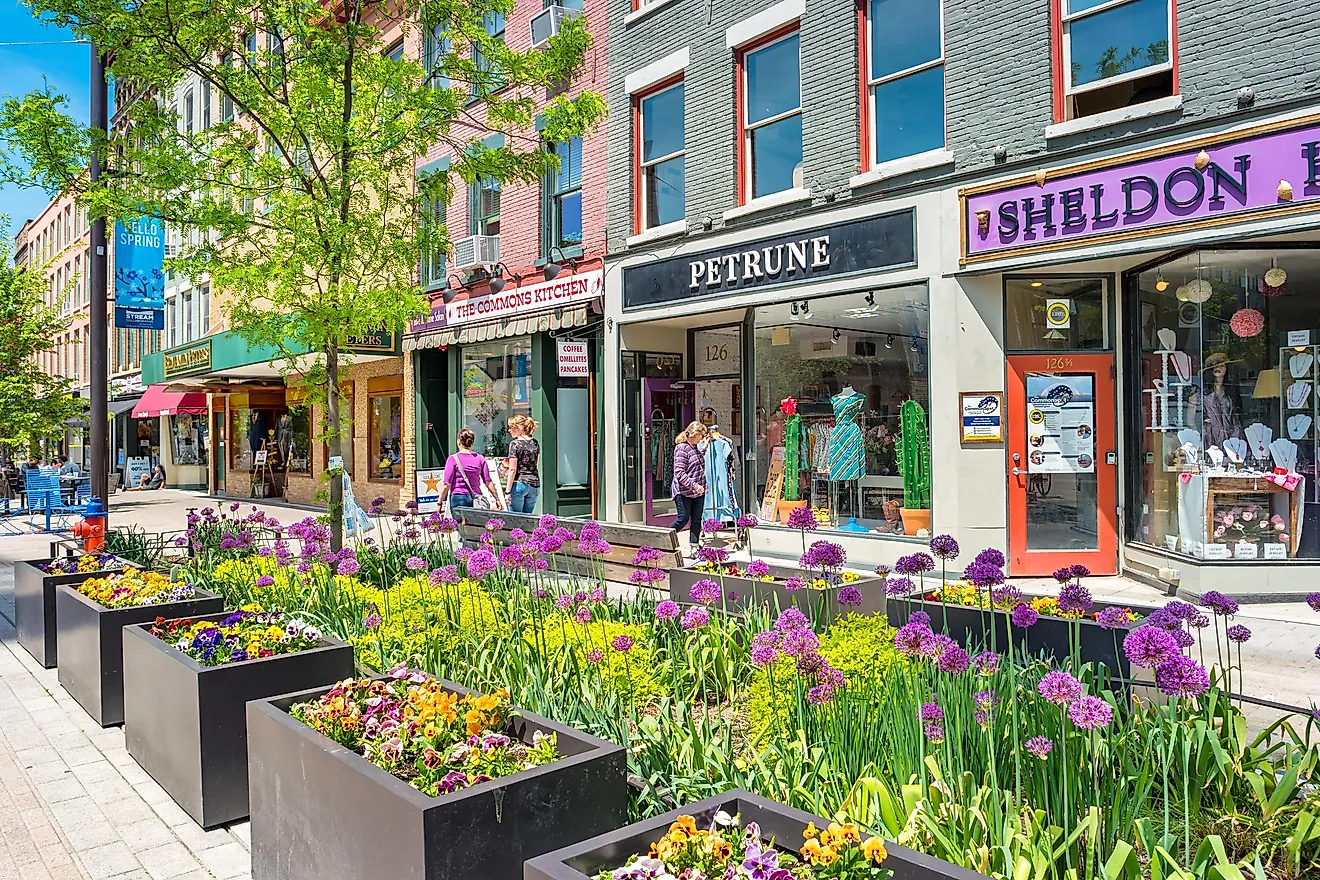
The job market is the other consideration. Cornell employs more than 10,000 people and is by far the largest employer in Tompkins County, with Ithaca College a distant second. If you don't have a university tie or remote work, the local economy is thin. What you get for staying is the city itself: the Commons keeps the downtown pedestrian core walkable, the Ithaca Farmers Market on Cayuga Inlet runs Saturdays year-round, and the Finger Lakes wineries on Cayuga and Seneca are 20 minutes out. The political culture leans hard left in a way that occasionally makes national news, which matters more or less depending on your priorities.
Rochester

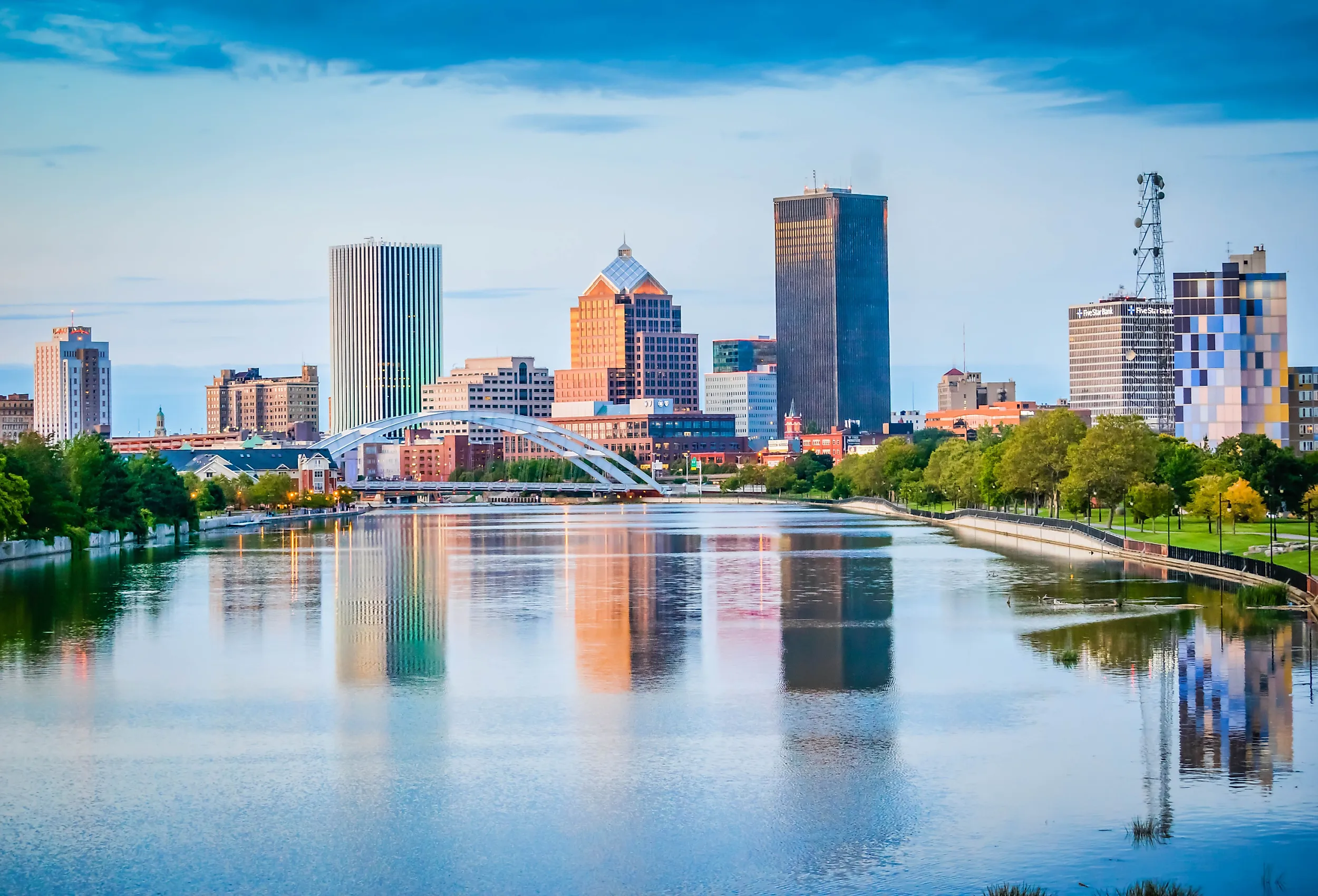
Rochester gives you major-metro culture at upstate prices. Median home prices in the city run around $180,000, the third-largest population center in the state at roughly 211,000 supports a metro of over a million, and the cultural institutions punch well above what the city size predicts. The George Eastman Museum holds one of the world's largest photography and film collections. The Strong National Museum of Play anchors the National Toy Hall of Fame. The Eastman School of Music is one of the top conservatories in the country.
The economic base finished its pivot away from Kodak and Xerox a decade ago. The University of Rochester (including Strong Memorial Hospital and Eastman) is now the largest private employer in the region, with Rochester Regional Health close behind. The strong school suburbs (Brighton, Pittsford, Penfield, Webster) cost more but are some of the highest-rated public districts in New York. The Rochester International Jazz Festival every June and the Lilac Festival every May bring serious attendance. The Genesee River runs straight through downtown, the Erie Canal trail system handles the cycling side, and Lake Ontario beaches sit 15 minutes north.
Syracuse

Syracuse is the biggest "buy now" bet in upstate. Micron Technology's announced 20-year, $100 billion semiconductor fabrication plant in Clay, just north of the city, is the largest economic development project in New York state history when fully built out. Whether or not Micron hits its full timeline, construction wages, suburban housing demand, and infrastructure spending are already in the region. Median home prices in the city sit under $200,000, with suburbs like DeWitt, Manlius, and Fayetteville running higher for the school districts. Cost of living runs around 5-10% below the national average.
The current economic anchors are Syracuse University, Upstate Medical University, and SUNY ESF, with about 145,000 residents in the city proper and 650,000 in the metro. The lakes are the off-hours payoff: Skaneateles, Owasco, and Oneida are all within 30 minutes, the Adirondacks are 90 minutes north, and the Finger Lakes wineries are an hour west. Snowfall averages 128 inches a year, which is real, but the city has won the Golden Snowball more often than any other upstate competitor and built its civic personality around handling it.
The Practical Read
None of these are perfect, but each one's flaws are predictable, which counts for more than it sounds when you're weighing a move. The decision usually comes down to which constraint binds hardest: budget, commute, schools, weather, or job sector. Run the math on the constraint that matters most and the right city tends to fall out of the list on its own.