7 Beautiful Lumber-Era Towns In Montana
With over 25 million acres of forest within its borders, Montana has always been one of the top contributors to America’s logging industry. As early settlers arrived in the state, they required lumber to construct their cabins, heat their homes, and establish their infrastructure. Later, during the 1862 gold rush, demand intensified, causing a boom in the burgeoning local timber industry. In the 1880s, two major developments fuelled further growth: the first sawmill and the coming of the railroads.
As demand for lumber soared, so did the number of workers and companies eager to meet that demand. Small communities sprang up around the mills, and many of those historic towns are still around today. Set in beautiful woodlands, deep forested valleys, and among Montana’s rugged peaks, these scenic small towns are a must-visit. Nature-lovers, history enthusiasts, and outdoor adventurers; whatever your ideal vacation looks like, you’ll find it in Montana’s lumber-era, fascinating cities.
Whitefish

Known as ‘the friendliest small town in the Rockies’, Whitefish can trace its history back to 1883 when John Morton built a cabin near Whitefish Lake. In 1890, he was joined by the Hutchison brothers from Michigan, who set up a sawmill and kick-started Whitefish’s logging industry. In the 1900s, the town earned the nickname ‘Stumptown’ due to all the tree stumps left from local logging.

Today, the town is a popular destination for visitors looking to explore Montana’s pristine wilderness. It’s one of the gateway towns for Glacier National Park and the Flathead National Forest, both of which offer breathtaking views and scenic trails for hikers of all abilities. You can also see the scenery as the early loggers did with a two-hour horseback trail ride from Bar W Guest Ranch. In the winter, the ranch offers sleigh rides through the forest’s winter wonderland.
Visit the Whitefish Museum, located downtown in the historic Depot building, to explore its exhibits on the history of Whitefish through the ages. Displays feature stories from Whitefish residents in the 19th century, photographs, and memorabilia from the town’s logging and railroad years.
Hamilton

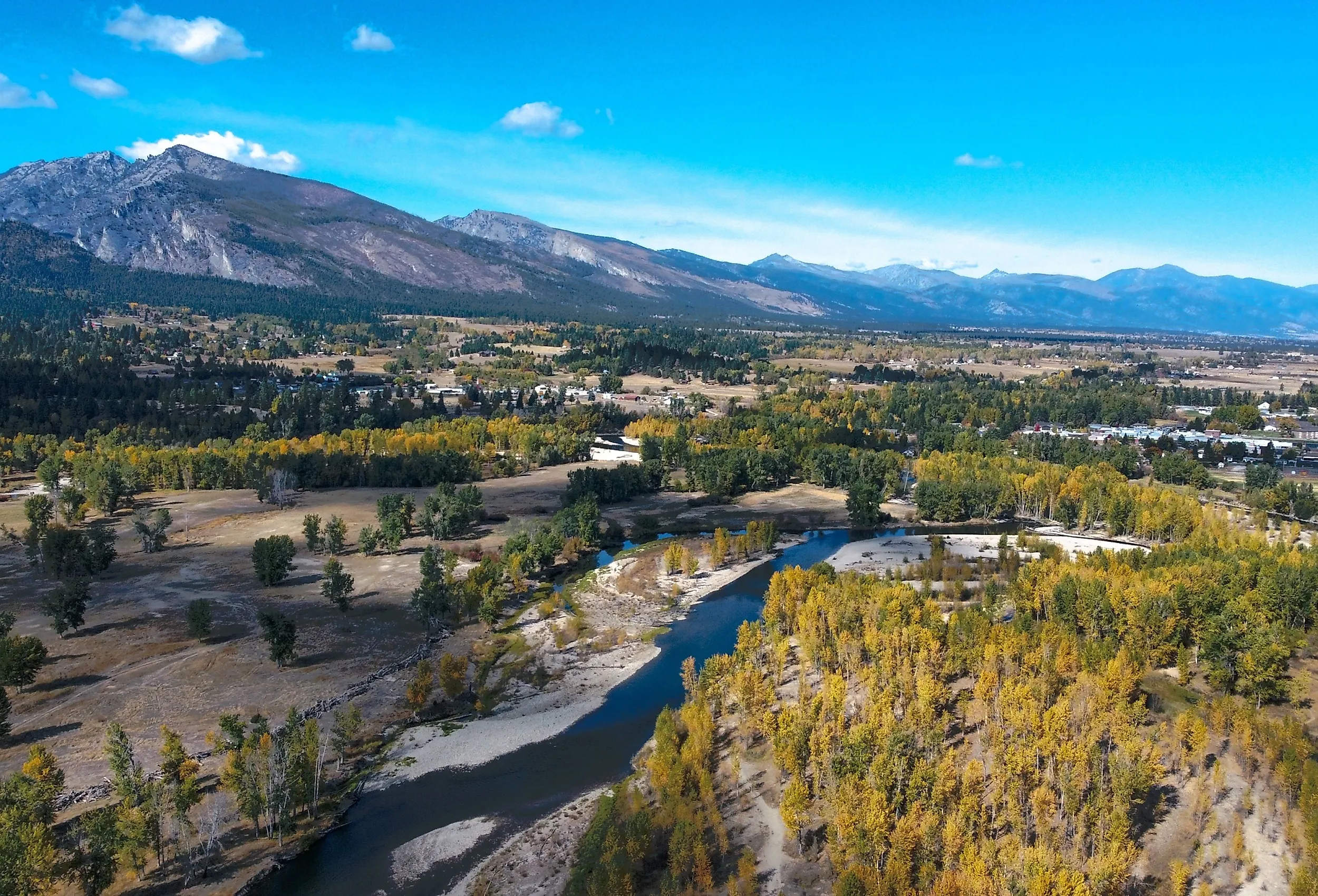
Located in the beautiful Bitterroot Valley, Hamilton’s founding father was ‘Copper King’ Marcus Daly, who came to the area to raise horses but discovered its potential as a lumber town that would harvest the logs needed to fuel his mining operations. Daly bought land and built a mill in the late 1800s. By 1893, there were over 40 businesses downtown, catering to the mill workers and their employers.
See where the Copper King himself lived with a trip to the Daly Mansion. Opened to the public in 1987, the palatial home is set in 46 acres of landscaped grounds. Tours are available year-round, although reservations are required in the fall and winter. The mansion also hosts seasonal events and festivals.

Learn more about Daly’s significant contribution to Hamilton at the Ravalli County Museum, housed in the original Ravalli County Courthouse, which was built in 1900 and is listed on the National Register of Historic Buildings. The museum focuses on art, local history, and natural history with 28 galleries, nine of which are exhibition rooms and six are permanent displays.
Hamilton is an excellent base for exploring the Bitterroot National Forest, located just a short drive north of town. Fishing, hiking, and wildlife viewing are all popular activities in the area. Check out the Blodgett Overlook Trail and Medicine Point Lookout for stunning views of the Bitterroot Valley.
Libby

Libby welcomed its first sawmill in the winter of 1891-1892. Built to serve the town’s growing mining population, the mill was followed by more as the arrival of the railroad drove demand for lumber. By the early 1900s, the town’s biggest operator, The J. Neils Lumber Company, employed 1,000 people.
Today, Libby is a scenic, laidback community near the Cabinet Mountain Wilderness and the Kootenai National Forest. The latter is where you’ll find one of the area’s most picturesque attractions, the Kootenai Falls and Swinging Bridge. One of the largest free-flowing waterfalls in the northwest, Kootenai Falls cascades 90 feet. Get some stunning vacation photos from the swinging bridge that crosses the Kootenai River.

There are more jaw-dropping views at the top of the Libby Dam. The 422-foot-tall dam spans the Kootenai River and is open to the public for tours. The Visitors Center is open daily during the summer. There’s also a recreation area, the Souse Gulch day-use area, near the Visitor Center, which has playgrounds, picnic shelters, and hiking trails around the shore of Lake Koocanusa.
Back in town, visit the Libby Heritage Museum to see artifacts from Libby’s long history of settlement, mining, and logging. The Museum's 12-sided log building is listed on the National Register of Historic Places.
Livingston

Businessman Emanuel Goughnour was Livingston’s first lumber baron. He came to the small town, located in southwestern Montana on the Yellowstone River, in 1882 and built several mills and a lumber yard. You can see his offices today in the Livingston Commercial Historic District. The property, built in 1891, is hard to miss thanks to the huge Livingston Lumber Company sign on its frontage.

Livingston is 55 miles from Yellowstone National Park, but if you’d rather avoid the crowds and stick close to town, there are plenty of hiking trails and recreation areas in the Livingston area. Challenge yourself by hiking Livingston Peak, which overlooks the city and offers stunning views of the Crazy Mountains and the Yellowstone River. This challenging trail climbs 954 meters and is a total of 11.7 kilometers. A more accessible option for beginner hikers and bikers is the paved Livingston Depot Rail Trail, which runs 1.4 miles along the river following former railroad tracks.
The rail trail starts at the Livingston Depot Center, which is worth a visit in itself. Housed in a beautifully restored 1902 Northern Pacific Railroad station, the center features a seasonal museum, a restaurant, a wine bar, and a park.
Stevensville

The first permanent settlement of non-indigenous people in Montana, Stevensville, is older than the state itself and was home to Montana’s first sawmill, built by Father Anthony Ravalli, a Jesuit missionary, in 1845.
Stevensville has over 40 properties listed on the National Register of Historic Places. These include the St Mary’s Mission, founded in 1841 as a busy, self-sufficient community led by Father Ravalli and others. Now a museum and visitors center, the Mission tells the story of Montana’s first pioneer community and is open mid-April to mid-October.

See where Montana’s first sawmill was constructed at Fort Owen State Park. Established in 1850, Fort Owen was Montana’s first European settlement and a vital trading post for the region’s early settlers.
Explore the beauty of the Stevensville scenery at the 2,800-acre Lee Metcalf National Wildlife Refuge, which has hiking trails that meander through mountain valley habitats with views of the Bitterroot and Sapphire Mountains.
Kalispell

When the first train rolled into Kalispell in 1892, it signalled a new era for the sleepy community in northwestern Montana. The growing town quickly became a trade hub, and one of its major industries was timber. By the early 1900s, 30 sawmills were operating in and around Kalispell, producing 150 million board feet of lumber.
Learn more about Kalispell’s role in the region’s development at the Northwest Montana History Museum. One of the many displays at the museum is the ‘Lumberjacks, Tie Hacks and River Pigs’ exhibit, which focuses on the men who worked in the 1800s logging industry in the Flathead Valley.

The Conrad Mansion Museum is another of Kalispell’s beautiful and historic landmarks. Built in 1895, the grand home was the residence of the pioneering Conrad family. Visitors can join a guided tour to learn about the home’s long history from an expert or take a self-guided tour to explore the estate at their own pace.
Nearby Flathead Lake State Park is the perfect spot for a picnic or a paddle. The lake is the largest natural body of freshwater in the western US and one of the cleanest in the country. Locals and visitors come to the lake to swim, hike, camp, picnic, and fish, enjoying its forested shoreline, stunning views, and crystal-clear waters.
Butte

Known primarily as a mining town, Butte was also a vital lumber hub as its logging industry developed to support the mines. Mines and cages were supported by hefty mine timbers, cut from local forests. One of the area’s largest producers, the Anaconda Copper Mining Company, bought up forested sections of land from the Northern Pacific Railway in 1901 to keep its mines in business and later built its own timber mills to speed up production.

One of the best ways to learn about Butte’s history while exploring its scenic streets is to take a Butte Trolley Tour. This 2 hr trip travels through the town’s historic district, passing many notable landmarks, including the Copper King Mansion, built in the 1880s, and the World Museum of Mining.
See one of Butte’s quirkiest landmarks with a visit to Our Lady of the Rockies. This 90ft tall statue was erected in 1979 and overlooks the city with her arms outstretched. The road up to the monument isn’t open to private vehicles, but you can see the statue and learn its story with the Our Lady of the Rockies Tour, which runs daily tours in July, August, and September.
Montana Memories
Montana has no shortage of beautiful communities set amid stunning landscapes, but if you’re looking for a dose of history with your scenic views, check out these quaint lumber-era towns. A window into the state’s logging past, these towns can trace their history back hundreds of years. That heritage is on display today in their many experiences, attractions, and recreational amenities—journey into the past in the timeless beauty and old-world charm of Montana’s lumber-era small towns.