6 Stunning Small Towns In Alaska
Alaska's small towns anchor the state's reputation with photographers, wildlife watchers, and long-trip adventurers. Sitka and Ketchikan showcase Tlingit, Haida, and Russian cultural layers at the Sitka National Historical Park and the Totem Heritage Center. Seward offers Exit Glacier within hiking distance. Valdez puts the massive Columbia Glacier in reach of a half-day boat tour. Homer's Spit stretches 4.5 miles into Kachemak Bay with shops and access to glaciers and fjords across the water. The six towns below each earn a place in Alaska's small-town standouts.
Sitka

Sitka sits on Baranof Island in the Inside Passage of Southeast Alaska. Mount Edgecumbe, a 3,201-foot stratovolcano (classified as active but last erupted approximately 4,000 years ago), forms the horizon across Sitka Sound. Sitka was the capital of Russian America from 1808 to 1867, when the US purchased Alaska, and the town's built environment still layers Tlingit, Russian, and American influences.

Sitka National Historical Park commemorates the 1804 Battle of Sitka (the last major armed conflict between Europeans and Alaska Natives) and preserves a collection of totem poles along a coastal trail. St. Michael's Cathedral, a Russian Orthodox church consecrated in 1848, was rebuilt after a 1966 fire (with nearly all the original icons rescued by townspeople during the blaze). The Alaska Raptor Center on the north edge of town rehabilitates injured bald eagles and other raptors.
Ketchikan

Ketchikan is one of the most-visited small towns in Alaska thanks to its position as a cruise ship port. Tongass National Forest surrounding the town is the largest National Forest in the US at 16.7 million acres, covering most of Southeast Alaska. The Totem Heritage Center preserves totem poles recovered from abandoned Tlingit and Haida village sites in the 1970s; many are over 100 years old and are displayed unrestored to show the natural weathering that the carvings were built to endure.

Creek Street, the town's best-known streetscape, consists of wooden buildings built on pilings over Ketchikan Creek. The street was historically Ketchikan's red-light district through the mid-20th century; today the preserved buildings house restaurants, galleries, and the Dolly's House Museum (the preserved former establishment of Dolly Arthur, the most famous of the Creek Street madams).
Kodiak

Kodiak Island lies in the Gulf of Alaska and is the second-largest island in the US after the Big Island of Hawai'i. Two-thirds of the island is protected as Kodiak National Wildlife Refuge, which supports one of the densest populations of Kodiak brown bears (Ursus arctos middendorffi), the largest subspecies of brown bear in the world. Adult males average 1,200-1,500 pounds. (The polar bear slightly exceeds the Kodiak in maximum weight on average, but Kodiaks are the largest of the brown bear subspecies.)
The town of Kodiak remains home to a substantial Alutiiq community that has occupied the island for more than 7,500 years. The Alutiiq Museum houses artifacts, oral histories, and living-tradition exhibits produced with ongoing community input. Fort Abercrombie State Historical Park on the northeast side of the island preserves coastal defence fortifications built during World War II as part of the American response to the 1942-1943 Japanese occupation of Attu and Kiska in the Aleutians.
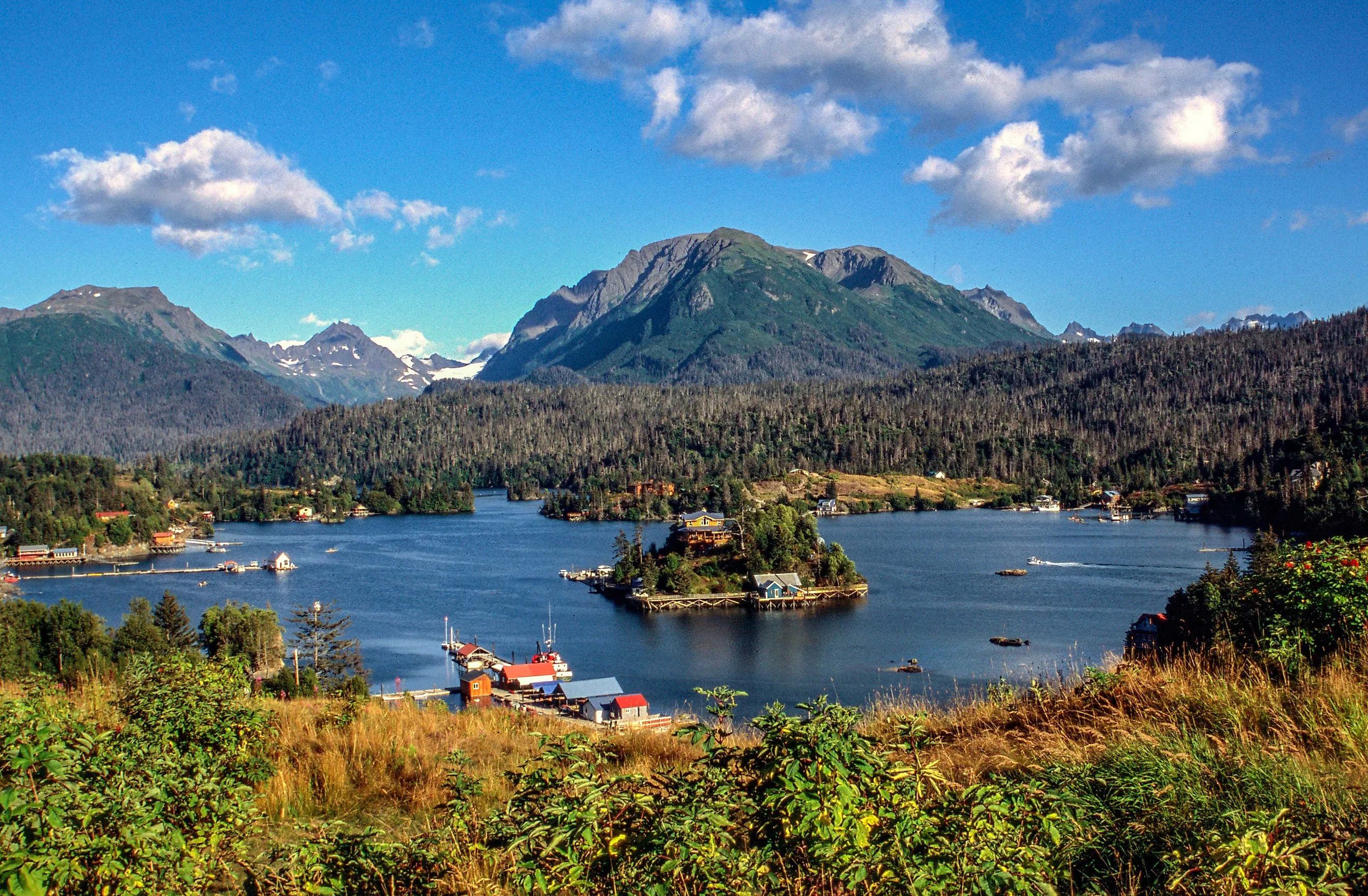
Homer

Homer sits at the southern end of the Kenai Peninsula, with the Homer Spit reaching 4.5 miles out into Kachemak Bay (the Spit itself was partially dropped into the sea by the 1964 earthquake and has been rebuilt since). Homer is a good base for bald eagle watching (though Alaska's densest bald eagle concentration is actually the Chilkat River near Haines, where thousands gather annually to feed on late salmon runs). Across the bay, Kachemak Bay State Park covers 400,000 acres of glaciers, fjords, and alpine meadows, accessible by water taxi from the Spit.
The Homer Spit concentrates the town's shops, seafood restaurants, halibut-charter outfitters, and the famous Salty Dawg Saloon (a converted post office, schoolhouse, and lighthouse now functioning as a dive bar). The Pratt Museum and Park on the north side of town covers local Alutiiq and Dena'ina history, the fishing economy, and the 1989 Exxon Valdez oil spill's effects on Kachemak Bay.
Seward

Seward is the gateway to Kenai Fjords National Park, one of only three Alaska national parks reachable by road from Anchorage (the other two being Denali and Wrangell-St. Elias). Day boats from Seward run 6-8 hour tours past the tidewater Holgate and Aialik glaciers, with regular sightings of humpback whales, orcas, Steller sea lions, sea otters, and tufted puffins. The Alaska SeaLife Center on the waterfront combines public aquarium exhibits with an active marine mammal research and rehabilitation facility (established with settlement funds from the Exxon Valdez spill).

Exit Glacier is one of the most accessible road-accessible glaciers in the state. The National Park Service maintains a series of trail markers showing where the glacier's terminus stood in specific past years, making the rate of glacial retreat (over a mile since 1950) visibly measurable. Resurrection Bay around Seward also supports kayaking, with Sunny Cove Kayaking offering guided day paddles.
Valdez

Valdez has been shaped by some of Alaska's defining 20th century disasters. The 1964 Good Friday Earthquake (magnitude 9.2, the second most powerful earthquake ever recorded) destroyed the original town; Valdez was rebuilt four miles east on more stable ground. The 1989 Exxon Valdez oil spill occurred in Prince William Sound after the tanker left Valdez, releasing 11 million gallons of crude. Valdez is also the southern terminus of the 800-mile Trans-Alaska Pipeline, which delivers North Slope crude to the port's Valdez Marine Terminal.
Today Valdez's draw is scenic. The Columbia Glacier, one of the largest tidewater glaciers in North America (though it has retreated dramatically since the 1980s), is accessible by boat tour. Worthington Glacier, a short drive from town off the Richardson Highway, offers a short hike to the glacier face. Valdez receives more snow than almost anywhere else in the US (averaging over 300 inches annually), which makes it a destination for extreme backcountry skiing. Prince William Sound supports kayaking with frequent humpback and orca sightings.
Six Towns, Six Alaskan Takes
Each of these towns represents a different slice of the state: Russian colonial capital at Sitka, Tlingit totem heritage at Ketchikan, Kodiak brown bear habitat at Kodiak, Kachemak Bay access at Homer, Kenai Fjords gateway at Seward, and industrial-disaster-turned-glacier-tour town at Valdez. Each earns its place through a distinct combination of history, wildlife, and landscape.