6 Old-Timey Mining Towns In Virginia
Mining in Virginia began with Native American stone use and early bog iron mining near Jamestown in 1619. Lead from the Austinville Mine helped supply ammunition during the Revolutionary War. Coal production began in 1758 near Richmond, marking the first commercial coal mining operation in the country. Salt from Saltville became vital during the Civil War. Mines spread across central Virginia in the 1800s, while coal and iron drove growth in the Appalachian southwest. Some mining operations occurred quickly, with camps transforming into towns almost overnight. Other mining operations lasted for decades, supporting steady industrial growth. Railroads, furnaces, and processing plants followed, tying mining towns to wider markets. When resources declined, some towns faded away, while others adapted and preserved their historic cores by shifting to new industries or roles in transportation. With that, here are some historic mining towns in Virginia that are ideal for exploring the state's rich mining history.
Pocahontas

Pocahontas is Virginia’s first coal boom town and one of its most important mining communities. Long before large-scale mining began, early settlers were already using local coal. Real growth began in 1883 when the railroad reached the area and the Pocahontas Mine No. 1 opened.
The town was named Pocahontas in 1881 and soon became a major coal producer. At its peak, more than 3,000 people lived here. Pocahontas coal fueled homes across the country and was used by the U.S. Navy during both World Wars. The mines closed in the 1950s, and the population declined.
Today, visitors can tour the Pocahontas Exhibition Coal Mine & Museum, the only exhibition mine in the world showing the Pocahontas No. 3 seam in its original state. Walk the historic district to see the Pocahontas Opera House and hike the Original Pocahontas Trailhead. The Pocahontas Cemetery stands as a poignant reminder of the miners who helped build the town.
Big Stone Gap

Big Stone Gap is a small town in Wise County with a population of about 5,100. Coal mining began here in the 1890s after the arrival of the Virginia Coal and Iron Company. For decades, coal shaped daily life and supported most local jobs. By the 1980s, mines began to close, and many residents lost steady work. Instead of fading, the town shifted direction. Local leaders and community groups have turned their attention to tourism and small business growth. They focused on outdoor recreation, local culture, and history. Training programs helped residents start their own businesses, from outfitters to bed and breakfasts.
Some of the places to explore the town's rich mining history include the Southwest Virginia Museum Historical State Park, and the Coal Museum-HW Meador. However, Big Stone Gap is not just about mining; it also offers plenty of recreational opportunities. The nearby Powell River Trail is perfect for exploring the natural wealth of the area, while visitors can enjoy watching the Trail of the Lonesome Pine Outdoor Drama for a unique experience.
Saltville

Saltville has a long history tied to salt mining and geology. Millions of years ago, this area sat under salt water. The deposits left behind attracted animals like mammoths, early humans, and later Native American communities. By the 1500s, Europeans were trading for salt here, and large scale production followed during colonial times.
Salt became critical during the Civil War because it was needed to preserve food. By the summer of 1863, Saltville supplied much of the Confederacy. In October 1864, Union General Stephen Burbridge led a major raid but was forced to retreat after heavy resistance. Fighting during this period led to the deaths of wounded Black Union soldiers, an event later called the Saltville Massacre. The Union finally captured and destroyed the salt works in December 1864.
A must-visit in town is the Museum of the Middle Appalachians, which features exhibits spanning over 30,000 years, from the Ice Age to the present day. Other historical attractions in town include the Historic Saltworks Park and the Saltville Battlefield historical landmark.
Dante

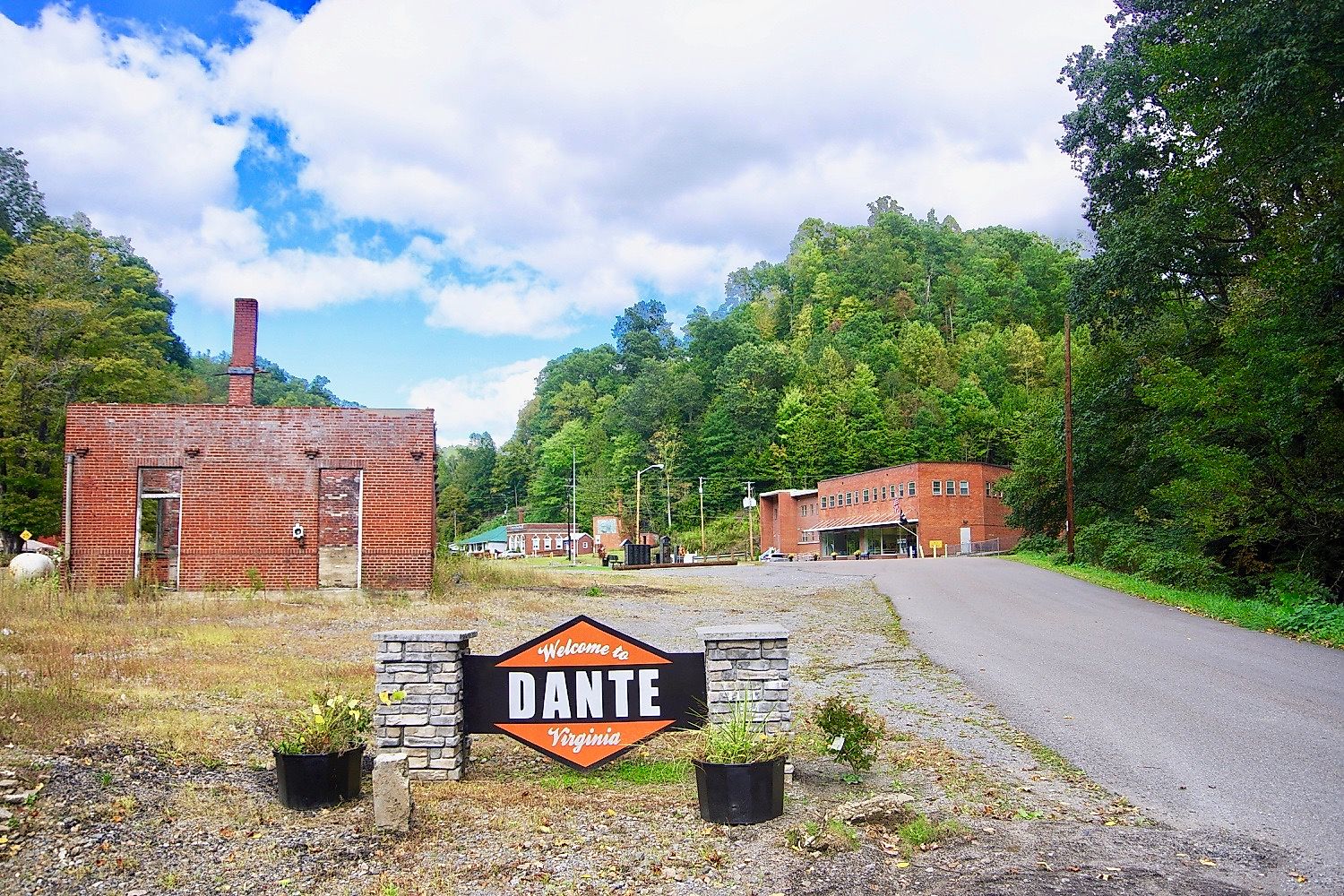
Dante is a small coal town with a long and complex past. It was established in 1905 and grew because of the Clinchfield Coal Company, which built nearly every home, store, and public building. At its peak in the 1930s, Dante had more than 4,000 residents and was the largest community in Russell County. It also had the county’s first electric power plant.
Before mining, the area was a rural settlement called Turkey Foot, named for the three branches of Lick Creek. After the Civil War, farmers sold mineral rights, and the land changed hands several times before coal production succeeded. Railroads made large-scale mining possible, drawing workers from many countries and backgrounds.
When coal operations ceased after World War II, the town's decline was rapid. Many buildings were removed, but rows of worker houses, churches, and the old depot still remain. Visitors can explore the Dante Coal Miners & Railroad Museum, which showcases coal and railroad memorabilia, offering an insight into the town's past and the lives of its miners and railroad workers. The nearby Hazel Mountain Lookout Tower offers stunning views of the surrounding mountain landscape. The Dante Community Center in town is a great meeting place for the community and hosts interesting events held throughout the year.
Midlothian

Midlothian is a small community in Chesterfield County with a population of about 18,000, and it holds a major place in American mining history. Coal mining here began in the early 1700s near Manakin Town, a French Huguenot settlement. Families such as the Wooldridges, Heths, and DuVals opened some of the earliest commercial coal pits in the country.
By the late 1700s and early 1800s, Midlothian became the center of the Richmond Coal Basin and the birthplace of Virginia’s coal industry. Coal from Midlothian powered factories during the Revolutionary War and later supported both Union and Confederate industry. Railroads built to move coal made the area an early transportation hub.
Mining peaked in the mid-1800s, but explosions, flooding, and declining demand led to closure by the late 1800s. To experience the town's mining history, visitors can walk through the Midlothian Mines Park, which features the ruins of historical mines surrounded by woodland and the Grove Shaft Ventilation Building. The nearby Pocahontas State Park is an excellent destination for outdoor exploration, renowned for its mountain biking opportunities and fishing.
Austinville

Austinville is a tiny town with one of the oldest mining histories in North America. Lead mining began here in 1756 when Colonel John Chiswell discovered a lead vein in the dolomite rock while exploring a shallow cave. At the time, he operated an iron furnace in eastern Virginia and quickly understood the value of the deposit.
With financial backing from Colonel William Byrd III and John Robinson, Chiswell developed the Lead Mine Company. The mines played a major role during the American Revolution. Virginia operated them directly to supply lead for bullets. Over the next century, ownership changed hands many times.
By the early 1800s, Thomas Jackson, a former blacksmith at the mine, built a shot tower where molten lead dropped over 150 feet into water to form round pellets. Mining later expanded to include zinc and continued until 1981. Today, visitors can walk the nearby New River Trail State Park to see mining remains, visit the Austinville Limestone, check out the Stephen F. Austin Memorial Park (dedicated in memory of the legendary Stephen F. Austin, who was born in Austinville), and canoe the New River.
Virginia’s old-timey mining towns demonstrate how deeply mining influenced the state’s early development. From coal to salt, these resources built towns, drew workers, and connected rural areas to the wider country through railroads and trade. Today, these towns still carry visible reminders of their past. Museums, mine tours, historic districts, cemeteries, and preserved trails help tell the stories of the people who lived and worked there. Visiting them provides a clear insight into how mining shaped daily life, industry, and settlement across Virginia, and how these communities adapted once the mines slowed or closed.