6 Old Mill Towns To Visit In Maryland
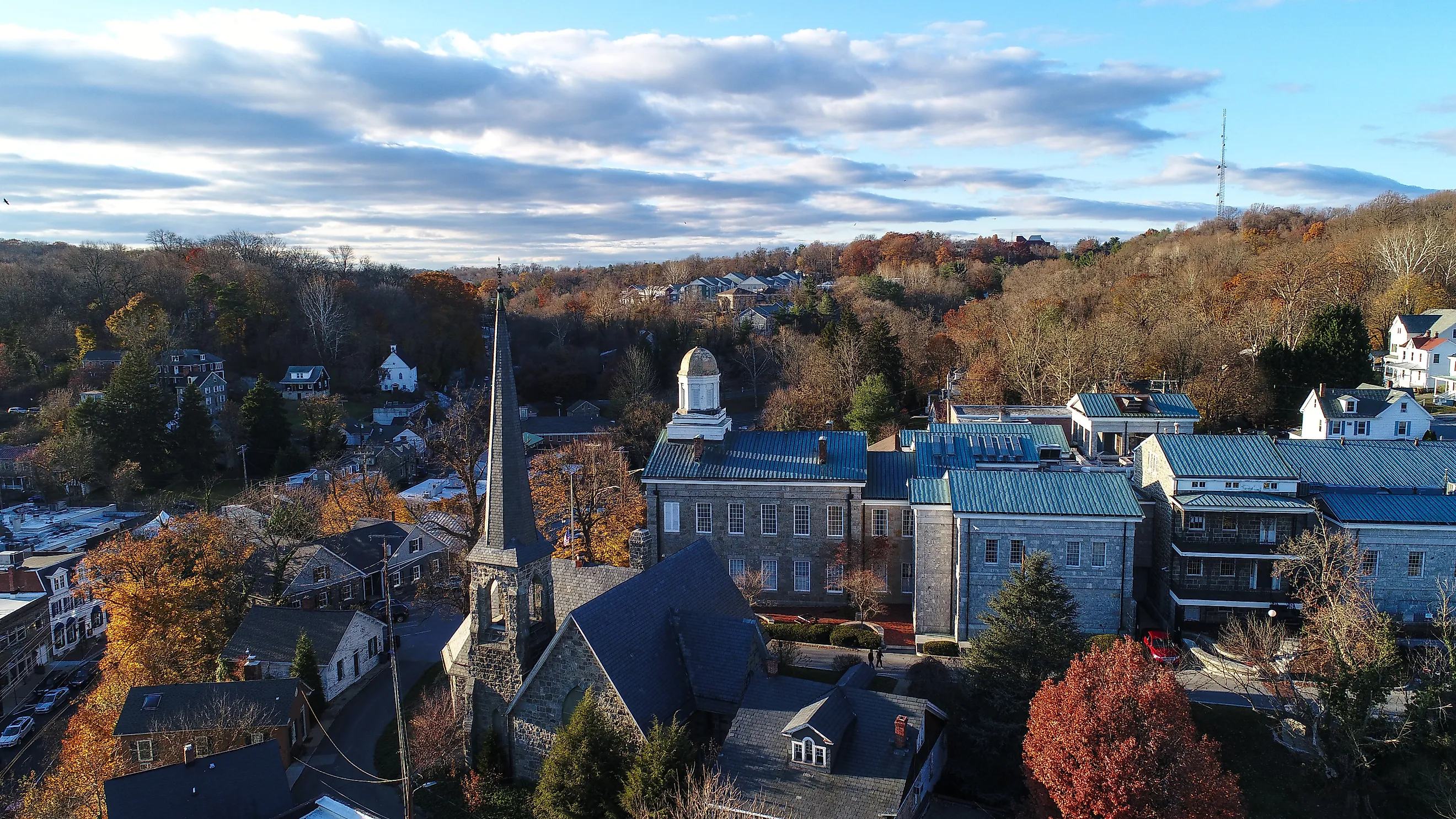
Maryland’s old mill towns preserve the history that shaped the state’s early growth. In Ellicott City, that history comes into view through the B&O Ellicott City Station Museum and rows of 18th- and 19th-century buildings overlooking the Patapsco. That same sense of continuity carries into Wye Mills, where the Old Wye Mill, founded in 1682, and Old Wye Church, built in 1721, reflect the area’s deep colonial roots. Across all six destinations, preserved mills, landmark structures, and historic streetscapes keep this early chapter of Maryland history vividly in view.
Ellicott City

When the first mills in Patapsco River Valley were constructed in the 1700s, few could have predicted Ellicott City would become home to the largest milling operation in the Colonies. Consisting of a sawmill, a granite quarry, and a grist mill, Ellicott Mills changed the region forever as local farmers switched from growing tobacco to producing grain, sending their milled flour to Baltimore for export around the world.
The town’s station, built in 1830 and the country’s oldest surviving railroad depot, bears witness to this important time in Maryland’s history. Now home to the B&O Ellicott City Station Museum, this free attraction features two entire floors dedicated to the town’s early milling history, the original station bell from 1830, plus a large model train layout of the first 13 miles of railroad track laid in America.
Ellicott City’s Main Street District is a lot of fun to wander. Part of Maryland’s Historic National Road, you’ll see more than 200 buildings dating from the town’s 18th and 19th century milling heyday. Some of the local watering holes are worth popping into, including Ellicott City Distilling Co., which produces small-batch spirits and great grub on Main Street.
Savage

Halfway between Baltimore and Washington, D.C., the small community of Savage grew quickly around the Savage Manufacturing Company, a textile mill that opened in 1822 and ultimately became one of the largest cotton mills in Maryland. Powered by the Little Patuxent River and its huge 30-foot water wheel, the factory produced everything from clipper ship sails to tents and cannon covers for Union armies during the Civil War.
Today, the Historic Savage Mill houses a marketplace spread across five buildings named after their original functions, including the Cotton Shed and Barn. Thriving local businesses include the Roggenart European Bakery, Bistro and Café (try their strudels!), and Boyd Cru Wines, a speakeasy-style wine bar that’s as popular with residents as it is visitors.
The nearby Bollman Truss Railroad Bridge is also worth seeing. Built in 1869, it’s one of the oldest railway bridges in America, and the last surviving example of its 19th-century design. You can cross the bridge while walking the mile-long Savage Mill Trail, which also passes the ruins of industrial structures.
Thurmont

Thurmont’s original name, Mechanicstown, certainly offers up some clues to the town’s early years. Originally named in the late 1700s after the cluster of toolmaker huts, gristmills, and tanneries that were dotted along Hunting Creek, Mechanicstown served as an important crossroads where settlers and local tradesmen did business.
The name change to Thurmont in 1894 cemented the town’s reputation as a tourist hub. As popular with Presidents as it is for us regular folks (Camp David, the presidential retreat, is located nearby), Catoctin Mountain Park features 25 miles of hiking trails, some of which lead to the famous Chimney Rock. Cunningham Falls State Park is also close by, and impresses with the state’s tallest cascade falls at 78 feet.
Thurmont is also the starting point for a fun covered bridges driving tour. Three historic covered bridges are situated on this scenic route, including the Roddy Road Covered Bridge, the state’s smallest (and prettiest) covered bridge.
Dickeyville

Tucked away on the western edge of Baltimore, the community of Dickeyville seems frozen in time. Set on the banks of the Gwynns Falls, industry here got a toehold in the late 1700s, eventually producing textiles needed for military uniforms during the Civil War.
Dickeyville Historic District can today lay claim to being one of the country’s most complete 19th-century mill towns, with residential buildings, public structures, and mill facilities all having survived intact. Homes originally built for mill workers can still be seen, as can the 1830s-era Ballymena Mill.
Highlights of a visit to this quaint mill village include passing landmarks like the Dickey Memorial Presbyterian Church, built in 1885, and the former Ashland Chapel, built in 1848 and now a private residence. The village borders Leakin Park, one of the largest urban woodland parks on the East Coast, while the Gwynns Falls Trail, a 15-mile walking and biking trail, begins at the edge of Dickeyville.
Oella

Just across the Patapsco River from Ellicott City, the village of Oella boasts an equally compelling milling history. The original Union Manufacturing Company opened a textile mill here in 1808, and by 1820, it was the largest textile operation outside New England. Named after a millworker credited with helping perfect manufacturing techniques, Oella itself became a poster child for its fair treatment of its employees, even building worker housing that stands to this day.
After the mill closed in the 1970s, efforts were made by descendants of the original mill owners to preserve the 78-acre village. The result, the Oella Historic District, is a marvel of preservation, with most of the structures from the community’s milling heyday still intact.
Highlights of a visit include the original Long Brick Row, a continuous line of two-story, two-bay worker houses built around 1850. Follow the Trolley Line Number 9 Trail, which passes through the community along the route of a former streetcar line, and you’ll see these and other mill-related structures around the village. The nearby Benjamin Banneker Historical Park and Museum is also worthy of a visit. It commemorates the African American mathematician, astronomer, and surveyor who famously helped survey the boundaries of the nation’s capital in 1791.
Wye Mills

The small community of Wye Mills has been grinding grain since 1682, when the Old Wye Mill was founded. Said to be among the oldest continuously operating grist mills in the country, its milling system was designed by Oliver Evans, an inventor who went on to build mills for both George Washington at Mount Vernon and Thomas Jefferson at Monticello.
The mill also played an important role in the American Revolution, producing much of the flour that supplied Washington’s troops. Now a museum, tours are available, and the mill’s stone-ground cornmeal, wheat flour, and buckwheat flour can be purchased at the mill’s shop.
The village around the mill features several other landmarks that are worth a look-see. Old Wye Church dates to 1721 and is one of only a handful of 18th-century Anglican churches left in the state. Nearby Wye Oak State Park preserves the site where Maryland’s honorary state tree, the Wye Oak, stood for more than 450 years before a severe thunderstorm toppled it in 2002.
How Water Powered Maryland
Together, these six quaint communities paint a fascinating picture of Maryland’s early days. In addition to simply being nice to look at, they also provide unique opportunities to learn about the state’s first industries, often with mills and machinery that are still working hard centuries after being built. Whether it’s for a day trip or a long weekend, you’ll want to include them in your Maryland travel plans.