6 of the Oldest Incorporated Towns in Alabama
Alabama is a prototypical Southern state, admitted to the Union in 1819, rich in culture and history. The small towns that make up the state reflect this multicultural heritage through preserved sites and modern traditions passed down over the centuries, from Fairhope on the coast to Fort Payne in the northern mountains.
History runs deep in Alabama, from its role in the Civil War to its prominence in the Civil Rights movement. The state also has a storied connection to American music, being the home to Hank Williams and Fame Recording Studio in Muscle Shoals. Here are some of the oldest incorporated towns in Alabama.
Monroeville

Monroe County was founded in 1815, four years before Alabama became a state. Monroeville, formerly known as Centerville, was renamed after President Monroe and incorporated in 1899, although it had been the county seat since 1832. Famous historic sites from this era include the Masonic Hall at Perdue Hill, circa 1823.

Regional history can be examined at the Monroe County Museum in the Old Courthouse. The small town also has a significant literary history, including the childhood friendship of famed novelists Harper Lee and Truman Capote, which is marked on the Literary Capital Structure Trail. Tours of Lee's home are also available, and there are markers honoring Capote.
Fairhope

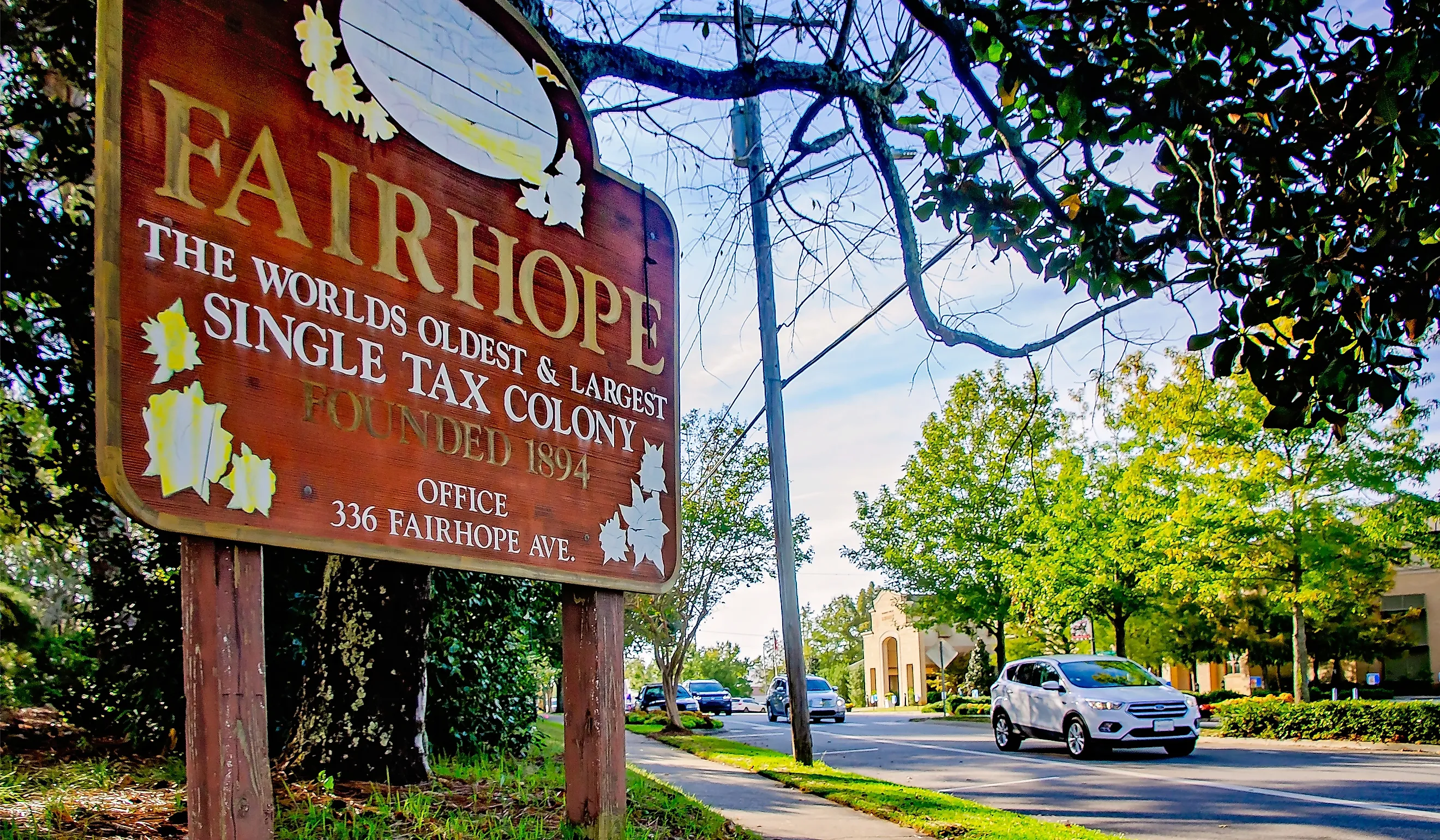
Fairhope was founded in 1894 as a utopian colony by a group of populist reformers who followed the Single Tax philosophy of economist Henry George. The first few years were tumultuous due to the inability to raise sufficient funds from national single taxpayers, forcing the founders to open the city to nonmembers. It was incorporated in 1908 in response to complaints about rent increases.
The coastal town remains a resort, as evidenced by the Grand Hotel Golf Resort and Spa and other luxurious hotels. The Fairhope Museum of History traces the colony's lineage from its founding to its present evolution, which was shaped by local artist Walter Anderson. The Walter Anderson Museum of Art showcases his work, which singularly transformed the resort town into an artists' haven throughout the 20th century.
Florence

The small city of Florence was established in 1818, named for Florence, Italy, by Italian engineer Ferdinand Sannoner, who surveyed the land. The land originally belonged to the Chickasaw Nation, who ceded it to the federal government in the early 19th century. Today, it is known as "Alabama's Renaissance City" because of its annual Alabama Renaissance Faire.
LaGrange College, now the University of North Alabama, moved from LaGrange to Florence in 1855, spurring an early economic boom, which would later grow due to the port on the Tennessee River. Historic sites today include the Alabama Music Hall of Fame and the Edith Newman Culver Memorial Museum, which features Civil War relics and exhibits, which crippled the local economy.
Fort Payne

Fort Payne was called Willisi and Will's Town in the late 18th century, named after the Cherokee Chief “Red-Haired” Will Weber. In 1838, U.S. Army Captain John Payne oversaw the construction of stockades to intern the Cherokee before their forced removal on the Trail of Tears. Soldiers started calling Will's Town Fort Payne, and the name was officially adopted in 1869.

The town experienced an economic boom starting in 1889, and it was incorporated. The Boom Town Historic District features several historical structures built in this era, including the Fort Payne Opera House and the Fort Payne Depot Museum. The latter is an opulent Romanesque-style structure with turrets that served as a train station until 1970, highlighting another booming industry in the region. Another landmark is the old Coca-Cola bottling factory, simply known as "The Building," between the historic districts, which played a pivotal role for many in the community.
Eufaula

Eufaula was established by the Creek Native people, adopted by settlers from nearby Georgia in 1816, and incorporated in 1843. It became an important shipping hub for the Southeast, and economic growth enabled the formation of the so-called "Eufaula Regency," a group of lawyers and planters instrumental in the state's secession from the Union in 1861.

Many heritage landmarks from the era are open for tours, including the Shorter Mansion and others featured at the annual Spring Pilgrimage. Fendall Hall, circa 1860, is another landmark, featuring Italian marble fireplaces and landscaped grounds. The mansions and commercial structures highlight the strong 19th-century economy that helped Mobile transform into the tourist destination it is today.
Childersburg

Childersburg is often referred to as the "oldest city in America" because it may have been along Hernando de Soto's route through the Southeast. The land belonged to the Creek Native people until their forced removal in 1836, when it was adopted by settlers. The first post office was built in 1855, signalling a growing population, and Childersburg was incorporated in 1889, two years after President Grover Cleveland gave a speech in town.

The town has long been a tourist destination, primarily at the historic Majestic Caverns, the first recorded caves in the US. Other landmarks include the Butler-Harris-Rainwater Museum and the Kymulga Grist Mill and Covered Bridge. Many historical markers are available to use as a roadmap through history, demarking important events including the De Soto Trail, giving credence to the fact that Childersburg is the oldest settlement in the nation.
Alabama has played a pivotal role in national and regional history before and after its admittance to the Union in 1819, and these are among the oldest incorporated towns. Each has a unique story to tell, and many of its historical sites have been preserved, offering tangible ways to look into the past. Towns like Eufaula benefited from their location along major rivers, spurring an economic boom evident in the grand mansions that still stand today.
Fairhope offers a different history, one that involves populist philosophies and a free spirit, which carries on today in its bohemian environment. The 20th century ushered in a creative surge to rival the economic growth of the previous century, with the likes of Harper Lee and Truman Capote in Monroeville and Walter Anderson in Fairhope. Individual histories weave together to form a collective heritage that can trace its lineage to the first incorporated towns in this region.