6 Most Relaxing Louisiana Towns
There is no shortage of relaxing spots in Louisiana. In St. Francisville, you can watch barges drift along the Mississippi from the American Cruise Lines Riverboat Landing for a tranquil afternoon activity. In Abita Springs, stress fades along the Tammany Trace at the Trailhead Museum and inside the whimsical halls of the Abita Mystery House. Across the state, these 6 small towns trade traffic and tight schedules for riverfront benches and historic districts meant for lingering.
St. Francisville

The Mississippi River flows along St. Francisville's southern edge, best enjoyed through American Cruise Lines Riverboat Landing. Boarding is not required to watch current-carrying barges and boats glide by, their paths unchanged since the French explorers first charted these waters against the backdrop of the limestone bluffs. Rosedown Plantation State Historic Site unfolds across ornamental gardens and antebellum interiors, spilling the historical vibes that the museum and broader estate willingly surrender. Martha Turnbull’s detailed diary from the 19th century documents every azalea and camellia planting, creating thriving gardens along winding paths between fountains and gazebos, allowing ample space for solitary contemplation.

Myrtles Plantation offers self-guided tours through rooms that are adorned with hand-painted stained glass and French furnishings, set within 1796 architecture. Another special location is the West Feliciana Parish Parks. This space features greenery along backroads and benches that are perfect for leisurely pauses along the way. Lastly, the West Feliciana Railroad Caboose serves as a historical reminder for visitors who are interested in the railroad’s century-and-a-half-long journey transporting cotton.
Abbeville

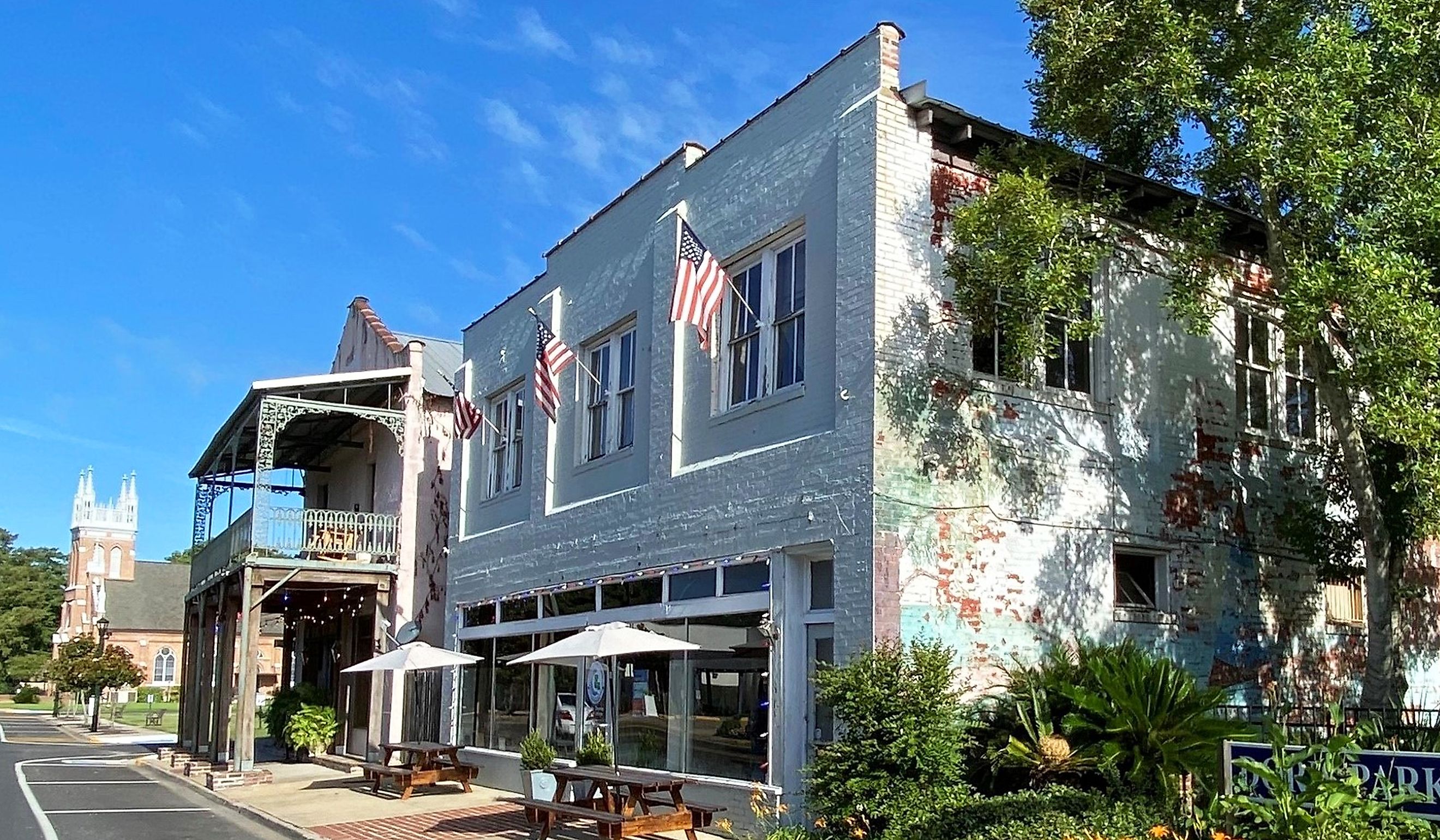
As it sits in a pocket of "Cajun prairie" that avoids the heavy industrial hum of the Mississippi and the commuter sprawl of Lafayette, Abbeville stands out as a valid selection for a quiet getaway. Unlike many south Louisiana towns, its core is designed around a quiet European-style square in the heart of the Vermilion. The parish seat drifts far from the frantic currents of metro spillover when you arrive at the lush Magdalen Square, where the absence of heavy commuter traffic allows for a genuine stroll beneath a dense canopy of centenary oaks. This slow commercial corridor reveals the St. Mary Magdalen Church, underpinning the city's fundamental identity, its brick spires rising above a historic district that invites a lingering pace.

To walk Abbeville's streets is to escape the heavy congestion of the city, trading sirens for the soothing rustle of a river breeze. Just beyond the center, the Lafitte Drive-In Park offers a reflective walking path around a still pond. Further down south, the Palmetto Island State Park provides a secluded sanctuary in an eclectic zone of swamp, dense palm trees, and native hardwoods paving the path to Vermilion Bay. Beneath the forest canopy, the Palmetto Island Trail winds through primeval greens, proving that true peace is found where the forest meets the river, far from the reach of the highway.
Farmerville

Farmerville retreats into the enclosure of Lake D'Arbonne's waters, tiny pieces of land hidden across the reservoir away from even infinitesimal sounds that disturb the silence elsewhere. While paddling, birdwatching, and peaceful walks are constants, the vast shoreline is itself dotted with boat houses, providing a picturesque setting. You can immerse yourself in nature by staying in lodges or cabins that offer a complete connection to the natural surroundings. Bald cypress trees rise from shallow waters, their knobby knees breaking the surface where waterfowl nest in branches that drape Spanish moss across the stillness.

Surrounded by wilderness, Lake D'Arbonne State Park is located along the western shore. As a result of its wilderness isolation, the crowds typically avoid this beautiful destination. The D'Arbonne National Wildlife Refuge extends beyond the park boundaries, with thousands of acres of hardwood forests and wetlands largely untouched by development. The refuge's trails are where herons fish remain undisturbed, and deer wander the area without fearing any human presence nearby. After a relaxing experience at the Wildlife Refuge, visitors should divert their attention to the quiet corners of downtown, featuring the Union Museum of History and Art. With a fascinating array of prehistoric Native American items, the site exhibits stimulate minds, proving that complete rest sharpens appreciation for learning.
Abita Springs

Tucked behind Lake Pontchartrain Causeway, the world's longest over-water bridge itself, Abita Springs is shielded from metro sprinkles crowding the southern shore. Crystallizing the town's eccentric interest in folklore is Abita Mystery House (the UCM Museum). Entering this Creole cottage forces a confrontation with grand wooden halls, wall-sized mosaics, tiny city scenes, and sculptures of half-human, half-creature hybrids. The even tinier Abita Springs Trailhead Museum preserves local history in a space barely larger than a shed. Located on the Tammany Trace, a trail perfect for hiking, biking, or horseback riding, it celebrates the town’s mythical "healing" element, which, as it turns out, can also help us shed stress.

For an exploration of the skies, check out Gold Coast Skydivers. Although this may not be relaxing in theory, there is something beautiful about viewing the world (and the beautiful Gulf Coast) from the perspective of the sky. Abita Creek Flatwoods Preserve is another location with views that cascade across acres of longleaf pines. These trees tower above interpretive boardwalks, wrought with notorious carnivorous pitcher plants staking their claim in the sandy soil. The preserve trails meander without destinations, inviting exploration that only ends when the time feels right.
New Roads

False River loops beside New Roads as Louisiana's most celebrated oxbow lake and an aquatic crescent severed from the Mississippi when the main channel shifted course centuries back. Boat houses line the shoreline where morning silence gets interrupted only by herons spearing fish from shallow water. Kayaks cut across glass-smooth surfaces without motor noise or weekend jet ski chaos. Back in town, the Julien Poydras Museum and Art Center chronicles the French-born planter whose wealth bankrolled Louisiana schools and hospitals during the early 1800s. Period furnishings and regional artwork rotate seasonally through galleries. As such, connecting biographical dots from displayed correspondence and business ledgers becomes an exercise in understanding antebellum economics without docent interference.

The Pointe Coupee Museum, on the other hand, is located in the countryside beyond town in a Creole-style house, which can easily be compared to the beauty of European manor homes. The structure sits among beautiful fields. This allows for a quiet, unhurried exploration of artifacts that are arranged across rooms. False River Park Walking Track is located along the oxbow's edge on flat pavement, with stunning sunsets that can be viewed from the benches.
Many

The Toledo Bend Reservoir is located along the Texas-Louisiana state line, creating a dramatic geography that has buffered Many from the southern states' industrial growth. Paddlers and swimmers will particularly enjoy this peaceful Reservoir. Additionally, the launching ramps at North Toledo Bend State Park provide direct access to sheltered inlets and cypress trees. The park's campgrounds empty midweek, leaving trails and fishing piers largely empty for those avoiding weekend traffic.
Cypress Bend Park hugs the reservoir's edge where namesake trees shade picnic areas, their roots twisting through soil toward water that laps against eroded banks. Away from all the hydro-engagement, Fort Jesup State Historic Site lies northeast of Many in the countryside. The scenery remains arrested in its 1822 founding, when the U.S. Army established this remote outpost, now standing isolated amid fields where interpretive signs explain garrison routines unimpeded by guides shepherding visitors through predetermined narratives.
Louisiana’s Tranquility Prevails Across the Prairies and Through the Pines
The unassuming antiques and oddities of these Louisiana towns, devoid of interpretation panels that rush visitors through predetermined narratives, retain a peaceful atmosphere. Farmerville hides behind Lake D'Arbonne's cypress-lined waters, while Abita Springs tucks beyond the causeway shielding it from southern shore congestion. New Roads loops inside False River's aquatic crescent, while Many extends across Toledo Bend Reservoir beside Texas in a riparian fashion. But more or less, all of them work to eradicate agitation, worry, or uneasiness in organic, effortless maneuvering. Encouraging you to wander at your own pace without docents hovering nearby, these communities reject the norms of nightlife, celebrations, and tourism infrastructure in favor of a hush that delivers everything. Solitude in this canopy of live oak branches doesn't require explanation or justification, all while the quietude and magnificence encourage you to escape in a sanctuary of silence in Louisiana.