8 Main Streets Where the Pacific Northwest Comes Alive
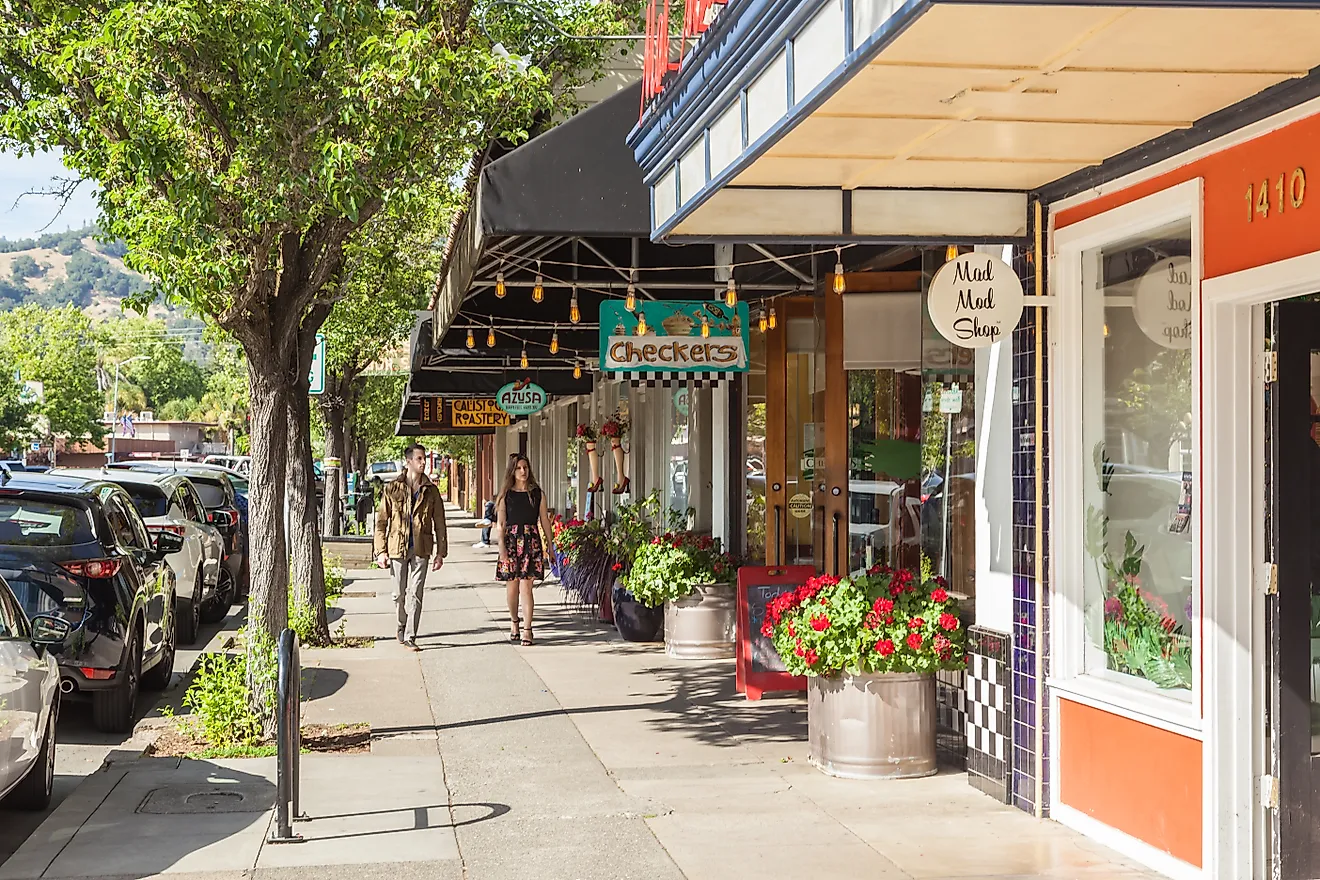
The best downtowns in the Pacific Northwest are built on history but stay lively with present-day arts scenes, independent coffee shops, and year-round events. In Ellensburg, Washington, the annual Music Festival fills multiple downtown venues each summer. In Ashland, Oregon, the Oregon Shakespeare Festival maintains three theaters on Main Street. In Walla Walla, a wine region that started with four wineries in 1984 now has over 100 tasting rooms within reach of the downtown historic district. These eight Main Streets show what happens when Pacific Northwest towns hold onto their architecture and fill it with something worth visiting.
Bremerton, Washington

Bremerton sits along the Sinclair Inlet in Washington, with a downtown whose roots go back to 1892, when the town's first post office was built at Sixth Street and Pacific Avenue. The Kitsap History Museum's Walking Tour covers 15 historic structures built between 1893 and 1950. The museum itself occupies a mid-century former bank building and features permanent and rotating exhibits, including a Main Street exhibit that recreates Bremerton life from a century ago with storefronts for jewelers, grocers, and photographers.
Community events like Make Music Day fill the downtown with live performances and add to the district's arts scene. The Historic Roxy Theatre, built in 1941 on Fourth Street, still operates as a movie theater and hosts live events after a 2017 renovation by the nonprofit Roxy Bremerton foundation. The Admiral Theatre on Pacific Avenue, built around the same time, also hosts live events, movies, and conferences.
Ashland, Oregon

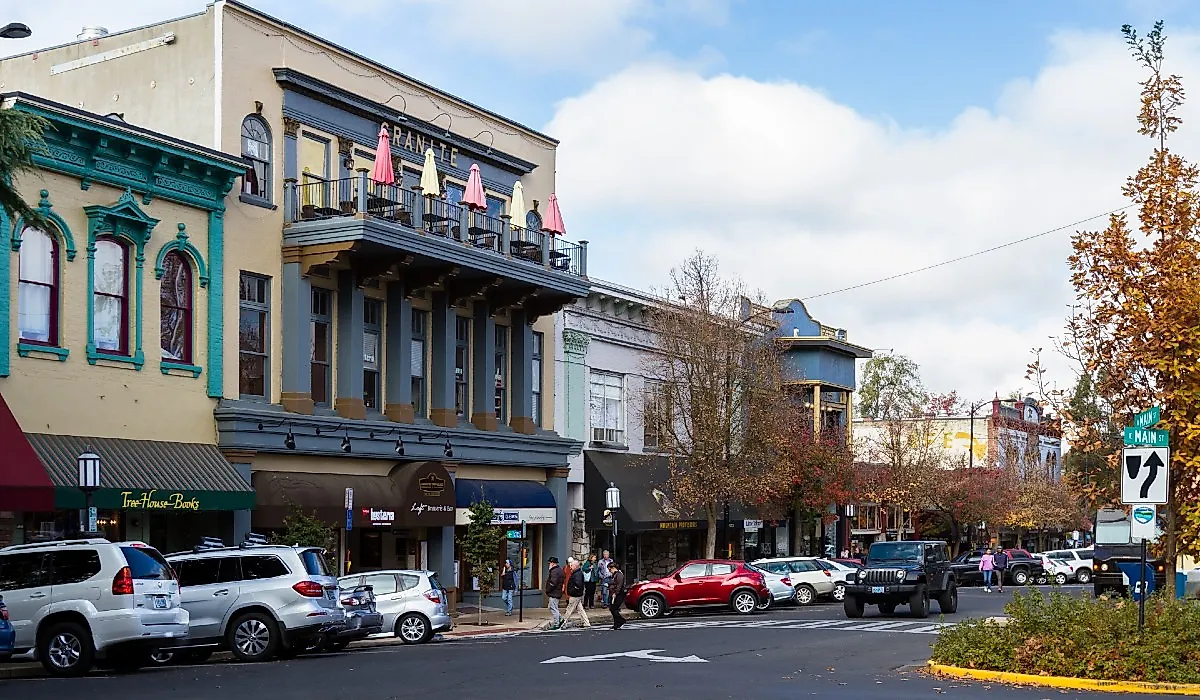
Ashland's Downtown Historic District, listed on the National Register of Historic Places, has been a commercial center since European settlers established it in 1852. On the west end of Main Street, the Oregon Shakespeare Festival operates three performing arts theaters. The festival traces its origins to the 1890s Chautauqua movement and evolved into a year-round professional theater company that is now one of the most respected in the country.

One block down Main Street, the Ashland Springs Hotel occupies the historic Lithia Springs Hotel, built in 1925 and also listed on the National Register. The Gothic and Beaux-Arts building was purchased and restored in 1998, with an English garden featuring tables, chairs, and decorative lighting. The hotel and the theater district together make Ashland's Main Street one of the most culturally concentrated stretches in the Pacific Northwest.
Hood River, Oregon

Hood River sits on the Columbia River in northern Oregon, and Oak Street is its Main Street. The town's agricultural roots date to the 1850s, when the Coe family planted the first fruit trees in the Hood River Valley, and the arrival of rail service in 1882 helped the settlement grow. Near the east end of Oak Street, the Mount Hood Railroad, in operation since 1906, offers scenic round-trip train excursions and two-person railbike rides through the surrounding orchards and farmland.

The 301 Gallery, in the historic Butler Bank Building (1924, listed on the National Register), displays modern fine art in the middle of the downtown strip. Dog River Coffee and Doppio Coffee & Lounge anchor the local coffee scene on Oak Street. Georgiana Smith Park, on land donated to the Library Foundation in 1999 and named after one of Hood River's earliest settlers and library supporters, provides public green space downtown.

Ellensburg, Washington

Ellensburg, in central Washington, started around 1872 with a blacksmith shop, a general store, a saloon, and a post office. The Downtown Ellensburg Historic District is now listed on the National Register of Historic Places, with buildings dating to the late 1800s. The Kittitas County Museum on Third Avenue features 50 displays across eight permanent exhibits covering the 1889 Ellensburg fire, Ellensburg blue agate, neon signs, antique automobiles, and more.

Gallery One Visual Arts Center, near the corner of Fourth Avenue, occupies the colorful historic Stewart Building and hosts studio tours, workshops, and rotating exhibits. The annual Ellensburg Music Festival brings live performances to multiple downtown venues each summer. A block away, the Ellensburg Rodeo Hall of Fame displays photographs, prize buckles, saddles, and other memorabilia from the Ellensburg Rodeo, which has been running since 1923.
Walla Walla, Washington

Walla Walla's downtown grew from Fort Walla Walla, built in 1856, with cabins, shacks, and tents springing up nearby by 1859. The Idaho gold rush of 1861 brought miners, merchants, and ranchers to the booming town. In the 20th century, the wooden buildings were replaced with brick, the streets were paved, and the Walla Walla Downtown Historic District was eventually listed on the National Register of Historic Places.

The wine industry reshaped the town's identity starting in 1984, when the Walla Walla Valley became an American Viticultural Area with just four wineries. Today, the downtown historic district includes over 10 tasting rooms on Main Street alone. Seven Hills Winery occupies the restored Whitehouse-Crawford building (1904) on North Third Avenue. The Walawala Plaza on First Avenue and Main Street, built with strong community support, provides an outdoor gathering space with bright yellow tables, chairs, and strung lighting.

Pendleton, Oregon

In northeastern Oregon, Pendleton's Main Street dates to the 1860s, when the Goodwin family turned a cabin into Goodwin Station. By 1909, Main and Court Streets were paved and the Pendleton Train Depot opened. Like Walla Walla, most of the wooden buildings were eventually replaced by brick structures with basements connected by underground sidewalks and delivery spaces. The South Main Street Commercial Historic District is listed on the National Register of Historic Places.

The Heritage Station Museum, in the renovated 1909 train depot, features exhibits including the Byrd Schoolhouse (1879), a 1942 train caboose, and the 1914 Signal House. The Pendleton Underground Tours offers guided tours through the 20th-century underground passages, including the Shamrock Card Room, the Empire Ice Cream Parlor, and a duck pin bowling alley. Across the Umatilla River on Main Street, the Pendleton Center for the Arts occupies the restored 1916 Umatilla County Library and maintains an active calendar of art exhibits, live music, literary events, and dance.
Baker City, Oregon

Baker City's Main Street (formerly Front Street) started with a saloon, a boarding house, and the Baker City House in the 1860s. An 1886 fire burned several businesses, and the brick replacements built afterward still stand today. The Baker City Historic District is listed on the National Register of Historic Places.

The Geiser Grand Hotel, on the north end of downtown, first opened in 1889 and was later restored with mahogany columns, Victorian chandeliers, and a large stained-glass ceiling. The hotel hosts events ranging from daily tours to murder mystery dinner parties. Peterson's Chocolates, also on Main Street, combines regional art displays with artisan chocolate and hosts monthly receptions during First Friday Art Walks. Barley Brown's Beer, in the renovated 1940s Gwilliam Brothers Bakery building, brews award-winning craft beer and serves pub fare.
Hailey, Idaho

Hailey, Idaho, became the county seat in 1881, and the Hailey City Hall offers a self-guided walking tour through the old town. The Blaine County Historical Museum, on the north end of Main Street in a building from 1882, preserves exhibits on mining, transportation, ranching, Sun Valley Resort, and Native American history. The museum also features a section on the writer Ezra Pound, who was born in Hailey in 1885.

One block from the museum, the Liberty Theater was built in 1938 and later purchased and restored by Bruce Willis and Demi Moore in 1994. They donated the theater to the Sun Valley Center for the Arts in 2017, and it continues to operate as a performance venue.
Eight Main Streets, One Region
These eight downtowns share a pattern: historic buildings that survived fires, floods, and decades of change, now occupied by theaters, galleries, tasting rooms, and locally owned shops. Bremerton and Ashland keep their performance arts tradition alive in vintage theaters. Hood River's Oak Street runs from a century-old railroad to a modern gallery. Walla Walla turned a frontier outpost into wine country. Pendleton lets you walk underground where delivery tunnels once connected the businesses above. Each town treats its Main Street as something worth preserving and something worth showing up for.