6 Fairy-Tale Small Towns In Portugal
Located on the westernmost part of the Iberian Peninsula in southwestern Europe, Portugal has just one neighbor, Spain, and borders the glistening Atlantic Ocean, with towns like Azenhas do Mar clinging to the seaside cliffs. Europe's oldest nation-state, with fixed borders and roots in Phoenician, Roman, and Moorish cultures, boasts over 400 castles, with one or more in five of the six towns below.
King Afonso Henriques conquered many towns like Óbidos and Monsanto, one of the 12 Beira villages in east-central Portugal, known for its many castles and their crucial strategic role in defending the nation's borders. Each compelling destination powers your exploration along cobbled streets and across stunning landscapes for a storybook escape.
Azenhas do Mar

Azenhas do Mar is a literal cliffhanger along N375, atop limestone cliffs cascading into the jewel-toned Atlantic. The town with white rust-roofed houses from the mid-20th-century postcards inspired artists and lured the city elite to the stunning oceanside, whose homes you can admire outside of the original cluster of the fishing community. With some, designed by Portugal’s leading architects, their traditional blue-and-white tile façades reflect an authentic "Portuguese style."

Home to fewer than 1,000 residents, the town clinging to the cliff is like a seaside fairytale, provoking tourists with scenic viewpoints and fine dining. After exploring the maze of narrow streets and patios tipping over the coast, you can stroll along the sandy Praia das Maçãs to the south, and catch a view of the entirety of the town. Find yourself in awe of the unfolding sunset over coffee, pastries, or beer from the sandwich shop Mensagem's top deck.
Belmonte

Home to under 7,000, this captivating town at the eastern edge of the Castello Branco District spans ancient and medieval eras with religious history and antiques from the national heritage. In Belmonte, the birthplace of the man who accidentally discovered Brazil, you can discover castles, visit an olive oil museum, and relax along the uncharacteristically calm flow of the River Zêzere, one of the country's longest rivers. Erected around the 13th century, Castelo de Belmonte is a national monument.

The fortified fortress boasts an open-air amphitheater design, majestic walls, and the Pedro Álvares Cabral family’s coat of arms, a granite work of art on the Manueline window, overlooking Serra da Estrela, the highest point on mainland Portugal. Some 2.5 miles north, Centum Cellas Tower stands alone on a desolate hill. The lonesome Roman monument in the frame of the sky and distant mountains is one of Portugal's best preserved, with obscure origins behind its random shape.
Marvão

Poised on a granite ledge in the heart of Alentejo, a hilly wine-producing region near the Spanish border, Marvão is a poem of deep lore and lush nature in a medieval environment, with hilltop views of the Serra de São Mamede, a mountainous national park to the south full to bursting with trails and native species. The 8th-century Castle of Marvão dominates a rocky hill, with various tours and views. Visit O Castelo, an espresso bar serving from an extensive drink menu with views.

Surrounded by centuries-old walls, Marvão's whitewashed houses with wrought-iron balconies and charming narrow streets inspire antique hunters and photographers alike, plus hikers and those looking to tantalize their taste buds with rich regional flavors and wine tours. Next to the municipal museum, snap a photo by the Santa Maria Church and cross the street to the Jardim do Castelo de Marvão, featuring floral patches and a refreshing pond fountain along the landscaped paths.
Monsanto

Inhabited since Paleolithic times, Monsanto, one of the 12 Beira villages near the Spanish border, was considered the "most Portuguese village" of the country in 1938. Despite being difficult to reach, the village built between giant granite boulders on a steep hill (Mons Sanctus) was an important regional trade center throughout the Middle Ages and a defensive station until the 19th century. The ruins of Monsanto Castle stand at the top of Mons Sanctus, which you can explore for close-up details and incredible landscape views.

Monsanto maintains its medieval allure with a small population and distinct architectural features. The stone houses carved into the rocks reflect the use of natural boulders as walls and roofs, their green gardens climbing up the narrow alleys, such as “casa de uma só telha” (house with just one tile), and even the iconic castle. The Capela São Pedro de Vir à Corça is a 17th-century chapel nearby, while the Quinta de São Pedro de Vir-a-Corça serves as a romantic hotel stay in a historic building.
Óbidos

In Óbidos, history courses deeper than the narrow cobblestoned streets, nearly unchanged since the 1600s, with traditional homes, restaurants, and businesses. The thick-walled town of around 3,100 still reflects those who laid the foundation of the medieval castle, its most well-known feature. Between 711 and 1148, Muslim forces fortified the city while building and adapting key structures like Castelo de Óbidos, a blend of Moorish and medieval Gothic styles.

The Church of St. Mary was the site of King Afonso V's royal wedding in the 15th century, while in the late 16th century, the magnificent Aqueduto de Usseira supplied water to the walled city. Some 88 kilometers from Lisbon, near the ocean coast, Óbidos is one of the most traditionally Portuguese towns alive, with flower-draped streets, stone turrets, and church steeples adding layers to the scenery. The 9th-century castle houses a luxury hotel for a unique medieval overnight experience with modern amenities.
Piódão

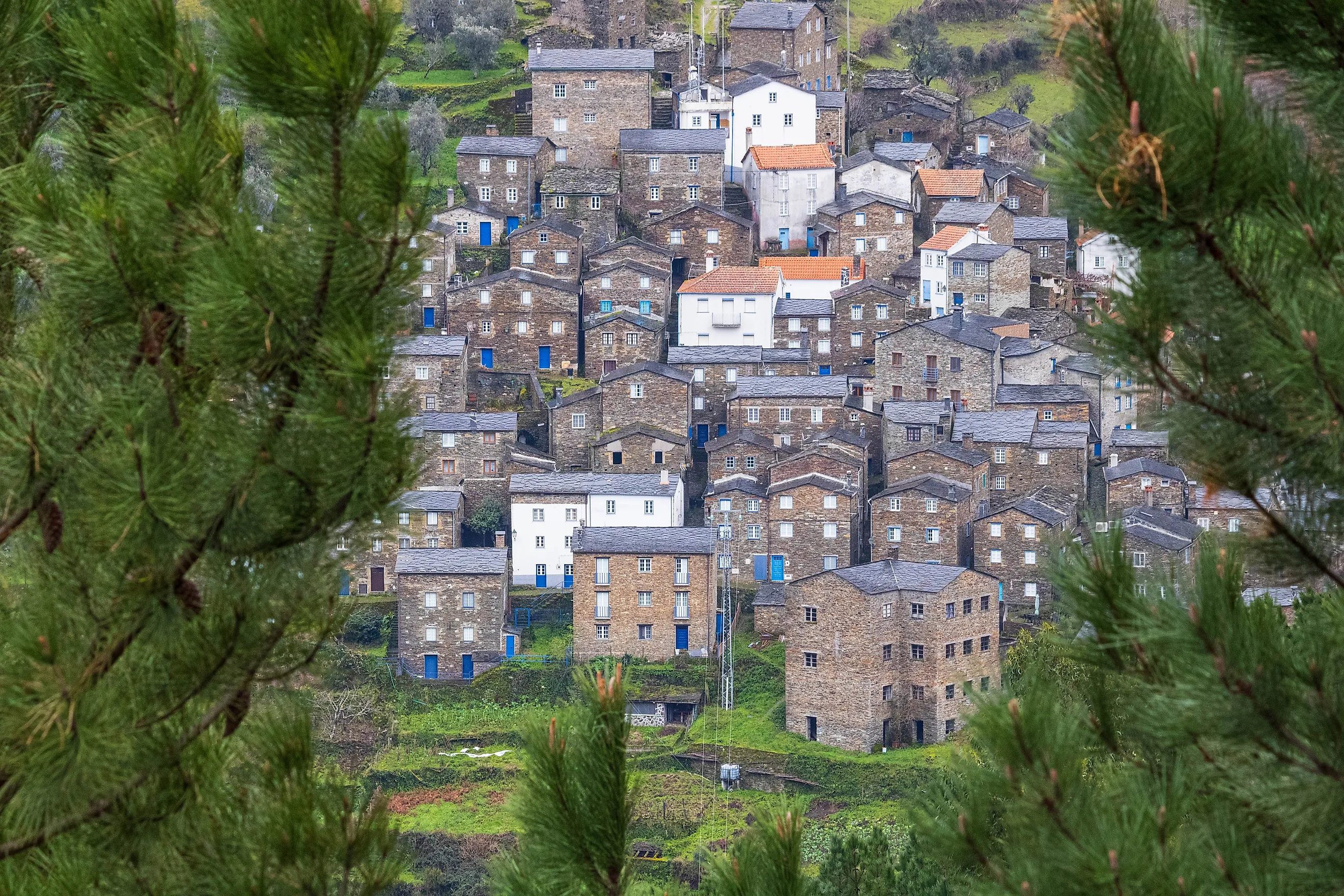
Piódão, long-settled by a mix of cultures, offers a glimpse into the traditional Portuguese rural lifestyle, tracing back to the Middle Ages, with historic architecture. Designated a National Heritage Site, the self-reliant town of under 100 utilized land resources for livestock, produce, olive oil, and even mining from the mountain. While many residents left Piódão for the big cities, you can chat up the locals in a homey ambiance at the family-owned O Fontina, serving local delicacies alongside familiar dishes.

Built on the ledges that climb the slopes within the Serra do Açor mountain range, the schist village is made almost entirely of a local metamorphic rock that blends into the mountainside. Strolling along their dark, earthy façades, you can admire blue doors and twig crosses along the winding, unpaved streets, as well as breathtaking views. Cascata Peneda da Sombra is a scenic waterfall some 25 minutes south by foot, while the Memorial Miguel Torga is a worthy detour to catch the sunset over town.
Portugal is often considered a top, safe, and affordable European tourist go-to with an ideal climate and rich cultural heritage. Pioneering the Age of Discovery with unmatched naval skills and the longest-lasting colonial empire, the nation-state is almost too much to wrap your head around and easier to write off as a fairytale.
From the coastal beauty of Azenhas do Mar to the wine region in Marvão and the traditional schist village of Piódão, each fairytale town of under 20,000 souls reveals a slice of the country known for its world-class cities, wines, and cuisine. Southern Portugal offers sunny weather, with rolling plains and hills transitioning to the extensive coastline with distinctive cliff formations and beaches.