5 of the Oldest Incorporated Towns in The Southern United States
No other region of North America can quite match the Southern United States when it comes to fascinating history. Stretching from the Atlantic Coast to the Gulf of Mexico and westward into the former territories of French Louisiana, this vast and culturally diverse region is home to a remarkable collection of historic settlements. Among them are some of the oldest incorporated towns in what is now the United States.
Founded decades before the American Revolution, these historic towns were home to some of the earliest European expeditions to reach the continent, witnessing colonial governance and the upheavals that culminated in the birth of a nation. As you prepare to celebrate America’s 250th birthday in 2026, get to know these old incorporated towns in the South that were there when it all began.
Bath, North Carolina

The North Carolina community of Bath isn’t just the oldest incorporated town in the state; it’s one of the smallest. Home to just around 240 residents, it received its charter in March 1705, a decade or so after French Huguenot refugees began settling the area in the 1690s. By 1708, Bath had established itself as a trading place for furs and tobacco, putting it firmly on the young territory’s map.
Bath also became infamous as the home of the notorious Blackbeard, a pirate who settled here in 1718 after receiving a royal pardon. Despite marrying a local woman and cultivating a friendship with local politicians, his time in Bath lasted less than a year after a Royal Navy expedition killed him in a battle at Ocracoke Inlet.

The pirate's legend, however, lives on here. Local guides recount tales of spooky lights along Bath Creek, where his vessels once anchored, and ghost tours of Historic Bath provide plenty of fodder for speculation about the legendary figure. Historic sites here include St. Thomas Episcopal Church, constructed in 1734 and the oldest still-in-use church building in North Carolina; Palmer-Marsh House, built around 1751 and one of the oldest and largest residences from the colonial period; and Van Der Veer House, dating to 1790.
Williamsburg, Virginia

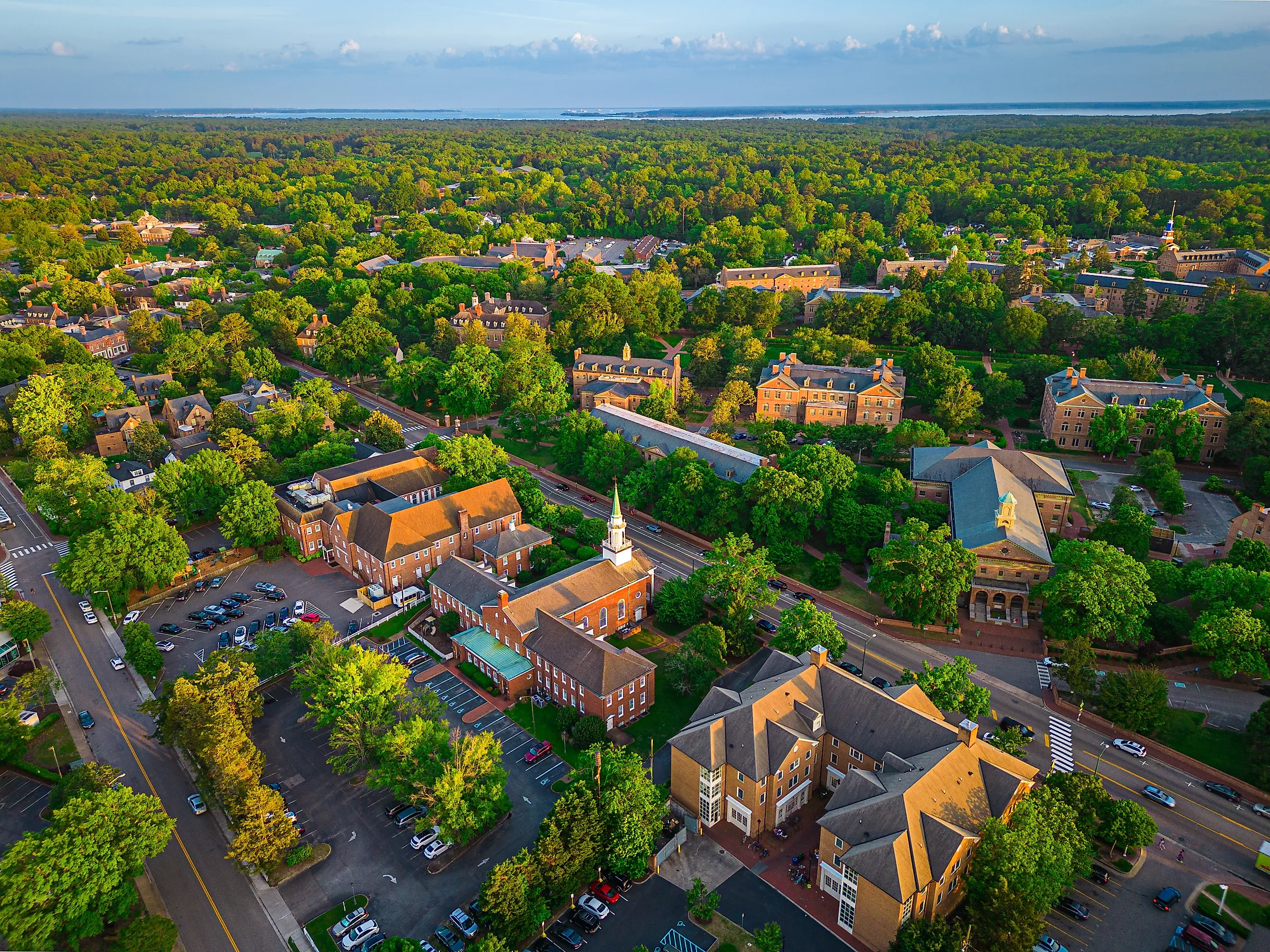
Although recognized by royal charter, an act that granted it “city incorporated” status in July 1722, Williamsburg’s story began much earlier. Back in 1632, English settlers had established a fortified community on the high ground between the James and York Rivers called Middle Plantation. After fires destroyed the statehouse in nearby Jamestown in 1698, the colonial government relocated permanently to this spot, renaming it Williamsburg in honor of King William III.
It served as the Colony of Virginia’s capital until 1780, and was where, on May 15, 1776, the delegates of the Virginia Convention instructed their representatives to declare independence from Britain. You can relive this remarkable period of time in Colonial Williamsburg, a sprawling living history museum that features many original and reconstructed buildings from this pivotal period in American history.

Highlights include visiting the Governor's Palace, completed in 1722, and the Capitol Building, where costumed interpreters reenact moments from the town’s early years. You can even pop into authentic old businesses where traditional crafts from blacksmithing to tin making and tailoring to dressmaking are demonstrated.
The College of William & Mary, founded in 1693 and the second-oldest institution of higher education in the country after Harvard, is also worth seeing. Set just outside Colonial Williamsburg (you’ll have to pass through Merchants Square to get there), it’s here you’ll find the Wren Building, built in 1695 and the oldest academic building in continuous use in America.
Edenton, North Carolina

Located on Edenton Bay at the head of Albemarle Sound, Edenton was incorporated in 1722, the same year Williamsburg received its royal charter. The region’s colonial capital until 1743, the town’s roots can be traced back even further to 1658 when settlers from Jamestown established the first permanent European settlement in present-day North Carolina.
Originally known as "the Towne on Queen Anne's Creek," the settlement was renamed in honor of Governor Charles Eden, who died in 1722. The town flourished as a port, trading timber and tobacco with England, the West Indies, and other British colonies.

Visit today, and you’ll see one of the most intact collections of 18th- and 19th-century architecture in the Southeast. Highlights include the elegant red-brick Chowan County Courthouse, completed in 1767 and still used for court proceedings (it’s now the oldest courthouse in continuous operation in the United States). Nearby, Cupola House, built in 1758, is famous for its second-floor cupola and Jacobean-influenced woodwork, while Lane House, dating to 1719, is one of the state’s oldest surviving dwellings.
Edenton was also the scene of one of the earliest organized political actions by women in American history. Constructed in 1782 on the town’s waterfront, Penelope Barker House was the home of Penelope Barker, who earlier organized the Edenton Tea Party when 51 women signed a declaration protesting British taxation. Now a museum, you can learn more about this brave act through exhibits and artefacts.
New Bern, North Carolina

Incorporated in North Carolina in 1723, New Bern was settled 13 years earlier by Swiss and German immigrants and was named after the Swiss city of Bern. Located at the confluence of the Neuse and Trent Rivers, it served as the colonial capital of North Carolina from 1770 to 1792 and hosted Provincial Congresses opposing British rule in 1774 and 1775.

Dubbed "the Athens of the South" for its cultural and political prominence, notable firsts include its being home to North Carolina's first printing press in 1749, its first newspaper in 1751, and its first chartered school, New Bern Academy, in 1764. Tryon Palace, the colonial governor's residence, reconstructed using original plans from the 1770s, provides an authentic look back in time through its displays of period antiques as well as its English-style gardens.
The North Carolina History Center features interactive exhibits on regional history, and is home to the Pepsi Family Center, celebrating the town's famous commercial legacy. Tours of the original Birthplace of Pepsi store are available and include samples of an old-fashioned fountain version of the cola.
Beaufort, North Carolina

Strategically positioned on the southern edge of North Carolina's Inner Banks, the small coastal town of Beaufort has changed little since 1709. Established as a fishing settlement (it was even called Fish Town for a while), the community was formally laid out in 1713 in a compact grid format, which remains largely intact today. Incorporated 10 years later, the town capitalized on its Beaufort Inlet location and was the safest and most navigable harbor on the North Carolina coast.

Blackbeard was known in these parts, too, especially after he ran his flagship, Queen Anne's Revenge, and his sloop, Adventure, aground near Beaufort Inlet. Artifacts recovered from the wrecks are on display at the North Carolina Maritime Museum on Beaufort's waterfront, including cannons, anchors, and personal items belonging to Blackbeard.
These days, Beaufort is a popular place to visit for its well-preserved historic district. In addition to many 18th and 19th-century homes bearing plaques noting the names of their earliest known owners, the Beaufort Historic Site provides guided tours of several restored buildings, including the Carteret County Courthouse, the Apothecary Shop, and the Old Jail.
Historic Towns Where the Past Lives On
There’s no better way to celebrate America’s Semiquincentennial (or 250th) anniversary than spending time learning about some of the oldest incorporated towns in the Southern United States. Together, these communities provide a unique opportunity to walk the very same streets and past buildings that have witnessed centuries of American history. Whether visiting for a weekend or simply sitting back in your favorite armchair and reading about them, the South's oldest incorporated towns offer a unique slice of Americana that’s well worth experiencing.