5 Classic Americana Downtowns In New Hampshire
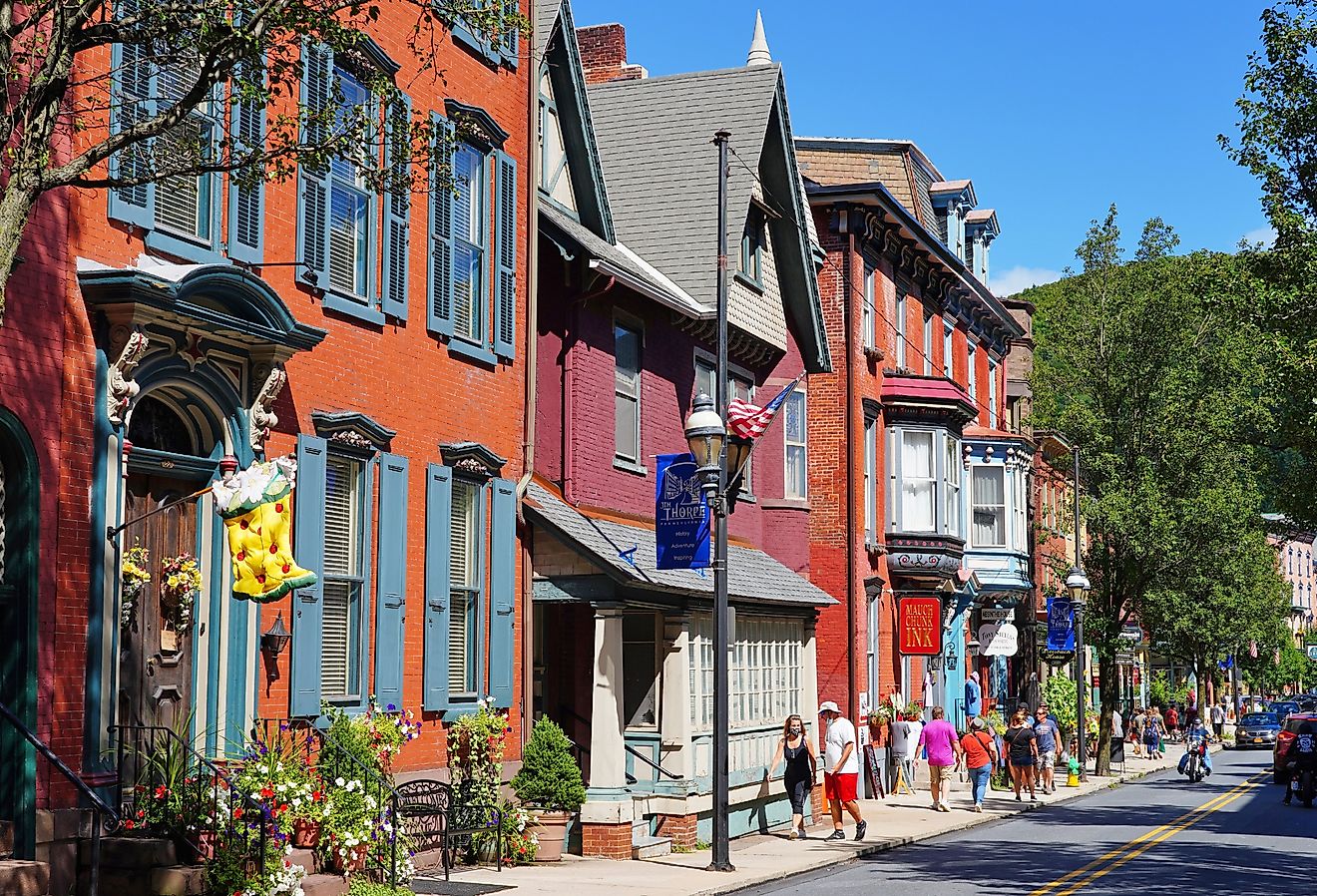
Regardless of the season, New Hampshire boasts a rich history and a quintessential New England atmosphere that is truly appealing. When people think of traveling to New Hampshire, they think of the state's natural wonders, its crisp winter days, and the mountains. There are over 1,500 classified elevations, including the White Mountains, a range covering a quarter of the state. These mountains make for a breathtaking backdrop to many of New Hampshire's towns and villages. These classic Americana towns are welcoming for their historic town commons, white-steepled churches, and architecture from the late Colonial and Revolutionary War periods. These walkable downtown districts feature historic red brick buildings, locally owned businesses, and nearby natural attractions, offering all the amenities you expect from a small New England town, and a feeling that can only be described as an ambiance rich in history, small-town charm, friendly people, and a quiet retreat from the everyday.
Portsmouth

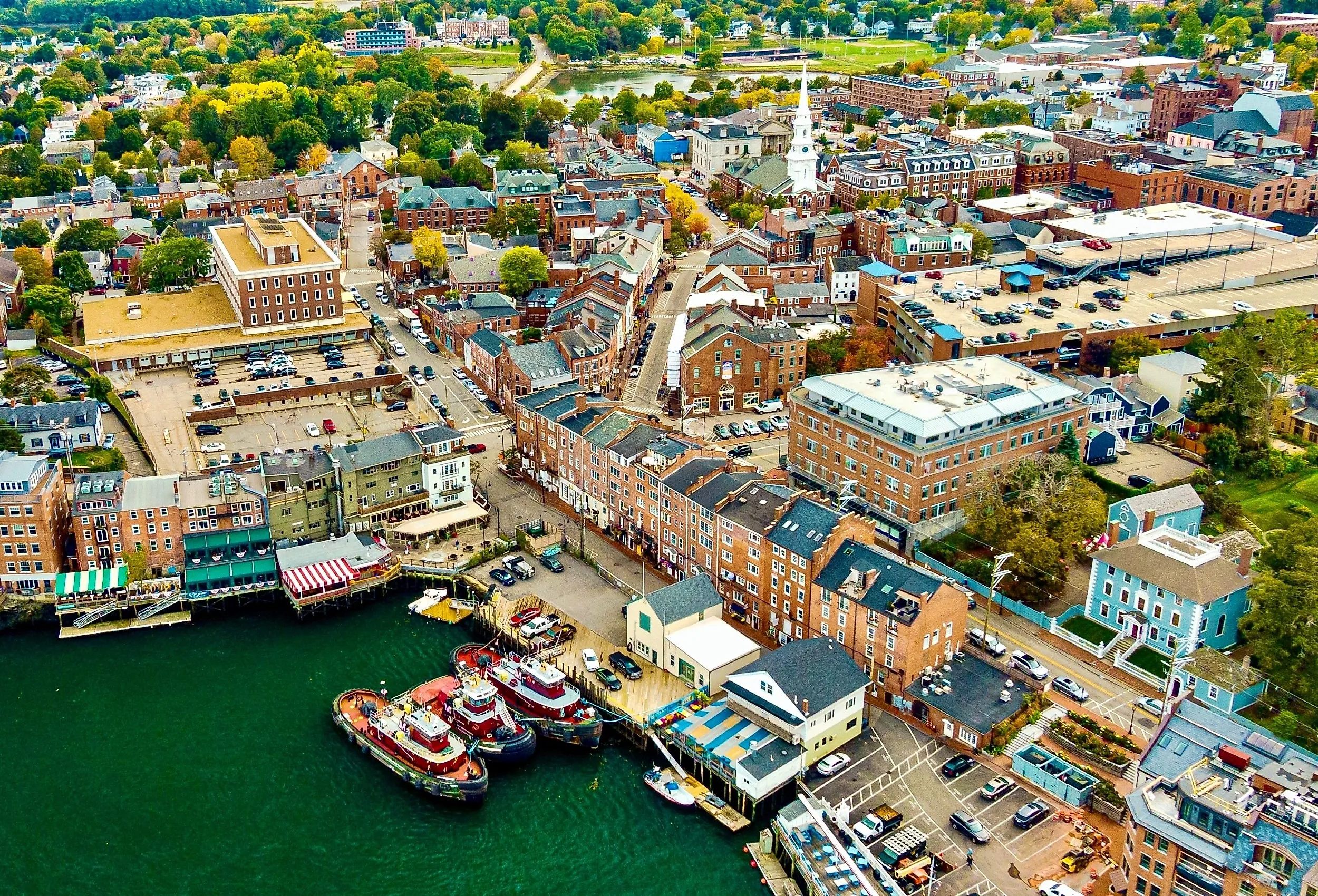
Portsmouth was incorporated in 1653, and its history is an integral part of the histories of Colonial America and the American Revolution. As a seaport, its maritime history is important, as is its position as a summer tourist destination. It sits on the Piscataqua River bordering the state of Maine, and being a maritime New England town, is part of its very fabric. Portsmouth also witnessed Paul Revere’s famous ride, passing through the town to warn of the British Navy heading for the port. The historic downtown borders the waterfront district, and the central Market Square is the focal point of many of the local shopping and dining options. Walking tours usually start there as well.

Located in Market Square, the Portsmouth Athenaeum, founded in 1817, is a membership library, located in three adjoining historic buildings. It is open to the public as a research library, art gallery, and museum. The Moffatt-Ladd House was built in 1763 and is now a museum. Its historic grand garden is maintained in its historical form and is a highlight. The museum is open seasonally, starting on June 1. For dining options in the waterfront district, the Water View Grill is highly rated and serves seafood with an outdoor bar overlooking the Piscataqua River, and an indoor lounge. In downtown at State and Penhallow Streets, Cure is a bistro specializing in American classics.
North Conway

A village within the town of Conway, North Conway has its own identity as a classic New England village nestled in the White Mountains. The area was initially known as Pequawket, from the name of the nearby Abenaki village. The name Conway comes from Henry Seymour Conway, part of a prominent English family, and the town of Conway was chartered in 1765. The village of North Conway developed as its own entity in the early 19th century, and soon became a popular destination for artists. Their paintings, in turn, attracted tourists to the area, and with the extension of railroads into the region, North Conway’s reputation as a resort destination was solidified. By the 1930s, “snow trains” brought winter tourists to North Conway to what was dubbed the Birthplace of American Skiing.

With the White Mountain National Forest at its northern and western boundaries, North Conway is a year-round resort area. Although much of the emphasis is on outdoor winter activities, North Conway itself is worth visiting for its classic New England downtown. The historic buildings from the 19th and early 20th centuries now house locally-owned businesses, with boutiques, antique stores, and plenty of dining options. Zeb’s General Store focuses on New England-made products, local foods, and hard-to-find nostalgic items. The North Conway League of NH Craftsmen Gallery was established in 1932 and exhibits crafts and furniture from New Hampshire artisans. Richard M Plusch Antiques is an eclectic shop sourced from New England homes. For food, The Local Grocer is a deli providing local and organic goods, fair trade coffee, in a solar-powered space.
Wolfeboro

Founded in 1759 and named for English General James Wolfe, Wolfeboro was opened to settlers starting in 1768, with the town being incorporated in 1770. This became a key summer retreat for the wealthy, and Wolfeboro was the first summer resort town in northern New England. Its reputation as a summer destination is stated in the town motto, The Oldest Summer Resort in America. As a summer colony for the elite, famous names such as Prince Rainier and Princess Grace of Monaco, and former President of France Nicolas Sarkozy are tied to the area. However, the town is not just for the rich and famous.

The waterfront downtown district overlooks Lake Winnipesaukee, the third-largest lake in New England. The main streets of the downtown area are lined with buildings from the late-19th and early 20th centuries. Here you will find locally-owned businesses, from boutiques and cafes to galleries and antique shops. For a sense of the town’s architectural history, the Avery Block on South Main Street is a yellow-brick building built in 1890 by John L. Peavey and maintained by the Avery family for over 90 years. It is situated at the center of town, near the docks. As an iconic building, the Avery Block is a starting point of the Downtown Walking Tour. For dining options, La Boca Restaurant & Market Wolfeboro, is run by a husband and wife team, with an emphasis on local ingredients. A Wolfeboro institution, Bailey’s Bubble ice cream shop is worth stopping by on hot summer days.
Keene

As the home to both Keene State College and Antioch University New England, Keene has a collegiate feel typical of a New England college town. In 1735, lots were granted to 63 settlers by the colonial governor for an area that was then called Upper Ashuelot. In 1753, it was renamed Keene after Sir Benjamin Keene, a British merchant. The historic downtown district is walkable, with Central Square and Main Street being the focal points. Overseeing the downtown is the United Church of Christ, a classic New England white clapboard building. The downtown is dominated by locally-owned businesses and is the location of the Horatio Colony House Museum, built in 1806 for the Blake and Colony family, and open seasonally.

Also located in the downtown district is Hannah Grimes Marketplace. This market features locally sourced food, crafts, and art from over 240 vendors. Walking tours of the downtown are available to take in the local history. A different kind of walking tour, the Walldog Mural Walking Tour, takes in over 15 murals throughout the downtown, depicting the history of the city. To take in the downtown history while taking it easy, Brewbakers Cafe is a coffee house with live music. A local brewery, Branch and Blade Brewing Company, specializes in fruited sours and New England IPAs, plus a full kitchen and outdoor seating.
Milford

Milford is a town on the Souhegan River. It came into being when it separated from the town of Amherst in 1794. Known for its granite quarries, granite from Milford was used for the pillars in the US Treasury Building in Washington, DC. Although granite production slowed down over the centuries, it remains the Granite Town. Milford was also an important stop on the Underground Railroad before the Civil War. It was home to Harriet E. Wilson, who, in 1859, wrote the first novel by an African American woman to be published in the United States. Nearly half of the Milford population lives in the town center, and as such, it is a busy and thriving downtown core. The downtown is anchored by Union Square, often called The Oval, which is filled with locally-owned shops, antique stores, and restaurants overlooking the Souhegan River.

Facing the Oval is the Milford Town House and Library Annex, commonly referred to as the Milford Town Hall. Built in 1869-1870 and enlarged in 1891, this primarily red brick structure was built in the Italianate and Second Empire styles. The bell tower contains a bell cast by Paul Revere in 1802. It is listed on the National Register of Historic Places. The Carey House Museum is the home of the Milford Historical Society for a taste of local history. The Harriet E. Wilson Memorial was dedicated in 2006 and is located in Bicentennial Park. For dining in the Oval, The Riverhouse Cafe offers breakfast, lunch, and drinks in a relaxed atmosphere, while Brickhouse Restaurant and Brewery is a highly-rated gastropub.
The Spirit of New England
For a taste of authentic Americana, these New Hampshire towns have class downtown centers and main streets, with turn-of-the-century red brick buildings, plenty of history, and all the charm one expects from New England towns. You may be there for the skiing or the fall colors, but each of these towns is worth stopping by to take in the atmosphere of small-town life, from antiques and quaint locally-owned stores to relaxed dining overlooking natural wonders or centuries of history.