5 Classic Americana Downtowns In Michigan
Michigan is deeply connected to the Great Lakes, bordering four of the five, and many of its towns developed along their shores. While Detroit is the state’s largest city and closely tied to automotive history, much of Michigan’s identity is rooted in smaller communities shaped by agriculture, shipping, and early European settlement. The state’s two peninsulas, divided by the Straits of Mackinac, fostered distinct town centers that grew as local hubs for trade, travel, and civic life.
Across both peninsulas, these towns developed walkable downtowns anchored by historic buildings, local businesses, and close ties to the surrounding countryside and waterways. Today, they reflect a classic Americana character grounded in place, history, and everyday community life.
Charlevoix

This town on the isthmus between Lake Michigan, Lake Charlevoix, and Round Lake is the gateway to Beaver Island, the largest island on Lake Michigan and a popular tourist destination. Charlevoix’s position on the northern end of the Lower Peninsula makes it an important hub for shopping and dining. Its lakeside placement and connections to the railroads in the late 19th century made Charlevoix a resort town. It also became an increasingly important destination for passenger liners. As tourism grew, the downtown district developed. A distinctive feature of downtown Charlevoix is the Mushroom Houses, built starting in 1918 by real estate agent and self-taught architectural designer Earl Young. These unusually shaped structures were made using local boulders.

Downtown Charlevoix is a walkable district anchored by Bridge Street. Its historic buildings house boutiques, galleries, and dining options, with a notable lack of chain stores. Within the downtown district, East Park features the Odmark Performance Pavilion, overlooking the marina, and hosts the Live on the Lake summer concert series. The Cultural Corridor is a section of downtown near the main shopping area and includes the Charlevoix Circle of Arts, the Harsha House Museum, and the public library. For a menu focused on local products, including seafood, Terry's of Charlevoix is highly rated, while Smoke On the Water features smoked meats and brisket and is open for breakfast and lunch.
Munising

Located in the Upper Peninsula, Munising sits on the southern shore of Lake Superior. The town is the gateway to the Pictured Rocks National Lakeshore, known for the multicolored Pictured Rocks cliffs, sandstone formations, and remnants of shipwrecks. Munising is a destination for outdoor activities year-round, even with colder temperatures and heavy snowfalls in the winter months. Downtown Munising is a walkable district with locally owned shops and dining options. It is particularly known for its local specialty, pasties. In the 1840s, miners from Cornwall in Britain immigrated to the region during the copper and iron mining boom. They brought with them recipes for Cornish pasties, meat and vegetables encased in a pastry crust.

Upper Peninsula pasties have become iconic to the region, and Munising has several options, including Muldoon's Pasties & Gifts and Miners Pasty Kitchen. Fresh Lake Superior whitefish and trout are fixtures in local restaurants. For casual dining, Cap'n Ron's Fish & Chips is associated with Matson's Fisheries, in operation since 1898. The eatery features Lake Superior whitefish baskets, sandwiches, and dip. The Duck Pond Eatery & Beer Garden is known for its Lake Superior whitefish tacos and a selection of craft beers. Bear Trap Restaurant, located nearby in Shingleton, has Friday night all-you-can-eat fresh whitefish.
Saugatuck

Called the Art Coast of Michigan, Saugatuck rose to prominence as an artists’ colony emerging from the 19th-century Arts and Crafts Movement. At the turn of the 20th century, artists settled in the area, particularly in and around the Ox-Bow School of Art and Artists' Residency, established in 1910 on the Kalamazoo River. The town developed studios and galleries, as well as the Saugatuck Center for the Arts. Saugatuck remains a center of art activity, with over 30 galleries and a walkable downtown district centered around Butler Street and Water Street. The town’s proximity to Lake Michigan is another attraction and remains a strong part of its identity.

The Butler Street thoroughfare features many historic buildings and is home to galleries and a lively shopping district. Numerous specialty shops share the area with dining options. Phil's Bar & Grille is a gastropub, while Borrowed Time is a small plate restaurant and wine bar. The area is also established with tasting rooms such as Fenn Valley Vineyards. For a sense of Saugatuck tourism history, the Saugatuck Chain Ferry is the only remaining hand-cranked ferry of its kind in the United States, carrying passengers across the Kalamazoo River. Docking off Water Street, The Star of Saugatuck is a paddle-wheel boat offering tours of the Kalamazoo River and Lake Michigan.
Petoskey

A noted resort destination in the northern Lower Peninsula, Petoskey attracts visitors to its setting on Little Traverse Bay. Popular for outdoor recreational activities, the town is also noted for its history and shopping. In Petoskey State Park, visitors take part in Petoskey Stone hunting, searching the area’s rocky beaches for the Michigan state stone. Petoskey stones, or Hexagonaria percarinata, are 350-million-year-old fossilized coral stones found on wet beaches and in shallow water. When wet, these gray stones reveal a distinct hexagonal honeycomb pattern.

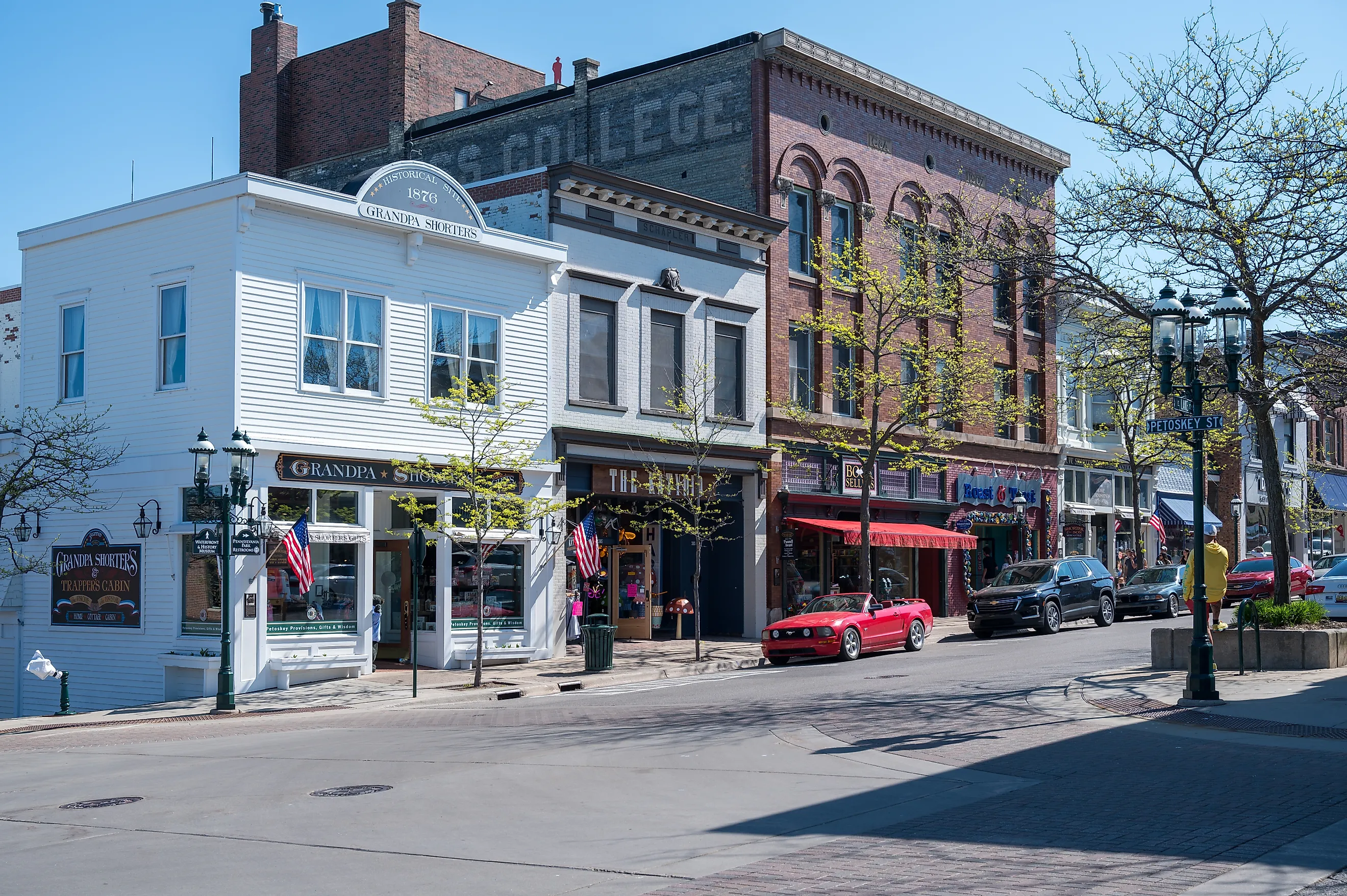
The Gaslight Shopping District is Petoskey’s historic downtown. Located on a bluff overlooking Little Traverse Bay in Lake Michigan, the district is named for the historic gaslights that line the streets. Converted for electricity, these gaslights remain part of the downtown atmosphere. The district features over 170 shops, galleries, restaurants, and bars housed within historic buildings. Many visitors come for the antique shops, and the area also includes locally owned small shops and boutiques. The area is also a designated social district that allows the consumption of alcoholic beverages sold by permitted participating businesses within the Commons Area. The 1911 Restaurant offers casual fine dining, featuring seasonal and local ingredients, and is located in the Terrace Inn overlooking Little Traverse Bay. Spring and Porter is a highly rated place for seafood and cocktails.
St. Joseph

Also known as Saint Joe, this small city on Lake Michigan in the southwest corner of the state is around 90 miles from Chicago, Illinois. Incorporated as a village in 1834, St. Joseph became a city in 1891. It sits on the Lake Michigan bluffs, and the downtown district features Victorian architecture and maintains old-time attractions such as the Silver Beach Carousel and the Whirlpool Compass Fountain. The downtown, centered on State Street, is a walkable area with locally owned businesses in historic buildings. It is adjacent to the waterfront on the St. Joseph River, beside Silver Beach. Lake Bluff Park offers views of Lake Michigan and the North Pier lighthouses.

The Krasl Art Center is a short walk from State Street and is a nonprofit organization focused on contemporary art exhibits, a collection of permanent sculptures, and education. For shopping, State Street features boutiques, antique stores, and dining options, as St. Joseph serves as the main cultural hub for Berrien County. The Chef's House on Main Street is a French bistro offering fine and casual dining. Silver Harbor Brewing Company is a brewpub with a variety of beers available, along with highly rated pub fare.
Downtown Traditions in Michigan
Michigan’s historic downtowns reflect the state’s long relationship with the Great Lakes and its small-town development patterns. Often located near the water, these downtowns grew as compact centers for commerce, culture, and gathering, and many still retain their original street grids and historic buildings.
With locally owned shops, longstanding restaurants, and strong connections to their surroundings, the towns featured here represent enduring examples of Michigan’s downtown tradition. They offer a clear picture of how history, walkability, and local identity continue to shape everyday life across the state.