12 Storybook Towns In Virginia
Storybook towns in Virginia cover areas from the Blue Ridge Mountains to the Eastern Shore. These scenic landscapes and historic streets create settings that feel lifted from the pages of a novel. On the Atlantic Coast and Chesapeake Bay, waterfront communities like Chincoteague and Cape Charles keep boating, fishing, and crabbing traditions alive. Farther inland, towns like Lexington are framed by the rolling peaks and valleys of the Allegheny Mountains. The Shenandoah Valley offers scenic drives and striking caverns with unusual rock formations. In the Tidewater and Blue Ridge Highlands, history and culture still shape the character of each town.
Luray

Outdoor recreation and natural beauty play a central role in Luray. It's located in the scenic Shenandoah Valley between the Blue Ridge and Massanutten Mountains, about 93 miles from Washington D.C. Downtown Luray is walkable with brick buildings, 19th-century architecture, and a pedestrian-friendly bridge over Hawksbill Creek. The surrounding landscape includes towering peaks, mountain cabins, and almost magical natural formations that make it a storybook town.
Luray Caverns is the largest cavern system in the eastern US. Stalactites, stalagmites, calcite formations, and beautiful blue pools of water create an otherworldly appearance. The Great Stalacpipe Organ, a massive structure inside the caverns, produces music using stalactites. Luray is also a gateway town to Shenandoah National Park, offering opportunities for hiking, wildlife watching, and driving along Skyline Drive.
Williamsburg

Williamsburg, between Richmond and Norfolk on the Virginia Peninsula, is straight out of a colonial-era storybook. Revolutionary and 18th-century American history are portrayed in the recreated village at Colonial Williamsburg, the world's largest living history museum. Costumed actors retell 18th century life through blacksmithing, tailoring, and wig-making demonstrations. The area features cobblestone streets, boxwood hedges, and English-style gardens. Horse-drawn carriage rides provide a way to learn historical facts from guides.
Merchant’s Square is adjacent to the colonial area. There are restaurants, shops, and specialty stores in a walkable village setting. Busch Gardens Williamsburg is a theme park with roller coasters, musical shows, and family-friendly rides within a European village setting. Sections of the park feature themes and food options from Italy, Germany, Scotland, and Ireland. The Williamsburg Winery is located at Wessex Hundred Farm. There are vineyards, cellar tours, a boutique hotel, a restaurant, and a tasting room on nearly 400 acres.
Cape Charles

Cape Charles is on the Chesapeake Bay, about 65 miles from Chincoteague, Virginia. The town is characterized by a coastal setting and a slower pace. Its walkable historic district, on the National Register of Historic Places, includes Victorian-era buildings adapted into small shops, boutique hotels, and restaurants that add to the town's storybook appeal.
Cape Charles Beach features a sandy shoreline and calm waters that support activities such as swimming and sunset watching. The Cape Charles Fishing Pier extends into the Bay and is used by anglers casting for striped bass, flounder, and spot. Boardwalk trails at Cape Charles Natural Area Preserve are accessible for birdwatching and nature viewing within the area’s 29 acres.
Chincoteague

Chincoteague is literally a scene right out of a book. Marguerite Henry’s 1947 “Misty of Chincoteague” is set on this Eastern Shore island. The book is based on a real-life horse. Reminders of the island’s equine heritage can be seen around town in its museums, shops, local stables, and annual events. The friendly town embraces a coastal vibe with scenic beaches, crab boats, and marshes.
Opportunities for birdwatching, kayaking, and spotting wild horses are available at Chincoteague National Wildlife Refuge. The Museum of Chincoteague Island features local maritime history and the real horse that became known as Misty of Chincoteague.
Irvington

Irvington is a small river town on Carter’s Creek in Virginia’s Northern Neck region. Carter’s Creek is a tributary of the Rappahannock River, which eventually meets the Chesapeake Bay. Irvington is about 68 miles from Richmond. Its historic district is characterized by a pedestrian-oriented layout and an Americana vibe. There are boutique shops and art galleries. Boating, oyster harvesting, and maritime history shape the community, making it a storybook town with river views.
The Steamboat Era Museum presents exhibits on steamboat travel on the Chesapeake Bay. The Rappahannock River has boating, fishing, and scenic views.
Occoquan

Occoquan is located in Northern Virginia, approximately 24 miles from Washington, D.C. in the Mid-Atlantic. The town's walkable historic district is characterized by narrow streets, wood-framed structures, and inviting porches. The area is home to art galleries, small shops, and boat docks along the Occoquan River. Painters and artisans can typically be seen at work in studios on Mill Street.
Outdoor recreation is a prime element of activity in the region. The Occoquan River provides access to kayaking, paddleboarding, and fishing. Nearby, Occoquan Regional Park and Occoquan Bay National Wildlife Refuge are other scenic areas for hiking, kayaking, and wildlife viewing.
Middleburg

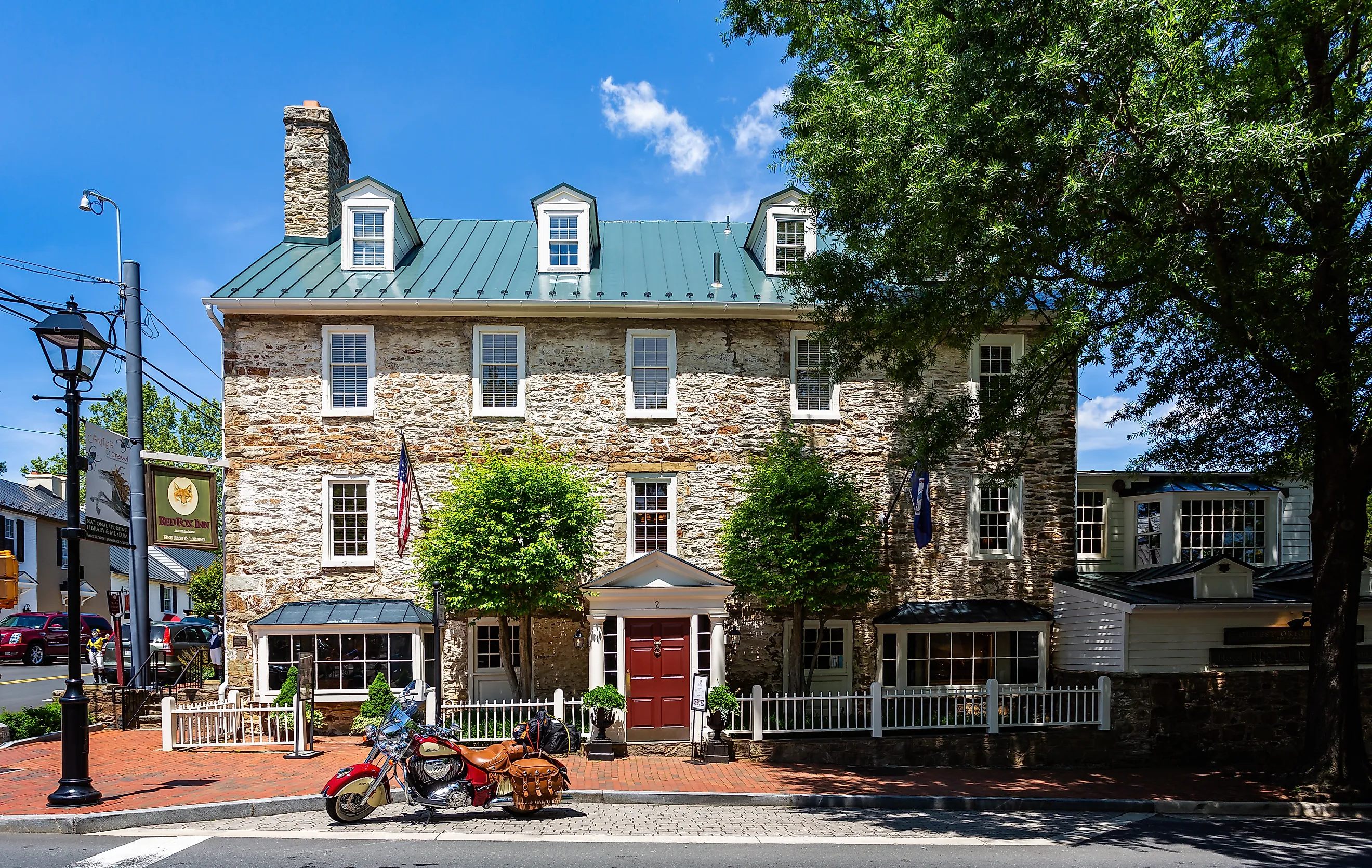
Middleburg is located in Virginia’s “hunt country” in the Piedmont region. It is approximately 45 miles west of Washington, D.C. The landscape is packed with vineyards, sprawling green pastures, and horse farms, resembling the English countryside. Equestrian life is evident in the area’s races, polo matches, and fox hunting events. The Middleburg Historic District adds 18th- and 19th-century buildings, stone structures, and brick sidewalks to this storybook town.
The National Sporting Library and Museum focuses on fine art and the area's history of fox hunting and equestrian sporting events. The Middleburg Hunt Races are a popular annual steeplechase event. A local boutique winery, Greenhill Vineyards, produces a range of wines and offers on-site tastings and tours.
Winchester

Winchester is located in the Northern Shenandoah Valley and is associated with sprawling fields of orchards. It is most famous for apples but also grows many acres of pear, peach, and cherry groves. Farmers’ markets operate throughout the region. Winchester was founded in 1744 and is the oldest city in Virginia west of the Blue Ridge Mountains. American history plays a large role in area attractions. Old Town Winchester is a National Register Historic District with 18th- and 19th-century architecture, brick-paved streets, and small businesses in a pedestrian setting.
The Shenandoah Apple Blossom Festival, a beloved 10-day celebration of spring that began in 1924, is one of Winchester’s most cherished traditions. Beyond the festival, the Museum of the Shenandoah Valley offers another look at the area’s heritage, with beautifully maintained gardens, an art museum, and the historic 1794 Glen Burnie House.
Lexington

Lexington is in Virginia’s scenic Shenandoah Valley between the Blue Ridge and Allegheny Mountains. It is approximately 44 miles from Lynchburg. The college town is the site of Virginia Military Institute (VMI) and Washington and Lee University. Its walkable downtown has preserved 18th-century architecture, small shops, and local restaurants. The Lexington Historic District is also listed on the Virginia Landmarks Register and the National Register of Historic Places.
Lexington’s location near the George Washington and Jefferson National Forest offers easy access to hiking, biking, and time outdoors. In town, Boxerwood Nature Center and Woodland Garden features 15 acres of native plants, and Jordan’s Point Park has trails and kayaking access. For local history, the VMI Museum tells the story of the well-known military college.
Natural Bridge

Natural Bridge creates a storybook scene with limestone boulders, towering natural formations, waterfalls, and lush forests in the James River valley. It is at the southern end of the Shenandoah Valley, approximately 40 miles from Roanoke. The town's historic district includes the Natural Bridge Hotel, Washington Hall, and Colonial-Revival architecture.
Natural Bridge State Park is dominated by the 215-foot Natural Bridge, a natural limestone arch once owned by Thomas Jefferson. The park also includes Cedar Creek Trail, leading through a wooded gorge to Lace Falls, as well as the Monacan Indian Village and exhibit, where the history and culture of the region’s Indigenous people come into focus. Nearby, the 180-acre Virginia Safari Park is the only drive-through wildlife park in Virginia and features animals such as llamas, elk, and bison both on the drive-through route and in the walk-through village.
Floyd

Floyd is a cultural hub and creative community in Southwestern Virginia. It is located about 45 miles from Martinsville. The region is characterized by the mountains and farmland of the Blue Ridge Plateau. It also has deep roots in Appalachian mountain music and a strong artisan spirit. Its walkable downtown area is filled with art galleries, farmers’ markets, and antique stores. Local shops sell handcrafted pottery, jewelry, and glass artwork.
Floyd is a stop on the Crooked Road heritage music trail. This approximately 330-mile-long driving path runs through Southwest Virginia from Rocky Mount to Breaks, at the Kentucky border. It connects music venues, jam sessions, and cultural sites. The Floyd Country Store hosts live music events, including Friday Night Jamboree music jams featuring bluegrass, gospel, and country performances.
Abingdon

Abingdon is approximately 13 miles from Bristol in the Southwestern region. Its heritage as a trading post includes pioneers, colonial settlements, and Revolutionary soldiers. Its historic district is a walkable area with 18th- and 19th-century architecture, a farmer’s market, and local restaurants. The town is another stop on Virginia’s Crooked Road heritage trail and leans heavily into arts, culture, and outdoor recreation.
The Virginia Creeper Trail follows a former railroad route for 34 miles of biking and hiking. Nearby, South Holston Lake has boating and fishing with mountain views.
Virginia’s Storybook Towns
Virginia’s storybook towns blend natural beauty with local character. On the Eastern Shore, beaches, boating, and marine life create a relaxed coastal feel. In western Virginia, mountains, caverns, and scenic drives draw people outdoors. The Shenandoah Valley and Tidewater are rich in Virginia history. Meanwhile, Northern Virginia’s Piedmont is known for horse farms and equestrian traditions. Together, these towns feel welcoming and straight out of a storybook.