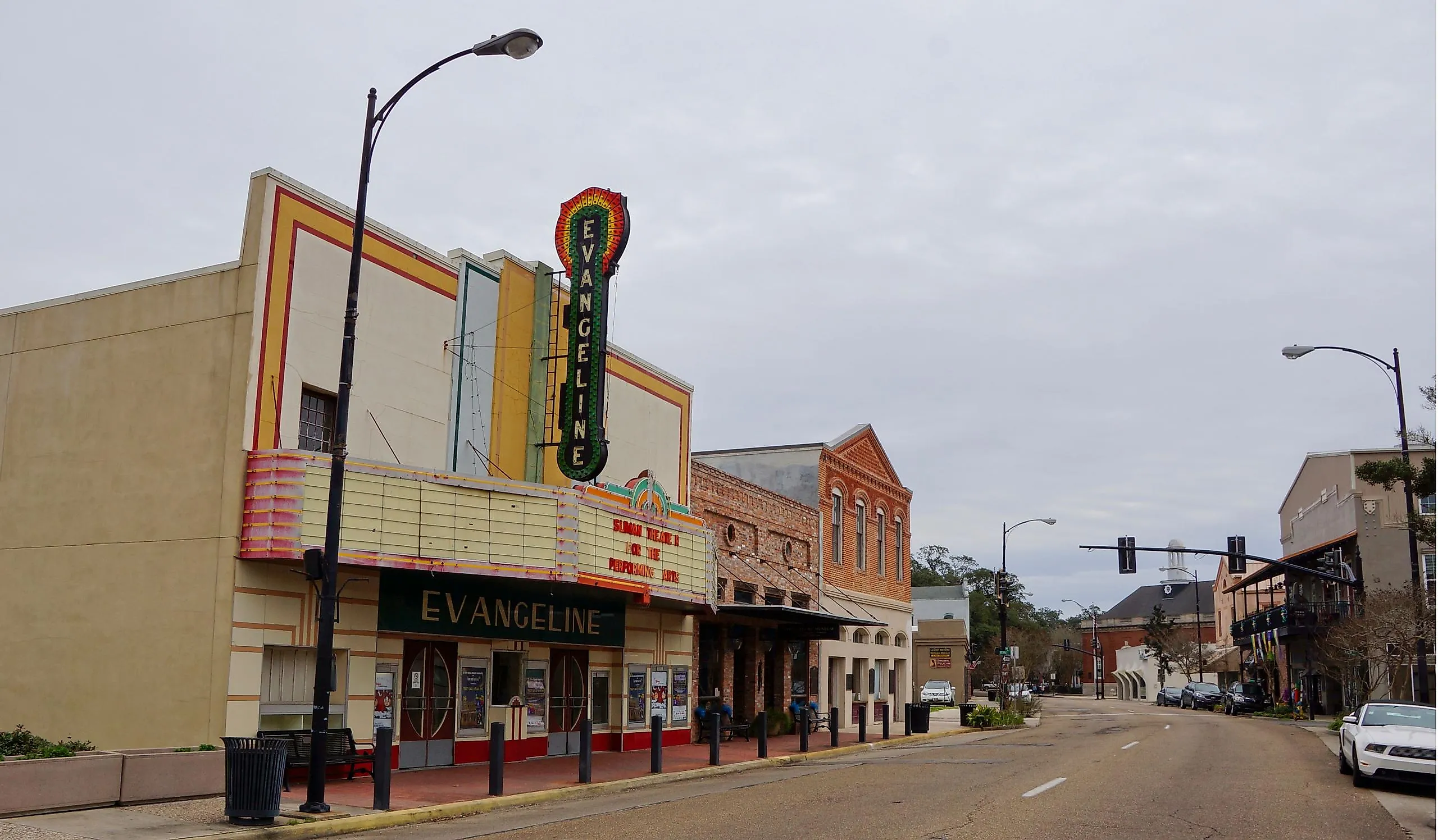
11 Towns Made For A Quiet Getaway In Louisiana
A quiet getaway in Louisiana might mean walking beneath 300,000 Christmas lights reflected in Cane River Lake. It might mean watching egrets lift off from a cypress stand while your kayak drifts in still water. Maybe it is dancing to zydeco before noon in Breaux Bridge. In St. Francisville shaded trails at Tunica Hills give way to evenings on porch swings at an 18th-century plantation turned bed and breakfast. The common thread across these eleven towns is a shared sense that a weekend need not be loud to be worth the drive.
Natchitoches

Holding the title of the oldest permanent settlement in the Louisiana Purchase, Natchitoches was established in 1714. Its brick-paved National Landmark District along Cane River Lake remains the town's center of gravity to this day. Front Street runs with wrought-iron balconies, local cafes, and shops that stay busy without feeling crowded, while the aroma of the town's famous meat pies drifts from restaurant doorways. The riverfront stays walkable year-round, but Natchitoches reaches its peak draw during the annual Festival of Lights, when over 300,000 lights and holiday displays draw visitors statewide into the historic district. Film history runs through the town as well: several sites from Steel Magnolias remain accessible, giving fans a reason to linger.
Lodging in Natchitoches runs deep, with one of the strongest collections of historic bed-and-breakfasts in Louisiana outside New Orleans. The Judge Porter House, built in 1912, has anchored the local inn scene since 1996, while the Queen Anne, a 1905 Victorian with wrap-around porches, earned a 2026 Go Natchitoches Award for Excellence in Lodging. The Church Street Inn and Chateau Saint Denis Hotel offer additional options within walking distance of Front Street.
St. Francisville

St. Francisville sits perched above the Mississippi River, with a population of only around 1,800, and its historic district moves to a pace set by porch swings and live oaks. The town earned national attention from Travel + Leisure as a top summer getaway, and the draw is immediate: shaded walking streets, antique shops, and historic home tours that carry visitors through the 19th century without the crowds of larger destinations. Rosedown Plantation State Historic Site preserves a formal 19th-century garden and antebellum home on a scale that rewards a full afternoon. A short drive outside town, Tunica Hills offers shaded hiking trails, ravines, and small waterfalls after a rain. The landscape feels unexpected in Louisiana.
The Myrtles Plantation, built in 1796 and named one of the most haunted houses in the United States by National Geographic, operates as both a museum and a bed-and-breakfast for those who prefer their overnight stays with a side of legend. Restaurant 1796 on the property serves wood-fired, farm-to-table dishes with ingredients sourced from the Myrtles' own farm, including goats and honeybees. Additional lodging includes the St. Francisville Inn, the Lodge at The Bluffs, and Hotel Toussaint.
Breaux Bridge

Claiming the official title of "Crawfish Capital of the World," Breaux Bridge backs it up with an annual Crawfish Festival and a year-round food culture rooted in Cajun and Creole traditions. Mornings in the downtown corridor can start with zydeco at Buck and Johnny's, a local institution where dancing before noon is perfectly normal. The antique scene runs serious here: Lagniappe, a 17,000-square-foot antique mall, anchors a shopping district that rewards browsers. Just outside town, Lake Martin offers swamp tours through cypress stands and still water where egrets, herons, and alligators make regular appearances.
Lodging options in Breaux Bridge lean toward the intimate. Maison Madeleine B&B and Bayou Cabins B&B both operate within minutes of downtown, while Bonne Terre Farm offers a rural stay on working acreage. The town sits only 10 miles from Lafayette Regional Airport and the University of Louisiana at Lafayette, making the Cajun culture of Breaux Bridge remarkably easy to access.
Covington

Covington anchors Louisiana's Northshore with a walkable historic downtown that pairs local food with outdoor access in a way few towns of its size manage. The Tammany Trace, a 31-mile rail-trail, starts here and draws cyclists and runners through a corridor of live oaks and open sky. The Southern Hotel, a restored boutique property in the heart of downtown, reflects what to expect from the lodging scene and gives visitors a reason to stay overnight rather than day-trip from New Orleans. Dining options, like Lola in Covington's old train depot and The Gloriette in the aforementioned Southern Hotel, cluster within walking distance, and the local food scene draws on Northshore produce and Gulf seafood.
For those who want water access, Big Branch Marsh National Wildlife Refuge offers kayaking and bayou paddling minutes from downtown, while Fontainebleau State Park sits a short drive east. Additional lodging includes the Camellia House B&B and several guesthouses in the historic district. Covington works as both a destination in its own right and a base for exploring the rest of the Northshore.
Thibodaux

Sitting along Bayou Lafourche, in the heart of Cajun Louisiana, is Thibodaux. Here, the waterway still shapes daily life and visitor experience. The historic downtown stretches along the bayou, and the Dansereau House, an 1847 Italianate mansion turned bed-and-breakfast, offers overnight guests a stay in one of the most architecturally significant homes in the region. Nicholls State University adds a layer of activity and culture to the town, while swamp tour operators use Thibodaux as a gateway into the surrounding wetlands.
The food scene is local and unpretentious. Spahr's Downtown is the definition of a local institution, serving the same gumbo and catfish chips to residents for almost 60 years. For a boat-shaped dish piled high with perfectly seasoned fish, head over to Grady V's and order the Cajun Redfish Pirogue. Sweet Elsa's Bed & Breakfast and the Carmel Inn & Suites are two more lodging options, making Thibodaux a practical base for exploring bayou country without the markup of New Orleans or the crowds of more heavily marketed Cajun destinations.
Ponchatoula

Ponchatoula calls itself the "Strawberry Capital of the World" and proves it every spring during the Ponchatoula Strawberry Festival, one of Louisiana's largest free festivals and a genuine statewide draw. The historic downtown doubles as an antiques district, with C.J.'s Antiques & Collectibles the largest at 15,000 square feet, and the Ponchatoula Country Market, housed in a former 1895 train depot, offering 30 booths for local art, crafts, and antiques along Pine Street. Visitors arrive for the strawberries but stay for the shopping: the antique inventory turns over regularly, and the small-town shopfronts reward repeat visits.
The Maison d'Or Bed & Breakfast is located in the historic district, while the Historic Michabelle Inn is just outside town, in nearby Hammond. Proximity to Manchac Swamp gives Ponchatoula an outdoor component, with swamp tours and fishing charters launching nearby. About an hour from both Baton Rouge and New Orleans, the town serves as a single-day escape or a weekend base.
New Iberia

New Iberia runs along Bayou Teche with a historic Main Street and a literary pedigree courtesy of crime novelist James Lee Burke, whose Dave Robicheaux series uses the town as a recurring setting. The Shadows-on-the-Teche, an antebellum home now managed by the National Trust for Historic Preservation, sits on the bayou and offers tours that examine both the planter class and the enslaved people who lived and worked there. A short drive away, Avery Island combines the Tabasco Factory tour with the Jungle Gardens, a 170-acre semitropical garden where over 20,000 egrets nest in season.
The Conrad Rice Mill, the oldest working rice mill in America, operates a tour and retail shop in town. Lodging options include Maison le Rosier, a historic downtown property listed on the National Register of Historic Places, the Estorge-Norton House B&B, and Bayou Chateau, a private chalet right on the bayou.
Mandeville

Facing Lake Pontchartrain from the Northshore is Mandeville, whose historic district offers lakefront walks, Creole architecture, and a maritime history that sets it apart from inland Louisiana towns. Mandeville is one of five communities linked by the 31-mile Tammany Trace, which begins in Covington, giving cyclists and runners a shaded route through the Northshore. The Dew Drop Jazz & Social Hall, one of the oldest jazz halls in the country, hosts live music in a space that has changed little since its construction began in 1895. Fontainebleau State Park, just east of town, offers camping, trails, and shoreline access on the lake.
Lodging in the Old Mandeville area includes Blue Heron Bed & Breakfast, de la Bleau B&B, and the Blume Cottage, a restored historic two-bedroom rental two blocks from the lake and steps from the Tammany Trace. Mar Villa Guest House and the Guesthouse on Girod add additional options within walking distance of the lakefront.
St. Martinville

St. Martinville ranks as the third-oldest city in Louisiana and is home to a literary landmark at its center: the Evangeline Oak, immortalized in Henry Wadsworth Longfellow's poem "Evangeline," which stands on the banks of Bayou Teche in the heart of downtown. The National Register historic district preserves the town's Acadian and Creole heritage through the Acadian Memorial Museum and the Church of St. Martin de Tours, one of the oldest Catholic churches in the state.
The Old Castillo Bed and Breakfast, built between 1835 and 1840, occupies a two-story historic home facing the Evangeline Oak and Bayou Teche. Its seven individually decorated rooms feature antique and reproduction furnishings, private baths, and balconies. The hotel also serves a complimentary Cajun breakfast to its guests. Additional lodging includes the Bienvenue House Bed & Breakfast, a Church in St. Martinville, and an Airbnb inside a 1904 church. Swamp tours operate 10 minutes from the hotel, and downtown Lafayette is only 20 minutes west.
Washington

With a population of only 711 residents, Washington holds the distinction of being an entire town designated a National Historic District. The town is a former 19th-century steamboat port on Bayou Courtableau, where the waterfront once bustled with cotton and commerce. Today, the historic district preserves the grid and storefronts of that era, and antique shops now fill the spaces that once held cotton brokers and shipping offices. The scale is intimate: visitors walk the whole district in an afternoon.
The Hotel Klaus, a boutique hotel in the historic district, and Steamboat Cottages provide lodging within the town itself. Washington sits roughly 10 minutes from Opelousas, the designated Zydeco Music Capital, where the Creole Heritage Folklore Center, Le Vieux Village, and Soileau's Dinner Club offer additional stops before retreating to Washington's quiet streets. The pairing makes Washington a practical base for exploring the region's Creole and zydeco heritage without staying in a larger town.
Grand Isle

Grand Isle is Louisiana's only inhabited barrier island, and the road literally ends here. Just follow LA-1 until you have arrived. Grand Isle State Park covers the east end of the island with beach access, fishing piers, and campsites facing the Gulf of Mexico. The town operates as a fishing destination, with charters running offshore for tarpon, tuna, and red snapper. Birding draws a quieter crowd: Grand Isle sits on a major migratory flyway, and spring and fall bring birders out to the island's oak-hackberry woods and chenier habitats. The annual Grand Isle Tarpon Rodeo, the oldest fishing tournament in the United States, fills the island each July.
Lodging follows a coastal cabin-and-inn model rather than the historic B&B pattern of inland towns. The Blue Dolphin Inn & Cottages offers beachfront rooms, and Bridge Side Cabins and Marina cater to fishing groups. Hurricane Hole Resort provides marina-adjacent lodging. Landry House B&B and Bill's Shady Lawn round out the options. Grand Isle is a destination for the Louisiana traveler who wants saltwater and sand without leaving the state.
A Quiet Louisiana Weekend, Found
These 11 towns operate at a different frequency than Louisiana's better-known destinations. Natchitoches offers the state's oldest streets and a B&B scene that rivals any small town in the South. Breaux Bridge delivers zydeco and crawfish in equal measure. Grand Isle gives Louisiana its only beach-town weekend, while Washington puts 711 people and a whole lot of history into a single designated district. Spring and fall reward the drive with festivals, cooler weather, and the kind of uncrowded weekends that remind in-state travelers how much ground there is to cover close to home.