11 Standout Main Streets In The Rockies
Across the Rocky Mountains, many towns developed around main streets laid out during the 19th-century mining and railroad booms, when a single corridor often handled most commerce and civic life. In some mountain towns, those original streets remain largely intact more than a century later. Places like Park City, Jackson, and Telluride rely on historic corridors that once served miners, rail passengers, and early settlers. Today, landmarks such as Park City Museum, Jackson’s Town Square, the Sheridan Opera House, and Breckenridge’s Gold Pan Saloon stay part of everyday downtown routines instead of sitting off to the side as historic set pieces. These standout main streets support businesses, institutions, and recurring events that keep downtown life active and connected.
Park City, Utah

Historic Main Street cuts through the center of Park City, Utah, and reflects the town’s shift from a silver mining settlement to a year-round resort community. The street follows a steep hillside, a layout that has changed little since the late 1800s, and its grade still shapes how buildings step upward along the corridor. Victorian-era structures line the street, many originally constructed as saloons, boarding houses, and supply stores during the mining boom that shaped Park City’s early growth.
Today, those same buildings house a dense mix of galleries, restaurants, museums, and performance venues within a compact downtown stretch. The Park City Museum sits directly on Main Street and documents both the mining era and the town’s later transition into a ski destination through permanent exhibits and archival collections. The Mary G. Steiner Egyptian Theatre, which opened in 1926, keeps the street’s cultural calendar busy with live performances and year-round programming.
Main Street also comes to life during the Sundance Film Festival, when multiple locations along the corridor host screenings and related events tied to the festival’s Park City presence. Long-running businesses such as No Name Saloon & Grill operate from early 20th-century buildings, maintaining continuity of use. Monthly gallery strolls organized by local arts groups reinforce Main Street’s role as an active downtown corridor rather than a preserved historic row.
Silverton, Colorado

Greene Street serves as the core of Silverton’s National Historic Landmark District and ranks among the best-preserved mining-era main streets in the Rockies. Sitting at more than 9,000 feet in elevation, the street features Victorian buildings from the 1880s that retain original facades and architectural character. The street takes its name from early pioneer George Greene, who supplied smelter equipment during the town’s early mining development.
Several landmarks define the corridor. The Grand Imperial Hotel, built in the early 1880s, welcomes guests today with lodging, dining, and social space within the downtown district. Nearby, the D&SNG Railroad Museum in Silverton sits at the Silverton Depot and fills in the railroad story tied to the Durango & Silverton Narrow Gauge Railroad. Just off Greene Street, the San Juan County Historical Society operates the Mining Heritage Center and related sites, including the former county jail and guided tours of the Mayflower Mill.
The historic corridor also supports seasonal events tied to Silverton’s winter recreation calendar. Silverton Skijoring runs down Blair Street in the historic downtown area and draws participants and spectators into the same walkable grid just off Greene Street. Shops and galleries such as White Eyes Gallery and Silver San Juan Gallery operate along or near the corridor, adding cultural activity within a downtown that keeps working as an active commercial district.
Whitefish, Montana

Central Avenue runs through downtown Whitefish and reflects the town’s beginnings as a railroad stop before its expansion into a recreation center near Glacier National Park. Early 20th-century commercial buildings line the street, many constructed during the arrival of the Great Northern Railway. Those structures remain in use and house restaurants, retail shops, and entertainment venues that operate year-round.
At the western end of the corridor, the Whitefish Depot functions as an active Amtrak stop and also houses the Whitefish History Museum, which documents the town’s railroad history and early settlement through permanent exhibits. Long-standing businesses such as the Great Northern Bar & Grill maintain direct ties to the railroad era, while newer businesses occupy restored storefronts without altering exterior architecture or original building footprints.
Central Avenue also supports cultural activity beyond dining and retail. Stumptown Art Studio operates near the downtown core and hosts exhibitions, classes, and community programs tied to regional artists. The Whitefish Theatre Company puts on performances throughout the year, adding a performing arts presence to the downtown area. Seasonal events remain part of the street’s routine use, with Central Avenue closing periodically for Winter Carnival activities, farmers' markets, and scheduled community events.
Lander, Wyoming

Lander’s Main Street developed in the late 19th century as a supply center for ranching, mining, and freight traffic moving through central Wyoming. Brick commercial buildings and wooden boardwalks from that period remain part of the streetscape, and many house businesses that serve daily needs rather than seasonal tourism. The street’s layout reflects its original role as a working corridor, with compact blocks and storefronts positioned close to the sidewalk.
Two museums sit within walking distance of the corridor and contribute directly to its identity. The Museum of the American West preserves frontier-era buildings and artifacts that document regional settlement, transportation, and early industry. Nearby, the Fremont County Pioneer Museum focuses on local history through rotating exhibits tied to agriculture, ranching, and community life. Both institutions keep their place in the downtown mix instead of sitting apart from the commercial core.
Businesses such as The Lander Bar, which opened in 1907 inside the historic Coalter Block, maintain continuity with the street’s early footprint while operating as an active bar and grill. Main Street also serves as the focal point for civic gatherings. Each July, Independence Day parades and celebrations follow the downtown route that has anchored community events for decades.
Wallace, Idaho

Bank Street sits at the center of Wallace, and the National Register of Historic Places lists the town in its entirety. That designation helps explain why late 19th-century brick buildings remain closely packed along the downtown corridor. The street reads as a compact commercial district, with short blocks and storefronts that support daily business activity.
The Wallace District Mining Museum focuses on the history of the Coeur d’Alene Mining District through exhibits, historic photographs, and a walk-through mine display. Nearby, the Northern Pacific Depot Museum adds railroad context inside a preserved depot setting, connecting Wallace to the broader rail network that once supported regional mining. The Oasis Bordello Museum preserves a former bordello as it stood when it closed in 1988, offering documented insight into a specific part of Wallace’s social history.
During scheduled events such as the Wallace Huckleberry Festival, vendors and programming fill the downtown grid and place Bank Street at the center of community activity.
Breckenridge, Colorado

Main Street in Breckenridge forms the backbone of one of Colorado’s largest historic districts and dates to the town’s Gold Rush origins in the mid-19th century. The corridor developed as a mining supply route and commercial center, and that layout remains visible today. False-front Victorian buildings line both sides of the street, many preserved under local historic guidelines and used for retail, dining, and civic purposes.
Several long-standing landmarks anchor the corridor. The Gold Pan Saloon has operated continuously since 1879 and ranks among the oldest businesses on Main Street. Nearby, the Breckenridge Welcome Center and Museum occupies a preserved log cabin and walks visitors through exhibits focused on mining, settlement, and early town development. The Breckenridge Heritage Alliance manages additional historic properties within walking distance of the corridor.
Main Street also functions as the town’s primary event space. Each winter, the International Snow Sculpture Championships transform nearby areas into a walkable outdoor gallery that channels foot traffic through the historic core. In addition to winter programs, Main Street remains the route and gathering space for scheduled parades and town-organized events tied to the historic district.
Hamilton, Montana

Main Street in Hamilton, Montana, acts as the commercial center of the Bitterroot Valley’s largest town and stays closely tied to local routines and community activity. Brick storefronts and low-rise commercial buildings reflect the area’s agricultural and mining past, and many house locally owned businesses rather than seasonal attractions.
One of the street’s anchors is the Ravalli County Museum & Historical Society, located in the former county courthouse. Inside, exhibits cover local history, natural history, and art, with permanent galleries focused on Indigenous history, pioneers, and regional wildlife. Restaurants and breweries such as Bitter Root Brewing and Nap’s Grill occupy long-standing downtown locations and operate year-round. From May through October, Saturday morning markets take place near Main Street, using downtown blocks for local produce sales and small-scale vendor activity tied to the surrounding valley.
Hamilton’s Main Street also turns into the center line for annual events that draw both residents and visitors. Daly Days, held each July, brings sales, street vendors, classic car shows, wiener dog races, and a farmers market into the downtown area. Nearby, the Bitterroot Brewfest adds craft beer tastings and live music to the seasonal calendar, while concerts presented by the Bitterroot Performing Arts Council take place at the Hamilton Performing Arts Center throughout the year.
Jackson, Wyoming

Jackson’s Town Square anchors the downtown grid at the intersection of Broadway and Cache Street and serves as the town’s primary civic space. Antler arches mark each corner of the square and frame the surrounding blocks, creating a defined center that links retail streets, public gathering areas, and historic buildings. The square’s layout has remained consistent as Jackson developed from a ranching and trading hub into a gateway community for nearby national parks.
Broadway extends outward from the square and works as the town’s main commercial corridor. Historic storefronts line the street and house restaurants, outfitter shops, and galleries connected to outdoor recreation and tourism. The Million Dollar Cowboy Bar, which opened in the 1930s, operates from its original downtown location and remains one of the area’s longest-running businesses.
Just off Broadway, the Jackson Hole Playhouse stages live performances in one of the town’s oldest buildings. Throughout the year, the Town Square and adjacent streets host recurring events such as Old West Days, parades, and community celebrations, keeping the downtown core active beyond daily commerce.
Telluride, Colorado

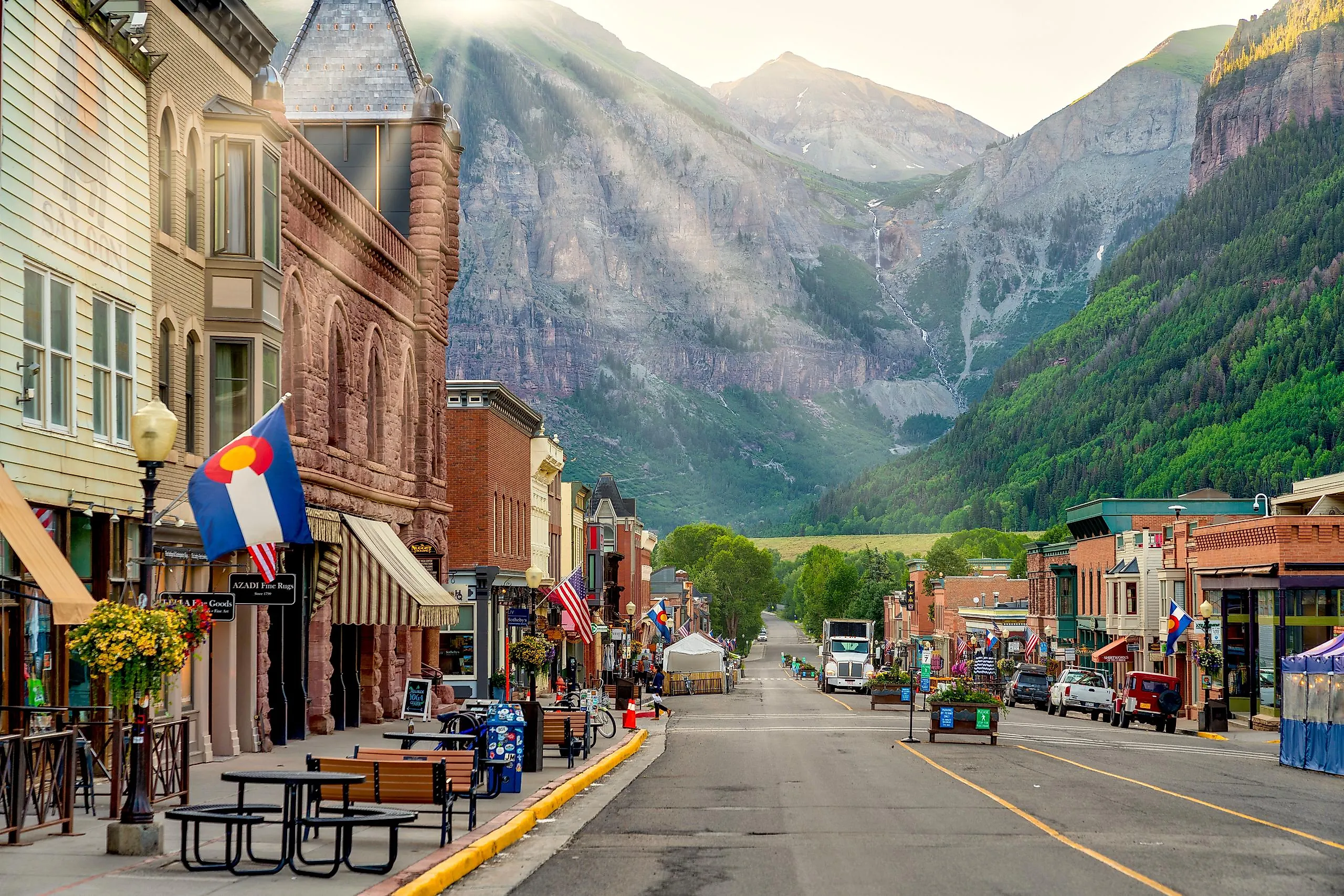
Colorado Avenue runs through Telluride’s National Historic Landmark District and follows the narrow footprint established during the town’s mining period. The street developed in the late 19th century as the commercial center of a remote mining camp, and that original layout remains visible today. Buildings along the avenue date primarily to the 1880s and 1890s and retain original massing, storefront widths, and facade details tied to early commercial use.
Several long-standing landmarks define the corridor. The New Sheridan Hotel, built in 1895, operates with preserved interior spaces that reflect its early role as lodging and a social center. Nearby, the Sheridan Opera House stays busy as one of the street’s most active venues, hosting concerts, community events, and festival programming throughout the year. During the Telluride Film Festival, the opera house and surrounding blocks serve as central gathering points within the historic district.
Colorado Avenue also connects directly to Telluride’s gondola terminal, linking the historic downtown to Mountain Village through a public transportation system integrated into daily movement. Restored storefronts along the avenue house active businesses within the original block widths and building footprints established during the mining period.
Crested Butte, Colorado

Elk Avenue serves as the central corridor of Crested Butte’s historic district and reflects the town’s origins as a coal mining community in the late 19th century. The street developed as the primary commercial route for miners and merchants, and that compact layout remains intact. Wooden false-front buildings and brick storefronts from the 1880s line the avenue, many preserved under local historic guidelines that regulate exterior changes and maintain the street’s original scale.
The Crested Butte Mountain Heritage Museum sits directly along the corridor in a former hardware store and documents the town’s transition from coal mining to recreation and tourism. Exhibits focus on labor history, early settlement, and the economic shifts that shaped the community. Nearby, Kochevar’s Saloon operates from its original interior, maintaining one of the longest-running uses along the street.
Elk Avenue also functions as a civic space. Seasonal events such as the Wildflower Festival use the street for programming and exhibitions. Outside of major events, the corridor supports daily activity through locally owned shops, restaurants, and services.
Red Lodge, Montana

Broadway Avenue forms the center of Red Lodge’s downtown and reflects the town’s development as a coal mining and railroad community in the late 19th century. The street emerged as the primary commercial corridor serving miners, railroad workers, and the surrounding ranches. Brick and stone buildings constructed between 1890 and 1910 line the avenue, and many house businesses that serve daily needs. The scale of the buildings and narrow block pattern reflect a downtown designed for foot traffic and local trade.
Several long-standing landmarks anchor the corridor. The Pollard Hotel, opened in 1893, ranks among Broadway Avenue’s most prominent buildings and operates as lodging and dining. Nearby, the Carbon County Historical Society and Museum occupies the former Labor Temple and preserves regional history tied to coal mining, organized labor, and railroad transportation.
Broadway Avenue also functions as the town’s primary event space. Activities connected to the Home of Champions Rodeo use the downtown corridor regularly. Outside of major events, the street remains active through a mix of locally owned shops, services, and restaurants.
Why These Main Streets Still Work
What connects these Rocky Mountain main streets is function rather than appearance. Each corridor concentrates commerce, civic institutions, and public activity into a compact area that remains in regular use. Mining, railroads, ranching, and tourism shaped these streets in different ways, yet the original layouts continue serving practical needs. Buildings designed for daily trade are adapted to new uses without losing their role in town life. Museums, long-running businesses, and scheduled events fit into blocks that changed gradually rather than being rebuilt, allowing these streets to operate as the centers of town life rather than symbolic backdrops.