11 Prettiest American Mountain Towns To Visit This Summer
Vail and Jackson Hole made their names on powder, Lake Placid has hosted the Winter Olympics twice, and Leavenworth spends December buried in fairy lights. Most of America's prettiest mountain towns read like ski brochures, which is exactly what makes summer the secret season: the snow melts, the crowds thin, the rates drop, and the wildflowers take over. These eleven, scattered across the Cascades, the Rockies, the Smokies, and the Adirondacks, are worth the drive once the passes open.
Bend, Oregon

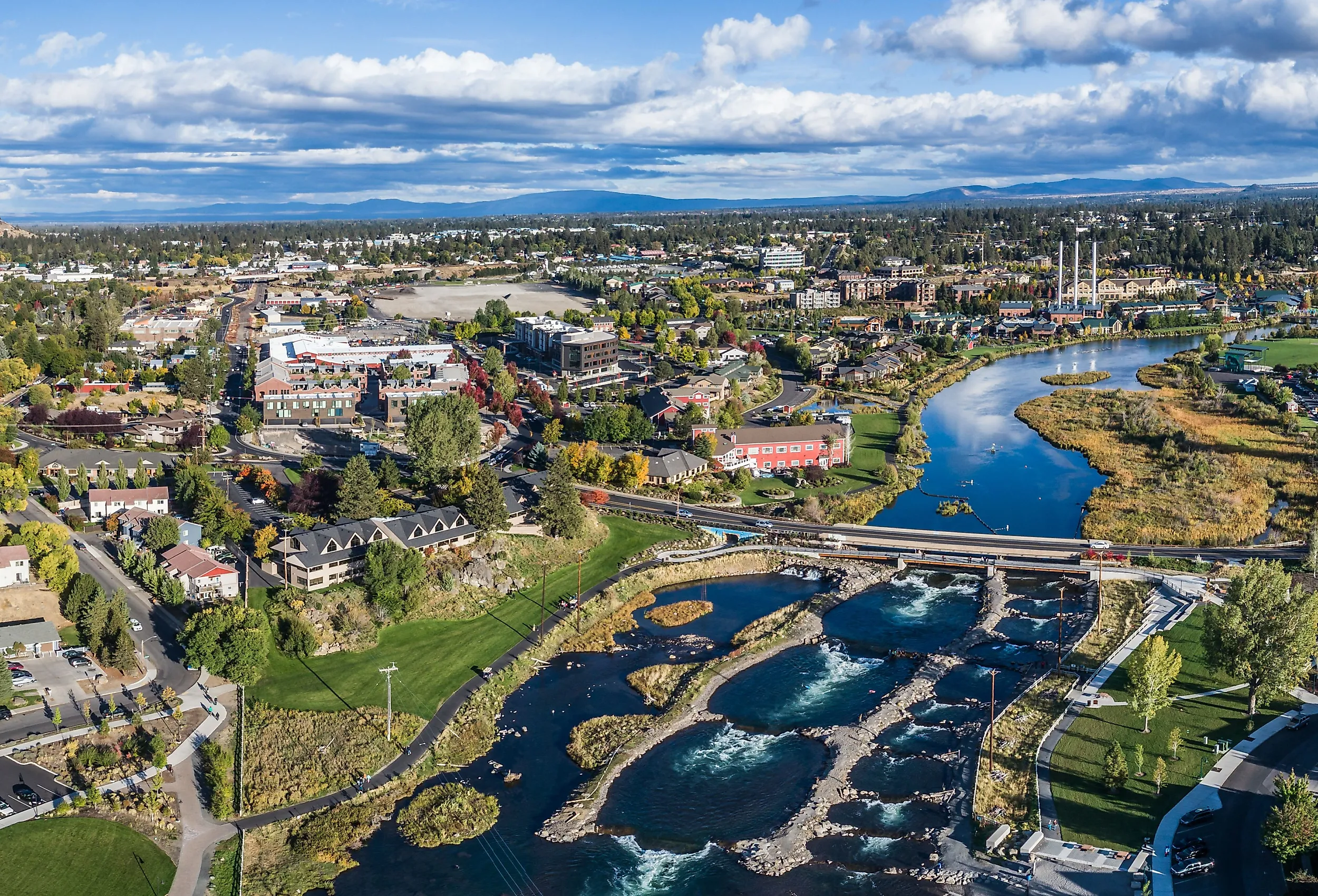
Bend sits on the Deschutes River on the dry, sunny side of the Oregon Cascades, which means it gets the mountains and the blue sky in one package. The river is the town's spine: anglers work it for trout, and on a hot afternoon half of Bend seems to be floating down it on inner tubes. When the floating is done, the drinking starts. Bend helped invent the modern craft-beer town, and Deschutes Brewery, pouring since 1988, anchors a trail you can follow pint by pint across the city.

The mountains are the other half of the pitch. Mount Bachelor, twenty-two miles out, swaps its ski runs for lift-served mountain biking and hiking once the snow goes, and the Cascade Lakes Scenic Byway strings together a chain of alpine lakes, Devil's Lake among them, whose water is so clear it looks edited. An hour north, the sheer walls of Smith Rock State Park draw climbers from around the world to rock that helped invent American sport climbing.
Dahlonega, Georgia

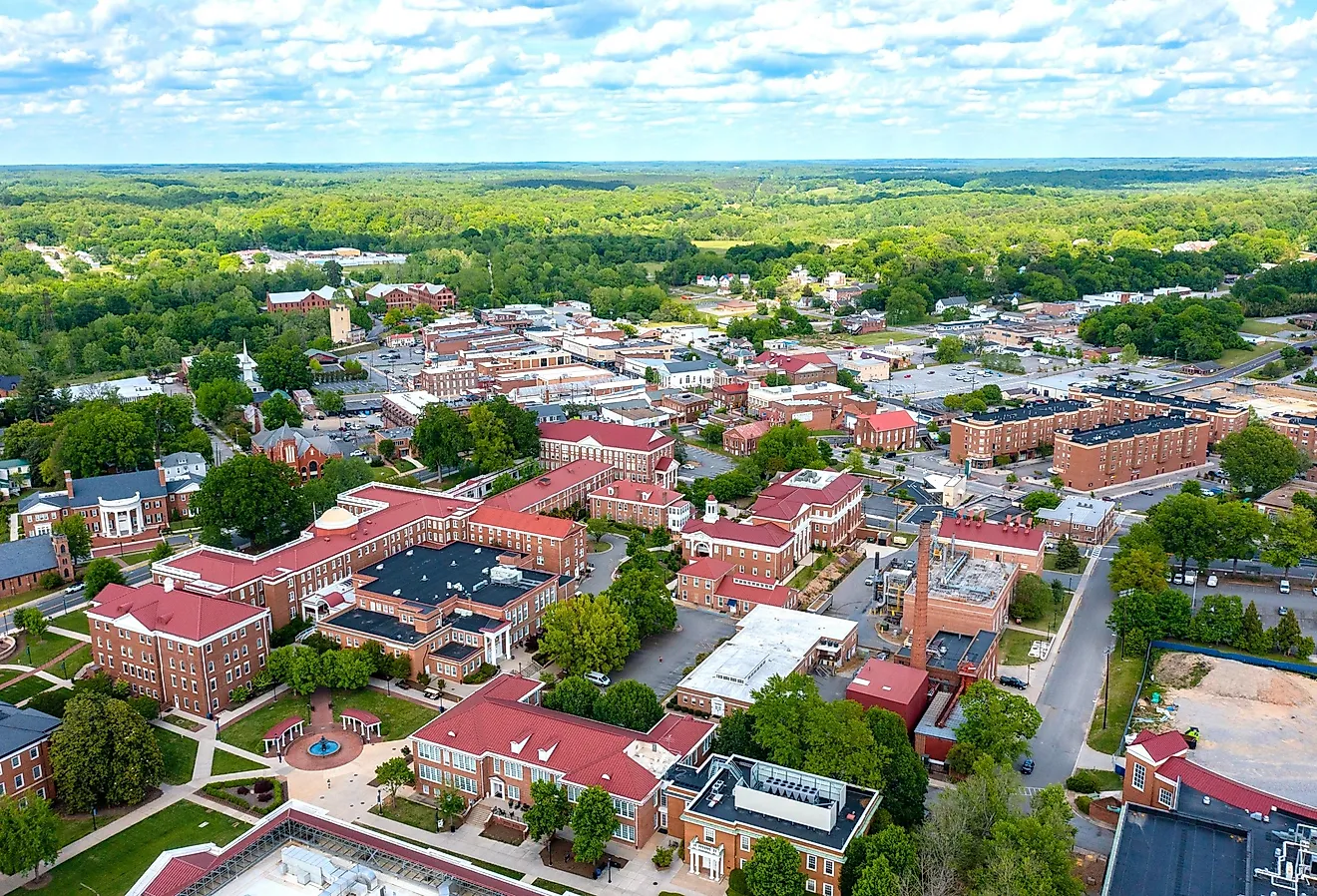
Gold turned up around Dahlonega in 1828, touching off one of the country's first major gold rushes. The town's name comes from the Cherokee word for the color of the metal, and to this day the dome of Georgia's state capitol is gilded with local gold. You can pan for it yourself or take in the story at the Dahlonega Gold Museum, set in the 1836 county courthouse on the public square. That square earned the town a Great American Main Street Award in 2016, and on Saturdays from spring through fall it fills with the fiddles and banjos of the weekly Appalachian Jam. North Georgia wine country and a lavender farm sit just outside town for anyone after a slower afternoon.

The gold is only half the draw now; the other half is liquid. Lumpkin County has so many tasting rooms that Georgia officially named it the state's Wine Tasting Room Capital, and the vineyards roll right up to the edge of the Chattahoochee National Forest. That forest hides waterfalls like the two-tiered DeSoto Falls, and a short drive west, Amicalola Falls marks the spot where many Appalachian Trail hikers shoulder their packs for the long walk to Maine.
Estes Park, Colorado

Rocky Mountain National Park begins just west of Estes Park, about 70 miles from Denver, which makes the town the busiest gateway on the park's east side. It has been a resort since 1909, when F.O. Stanley, of Stanley Steamer fame, built the white-columned hotel that still carries his name. The Stanley later unsettled Stephen King into writing The Shining, and the hotel happily leans into the legend with nightly ghost tours. Beyond the haunted-hotel business, the town keeps things simple: hiking, fly-fishing, horseback riding, and an aerial tramway up Prospect Mountain for the long view.

The park is the main event. Trail Ridge Road, the highest continuous paved road in the country, climbs past 12,000 feet of open tundra before dropping toward Grand Lake on the far side, open only once the summer plows have cleared it. Lower down, the trails to Bear Lake and Emerald Lake fill with day hikers chasing reflections of the peaks. And the elk run the town like they own it, grazing front lawns and golf courses and stopping traffic on Elkhorn Avenue without apology.
Frisco, Colorado

Frisco calls itself the Main Street of the Rockies, and the claim holds up: one walkable street of locally owned restaurants, coffee shops, and bookstores, with Mount Royal rising straight off the end of it. The town sits on Dillon Reservoir, and the Frisco Bay Marina launches the summer fleet of sailboats, kayaks, paddleboards, and the racing shells of the Frisco Rowing Center. One thing the reservoir is not is a swimming hole. As Denver's drinking water, it stays off-limits to swimmers, and the snowmelt is cold enough to change your mind anyway. Better to stay in the boat and watch the alpenglow climb the peaks.

Frisco also sits in the middle of a ski-resort cluster, with Breckenridge, Copper Mountain, Keystone, and Arapahoe Basin all a short drive off, and in summer their slopes turn into hiking and biking trails. Back at the water, an eighteen-mile paved path loops the entire shoreline, climbing to the Sapphire Point overlook for the postcard view of the reservoir ringed by the Tenmile Range. Rent a bike in town and you can circle the lake before lunch.
Gatlinburg, Tennessee

Gatlinburg has one job and does it well: it is the front door to Great Smoky Mountains National Park, the most visited national park in the country. The main entrance is a short drive from the middle of downtown, so you can hike to a waterfall in the morning and ride the tramway up Ober Mountain in the afternoon. The permanent population is only about 4,000, a figure that all but vanishes under the summer crowds. Between park trips, the Space Needle observation tower and Ripley's Aquarium of the Smokies keep families busy, while the Great Smoky Arts and Crafts Community gathers potters, broom-makers, and painters who sell straight from their studios.

The real reason to come is on the other side of that park boundary. Cades Cove, a broad valley ringed by peaks, loops past pioneer cabins and white clapboard churches and is one of the best places in the East to spot black bears, of which the park has around 1,500. Newfound Gap Road climbs over the crest of the Smokies toward North Carolina, and on a clear morning the ridgelines stack up blue and hazy in every direction, which is how the mountains earned their name.
Helen, Georgia

Helen is a fading logging town that reinvented itself, in the late 1960s, as a replica Bavarian village, cobblestones and gingerbread trim and all, dropped into the north Georgia mountains. Fewer than 600 people live there, but the alpine act draws crowds for schnitzel, pretzels, and beer, and for an Oktoberfest that runs across September, October, and November. Summer belongs to the Chattahoochee River, which threads through the middle of town and carries a steady parade of tubers. The harder country is minutes away in the surrounding hills, including the waterfalls of Raven Cliffs and the trout streams of Smithgall Woods.

The Chattahoochee is the town's lazy river; on a hot afternoon, an inner tube and a few dollars buy a slow drift past the half-timbered facades. When you want actual mountains, Unicoi State Park sits just up the road with a lake, trails, and the twin cascades of Anna Ruby Falls a short walk in. And because this is north Georgia, there is wine: Habersham, one of the state's oldest wineries, pours just outside town.
Jackson Hole, Wyoming

The town of Jackson sits in the valley of Jackson Hole, with Grand Teton National Park at its back door and Yellowstone an hour up the road. Each corner of the town square is marked by an arch built entirely of shed elk antlers, which reads as either pure Western pageantry or slightly unhinged, depending on your mood. Days go to hiking and mountain biking under the Tetons, or to a float trip on the Snake River; evenings go to the square's restaurants and saloons. For a splurge, the Amangani resort perches on a butte south of town with the whole range spread across its windows.

Those antler arches are less decoration than inventory: the antlers are gathered each spring from the National Elk Refuge just north of town, where thousands of elk spend the winter. Come summer, the herds head for high pasture and the visitors take over the square, ducking between art galleries and saloons. For a fast trip above the valley, the aerial tram at the ski resort hauls you roughly four thousand feet up Rendezvous Mountain, where the view does the rest.
Lake Placid, New York

Lake Placid has hosted the Winter Olympics twice, in 1932 and 1980, and the ski jumps still tower over the village as a reminder. Summer is the quiet season and arguably the better one. The 46 High Peaks of the Adirondacks draw hikers chasing the full set; High Falls Gorge sends a river crashing through a slot of ancient rock; and Mirror Lake, right in the village, stays calm enough for a swim or a slow lap on a paddleboard. Evenings bring lakeside concerts from the Lake Placid Sinfonietta, and the Golden Arrow resort even lets you bring the dog.

The Olympic infrastructure never left, and in summer it gets repurposed in entertaining ways: you can ride a wheeled bobsled down the track at Mount Van Hoevenberg, take the elevator up the ski-jump tower, or stand in the arena where the 1980 Miracle on Ice happened. Whiteface Mountain, the downhill venue and one of those 46 High Peaks, has a highway most of the way up and an elevator blasted through the rock to the summit. It is a lot of Olympic legacy for a village of a few thousand people.
Leavenworth, Washington

Leavenworth pulled the same move as Helen, remaking a fading timber town into a Bavarian village, and it now draws millions of visitors a year. The Christmas lights get the headlines, but summer is when the setting earns its keep: the Wenatchee River runs right past downtown for rafting, tubing, and fishing, and the crags above town pull in climbers. After a day outside, the payoff is predictable and excellent, brats and beer from a street cart or schnitzel and a pretzel the size of your head at a sit-down spot. Cideries and wineries fill in the surrounding valley.

The Bavarian act runs on a calendar of festivals, a spring Maifest with a maypole in the square, summer art and music, and the famous winter lighting, but the scenery needs no theme. Icicle Creek pours out of the Alpine Lakes Wilderness right beside town, and the trailheads above it climb toward a string of granite basins and turquoise tarns so coveted that hikers enter a lottery just for a permit to camp.
Taos, New Mexico

Taos is two things at once: a Native American pueblo lived in for roughly a thousand years, and an artists' colony that has pulled in painters for more than a century. Taos Pueblo, a UNESCO World Heritage Site of stacked adobe at the foot of the Sangre de Cristo Mountains, is the older half; the galleries, the margaritas, and the Adobe Bar at the Taos Inn are the newer one. The town of about 6,000 sits high and dry, with fly-fishing, rafting, and hot springs within reach and hot-air balloons drifting over the Rio Grande gorge on calm mornings. Even the llama trekking, improbable as it sounds, is real.

That adobe church, San Francisco de Asis at Ranchos de Taos, has been painted by Georgia O'Keeffe and photographed by Ansel Adams, which tells you how long Taos has been catnip for artists. The strangeness extends past the town limits: ten miles west, the Rio Grande Gorge Bridge carries the highway some 600 feet over a slot canyon, and just beyond it sit the Earthships, off-grid houses built from packed tires and bottles that look like a colony on Mars.
Vail, Colorado

Vail is a ski town that quietly becomes a hiking town the moment the snow melts, and summer rates run a fraction of the winter ones. The Eagle Bahn Gondola keeps turning into the warm months, carrying mountain bikers and the zip-line-and-ropes-course crowd of Epic Discovery up the mountain. Down in Vail Village, Gore Creek runs close enough to the streets that you can fly-fish a few steps from a restaurant patio. The Gerald R. Ford Amphitheater, named for the president who summered here, hosts concerts and dance under the open sky through the season.

Vail also runs the highest botanical garden in North America: the Betty Ford Alpine Gardens, a free collection of alpine plants set beside the Ford Amphitheater at 8,200 feet. For something more strenuous, the trail to Booth Falls climbs out of the valley to a waterfall in a couple of miles, and the paved Vail Pass bike path lets you coast much of the way to the next town over. None of it requires a lift ticket.
Same Mountains, Different Season
The common thread here is timing. Most of these towns made their name on snow, lift tickets, and holiday lights, which means summer is when they exhale: the rates ease, the trails open, and the rivers take over the work the chairlifts do in winter. Pick one within a tank of gas, go when the passes are clear, and you stand a good chance of finding the place at its best with half the crowd.