11 Of The Most Captivating Small Towns In Germany
Germany excels at charming small towns more than almost anywhere else on Earth. Beyond its major cities, the country is dotted with medieval town centers enclosed by walls, half-timbered houses over cobbled streets, hilltop castles, and wine villages cascading toward the river. Many of these towns survived the upheavals of the 20th century remarkably well, so wandering their squares today can feel like traveling back in time by centuries. The challenge is choosing, as nearly every region boasts a worthy destination—from Alpine lake towns in the deep south to time-capsule border towns in the far east. We’ve compiled a list of 11 of the most enchanting small towns in Germany, each with its unique charm. Bring comfortable shoes and an appetite for discovery.
Rothenburg ob der Tauber, Bavaria

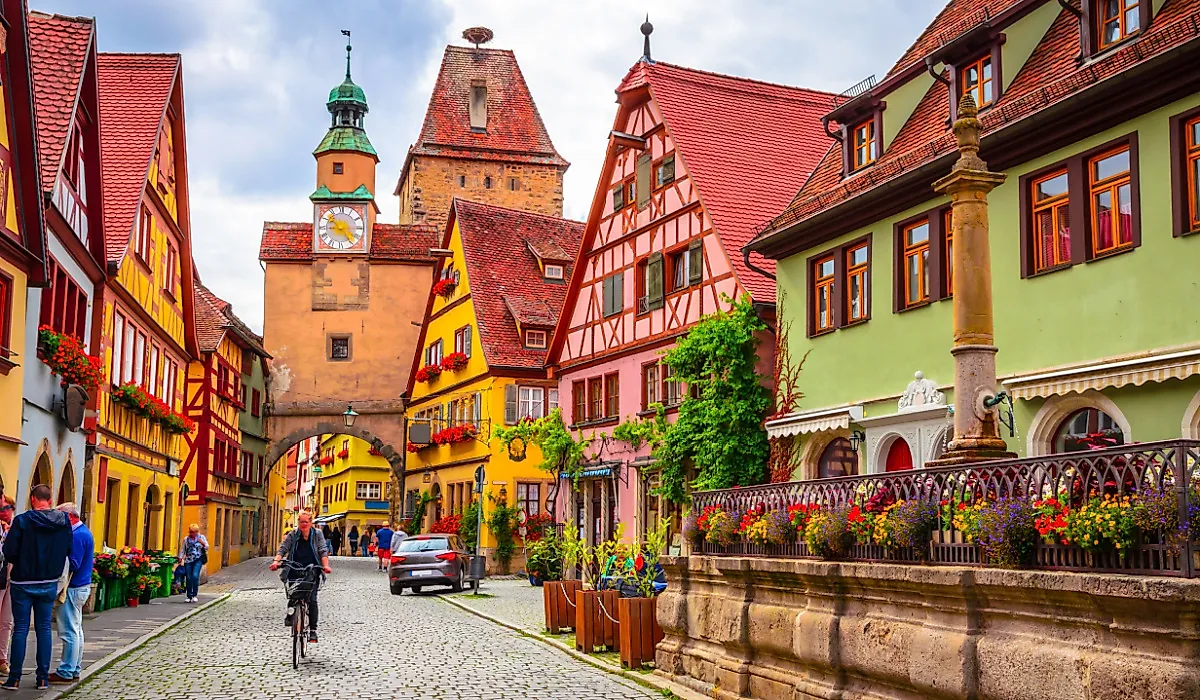
If you imagine a fairy-tale German town, Rothenburg ob der Tauber is probably what comes to mind. Situated on a plateau above the Tauber River in Franconia, this medieval town with walls has been a free imperial city since 1274. It is one of only about four towns in Germany with fully preserved fortifications that you can almost circumnavigate. Its most iconic view is the Plönlein, a charming junction of half-timbered houses and towers that appears on countless postcards. Inside St. Jakob's Church, you can see a stunning late-Gothic altarpiece carved by Tilman Riemenschneider around 1500. The town embraces Christmas so wholeheartedly that its year-round Christmas shop is a must-visit. It is one of Germany’s most inviting small towns for first-time visitors.
Bamberg, Bavaria

Bamberg, spread over seven hills and often called "Franconian Rome," is a UNESCO World Heritage site that remained largely intact after World War II. Its focal point is the Altes Rathaus, an ancient town hall uniquely perched on a tiny island in the Regnitz River, accessible via bridges on both sides and adorned with painted frescoes. Along the water, you'll find Klein-Venedig, or "Little Venice," a row of former fishermen's cottages with flower-filled balconies that lean toward the river. Bamberg is also renowned for its beer culture, especially its distinctive Rauchbier—a smoked lager with a flavor that’s unlike any other in Germany.
Füssen, Bavaria

Nestled among the Alps at the southern tip of the renowned Romantic Road, Füssen is best known as the entry point to Neuschwanstein, the iconic 19th-century castle that inspired Disneyland's design. However, the town itself warrants exploration beyond the crowds at the castle. Its baroque old town offers a lively mix of pastel-colored facades and painted houses, overseen by the Hohes Schloss, a late-Gothic castle adorned with skillfully painted trompe-l'œil walls. Located on the pristine, green Lech River with mountains encircling it, Füssen serves as an ideal base for hiking, lake swimming, and discovering castles in one of Germany's most picturesque regions.
Lindau, Bavaria

Located in the far southwest of Bavaria, Lindau is an historic town on a small island in Lake Constance, connected to the mainland by a bridge and causeway. Its harbor is marked by two iconic features: a stone Bavarian Lion and a lighthouse, often framed by snow-capped Alps on clear days across the lake. Behind the waterfront, narrow medieval streets are lined with centuries-old half-timbered houses, including the notable Altes Rathaus. Since 1951, Lindau has been the site of the annual Nobel Laureate Meetings, attracting the world's leading scientists to its stunning lakeside setting.
Cochem, Rhineland-Palatinate

Nestled along a bend of the Moselle River and amid some of Europe's steepest vineyards, Cochem ranks as one of Germany's most picturesque wine towns. Overlooking the rooftops, the Reichsburg castle, rebuilt in the 19th century in romantic neo-Gothic style, offers guided tours and sweeping river vistas. Below, the historic market square, bordered by half-timbered houses dating back to the 13th century, now hosts wine taverns and cafes. In late summer, the town comes alive during the five-day Cochem Wine Festival, featuring Riesling tastings, live music, parades, and fireworks over the river.
Bacharach, Rhineland-Palatinate

Nestled in the UNESCO-listed Upper Middle Rhine Valley, the small wine town of Bacharach appears almost impossibly medieval. Much of its historic defensive wall remains, complete with watchtowers that visitors can walk between. Overlooking the town, the 12th-century Stahleck Castle watches over the vineyards and now functions as a youth hostel. The charming center is a labyrinth of leaning, timber-framed houses, including the ornate Altes Haus from 1568, one of the most photographed buildings along the river. As its name (meaning "altar of Bacchus") suggests, this area has been a prominent wine region since Roman times.
Monschau, North Rhine-Westphalia

Nestled in the wooded Eifel hills near the Belgian border, Monschau is a true hidden gem. Its half-timbered houses line the banks of the rushing Rur River, which runs through the town beneath a ruined 13th-century castle perched atop a hill. The highlight is the Rotes Haus, or Red House, built in 1760 by a wealthy cloth merchant, featuring a stunning cantilevered oak staircase inside. Since the 1880s, Monschau has been producing its own mustard in a riverside mill, offering flavors like apple-horseradish and ginger-pineapple. Its Christmas market is straight out of Dickensian tales.
Quedlinburg, Saxony-Anhalt

On the northern border of the Harz Mountains, Quedlinburg features one of Germany's most intact medieval old towns, designated as a UNESCO World Heritage Site. Its maze of streets is lined with over 1,300 half-timbered houses spanning six centuries, serving as an outdoor showcase of German timber-framing, including the Ständerbau, one of the oldest in the country. Atop Schlossberg hill stands the Romanesque Collegiate Church of St. Servatius, which contains the tomb of Henry I, the first king of a unified Germany, and boasts a stunning medieval treasury. It’s a place that invites relaxed, unhurried wandering.
Wernigerode, Saxony-Anhalt

Known as "the colorful town in the Harz," Wernigerode delights visitors from the moment they see it. Its historic center bursts with vividly painted half-timbered houses, crowned by an elaborately decorated town hall that resembles icing, with twin pointed towers overlooking the market square. Over the town, Wernigerode Castle is a romantic 19th-century Schloss with terraced gardens and panoramic views of the Harz. Most notably, it serves as a terminus for the Harz narrow-gauge steam railway, where authentic steam locomotives still chug their way to the Brocken, the highest peak in northern Germany, attracting train enthusiasts of all ages.
Meissen, Saxony

Meissen, located just above the Elbe River near Dresden, is renowned worldwide for its porcelain. In 1710, Europeans discovered the secret to making hard-paste porcelain here for the first time. The famous blue crossed-swords mark of Meissen china has represented luxury for centuries, and the state manufactory remains open to visitors today. The town is equally charming, dominated by the Albrechtsburg—considered the first castle in Germany to be built as a royal residence rather than a fortress alongside a grand Gothic cathedral. Narrow alleys and staircases link the riverbank below to the castle hill above.
Görlitz, Saxony

Located right on the Polish border along the Neisse River, Görlitz is Germany's easternmost city and boasts some of the best-preserved architecture in the country. Because it was spared from bombing during World War II, its historic center still features approximately 4,000 protected buildings representing Gothic, Renaissance, Baroque, and Art Nouveau styles, all well-maintained. This preserved timelessness has made Görlitz popular among filmmakers, earning it the nickname "Görliwood," with movies like The Grand Budapest Hotel and Inglourious Basterds filmed there. Crossing the footbridge over the Neisse brings you directly into Zgörlitz, Poland, highlighting the deep interconnection of Central Europe's histories.