10 Prettiest Small Towns In Nevada
Nevada's small towns have sharp contrasts in landscape, ranging from alpine shorelines along Lake Tahoe to high-desert valleys and former mining corridors. Each town mentioned here offers its own type of beauty, where history and scenery combine to create some of the state's most distinct and charming destinations.
Towns such as Ely and Tonopah sit within wide, open basins where dark skies and distant mountain ranges define the setting. In Genoa, early settlement history is still visible through preserved sites like Mormon Station, while Virginia City’s wooden boardwalks and hillside layout reflect the rapid expansion of silver mining during the Comstock Lode era. Together, these 10 pretty Nevada cities are well-suited for scenic drives and slower-paced travel.
Genoa

Established in 1851, Genoa developed as a trading post along the Carson Route and remains the oldest permanent settlement in Nevada. Its early layout is still visible around Mormon Station State Historic Park, where reconstructed buildings mark the original site that served travelers moving between California and Utah.
Narrow streets and preserved 19th-century homes reflect Genoa's early settlement layout, with minimal changes to many original structures. The town sits directly at the base of the Sierra Nevada Mountains, and its position creates a clear visual contrast between open valley land and rising mountain slopes. In the fall, the leaves of the surrounding cottonwood trees turn deep yellow, making the area particularly scenic. The compact streets, historic homes, and unobstructed mountain views give Genoa a distinctly preserved and grounded atmosphere.
Virginia City

Virginia City’s appearance is directly tied to the discovery of silver in the Comstock Lode in 1859, which transformed the area into one of the most significant mining centers in the American West. The town expanded quickly along a steep hillside, resulting in narrow streets, layered wooden buildings, and elevated boardwalks that still define its layout today. Much of C Street, the town’s historic main street, is lined with original-style saloons, storefronts, and historic structures that reflect the town’s rapid growth during the mining boom.
Visitors can explore sites within the Comstock Historic District or go underground at the Chollar Mine to better understand how the industry shaped the landscape. The town’s elevated position also provides wide views of the surrounding desert terrain, adding to its visual character.
Incline Village

Incline Village sits along the northern shore of Lake Tahoe, where deep blue water meets forested slopes and granite outcrops. The shoreline here is defined by clear water and smooth rock formations, particularly visible at Sand Harbor State Park, where large boulders extend into the lake and create distinct viewing points. The surrounding Sierra Nevada mountains frame the area, giving the town a strong alpine setting that changes with the seasons.
During summer, the shoreline is a popular spot for swimming, kayaking, and boating, while winter brings snow-covered slopes and access to nearby ski areas. The combination of lake clarity, elevation, and surrounding forest gives Incline Village a landscape that contrasts sharply with much of Nevada’s terrain.
Boulder City

Boulder City was established in the 1930s to house workers building the Hoover Dam, and its planned layout still shapes the town’s structure today. Unlike many Nevada communities, it was designed with organized streets, public spaces, and civic buildings, creating a more structured and walkable environment. The historic downtown includes mid-century architecture, small shops, and local cafés that reflect its origins as a government-planned settlement.
Just outside the town, the Hoover Dam introduces a dramatic shift in scale, with its concrete structure set against the Black Canyon. Nearby, Lake Mead National Recreation Area's open water is surrounded by desert hills, expanding the contrast of the surrounding landscape. This combination of engineered landmarks and natural landscape creates a setting that feels both structured and expansive.
Ely

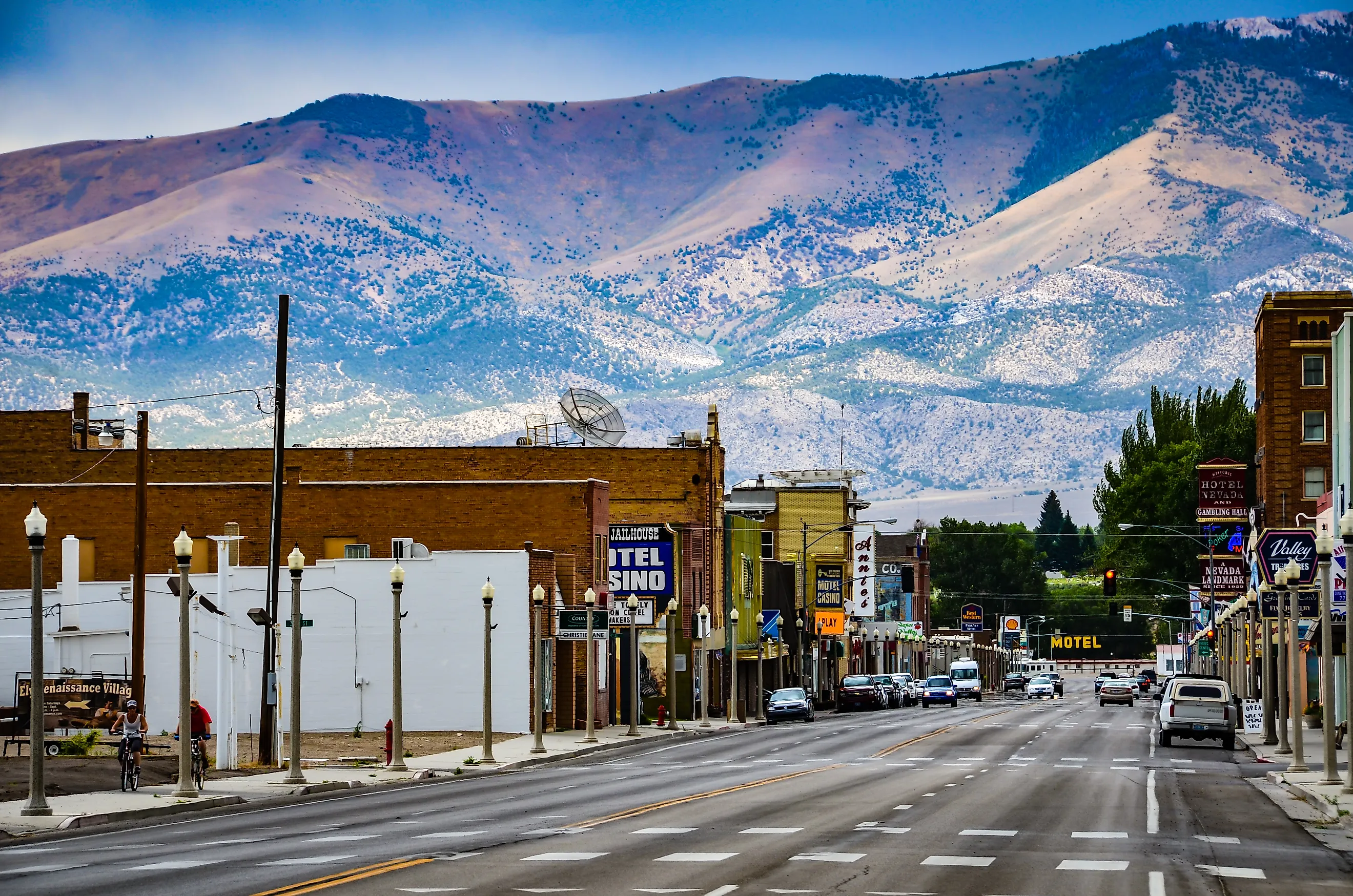
Surrounded by open desert and distant mountain ranges, Ely stands out for its sense of space and access to some of Nevada’s most remote scenery. It developed as a railroad and mining town, and much of that infrastructure remains visible even today through the Nevada Northern Railway Museum. The museum yard includes original tracks, locomotives, and maintenance buildings that reflect the town’s industrial past. It also offers multiple train rides, like the Star Train, which departs at sunset and reaches Star Flat, a remote desert perfectly suited for stargazing, where telescopes are set up and ready for you to explore the cosmos.
Beyond the town, Great Basin National Park introduces a different landscape, with alpine lakes, forested trails, and high-elevation views. The shift between desert terrain and mountain environments adds to Ely’s overall appeal.
Gardnerville

Gardnerville is located in Carson Valley, where flat agricultural land stretches toward the eastern edge of the Sierra Nevada. The town’s Main Street and surrounding area features historic buildings and quirky shops, like the Eddy Street Vintage Market and the JT Basque Bar, helping to maintain a connection to the area’s past.
The surrounding landscape plays a central role in the town's appearance, particularly during seasonal transitions. In spring, the valley turns green with new growth, while fall brings a mix of yellow and orange tones against the mountain backdrop. Scenic drives through Carson Valley highlight the contrast between cultivated land and rising alpine terrain, giving Gardnerville a strong visual identity tied to both agriculture and geography.
Fallon

Fallon developed in the early 1900s following the Newlands Reclamation Act, which brought irrigation projects to the Lahontan Valley and transformed the surrounding desert into productive farmland. The construction of Derby Dam, the Truckee Canal, and Lahontan Dam made large-scale agriculture possible, and that infrastructure continues to support farming and define the town’s layout. Fields of alfalfa and other crops extend outward from the center, creating a visible contrast between irrigated land and the surrounding desert basin.
The nearby Lahontan State Recreation Area is centered around a large reservoir where visitors can boat, fish, and camp, and see views of the water body framed by the desert hills. In the historic core, the town itself includes local cafés where neighbors gather for a slow morning. The combination of water, farmland, and desert gives Fallon a setting unlike many other parts of Nevada.
Winnemucca

Winnemucca developed as a transportation hub along key rail and highway routes, and its historic downtown reflects that role through preserved buildings tied to early travel and commerce. The Humboldt Museum provides additional context, with exhibits covering regional history, Native American culture, and the development of transportation networks in northern Nevada.
The town of Winnemucca is surrounded by wide desert basins and distant mountain ranges, creating open sightlines in every direction you look. This setting makes it a starting point for exploring nearby outdoor areas, including the beautiful Santa Rosa Mountain Range. Winnemucca's unique character is created through the stark contrast between its constructed buildings and the vast, open landscape that surrounds it.
Mesquite

Mesquite is situated in the state's far southeastern corner, near the Arizona border. Its landscape is defined by the contrast between desert terrain and the Virgin River, creating open valleys and low mountains, with noticeable green spaces throughout. Developed areas, including golf courses and other landscaped resort developments, stand out vividly against the natural desert tones.
The town itself has a more spread-out layout, offering open views across the valley. The areas along the Virgin River offer nearby natural spaces for walking and exploration, while businesses tend to operate along West Mesquite Boulevard. Overall, the town presents a unique visual balance between its arid desert environment and the green developments.
Tonopah

Tonopah offers a unique sense of place, rooted in its dual identity of history and natural isolation. The town's origins are deeply connected to the early 20th-century silver mining boom, and much of that history is preserved at the Tonopah Historic Mining Park. Here, visitors can see the original equipment, structures, and pathways that illustrate how mining operations were conducted in the surrounding hills.
Beyond its historical importance, Tonopah is also recognized as a stargazing destination. Located within a high desert basin, the light pollution allows a clear night sky, offering regular, unobstructed views of the Milky Way. By day, the surrounding landscape consists of open land and dry hills extending in all directions, underscoring the area's natural seclusion.
Nevada’s small towns show how landscape and history shape communities in different ways. Each of these towns reflects a specific period of development, whether through preserved rail infrastructure, historic districts, or access to long-standing recreation areas. These pretty, small towns of Nevada offer a more detailed view of the state’s regional variation, where changes in geography and industry are visible across relatively short distances. Visiting cities like these provides a clearer understanding of how Nevada’s smaller communities continue to reflect its broader character.