10 Prettiest Downtown Strips In Arizona
Arizona's downtown strips run a mix of preserved Old West facades and high-desert color you don't get anywhere else in the country. Prescott still has the Palace Saloon where Doc Holliday once gambled on Whiskey Row. Williams holds the last stretch of Historic Route 66 that I-40 bypassed in 1984, with the original neon and brick storefronts still on the street. Jerome clings to a 5,000-foot hillside above the Verde Valley as a former copper-mining ghost town turned arts village. The 10 communities below each pack their downtown into a few walkable blocks of preserved character.
Bisbee

Bisbee's Victorian mining-era buildings cascade down steep hillsides in Tombstone Canyon, creating one of the most layered streetscapes in the Southwest. Along Tombstone Canyon Road stands the Iron Man statue, a 1930s bronze of a Bisbee miner that fronts the Cochise County Courthouse. The Bisbee Grand Hotel carries the weathered elegance of more than a century of operation in its rooms and saloon. The Smithsonian-affiliated Bisbee Mining & Historical Museum runs extensive displays on copper mining in the area, including the Copper Queen Mine that produced over 8 billion pounds of copper before closing in 1975. The Queen Mine Tour next door takes visitors 1,500 feet underground into the original Copper Queen workings on the same rail cars miners once used.
Sedona

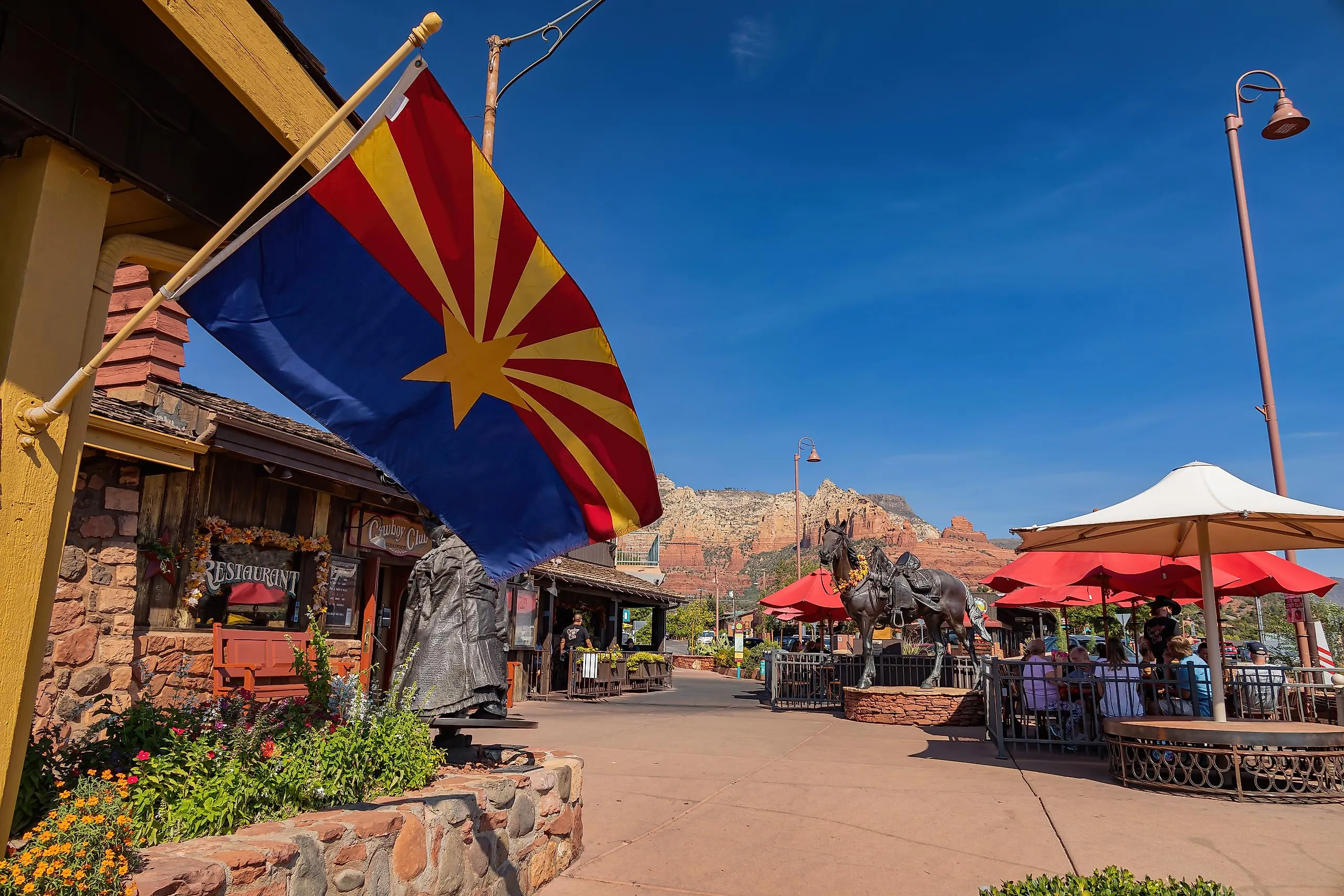
Even before reaching Sedona's downtown, the Red Rock Scenic Byway sets the surrounding scenery in motion. To work the town itself, start at the Center for the New Age to meet local psychics and Reiki masters, then walk through Tlaquepaque Arts & Shopping Village, an open-air complex built in the 1970s to mimic a colonial Mexican village along Oak Creek with shaded courtyards, fountains, and tiled stairways. The Sedona Heritage Museum runs exhibits on the era when the area was filled with orchards and cattle, alongside its early run as a location for more than 60 Western films from the 1920s through the 1970s. Exposures International Gallery on State Route 179 holds a substantial collection of fine art, sculpture, and jewelry across an outdoor sculpture path.
Tubac

Tubac claims status as Arizona's oldest European settlement, founded as a Spanish presidio in 1752 (24 years before American independence). The Tubac Center of the Arts occupies an adobe-style complex with shaded courtyards and Southwestern details, running rotating exhibitions by regional painters, sculptors, and photographers along with performances and cultural events. Elvira's Restaurant doubles as a restaurant and art gallery in an upscale space serving Mexican cuisine.
Tumacácori National Historical Park, three miles south, preserves the ruins of a Spanish mission first established by Jesuit missionaries in 1691 and rebuilt by Franciscans in the early 1800s. The Tubac Golf Resort and Spa was built on the Otero Ranch grounds and runs a 27-hole championship course, luxury casitas, a full-service spa, and views of the Santa Rita Mountains. Grumpy Gringo Fine Cigars is the local hang where you can sit outside and shoot the breeze with chatty regulars.
Williams

Picture a place lined with Route 66 neon, retro 1940s motels, and brick storefronts dating to the late 1800s. Williams is American road-trip nostalgia in a single mountain town because it was the last community on Historic Route 66 to be bypassed by Interstate 40, on October 13, 1984. Because of that delayed bypass, its historic downtown remained remarkably intact and still feels genuine rather than staged for tourists. Cruiser's Route 66 Café is a long-running local favorite known for smoky brisket, burgers, live music, and walls lined with vintage signs and Mother Road memorabilia. Palooka Galleries offers Southwestern art, handcrafted jewelry, and Route 66 souvenirs, sitting across from the painted Route 66 shield on the street, one of the most photographed spots in town. The Grand Canyon Railway also runs daily out of Williams to the South Rim of Grand Canyon National Park, 65 miles north.
Cottonwood

Cottonwood is a walkable wine-country town in the Verde Valley with locally focused restaurants, restored 1920s brick buildings, and tasting rooms on shaded sidewalks. Named for the trees that grow along the Verde River, Cottonwood sits in the lap of the Mingus Mountains. Merkin Vineyards Tasting Room & Osteria is a local favorite for Arizona wines, house-made pasta, and an atmosphere that captures the town's wine-country attitude. The Clemenceau Heritage Museum runs exhibits on local railroad and mining history including a detailed diorama of early trains and buildings. Dead Horse Ranch State Park on the edge of town has lagoons for fishing and miles of trails along the Verde River.
Patagonia

A high-desert retreat framed by rolling grasslands and the Santa Rita Mountains, Patagonia carries small-town atmosphere with local galleries, cafés, and an emerging wine scene. Queen of Cups is a favorite gathering spot known for low-intervention wines made from Arizona-grown grapes. Birding is a major calling card here. The Paton Center for Hummingbirds, operated by the Tucson Audubon Society, has recorded more than 200 bird species over the years. The center is especially known for sightings of the violet-crowned hummingbird, one of the most sought-after birds in the region. Patagonia-Sonoita Creek Preserve runs a 750-acre Nature Conservancy property along a year-round creek with one of the best riparian forests left in the Sonoran Desert. Spirit Tree Inn B&B sits on 50+ acres of private land just outside town.
Tombstone

Few towns wear the aura of the Wild West as convincingly as Tombstone. Walking Allen Street under the weathered 1880s facades, you can almost hear the jingle of spurs. Most visitors come for the gunfight reenactments at the O.K. Corral (the historic October 26, 1881 gunfight lasted only about 30 seconds and resulted in three deaths). Beyond the Corral, the dimly lit Bird Cage Theatre carries 140-some bullet holes and a long ghost-story reputation. The old Tombstone Epitaph office houses the state's oldest continuously published newspaper, founded in 1880 by John Clum. The Rose Tree Museum holds the world's largest rose tree, a Lady Banks rose planted in 1885 that now covers over 9,000 square feet. Tombstone Miners Cabins and the Sagebrush Inn handle the lodging.
Wickenburg

Wickenburg's downtown carries cowboy-era storefronts and life-size bronze sculptures along the streets celebrating the town's mining and ranching heritage. A 200-year-old mesquite tree on Tegner Street, known as the Jail Tree, supposedly served as the town's holding spot for outlaws from 1863 until 1890 because Wickenburg didn't yet have a jail (though most historians treat the story with some skepticism). The Hassayampa River, one of Arizona's few above-ground desert streams, runs with cottonwood-lined banks through town.
The Desert Caballeros Western Museum (the source previously called this Sigler Western Museum) carries immersive exhibits and a recreated frontier streetscape that brings Arizona's territorial days to life. The museum holds the largest collection of Western art in Arizona and runs the annual Cowgirl Up! Art from the Other Half of the West exhibition each spring. Buttermilk & Honey Bakeshop is a small space that runs cookies, pies, scones, and cinnamon rolls. The Saguaro Theatre is the 1940s cinema that handles community events and movies.
Prescott

Strolling around Prescott's Yavapai County Courthouse with Thumb Butte on the horizon and tall pines overhead, the atmosphere runs part cinematic. Whiskey Row, the legendary block of historic saloons along Montezuma Street, has been known for its high-octane bar scene since the 1870s. The Palace Restaurant & Saloon, opened in 1877, is the oldest frontier saloon in Arizona and the same bar where Wyatt Earp, Virgil Earp, and Doc Holliday gambled in late 1879 before heading south to Tombstone. The Brunswick bar inside was famously carried across the street to the courthouse plaza by patrons during the 1900 Whiskey Row Fire and is still in use today. Just across the street, the Sharlot Hall Museum keeps the original Arizona Territorial Governor's Mansion on its original site (built 1864). Rosa's Pizzeria handles a hot slice on a downtown patio.
Jerome

A cliffside ghost town turned arts village, Jerome's crooked historic storefronts cling to a 5,000-foot hillside above the Verde Valley. The town's population peaked at 15,000 during the copper-mining boom of the 1920s, then crashed to about 50 residents after the mines closed in 1953, making it one of the largest American ghost towns at the time. Today around 450 people call Jerome home. Haunted Hamburger is the culinary calling card on top of the hill, with panoramic Verde Valley views especially at sunset.
The old Jerome Jail (the "Sliding Jail" that gradually slid more than 200 feet downhill over the years due to landslides) sits a block off the main shopping area. Caduceus Cellars, the winery owned by Tool/A Perfect Circle frontman Maynard James Keenan, sells local Arizona wines, espresso drinks, and a small gift shop right downtown. Nellie Bly Kaleidoscopes runs the largest kaleidoscope gallery in the world with hundreds of handmade kaleidoscopes for sale.
Ten Strips Across the High Desert
The 10 strips above each handle a different stretch of Arizona character. Bisbee and Jerome run the former mining towns on steep hillsides. Tombstone and Prescott carry the Old West preserved into the present. Williams works the last stretch of Route 66, and Sedona pairs red-rock scenery with art galleries. Cottonwood and Patagonia hold the wine-and-birding niche, Tubac runs the Spanish colonial heritage, and Wickenburg handles the cowboy-and-mining angle. Pick a corner of the state, and one of these downtowns sits within an easy drive.