10 Off-The-Beaten-Path Towns In Montana
Anaconda

Experience the mountains, trails, and hot springs all in the small town of Anaconda. No, the town was not named after the 20-foot reptile, but rather for the copper mining that took place. Although the mining plant is long gone, remnants of it still stand. The tallest reminder of those times is located in the historic mining town of Anaconda Smoke Stack State Park. Within the park are some of the tallest free-standing brick structures in the world. The largest smelter stack in the park, built in 1919, reaches heights of 585 feet and represented the Anaconda Copper Company; today, it represents challenges faced by communities that are dependent on finite resources. Another local park that features more geographical sites and fewer commercial attractions is Lost Creek State Park. Take the trails through forests and meadows and soak in mesmerizing views of the surrounding Pintler Mountains. Follow the trails to the main park attraction, the 50-foot Lost Creek Falls. Enjoy the sounds of the crashing water and views of the cascading falls in the secluded forest.
Treat yourself to a calming experience and tranquil vibes at Fairmont Hot Springs Resort. Immerse yourself in one of their four mineral pools, both indoors and outdoors, which are continuously fed by 155-degree natural hot spring water. The water is cooled to various temperatures depending on each pool. Take a soak in the springs and relax in the pools or excite your senses with a coast down the 350-foot water slide that ends in the hot springs.
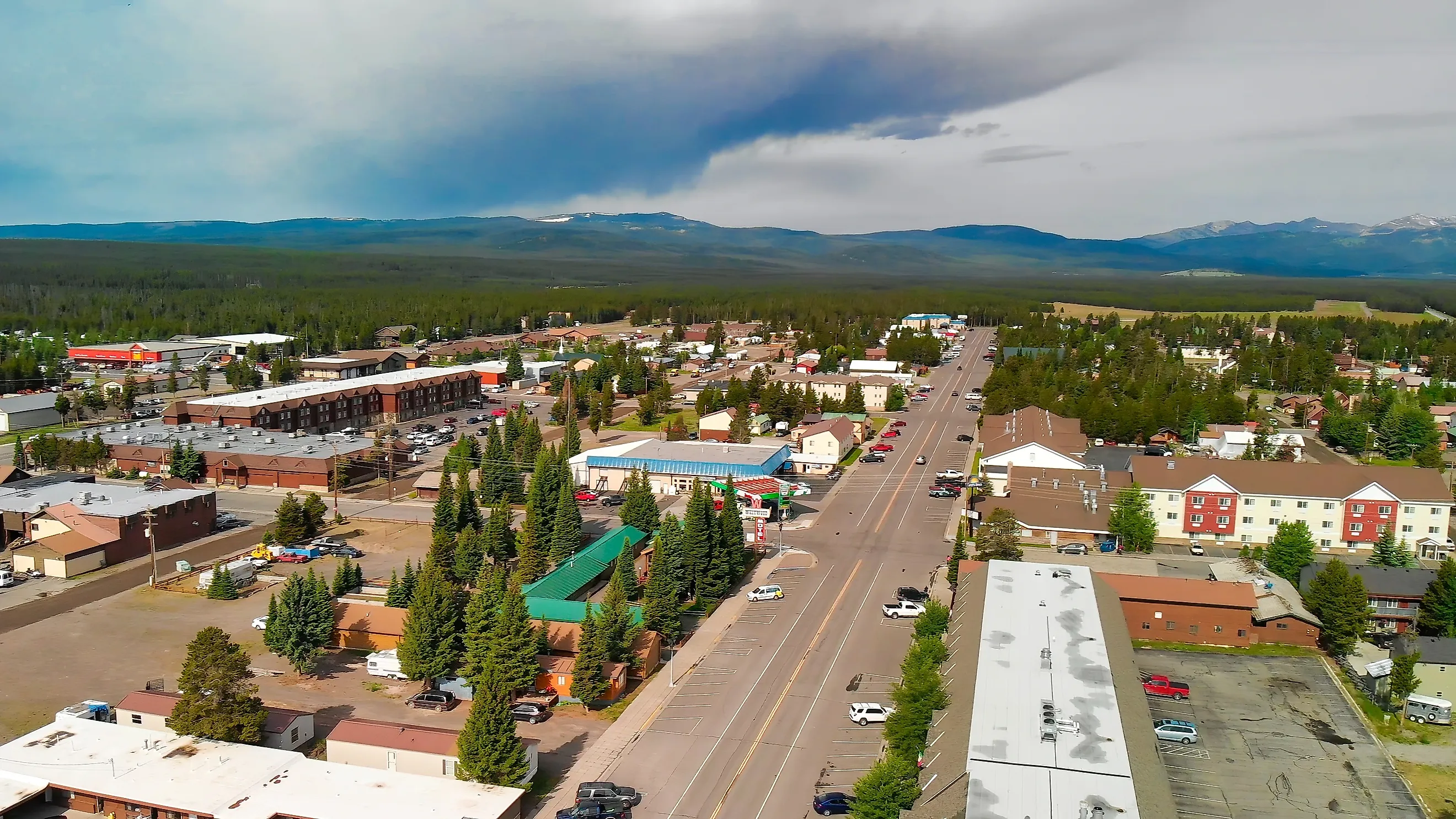
West Yellowstone

West Yellowstone is the gateway town to one of the most visited destinations in the U.S., Yellowstone National Park, the World’s First National Park. Plan to spend more than a day in the park due to its size and attractions, one of which is the most prominent, Old Faithful. One of nearly 500 geysers within the park, and only one of six that park rangers can predict its eruption patterns. Water and steam can shoot from Old Faithful up to 180 feet! Another “hot” spot in the park is the Mammoth Hot Springs Trails. Keep to the boardwalk and marked trails on these trails, as there is active thermal activity throughout. For a smaller park with just as much activity, head over to The Diamond P Ranch and mosey down some trails via horseback. Enjoy a private horseback ride or with a group through enthralling landscapes and mountain terrain. For over 70 the ranch has been preserved and is in the center of iconic locations of trout waters, the Continental Divide, and the aforementioned Yellowstone National Park.
Go from galloping to grizzlies at the Grizzly and Wolf Discovery Center. The sanctuary offers a behind-the-scenes tour for up-close experiences with grizzly bears and otters. Other exhibits include more native wildlife, in the form of the Western Tiger Salamander, the Western Terrestrial Garter Snake, Columbia spotted frogs, and a rubber boa.
Libby

The Kootenai National Forest in Libby offers unmatched views of cliffs, spires, river canyons, and the splendid peaks of the Cabinet Mountains. But in a park of 2.2 million acres, the Cabinet Mountains compete with four other ranges. Whitefish Range, Purcell Mountains, Bitterroot Range, and the Salish Mountains are all found within park boundaries. But for some visitors, the mountains are only part of the main attractions, while the Kootenai Falls Swinging Bridge, built in 1948, is another one. Found at 2,100 feet, the bridge is not only the access point to the regal Kootenai Falls, but also the only way to cross the Kootenai River in the event of forest fires. Swing over the bridge for views of the Kootenai River gorge directly below Kootenai Falls.
Outside of the mountains, spend some time getting a historical education at the Libby Heritage Museum. The museum, located in a 12-sided log building, preserves the culture and heritage of northwest Montana. Featuring historical artifacts from the early days of settlement, mining, and logging, the unique building is listed on the National Register of Historic Places.
Virginia City

Escape the mountains for a bit and stroll through a rugged western town in Virginia City. Take in some historical insight of the town in the Virginia City National Historic Landmark District with a tour of the Thompson-Hickman Library and Museum. Founded by pioneers' descendants and constructed in 1918, the museum features blue-gray stone, great fireplaces, and vast bookcases in the reading room and public library. The library is located on the upper floor, while the ground-floor museum displays local artifacts, photographs, and collections from early Alder Gulch. Learn more about the Alder Gulch and its thriving gold mining history at Mount Vernon Dredge. Outdoor museum exhibits of mining equipment can be found at the site that once held the richest free gold deposits in the state. With the first discovery of gold in the gulch in 1863, the site has accounted for over one hundred million dollars’ worth of gold, and that’s just the 1920s estimate!
Enjoy another truly unique experience with a nostalgic feel to it by visiting Montana’s oldest candy shop, Cousin’s Candy Shop. The historic Old West Candy offers old-fashioned candy, homemade fudge, salt water taffy, and hand-dipped chocolates. The historic shop also features over 300 varieties of licorices, some new flavors, and some from days gone by.
Fort Benton

Explore Fort Benton by way of water with a guided tour through the longest operating outfitters in Montana, Missouri River Outfitters. Rent a canoe or kayak for a day trip down the river, or sign up for a 3 to 6-day guided trip for the ultimate adventure. Situated within the Great Plains area, the Upper Missouri River Breaks National Monument represents natural history and pure beauty. Geologically sculpted during the last ice age, the Missouri River features its winding paths through the plains to expose a vivacious collection of ecosystems, historical sites, and spectacular views. The diverse plant and wildlife species that run rampant through the area are just a few of the treasures that can be enjoyed with a paddle down the river.
If you're not able to float downriver to take in the sights and sounds of the area, learn about them firsthand at the Museum of the Northern Great Plains. Telling the history of the last 100 years of life on the Montana Plains, the museum is recognized for its interpretation of the homesteader, all while featuring the Smithsonian Hornaday Bison as the museum's main focal point. Disbursed throughout the museum, multiple displays allow visitors to get a glimpse of the hardships and triumphs of three generations of families who once called the Northern Great Plains home. Another museum that treats visitors with a historically agricultural experience is the Museum of the Upper Missouri. Displays will take visitors from the steamboat era to the golden age of Fort Benton with a focus on the fur trade, a lawless river port, sophisticated city folk, cattlemen, and more. Historical routes and significant trails that pioneers traversed are all featured in exhibits as well.
Ulm

The town of Ulm has one mighty, if not slightly morbid, attraction that is larger than life. The First Peoples Buffalo Jump State Park is a park dedicated to the people, animals, and landscape of the prehistoric buffalo culture. What exactly is a buffalo jump site, one might ask? It is a natural cliff formation, but its purpose is what makes it unique. The cliff in question was used for thousands of years by Indigenous Peoples of the North American Plains as a form of hunting. They would drive herds of bison over the edge and collect them at the bottom after they reached their untimely demise. Take the three miles of hiking trails or the interpretive trail through the park to view the remnants of the Native Prairie, the Rocky Mountain Front, the Missouri River valley, and more, and learn more about this archeological site that is one of the largest prehistoric bison kill-sites in North America.
In a town with a population of under a thousand people, dining options might be limited, but while the quantity is lacking, the quality is not. Enjoy a fine dining experience at Beef N Bone Steakhouse. Owned by Montana native Chef Michael, aims to showcase his talents to the community by utilizing ingredients from surrounding ranches and colonies, also supporting his great state’s economy. Chow down on a prime rib, porterhouse, or T-Bone at Ulm’s local steakhouse. After a filling meal, stick around town with a night at the Heaven on Earth Ranch. A true example of the old West, sure to delight any cowboy. Located near the Smith River, fishing is abundant on the ranch as well as sanctioned activities including horseback riding, wagon rides, tepee camping, target shooting, golf, and so much more. Being a working ranch, guests are invited to participate in daily operations or just enjoy the scenery.
Stevensville

Montana’s first permanent European-style settlement was established in Stevensville and can be visited today. What still stands of Fort Owen can be observed in its old ruins of an Indian Agency, trading post, and agricultural center. As the first permanent European-style settlement in the state, Fort Owen holds many other firsts for Montana. Primarily, it was the first safe place for indigenous cultures of the Bitterroot Valley that allowed them to entwine and connect with settlers and missionaries. Other firsts include the first sawmill, grist mill, agricultural development, water rights, the first school, and the original site of Montana’s first Catholic church, all right outside the fort. Appreciate the history of this sacred space while enjoying views of the Bitterroot Mountains and surrounding valleys. Explore even more that the Bitterroot area has to offer at the Bitterroot National Forest. Encompassing 1.6 million acres across southwest Montana and parts of Idaho, this forest is an outdoor enthusiast's haven for hiking, horseback riding, camping, caving, skiing, snowmobiling, and even more than one can imagine.
Take a break from the outdoor excitement and immerse yourself in the town’s history at The Stevensville Historical Museum. Stevensville is recognized as the first permanent white settlement in Montana and as the traditional homeland of the Salish Indians. The museum features displays that portray those historical milestones and moments, including artifacts left behind by the Salish Indians.
Philipsburg

Ghosts, gems, gummy bears, just a few things, visitors of Philipsburg will be able to delight in. To quench your sweet tooth, make your first stop in town, The Sweet Palace. Selling over 1,000 selections of candy, the palace is considered the grandest candy emporium in the Great American West. From hand-dipped chocolates to freshly made fudge to 72 flavors of saltwater taffy, this well-stocked candy store has something for everyone. Watch and marvel as the saltwater taffy gets pulled and wrapped by a 1918 Model K taffy wrapper, and enjoy the nostalgia that only classic candies can exude. Grab a handful of your favorite hard candies and make your way over to the state’s largest, oldest, & best Sapphire Mine at Gem Mountain Sapphire Mine. Dig your way through 100% natural sapphire gravel directly from the mine in the hopes of recovering high-value, colorful gemstones. Guests can purchase a bucket of Sapphire Gravel and are provided with all the equipment needed to mine from Montana Sapphires. Over the course of 130 years, over 180 million carats of sapphires have been extracted from this very mine.
Learn more about the mining era in Philipsburg at Granite Ghost Town State Park. Remnants of a once-thriving silver boomtown still litter the grounds for the curious to come see. What was once a bustling town with saloons, a newspaper office, rooming houses, and restaurants is now a desolate, run-down, abandoned area. The Granite Mine Superintendent’s house and the ruins of the old miners’ Union Hall are preserved by the state park and included in the Historic American Buildings Survey.
Big Sky

Experience the pure beauty of Big Sky on the Ousel Falls Trail. Starting in the heart of downtown, winding along the Gallatin River, the trail brings hikers across three separate bridges before reaching the falls. This 1.6-mile hike crosses a ravine over the South Fork of the West Fork of the Gallatin River and continues through the woods before coming to an end at the 100-foot waterfall. Another trail, slightly longer than the Ousel Falls Trail, but still offering stunning views, is the Beehive Basin Trail. The 6.6-mile trail ascends 1,500 feet to a panoramic view of Lone Peak. The basin itself is celebrated for its wildflowers that take over the park in the summer, and the crystal-clear alpine lake towering over Lone Peak.
Take some time for yourself after the excitement of hiking, and relax at Lone Mountain Ranch. Lounge in one of its 25 renovated cabins featuring wood stoves, sunrise views from the balcony, a soaking tub, a fireplace, an infinity pool, a fire pit, and so much more, depending on which cabin you choose. Since homesteading in 1915, Lone Mountain Ranch has been a symbol of the American West, from the early days of ranching and logging to the preservation of the remarkable wilderness.
Lewistown

The Charles M. Russell National Wildlife Refuge encompasses 1.1 million acres of native prairie, forested valleys, river bottoms, and badlands, and can be accessed from Lewistown, Montana. The second-largest national wildlife refuge in the lower 48 offers visitors hunting, fishing, camping, and hiking at the recreation area. Because of the remoteness of the refuge, little has changed in the area from the early days of the historic Lewis and Clark expedition to the era of outlaws and homesteaders, and now to the present. Enjoy fishing in the refuge, or visit the Big Springs Trout Hatchery for a truly original Montana experience. Stream fishing for trout with a mountain backdrop is the ultimate scene for outdoor activity in Montana. After fishing, spend some time learning the backstory of the fish and see where they are hatched and raised. Big Springs Trout Hatchery is the largest cold water production facility in Montana and can produce 160,000 pounds of fish every year. Those fish are then disbursed across different bodies of water, all within the state.
After fishing and exploring the great outdoors, treat yourself to a truly unforgettable dining experience aboard the Charlie Russell Chew Choo. A 56-mile round-trip ride takes patrons past plentiful wildlife, rolling hills, immense ranchlands, and spectacular sunsets on the Dinner Train. The 4.5-hour train ride includes a full-course prime rib dinner, live music, and western entertainment while traversing through three trestles, the historic Hoosac Tunnel, and the mountains and prairies of Central Montana.
Start your visit to Montana by witnessing the most distinguished geyser in the state, and end it by mining for sapphires. And don’t miss any of the activities in between. Explore the vast prairie land while learning about the indigenous people who came before, and witness one of their most notable killing sites. These small towns all provide entertaining and exciting sites related to history, nature, and culture. Work some chores as a farmhand and then spend the night on that same ranch.