10 Illinois Towns With A Slower Pace Of Life
In Peru, the morning can start with a slow breakfast downtown and end on a wooded overlook a few minutes away, and that unhurried rhythm holds across a good stretch of Illinois. Galena brings visitors past 19th-century storefronts and onto a river trail lined with countryside views. Pontiac pairs Route 66 museums with a mural-filled downtown made for wandering. These are places where the day is measured by a coffee refill, a walk along the river, and browsing the local bounty at the weekend market. The ten towns here range between Mississippi River bluffs and interior prairie, and each gives you a reason to stay put a while longer.
Galena

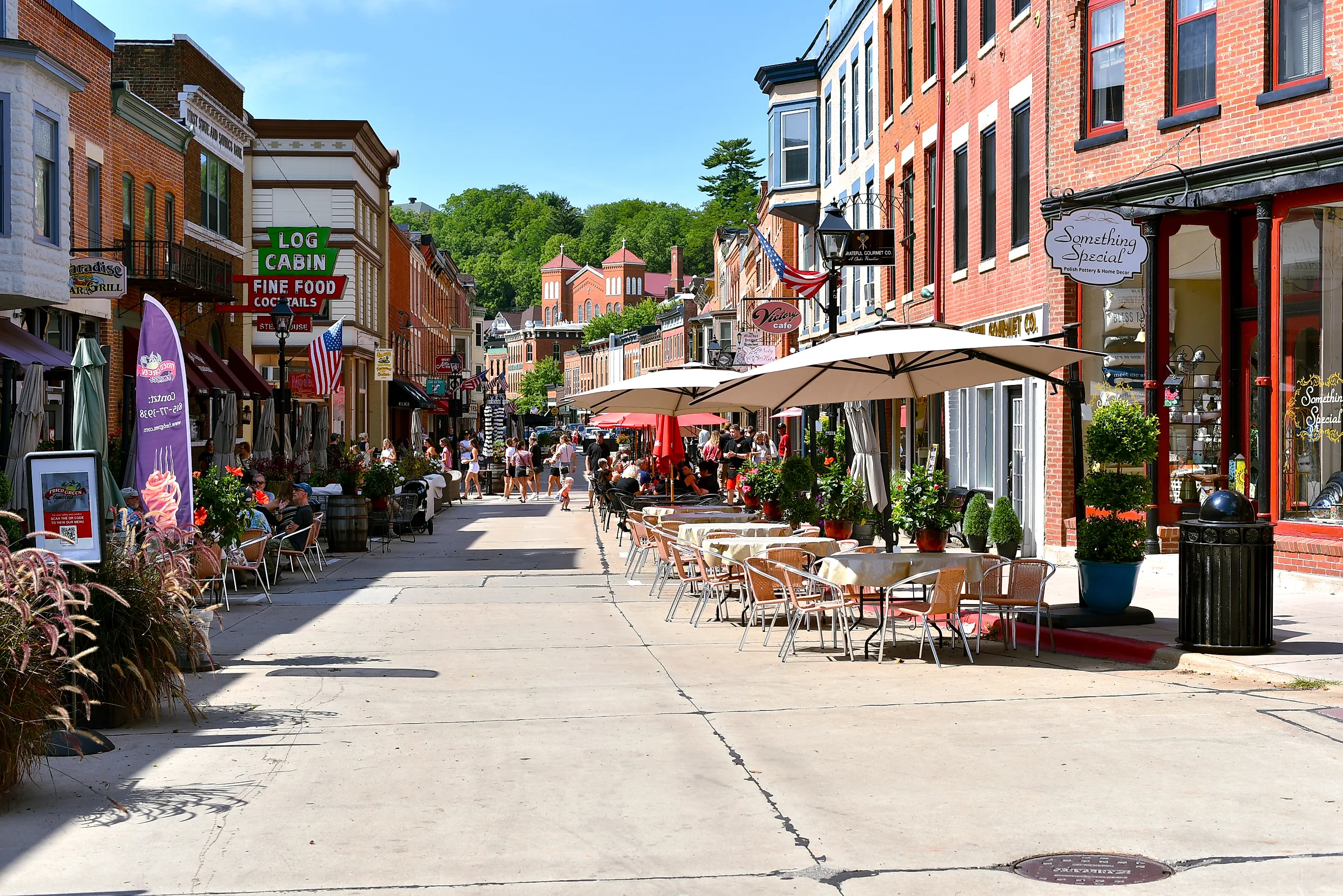
Galena sits in a fold of bluffs above the Galena River, and its Main Street looks much as it did in the 1800s, when lead mining made this one of the busiest ports on the upper Mississippi. More than eight in ten of the town's buildings fall within the Galena Historic District, so a slow walk past the brick and cast-iron storefronts doubles as a tour of the era. The 1826 Dowling House, among the oldest homes in the state, still welcomes visitors to its limestone rooms, and the nearby Ulysses S. Grant Home preserves the residence local Republicans gave the general when he returned from the Civil War in 1865. When the shops close, the Galena River Trail follows an old rail line out of town for long, quiet views of the countryside.
Peru

Peru overlooks the Illinois River and pairs its Victorian history with public spaces built for lingering. Mornings tend to begin at Four Star Family Restaurant, a longtime local favorite known for hearty breakfasts, before a loop around Baker Lake Park, where paved paths circle the water beneath mature trees. Just across the line in neighboring La Salle, the Hegeler Carus Mansion, completed in 1876, showcases well-preserved interiors and stained glass on guided tours of its fifty-seven rooms, designed by the Chicago architect behind the Water Tower. A few minutes east, Starved Rock State Park offers sandstone canyons, seasonal waterfalls, and wooded trails along the river bluffs for those in no hurry to leave.
Sterling

Daily life in Sterling revolves around the Rock River, where historic architecture and riverfront parks make it easy to slow down. A cup of coffee and a pastry at Air Play Espresso sets up a leisurely walk along the Sterling Riverfront Trail, which follows the water past overlooks and green spaces before crossing toward the twin city of Rock Falls on the opposite bank. History enthusiasts can tour the Dillon Home Museum, an 1858 Italianate residence built for Civil War Brigadier General Edward Needles Kirk and later home to the Dillon family, filled with period furnishings and decorative woodwork. The day winds down at Woodlawn Arts Academy, housed in a former school, where rotating exhibits, performances, and community classes keep the region's creative life close at hand.
Geneseo

Brick storefronts line Park Avenue in Geneseo, a town settled in the 1830s by New England and New York colonists whose Greek Revival and Italianate buildings still frame the downtown. Local Motive Coffee Bar is the daily ritual for residents and slow travelers alike, its windows catching the morning light over carefully pulled espresso and house-made pastries. From there, the Geneseo City Park and its walking paths offer a gentle stretch where wildflowers crowd the edges. The Geneseo Historical Museum, set in a 19th-century home on South State Street, fills in the town's farm-and-rail past, the same heritage behind a summer farmers market stocked with heirloom tomatoes, honey, and small-batch goods on Saturday mornings. It is a place that rewards an aimless afternoon on foot.
Elsah

Set between limestone bluffs and the Mississippi River, Elsah looks much as it did in the mid-1800s, when riverboats stopped here to take on wood and grain. Nearly the whole village forms the Elsah Historic District, the first entire village listed on the National Register of Historic Places, where ivy-covered stone cottages, narrow lanes, and old trees make one of the most photographed settings in the state. Coffee at the nearby Principia College campus café is a fitting start to a walk through the village on foot, past well-kept Greek Revival and Gothic Revival houses. A short drive leads to nearby overlooks above the river, and the Great River Road strings together bluff-top views that reward an unhurried afternoon of stopping wherever the scenery asks you to.
Nauvoo

Nauvoo rises from a wide bend of the Mississippi, and its flats hold one of the most complete 1840s streetscapes anywhere in Illinois. Historic Nauvoo preserves dozens of restored brick homes and workshops from the town's era as a Latter-day Saint settlement, with costumed demonstrations of period trades such as brickmaking and blacksmithing in the warmer months. The Joseph Smith Historic Site anchors the south end, gathering the original homestead and family cemetery near the river. Just outside the village, Nauvoo State Park spreads along the water with picnic grounds and trails, and Baxter's Vineyards, working since 1857 and recognized as the oldest winery in Illinois, keeps up the winemaking that German, French, and Icarian immigrants brought to these river bluffs.
Mendota

Mendota keeps its farm-town traditions close, a habit rooted in its start as a railroad junction where the Illinois Central and Chicago, Burlington and Quincy lines crossed. Each August, the Mendota Sweet Corn Festival fills the streets with free roasted sweet corn, cooked with a vintage steam engine, along with live music and a grand parade that have drawn crowds since 1948. Year-round, the Union Depot Railroad Museum occupies the restored 1888 depot, a short walk from the historic Hoblit and Breckenridge blocks downtown. On the edge of town, area nature preserves let visitors wander trails through some of the tallgrass prairie that once covered this part of Illinois, a quiet counterpoint to the festival-weekend bustle and an easy way to stretch a slow afternoon.
Sandwich

Founded in 1855 around another stop on the Chicago, Burlington and Quincy Railroad, Sandwich invites a slow morning through one of northern Illinois' best-kept historic downtowns. Antique and specialty shops fill the storefronts, and the restored Sandwich Opera House, built in 1878 inside the old city hall, has hosted community theater, recitals, and traveling performers ever since. Nearby Knights Park offers walking trails, picnic areas, and shade trees around a quiet lake. Come September, the Sandwich Fair, one of the oldest continuously running county fairs in Illinois, turns the town over to the region's agricultural heritage with livestock barns, harvest exhibits, and a midway that pulls in visitors from across the region. It is the kind of place where an errand becomes an afternoon.
Bishop Hill
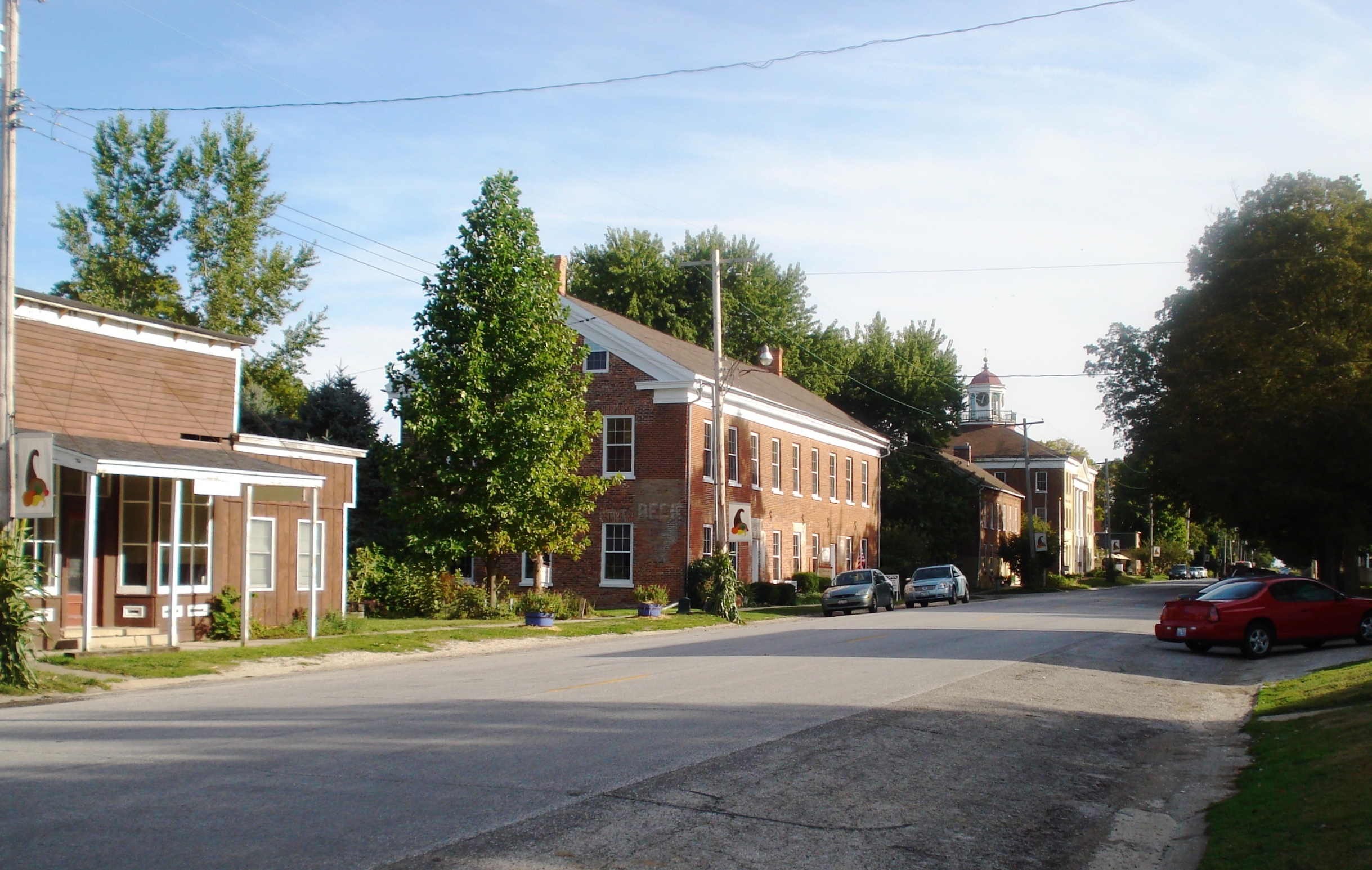
Founded in 1846 by Swedish religious dissenters following Erik Jansson, Bishop Hill still runs on the buildings its colonists raised on the prairie, and with barely more than a hundred residents, it may be the quietest stop on this list. Tours generally begin at the 1854 Steeple Building, whose tower clock famously has a single hand, then move to the Colony Church, where the sanctuary sits above ground-floor rooms that once housed families. The Colony Store carries Swedish gifts and crafts, and the Bishop Hill Heritage Museum holds the folk paintings of colonist Olof Krans, whose portraits document the settlers themselves. Each September, the Jordbruksdagarna harvest festival brings old-time farming demonstrations back to the village, and a walk around the wide, communal streets fills an easy hour.
Pontiac

Pontiac pairs Route 66 nostalgia with a downtown built for slow living, its historic square anchored by the 1875 Livingston County Courthouse and more than twenty outdoor murals. Pastries and lattes at The Cup and the Scone start an easy morning, and the Route 66 Association of Illinois Hall of Fame and Museum, set in a restored firehouse, keeps the vintage road culture close. The Pontiac-Oakland Automobile Museum lines up decades of classic Pontiac and Oakland cars and memorabilia, while the Vermilion Riverwalk threads the historic district on a tree-lined path best taken on foot, crossing three swinging pedestrian bridges over the water. There are plenty of shady spots for a picnic lunch, and free trolley rides make it simple to see the town at a wandering pace.
Off the Clock in Illinois
What ties these towns together is a shared willingness to let the day unfold at walking speed. A restored opera house, a prairie trail, a market table stacked with late-summer tomatoes, each giving visitors a reason to stop checking the time. Whether the setting is a Mississippi bluff or a quiet block of prairie brick, the reward is a stronger sense of place that only shows itself when you slow down enough to notice it.