10 Cutest Small Towns In Indiana for 2025
In 2025, Indiana’s smallest towns are telling their stories in quieter, more deliberate ways, through river bluffs where old colleges still watch the water move, courthouse squares that host weekly routines instead of crowds, and main streets where local history remains visible without a plaque at every corner.
This guide moves town by town across the state, focusing on places where a single landmark, landscape, or tradition defines the experience rather than overwhelms it. From hill towns shaped by artists and distillers to river communities anchored by waterfalls, ferries, and historic streets, these ten destinations reward slow exploration and close attention. What follows is not a checklist of attractions, but a closer look at how each town spends its days, what draws people back year after year, and why these corners of Indiana stand out in 2025.
Merom

Perched high above a bend in the Wabash River, Merom carries a quiet gravity that feels earned rather than curated. The town’s most striking landmark is the former Union Christian College, a brick structure built in 1859 that still dominates the bluff and anchors Merom’s identity. Walking its perimeter reveals views across river valleys that stretch into Illinois, especially striking in late afternoon light. Just beyond town, Merom Bluff Park provides wooded paths and open overlooks above the Wabash River, making it a favored spot for birdwatching and quiet walks.

Merom moves slowly, and that is the point. Short drives along surrounding farm roads reveal old barns, small cemeteries, and long sightlines uninterrupted by traffic. Locals often cross paths at Meleah’s Cafe, a small home-style spot where breakfast plates and daily specials keep conversations lingering longer than planned. The restored Merom Grist Mill adds another layer of context, connecting the landscape to the town’s working past, best appreciated from the bluff as evening settles in.
Nashville

Nashville sits in the folds of Brown County, where hills replace cornfields and creativity shows up storefront by storefront. The downtown district clusters around Main Street, filled with working artist studios, small galleries, and locally owned shops that rotate displays often enough to reward repeat visits. A short drive brings you to Brown County State Park, where paved overlooks and rugged trails reveal why painters and photographers have been drawn here for generations.

Food and drink are part of Nashville’s rhythm. Hard Truth Distilling Co., set on wooded acreage outside town, blends spirits production with outdoor seating and live music, while Bear Wallow Distillery leans into local lore and small-batch releases. In town, Big Woods Pizza Co. serves as an easygoing gathering spot, where long tables, local brews, and shared plates keep conversations going well past lunch. Seasonal festivals spill into the streets, but weekday mornings remain unhurried, especially before park traffic arrives from Indianapolis.
Goshen

Goshen’s downtown runs on community energy rather than spectacle. The streets near the Elkhart River are lined with independent bookstores, coffee shops, and restaurants that stay busy with students, cyclists, and families throughout the day. South Side Soda Shop anchors the scene with counter seating and milkshakes, while Electric Brew functions as an informal living room for the neighborhood.

The Goshen Farmers Market, held year-round, serves as a weekly gathering point, showcasing regional produce, baked goods, and prepared foods tied closely to the area’s agricultural roots. Outdoor access is immediate via the Pumpkinvine Nature Trail and Goshen’s Millrace Trail, where kayaks slip into the water just steps from downtown patios, especially near dinner hour.
Aurora

Aurora unfolds along the Ohio River, where brick storefronts face the water and steamboat-era wealth still shapes the town’s footprint. Downtown Aurora centers on a compact stretch of storefronts near the river, where independent shops and galleries sit just steps from the levee and marina access. Just uphill, Hillforest Mansion rises above the river, its Italian Renaissance design and broad balconies reflecting the ambitions of a river-powered past, now maintained as a museum with commanding views across the valley.

Daily life remains connected to both river and community. Third & Main, a longtime downtown favorite, keeps tables full with familiar conversation and unhurried meals. Down along the water, Gabbard Riverfront Park provides open lawns, public art, and uninterrupted river views where families gather and freighters pass by. During the Aurora Farmers Fair, streets fill with parades and food stands, but even outside festival season, evenings along the levee move at an unhurried pace.
Corydon

Corydon carries Indiana’s early political history in plain sight. The Old Capitol Building, once the seat of state government, anchors downtown and remains open for guided tours detailing the state’s formative years. Nearby, Corydon Battle Park marks the site of Indiana’s only official Civil War battle, with wooded paths dotted with interpretive signs and memorials.

The town square supports small restaurants and shops housed in preserved brick buildings. Locals often meet up at Flipdaddy’s Brilliant Burgers - Corydon & Scottsburg, where handcrafted burgers, craft beers, and lively conversation fill the dining room and wraparound porch well into the evening. Just outside town, Hayswood Nature Reserve offers quiet trails through hardwood forest, making it easy to move between history, food, and nature without leaving the area.
Williamsport

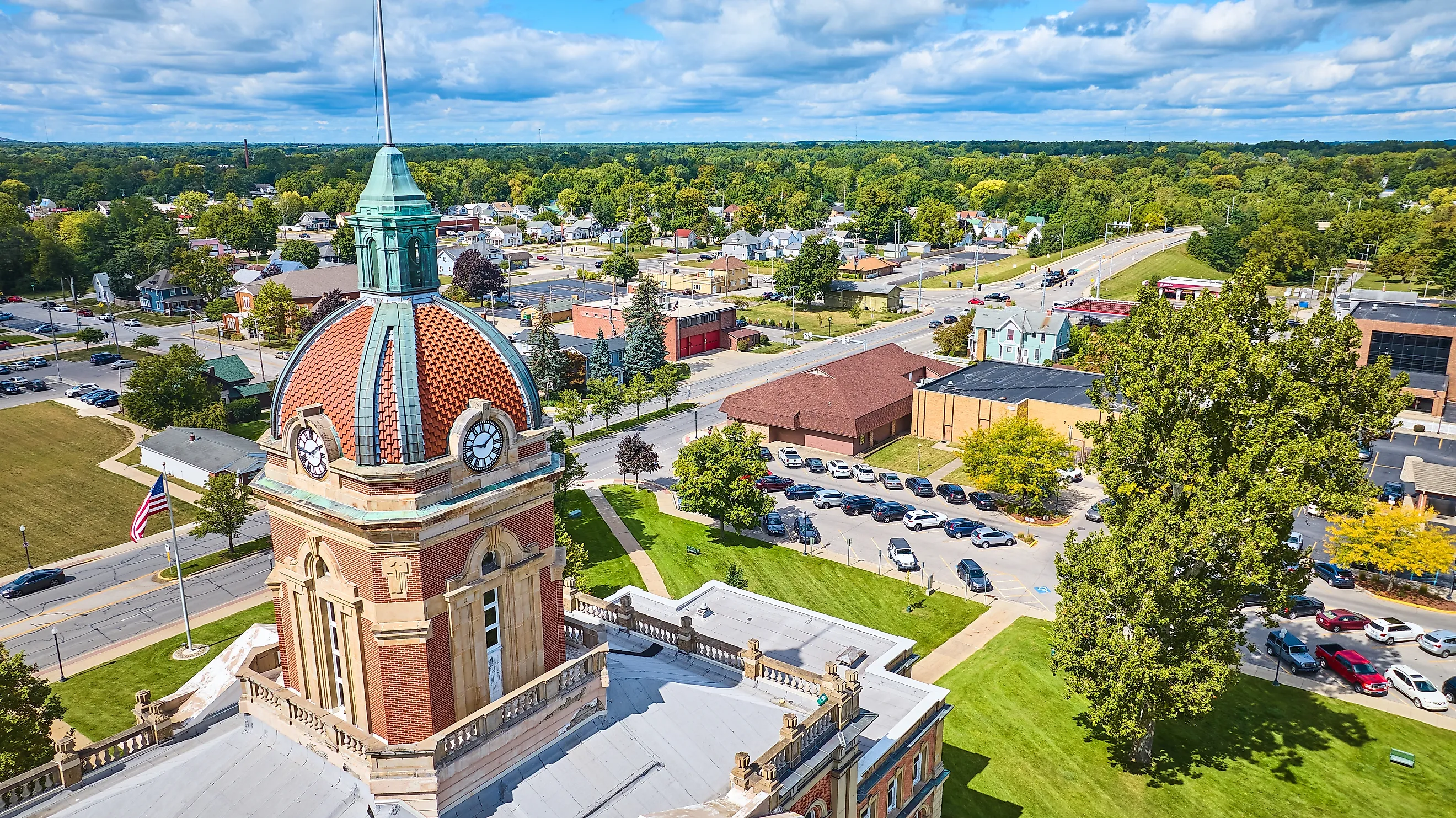
Williamsport rises from the banks of the Wabash River with a sense of vertical drama rare in Indiana. The centerpiece is Williamsport Falls, the state’s tallest waterfall, visible just steps from downtown when water levels cooperate. A short walk leads to the Warren County Courthouse, its Second Empire architecture standing out against the surrounding streets.

Old residential blocks reveal homes built during the canal era, including the distinctive Tower House. Locals often gather at The Foxhole, a bar and grill where hearty sandwiches, burgers, and cold drinks encourage easy conversation after a morning by the river. Riverside access supports kayaking and fishing along calmer stretches of the Wabash, while the sound of the falls, when active, carries through town and defines the visit.
Angola

Angola benefits from its proximity to water. Just minutes from downtown, Pokagon State Park and Lake James shape daily life with swimming beaches, boating access, and wooded trails active year-round. Winter brings crowds for the toboggan run, while summer mornings belong to anglers launching boats at first light.

Downtown Angola supports local restaurants and gathering spots like The 6 On James, where seasonal menus and patio seating keep the square lively. The Steuben County Courthouse anchors the center of town, and the nearby Steuben County Jail adds historical context. Angola works best as a base, with lakes and meals always within easy reach.
New Harmony

New Harmony was designed around ideas rather than commerce, and that philosophy still shapes the town. The Roofless Church, an open-air sanctuary framed by walls and sky, serves as a central gathering space meant for reflection rather than ceremony. Nearby, the Atheneum Visitor Center introduces the town’s utopian experiments through architecture and exhibits that set the context for everything else.

Meals tend to be unhurried here. The Red Geranium, set within an 1830s building, draws visitors and locals alike for seasonal dinners and long conversations. Streets remain walkable and quiet, leading past historic homes and sculpture gardens. Outside town, Harmonie State Park offers wooded trails and river access that echo the settlement’s original connection to land and labor.
Madison

Madison stretches along the Ohio River beneath steep bluffs, with downtown packed into the Madison Historic District, a National Historic Landmark District often described as among the largest of its kind in the nation. Main Street showcases Greek Revival and Federal-style architecture, with shops and restaurants occupying structures that date back to the 1800s. A short walk uphill brings visitors to the Lanier Mansion, where guided tours explore the town’s role in river trade.

Food culture thrives here. The Red Roaster Coffee & Eatery and Hinkle’s Sandwich Shop serve as daily gathering points, especially for locals who have been coming for decades. Beyond downtown, Clifty Falls State Park adds depth with waterfalls and overlooks, while riverfront paths reconnect visitors with Madison’s shipping past.
Greenfield

Greenfield ties its identity to storytelling and public space. The Riley Home Museum preserves the poet’s early years and connects literature directly to place, while downtown streets remain active with diners, shops, and seasonal events centered near the courthouse square. Historic buildings and pocket parks make wandering the Greenfield Courthouse Square Historic District an easy way to spend an afternoon.

Community life often converges at spots like The Depot, where casual American fare draws locals for lunch and relaxed dinners, and Carnegie's A Place To Eat, a refined restaurant in a historic building that also serves as a gathering place for special meals. Just south of downtown, Riley Park provides walking paths, open lawns, and a performance pavilion used for concerts and gatherings, while the Hancock County Historical Society Museum adds context through rotating exhibits that trace local industry and daily life.
Little Towns, Lasting Impressions
These Indiana towns stay with you for simple, specific reasons: a waterfall you hear before you see it, a church open to the sky, a river bluff that asks you to stop walking and look. Each place on this list reveals itself through small moments rather than grand gestures, rewarding travelers who slow down and pay attention. By the time you leave, it is often one quiet street, one view, or one familiar routine that lingers longest.