10 Coolest The Pacific Northwest Towns For A Summer Vacation In 2026
Some of the most interesting arts communities in the Pacific Northwest are in towns at the end of a ferry line or a mountain road. Artists and writers have shaped the whole character of these places. A former Victorian seaport like Port Townsend, a bronze-sculpture center like Joseph, and a theater town like Ashland each built a real creative identity well off the main tourist routes. Summer is when it's most visible as festivals and gallery walks bring the work into the open. The ten towns below stay uncrowded precisely because they take some effort to reach, and that's much of their appeal.
Port Townsend, Washington

If the Pacific Northwest had a capital of beautiful eccentrics, it might be Port Townsend. Sitting at the northeastern tip of the Olympic Peninsula, the former Victorian seaport has spent decades attracting artists, boat builders, writers, and musicians. Grand 19th-century buildings line Water Street, where weathered docks, maritime workshops, and independent galleries give the town a creative edge.
With a population of around 10,700, the center of that energy is Fort Worden Historical State Park, a former military installation turned into a cultural campus where artists-in-residence, musicians, and filmmakers gather year-round. Historic barracks and other former military buildings now house studios, performance venues, and the Centrum arts organization, which runs workshops and festivals throughout the summer.
The town's artistic reputation peaks during events such as the Port Townsend Film Festival in September and Centrum's Fiddle Tunes Festival, which draws musicians from around the world. Between festivals, downtown stays lively with shops like Imprint Bookshop, the First Saturday Gallery Walk, coffee shops, and waterfront taverns.
Astoria, Oregon

There are prettier coastal towns in the Pacific Northwest, but few have Astoria's cinematic cool. Sitting on a steep hillside where the Columbia River meets the Pacific Ocean, the town feels equal parts working waterfront, indie film set, and creative refuge. Historic canneries and warehouses have been turned into breweries, galleries, hotels, and performance spaces, while fog drifts across the river.
Astoria's identity is tied to storytelling. It served as the backdrop for films including The Goonies, Kindergarten Cop, and Free Willy, but its current appeal comes from a busy arts scene centered on downtown's historic commercial district. Murals, galleries, and artist-run spaces occupy century-old buildings.
With a population of around 10,000, summer brings a full calendar of events, from the Astoria Scandinavian Midsummer Festival and FisherPoets Gathering to concerts and exhibitions at venues throughout town. Visitors can ride the Astoria Riverfront Trolley along the Columbia River or follow a self-guided route past familiar Goonies filming locations, including views of the famous house from public areas nearby. Many people spend sunsets along the Astoria Riverwalk or at Pier 39, watching cargo ships move along the Columbia River.
Friday Harbor, Washington

Reaching Friday Harbor takes some effort. Whether you arrive aboard a Washington State Ferry crossing the Salish Sea or step off a small regional flight, the trip feels like a shift in pace. On San Juan Island, the town has become one of the Pacific Northwest's most appealing island communities, drawing marine biologists, artists, entrepreneurs, and travelers who want a quieter pace without giving up culture.
Much of Friday Harbor's identity revolves around the waters around it. The town is known for its work in marine conservation and whale research, and conversations about orcas, ecology, and sustainability are as common as talk about art openings or local music. Despite its reputation among marine scientists, downtown stays small-scale, with a population of around 2,600, and independently owned bookstores, galleries, cafes, and restaurants cluster around the harbor.
Summer is the island's social season. Farmers markets fill with local makers and artisans, outdoor concerts spill onto waterfront lawns, and whale-watching boats head into the Salish Sea in search of orcas, humpbacks, minke whales, and other wildlife. Visitors can also stop by The Whale Museum on First Street, a long-running Friday Harbor institution devoted to whales, marine mammals, and the waters that shape life in the San Juan Islands.
Langley, Washington

If Friday Harbor is the San Juan Islands' busy ferry-port hub, Langley is Whidbey Island's bohemian living room. Set on bluffs overlooking Saratoga Passage, the tiny village has spent decades building a reputation as a haven for artists, writers, performers, and independent thinkers. Downtown stretches only a few blocks, but nearly every storefront seems devoted to books, art, music, coffee, or conversation.
Residents gather for gallery shows at artist-owned spaces such as Rob Schouten Gallery and MUSEO and for theater and music at Whidbey Island Center for the Arts, while visitors wander between cafes and bookstores before watching Saratoga Passage from Seawall Park or making the short drive to South Whidbey State Park near Freeland. The town's creative streak runs past summer too, from gallery openings and WICA performances to off-season favorites like Langley Mystery Weekend, a community-wide whodunnit that turns downtown into a stage.
What makes Langley appealing is how easily culture and nature sit side by side. Old forests are minutes from galleries, whale sightings are possible from downtown overlooks, and some of the region's best creative spaces are housed inside historic buildings overlooking water.
Joseph, Oregon

At first glance, Joseph looks like a small, classic Western mountain town. Then you notice the bronze sculptures lining Main Street at the Bronze Art Walk, the artist studios set between outfitters and cafes, and the peaks of the Wallowa Mountains rising beyond Wallowa Lake. Over the past several decades, this remote corner of northeastern Oregon has quietly become one of the region's more distinctive arts destinations.
Joseph has built a national reputation around bronze sculpture. What began with a handful of artists and foundries has grown into a creative community where public art is part of everyday life. Visitors can spend the morning touring Valley Bronze of Oregon's Joseph foundry, the afternoon kayaking beneath snowcapped mountains at Wallowa Lake, and, later in the season, time a visit around the Wallowa Valley Festival of the Arts.
Summer is when Joseph is at its best. The streets fill with visitors attending art festivals, outdoor markets, and music events, while nearby Wallowa Lake becomes a hub for paddlers, hikers, and campers drawn by some of the state's most spectacular scenery.
Ashland, Oregon

Few towns in America have built their identity around the arts as completely as Ashland. Set at the southern edge of Oregon's Rogue Valley, this mountain-framed community feels like a place where theater, literature, and creativity are part of everyday life. Ashland's cultural heart is the Oregon Shakespeare Festival, which turns the town into one of the country's most important performing arts destinations. But the creative energy extends well beyond the stages. Independent bookstores, music venues, and cafes occupy historic buildings throughout downtown.
Summer is Ashland's signature season. Visitors spend mornings hiking local trails, afternoons exploring galleries and tasting wines at one of the town's vineyards, and evenings at the theater, live music, or literary events. Beyond the performances and scenery, Ashland's real strength is how much it invites you to take part. A trip might mean wandering through Lithia Park, the 100-acre landscape with wooded trails, duck ponds, and the Ashland Japanese Garden, or catching live music at venues such as the Historic Ashland Armory.
Manzanita, Oregon

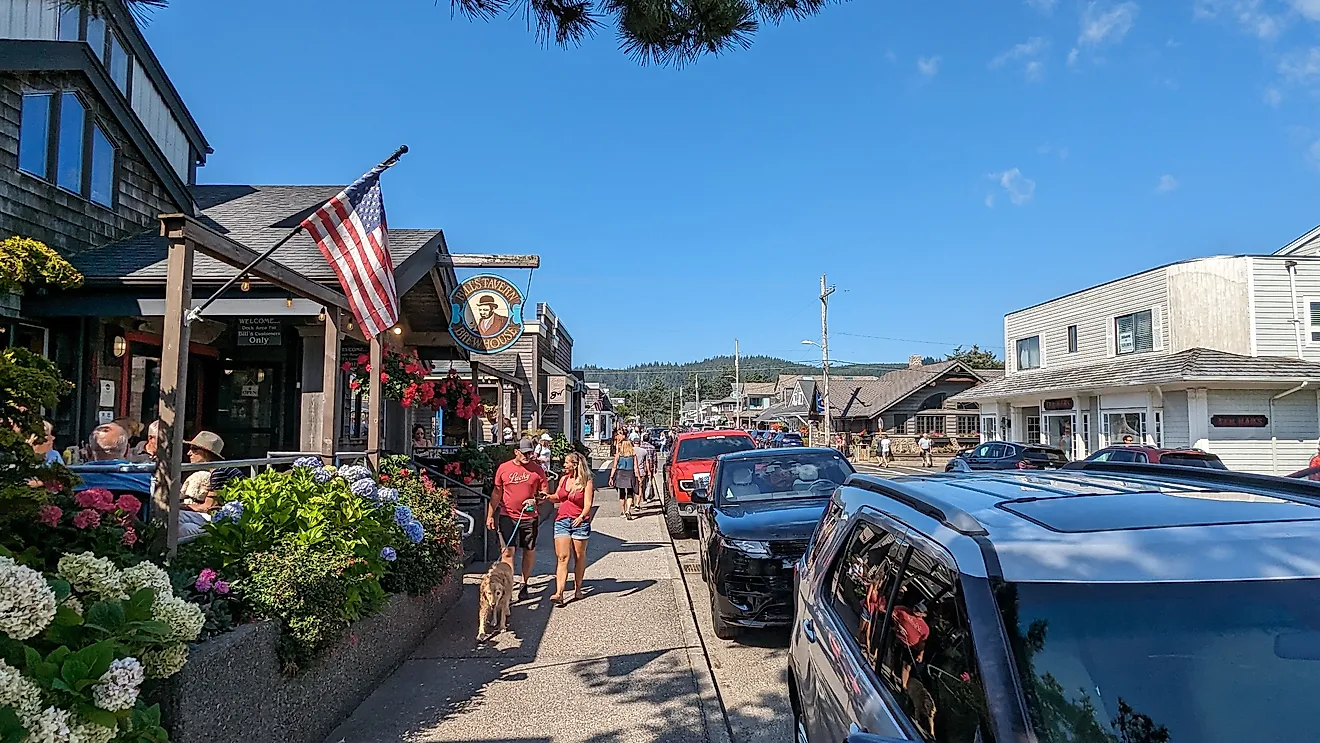
On a coastline full of famous destinations, Manzanita stays refreshingly low-key. Set between the Pacific Ocean and the forested slopes of Neahkahnie Mountain, this small beach town has become a refuge for artists, writers, surfers, and creative professionals after a quieter version of the Oregon Coast. There are no amusement parks, oversized resorts, or crowded boardwalks; people come for the walkable downtown, the beach, and a community that values a calmer pace.
The town's creative side shows up everywhere. Painters display work in storefront galleries, local musicians perform at small venues, and residents gather for art walks and community events throughout the summer. While neighboring Cannon Beach often draws larger crowds, Manzanita offers many of the same dramatic coastal landscapes with a more relaxed neighborhood feel.
Summer is when the town comes alive. Visitors spend mornings at the Manzanita Farmers Market, where local artists, craft vendors, food producers, musicians, and community groups gather through the warmer months. During the day, you can hike the Neahkahnie Mountain Trail, where viewpoints look out over Manzanita Beach, the Pacific Ocean, and the rocky coastline. The quieter pace draws travelers more interested in discovery than crowds.
Sisters, Oregon

At first glance, Sisters looks like a carefully preserved Old West town. Wooden storefronts line Cascade Avenue, hitching posts stand outside businesses, and the Three Sisters peaks dominate the horizon. But behind the frontier-style facade is one of Central Oregon's busiest creative communities.
What makes Sisters stand out is the way it mixes outdoor adventure with art. The same people who spend mornings mountain biking or hiking in the Cascades often spend evenings at gallery openings, folk concerts, and community arts events. That crossover gives the town a creative energy that feels real rather than staged. Downtown, Hood Avenue Art and Sisters Gallery & Frame Shop make it easy to browse work by Central Oregon painters, ceramicists, jewelers, fiber artists, and other regional makers.
Sisters also sits near striking lava fields, including Dee Wright Observatory on McKenzie Pass, where the Lava River National Recreation Trail crosses black volcanic flows with views toward the Cascades. Those after more of a challenge can ride a section of the McKenzie Pass Scenic Bikeway, one of Oregon's best-known cycling routes, pedaling through those same lava fields.
Winthrop, Washington

Winthrop, lined with wood boardwalks, false-front storefronts, and a Main Street that leans fully into its frontier look, looks straight out of a Western film. Behind the Old West styling, though, is a modern mountain community in the Methow Valley, where cyclists, painters, backcountry skiers, and musicians turn up each summer.
Set along the Methow River and framed by the eastern Cascades, Winthrop has become a hub for outdoor culture and small-scale creativity. Local art is easy to find at The Winthrop Gallery, an artists' cooperative filled with paintings, photography, ceramics, jewelry, textiles, woodworking, and other Methow Valley work. The surrounding valley also has one of the country's most celebrated trail systems, while visitors can float the Methow River, explore nearby paths, and stargaze from Sun Mountain Lodge.
Despite its tiny size, the town often feels busy with musicians, cyclists, and makers passing through during the warmer months.
Vashon Island, Washington

Vashon Island is close enough to Seattle to see the skyline on a clear day, but it feels completely removed. Reachable only by Washington State ferries from Fauntleroy or Tacoma, the island has built a reputation as a self-contained creative enclave where artists, musicians, and farmers share a strong streak of independence. The pace is slower, but the cultural output is steady. Between gallery openings at the Vashon Center for the Arts and market days at the Vashon Island Farmers Market, the island's appeal is that creativity is built into the place itself.
Weekend visits often turn into longer stays, with hikes at Maury Island Marine Park, a shoreline park with trails on Maury Island. Point Robinson Park is a classic lighthouse stop, and Vashon's studio-tour tradition gives visitors a window into the island's community of painters, sculptors, ceramicists, printmakers, and other artists.
The Pacific Northwest At Its Most Creative
As travelers move away from overcrowded destinations, more of them are looking for communities with real local culture. The Pacific Northwest's smaller towns offer something increasingly rare, places where creativity thrives because it is part of everyday life.
At a time when many destinations feel curated and predictable, these towns keep a sense of discovery. A summer afternoon might lead to a pop-up gallery opening, a ferry ride to an island beach, a concert in a converted warehouse, or a conversation with a local artist whose work has never left the region.
Whether you are watching whales in Friday Harbor, browsing galleries in Port Townsend, catching a play in Ashland, or watching a beach sunset in Manzanita, these towns show the Pacific Northwest at its most imaginative, and any one of them could be your most memorable summer trip.