What Happens When A State Park Becomes A National Park
When Ohio handed Virginia Kendall State Park over to the federal government in 1978, nothing about the land itself changed overnight. The sandstone shelters the Civilian Conservation Corps built in the 1930s were still standing, the trails still wound through the same hemlock ravines, and the ledges still drew the same hikers. What changed was everything around the land and how it was run. That property is now part of Cuyahoga Valley National Park, and it remains the clearest real-world case study of what actually shifts when a state park crosses over into the National Park System. This piece uses it, alongside a live proposal in Florida, to walk through the changes that follow.
New Management Takes Over

The most immediate change is who runs the place day to day. State parks are staffed by a state's own parks and natural resources department. Once land becomes part of the National Park System, it's managed by the National Park Service, a federal agency under the Department of the Interior, complete with a superintendent and its own resource-management staff. Law enforcement changes too. National Park Service rangers are commissioned federal law enforcement officers trained through the Federal Law Enforcement Training Center, with authority to enforce federal law as well as assimilated state law, make arrests, and carry firearms, a different legal framework than the state officers who patrolled the same acres before the switch. At Cuyahoga Valley, that federal management is also supplemented by a nonprofit partner, the Conservancy for Cuyahoga Valley National Park, which runs volunteer programs and helps fund projects the park's federal budget doesn't fully cover, a partnership model that's common across the National Park System but rare at the state level.
The Funding Source Flips

Money moves through a different pipe entirely. National park units are funded primarily through congressional appropriations to the National Park Service, supplemented by park-specific entrance and recreation fees where they're charged. State parks, by contrast, typically draw on a mix of state general-fund budgets, their own user fees, and in some states, lottery or bond revenue, according to America's State Parks. That funding switch doesn't automatically mean higher costs for visitors, though. Cuyahoga Valley National Park charges no entrance fee at all, a detail worth checking before assuming national park status means a pricier gate, since fee policy is set park by park rather than as a blanket national rule.
The Rulebook Gets Rewritten

Because the National Park Service's mission is legally weighted toward preservation over recreation, some activities that were routine at a state park often disappear once the National Park Service takes over. Hunting is a good example. Many state parks allow seasonal hunting, while national parks generally prohibit it except where Congress specifically authorizes it, as it does in national preserves. Pet policies typically tighten as well, with dogs commonly restricted to roads, campgrounds, and parking areas rather than allowed on backcountry trails. None of this happens through a single universal rulebook, though. Because state park policies vary widely between states and national park rules can vary unit to unit, anyone comparing a specific park's old and new regulations should check that park's own current rules rather than assume a rule holds nationwide. WorldAtlas has a broader comparison of the two systems in the difference between a state park and a national park.
Visitor Numbers Climb, And So Does Traffic

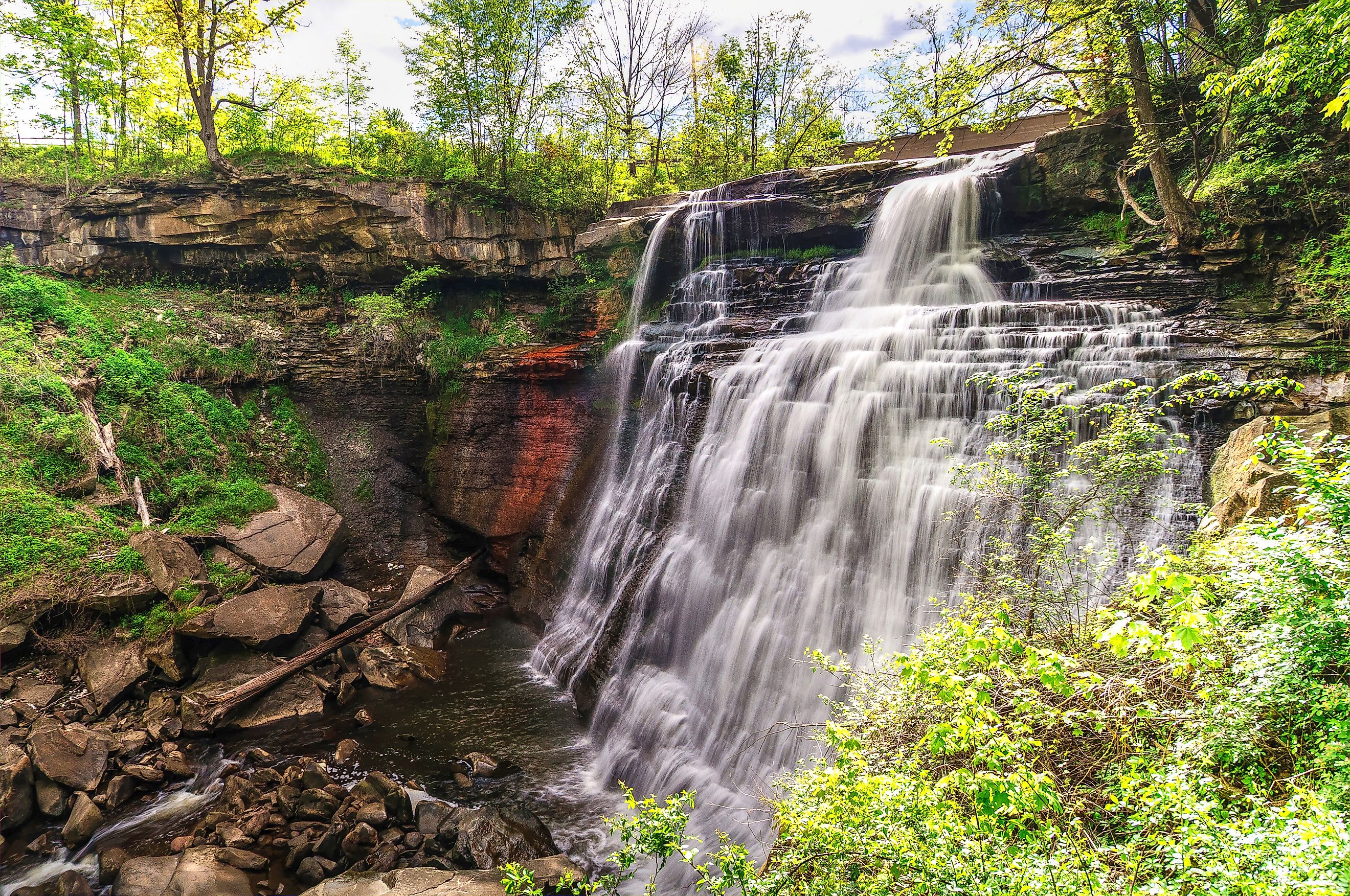
National park status carries a marketing effect that a state park designation rarely matches, and Cuyahoga Valley shows it. The park drew roughly 2.9 million visitors in 2023, and its most popular single stop, Brandywine Falls, has parking that the park itself describes as filling up between roughly 10 a.m. and 3 p.m. on weekends. The park has leaned on infrastructure fixes rather than turning visitors away, including directing overflow parking to the Boston Mill Visitor Center and partnering with the nonprofit-run Cuyahoga Valley Scenic Railroad, which shuttles riders through the park along the historic Valley Railway line as an alternative to driving in. That kind of congestion management, using shuttles, satellite parking, and visitor centers to spread out crowds rather than cap them outright, is a pattern repeated at national parks nationwide as visitation climbs.
The Local Economy Usually Grows

The clearest upside for nearby towns is dollars. The National Park Service's own 2023 figures show that Cuyahoga Valley's 2.9 million visitors spent $139 million in the communities surrounding the park, supporting 2,136 local jobs and generating a cumulative $225 million benefit to the regional economy. That's not unusual for a national park. NPS reported that visitor spending across the entire National Park System reached $29 billion in gateway communities in 2024, supporting 340,100 jobs and generating $56.3 billion in total economic output nationwide, with lodging and restaurants capturing the largest direct share. A state park redesignated as a national park typically inherits that same tourism pull, often well beyond what it drew under state management.
Growth Brings Real Trade-Offs For Nearby Communities
That economic boost isn't free of friction. Research from Headwaters Economics on gateway communities near protected public lands documents a recurring pattern. Growing visitation and new residents drawn by a park's amenities can push housing costs up, and small towns can struggle to fund the roads, water systems, and recreation infrastructure needed to support a seasonal population that dwarfs their year-round one. Trailheads and campsites can become crowded and overused as word spreads. These pressures aren't unique to former state parks that became national parks, they show up around any fast-growing park, but a redesignation that brings a jump in visibility and visitation can accelerate a small gateway town's growing pains faster than it would otherwise face them.
A Test Case Playing Out Right Now In Florida
Central Florida offers a live look at how this process starts. In 2025, U.S. Representative Randy Fine introduced the Path to Florida Springs National Park Act, which would direct the National Park Service to study whether a roughly 2,800-square-mile area of central and north Florida is suitable for national park status. The proposed boundary would draw together the Ocala National Forest with several existing state properties, including Silver Springs State Park, Blue Spring State Park, Paynes Prairie Preserve State Park, and De Leon Springs State Park. As of this writing, the bill has not been enacted and calls only for a special resource study, the same first step every recent national park has had to clear before Congress votes on a designation. Local reaction has been mixed, with supporters pointing to the funding, protection, and tourism draw a national park label could bring, and residents and local business owners raising exactly the same management, access, and growth questions this article has walked through.
What The Sign Change Actually Means
A new national park sign at the entrance is really shorthand for a longer list of changes underneath it: a new managing agency and a different kind of law enforcement, a new funding source and possibly a new fee structure. Other changes may include a narrower rulebook built around preservation, a likely jump in visitors and the traffic that comes with them, a meaningful boost to nearby businesses, and, often, some real growing pains for the community absorbing all of it. Cuyahoga Valley National Park shows what that looks like once it's fully played out. The Florida springs proposal shows what it looks like while a community is still arguing about whether to go through it at all.