7 Snake Infested State Parks In Louisiana
You’re in a dark, dense swamp in the Louisiana bayou. Beads of sweat drip down your face as the sun sets and night creeps in. You hear a familiar hiss as you turn slowly. While that may sound like the opening scene of a movie, the reality of Louisiana’s outdoors is far less dramatic and far more grounded.
The Bayou State is home to 21 state parks, each supporting a diverse mix of plants and wildlife. Snakes are a natural part of that ecosystem. Louisiana has 48 snake species, and only seven are venomous. While encounters are generally uncommon, certain environments make snake sightings more likely than others. As you plan your next outdoor trip, here are seven Louisiana state parks where snake activity is more noticeable, especially near water and dense vegetation.
Chicot State Park

Chicot State Park, located in central Louisiana, is built around the massive Chicot Lake, a body of water surrounded by dense forest and marshy shoreline. This combination of standing water, submerged vegetation, and wooded uplands creates prime conditions for snakes, particularly semi-aquatic species. Visitors often spot non-venomous water snakes basking near the lake’s edge, while cottonmouths may also be present in quieter, less-traveled areas near the shoreline.

Beyond its reptile residents, Chicot is a popular destination for anglers, birdwatchers, and campers, with miles of trails winding through pine and hardwood forest. The park’s natural beauty and wildlife diversity make it a standout destination, but it is also a place where watching footing, especially near water, is advisable.
Lake Fausse Pointe State Park

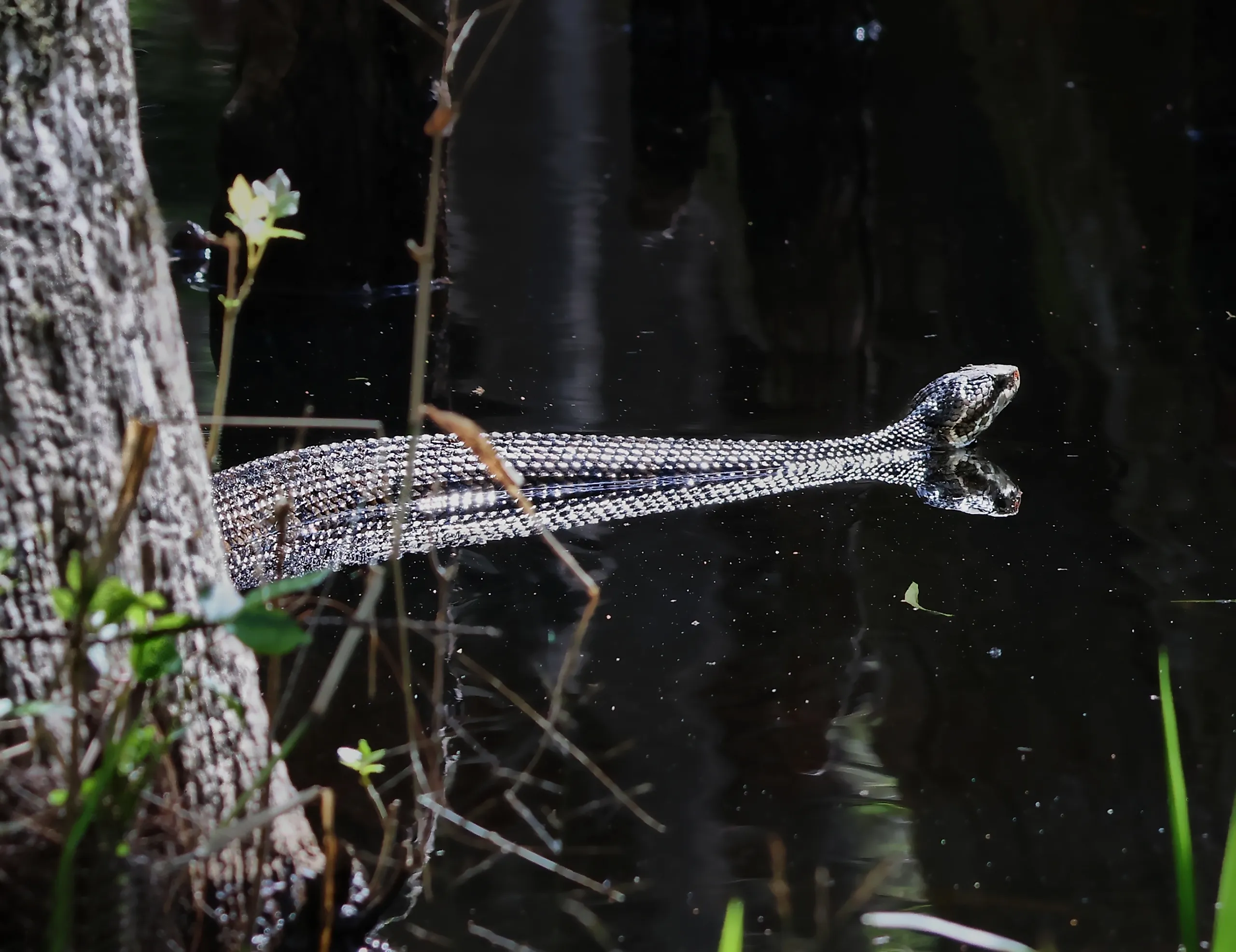
Deep in the heart of the Atchafalaya Basin, Lake Fausse Pointe State Park offers one of the most immersive swamp environments in Louisiana. The park’s slow-moving bayous, cypress-tupelo forests, and flooded wetlands create ideal cottonmouth habitat, and sightings are not uncommon, particularly during warmer months. Alongside venomous species, the area supports a wide range of non-venomous water snakes that thrive on the ample fish and amphibian populations.

Canoeing through the park’s waterways provides a close view of this ecosystem, where snakes may be seen swimming across channels or resting on low branches. The park also supports abundant birdlife and offers a quieter wilderness experience than many other state parks.
Fontainebleau State Park

Fontainebleau State Park sits along the northern shore of Lake Pontchartrain, a large estuarine system known for its marshes and wildlife diversity. The park’s mix of wooded trails, wetlands, and lakeshore habitat supports several snake species, including water snakes and cottonmouths near freshwater inlets and marshy edges. While much of the park feels open and family-friendly, snakes tend to remain closer to less disturbed areas near the waterline or within dense vegetation.

Fontainebleau also features a popular beach, walking paths, and remnants of a historic sugar mill, making it a destination for visitors interested in both natural scenery and local history. As with many parks near large bodies of water, snake encounters are more likely away from heavily trafficked areas.
Sam Houston Jones State Park

Located near Lake Charles in southwestern Louisiana, Sam Houston Jones State Park encompasses a varied landscape of hardwood forests, lagoons, and waterways connected to the Calcasieu River system. This range of habitats supports a broad mix of snake species, from non-venomous racers and rat snakes in wooded areas to water snakes along the park’s lagoons. Venomous species such as cottonmouths and copperheads may also be present, particularly in brushy or less-maintained sections of the park.

The park is well known for fishing, paddling routes, and birdwatching opportunities, drawing visitors throughout the year. Its dense vegetation and water access make it a strong location for wildlife observation, while reinforcing the need for awareness on trails and near water.
Bayou Segnette State Park

Just minutes from New Orleans, Bayou Segnette State Park retains a notably undeveloped feel. The park sits at the intersection of freshwater bayou and coastal marsh, creating a complex ecosystem that supports a variety of snake species. Non-venomous water snakes are common along canals and bayou edges, while cottonmouths may occasionally be found in dense vegetation near the water.

Kayakers and anglers often report sightings, particularly during warm, humid conditions. Beyond its reptile life, Bayou Segnette offers fishing piers, paddling trails, and birdwatching opportunities, making it one of the more accessible state parks in the region.
South Toledo Bend State Park

South Toledo Bend State Park borders the Toledo Bend Reservoir, one of the largest man-made lakes in the southern United States. The lake’s extensive shoreline, submerged timber, and quiet coves provide ideal habitat for snakes, particularly aquatic species. Cottonmouths are often associated with brushy inlets and calm backwaters, while non-venomous water snakes are commonly seen swimming across open water or basking along the shore.

The park is a major destination for bass fishing and boating, and its size makes wildlife encounters more common. Large stretches of undeveloped shoreline and limited human activity in certain areas naturally increase the likelihood of snake sightings.
Lake Bruin State Park

Lake Bruin State Park is set on an oxbow lake in northeastern Louisiana, where calm waters and cypress-lined shores define the setting. Oxbow lakes are particularly attractive to snakes due to their still water, plentiful prey, and dense vegetation. Water snakes are commonly found along the shoreline, while terrestrial species such as racers and rat snakes inhabit nearby wooded areas.

Although the park is popular for swimming, boating, and fishing, snake activity tends to remain closer to natural edges and less-maintained sections of the lake. The quiet setting and active wildlife reflect Louisiana’s reptile-rich environments.
Respecting Wildlife in Louisiana’s State Parks
These Louisiana state parks are popular for fishing, paddling, hiking, and wildlife viewing, largely because of their wetlands and preserved habitats. Those same conditions also support healthy snake populations. In most cases, snakes avoid human activity and play an important role in maintaining ecological balance.
Being aware of where snake encounters are more likely helps visitors enjoy these parks responsibly. Staying on marked trails, watching footing near water, and respecting wildlife contribute to safer outdoor experiences. Snakes are a natural part of Louisiana’s landscape, and these parks reflect that reality.