The Oldest Skyscrapers in the United States
The Delaware Building has stood at the corner of Randolph and Dearborn in Chicago since 1874, watching a century and a half of taller, shinier neighbors go up around it and, in many cases, come back down. Survival is the whole point of this list, and the strict door policy (still standing, no exceptions) bounces some famous names at the rope. The Home Insurance Building of 1885, widely called the world's first skyscraper, was flattened in 1931; the New York Tribune Building has been gone since 1966; Chicago's 302-foot Masonic Temple came down in 1939. The Delaware predates them all, and it predates the skyscraper itself, which is why it opens this article as a prologue rather than a contender. The buildings below beat the wrecking ball, and the table at the bottom ranks twenty-nine survivors with their vital statistics. Every one of them can still be visited, which is more than the pioneers can say.
Before The Skyscraper: The Delaware Building

The Delaware Building is not a skyscraper, and that is exactly why it belongs at the front of this article. Wheelock and Thomas designed it as a five-story Italianate office block during the furious rebuilding that followed the Great Chicago Fire of 1871, which had erased more than three square miles of the city and created the world's largest architectural blank slate. It holds itself up the old way, with load-bearing walls over a cast-iron base, raised a full decade before the Home Insurance Building introduced the skeleton frame that defines the skyscraper as a type. Its claim to fame is the facade: an early use of precast concrete elements, a trick that was decades ahead of schedule. Julius Huber's 1889 remodel added an atrium and two more floors, bringing it to seven stories, and the building earned National Register listing in 1974 and Chicago Landmark status in 1983. It still rents space in the Loop today, a working relic of what "tall" meant before the skyscraper existed, while most of its 1870s classmates survive only in photographs.
Temple Court Building

The Temple Court Building went up at 5 Beekman Street in Manhattan between 1881 and 1883, built to lure lawyers with a name borrowed from London's legal district. Its secret sat inside: a nine-story Victorian atrium crowned by a pyramidal skylight, with floor after floor of cast-iron railings climbing toward the glass. The atrium spent decades sealed behind walls after the last tenants left, was rediscovered like a shipwreck in place, and reopened in 2016 as the centerpiece of The Beekman hotel. Guests now drink cocktails inside what is essentially the skeleton key to early skyscraper design.
Hotel Chelsea

The Hotel Chelsea opened on West 23rd Street in 1884 as one of New York's tallest buildings, then spent the next century becoming its most storied address. Mark Twain stayed, Dylan Thomas was living here when he fell fatally ill in 1953, Arthur C. Clarke wrote 2001: A Space Odyssey in residence, and Leonard Cohen immortalized the place in song. The red-brick Victorian with the iron balconies holds both New York City landmark status and a spot on the National Register, and after a long renovation it operates as a hotel again. No building on this list has hosted more art per square foot.
Sun Building

The Sun Building on F Street in Washington, D.C. was completed in 1887 as the Baltimore Sun's capital bureau, designed by Alfred B. Mullett, the architect behind the Eisenhower Executive Office Building. At nine stories and 116 feet, it was the tallest private building in the capital when new, and it is often called the oldest skyscraper standing outside New York and Chicago. Washington's strict height limits, passed soon after, froze the city's skyline at modest altitude, which makes this early high-rise a snapshot of the skyscraper race the capital chose not to run.
Rookery Building
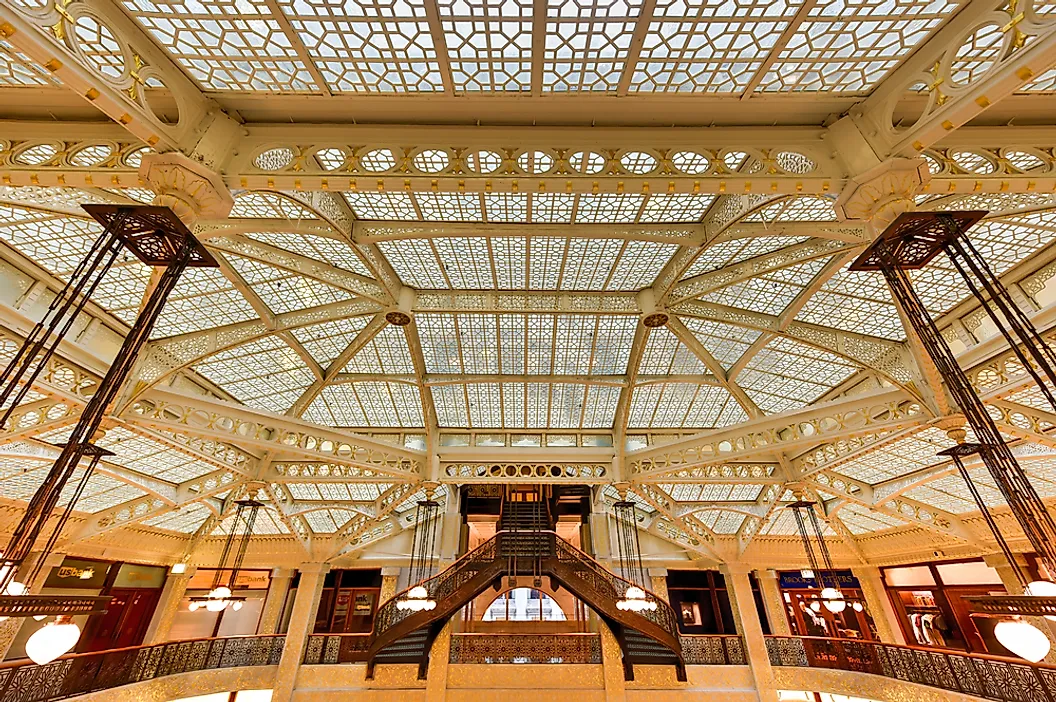
The Rookery, finished in 1888 at 181 feet, is Chicago's oldest standing high-rise and the masterpiece of Burnham and Root, who liked it enough to keep their own offices inside. The name honors the temporary city hall that previously held the site, nicknamed for the crows that perched on it and (locals insisted) for the politicians roosting within. In 1905, Frank Lloyd Wright remodeled the central light court in white marble and gold, giving the building two signatures from two different eras of American architecture. The lobby remains one of the most photographed interiors in the city, and the offices upstairs still command La Salle Street rents.
Wainwright Building

The Wainwright Building in St. Louis, completed in 1891 at 147 feet, is where the skyscraper found its grammar. Louis Sullivan, the architect who coined "form follows function" and mentored Frank Lloyd Wright, designed it as a proud vertical statement rather than a stack of horizontal floors, with unbroken brick piers drawing the eye skyward. Architecture historians treat it as the moment tall buildings stopped apologizing for their height. Saved from demolition in the 1970s, it now houses Missouri state offices, meaning one of the most influential buildings in American history spends its days processing paperwork.
Monadnock Building

The Monadnock Building, completed in 1893 at 197 feet, is the heavyweight champion of this list in the most literal sense. Its northern half is the tallest load-bearing masonry building ever constructed, holding itself up with brick walls that thicken to six feet at the base, no steel skeleton involved. The southern half, added immediately after with a modern steel frame, makes the building a before-and-after diagram of the skyscraper revolution in a single block. Sixteen stories of pure brick stubbornness still house offices and street-level shops on Jackson Boulevard, and the flared walls remain startling to anyone who touches them.
Reliance Building

The Reliance Building, finished in Chicago in 1895 at 202 feet, looks shockingly modern for its age, and that is the point. Its steel frame allowed walls of glass and gleaming white terra cotta where masonry would have stood a decade earlier, making it the great-grandmother of every glass tower on every skyline on Earth. Designed by Burnham's firm with Charles Atwood finishing the job, it spent the late 20th century in decline before a heroic restoration, and it now operates as a boutique hotel at State and Washington. Guests sleep inside the building that predicted the next hundred years.
The Oldest Skyscrapers Still Standing In The United States
The table orders the survivors by completion date, all verified as still standing. Heights come from landmark-commission and architectural-survey records; figures marked with a tilde are approximate, since early skyscrapers were remodeled, expanded, and re-measured often enough that sources disagree by a few feet.
| Rank | Building | City | Completed | Floors | Height (ft) |
|---|---|---|---|---|---|
| 1 | Temple Court Building | New York, NY | 1883 | 10 | ~150 |
| 2 | Hotel Chelsea | New York, NY | 1884 | 12 | 180 |
| 3 | Osborne Apartments | New York, NY | 1885 | 11 | ~135 |
| 4 | Sun Building | Washington, D.C. | 1887 | 9 | 116 |
| 5 | Rookery Building | Chicago, IL | 1888 | 12 | 181 |
| 6 | Wilder Building | Rochester, NY | 1888 | 11 | ~170 |
| 7 | New York Times Building (41 Park Row) | New York, NY | 1889 | 16 | ~190 |
| 8 | Old Chronicle Building | San Francisco, CA | 1890 | 10 | ~145 |
| 9 | Manhattan Building | Chicago, IL | 1891 | 16 | ~200 |
| 10 | Wainwright Building | St. Louis, MO | 1891 | 10 | 147 |
| 11 | Ludington Building | Chicago, IL | 1891 | 8 | ~105 |
| 12 | Second Leiter Building | Chicago, IL | 1891 | 8 | ~110 |
| 13 | Brown Palace Hotel | Denver, CO | 1892 | 9 | ~125 |
| 14 | Mills Building | San Francisco, CA | 1892 | 10 | ~154 |
| 15 | Monadnock Building | Chicago, IL | 1893 | 16 | 197 |
| 16 | Ames Building | Boston, MA | 1893 | 14 | ~190 |
| 17 | Old Colony Building | Chicago, IL | 1894 | 17 | 215 |
| 18 | Winthrop Building | Boston, MA | 1894 | 9 | ~112 |
| 19 | Reliance Building | Chicago, IL | 1895 | 15 | 202 |
| 20 | Marquette Building | Chicago, IL | 1895 | 16 | ~245 |
| 21 | American Tract Society Building | New York, NY | 1895 | 23 | 287 |
| 22 | Milwaukee City Hall | Milwaukee, WI | 1895 | 15 | 353 |
| 23 | American Surety Building | New York, NY | 1896 | 23 | ~338 |
| 24 | Fisher Building | Chicago, IL | 1896 | 20 | 275 |
| 25 | Guaranty (Prudential) Building | Buffalo, NY | 1896 | 13 | 152 |
| 26 | Bayard-Condict Building | New York, NY | 1899 | 13 | 162 |
| 27 | Park Row Building | New York, NY | 1899 | 31 | 391 |
| 28 | Broadway-Chambers Building | New York, NY | 1900 | 18 | 225 |
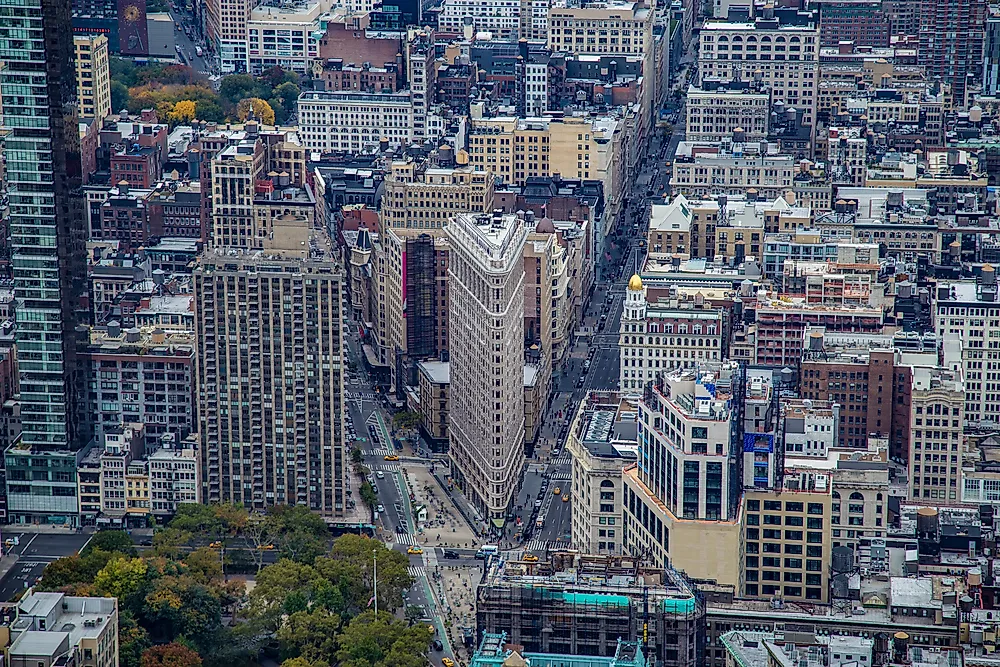
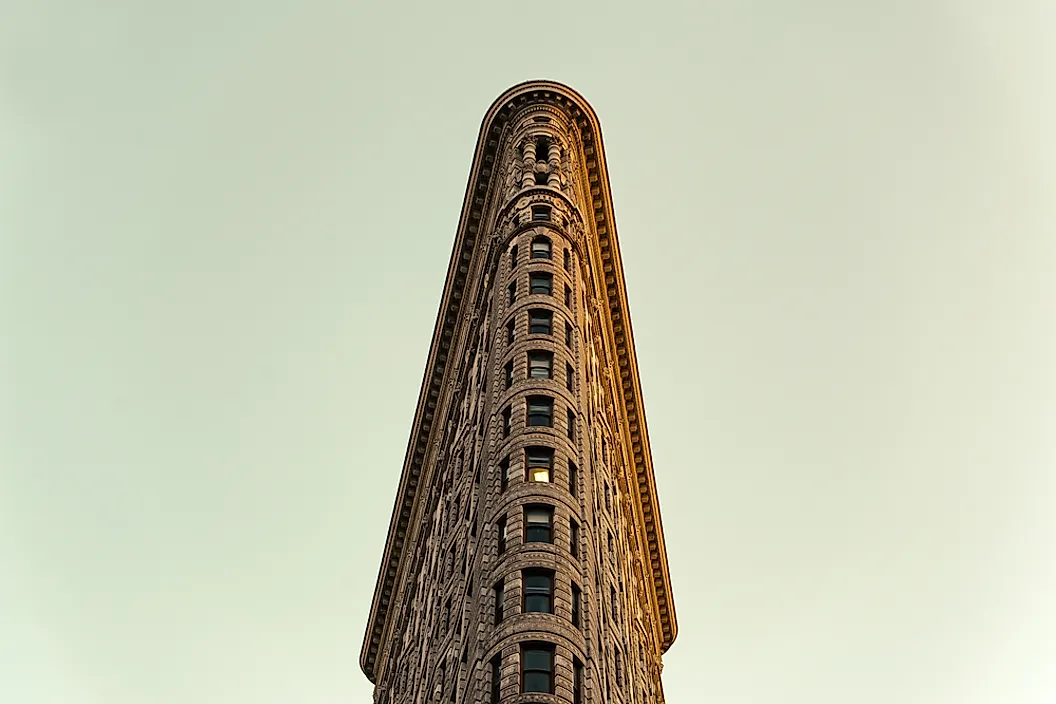
| 29 | Flatiron Building | New York, NY | 1902 | 22 | 285 |
Still Standing, Still Working
The twenty-nine survivors above share one trait beyond age: every single one earned protection by staying useful. They became hotels, state offices, apartments, and landmark lobbies, because in American cities, sentiment saves nothing and a paying tenant saves everything. The demolished pioneers taught that lesson the hard way, with the world's first skyscraper lasting just 46 years before Chicago traded it for something bigger. The buildings on this list adapted instead, and the reward is that anyone can still walk into the Rookery's gold-leafed light court or sleep behind the Reliance Building's glass and judge the dawn of the skyscraper in person. Old age, in architecture, turns out to be the rarest achievement of all.