This Rhode Island Scenic Byway Is The Road Trip Of A Lifetime
At six miles long, Rhode Island's Revolutionary Heritage Byway runs from Warren through the waterfront town of Bristol. It became a state byway in 2000 before earning National Scenic Byway designation in 2021. The name reaches back to May 25, 1778, when British and Hessian troops from occupied Newport marched through both towns and burned boats, buildings, and Warren's powder magazine. Colonial houses that survived that raid still stand along the route, alongside the 1810 Linden Place mansion, the Herreshoff Marine Museum, and the Bristol Ferry Lighthouse below the Mount Hope Bridge. Rather than driving straight through it in a matter of minutes, the byway rewards travelers who take time to explore each stop along the way.
Know Before You Go

The byway takes its name from the events of May 25, 1778, when roughly 500 British and Hessian troops from the garrison at occupied Newport landed on Bristol Neck and marched through both towns. They burned boats the Continental Army had cached for a planned assault on Aquidneck Island, torched Warren's powder magazine and Baptist meeting house, and set fire to homes in Bristol. Many houses that survived the American Revolutionary War still line the route today, which is what the byway was created to preserve.
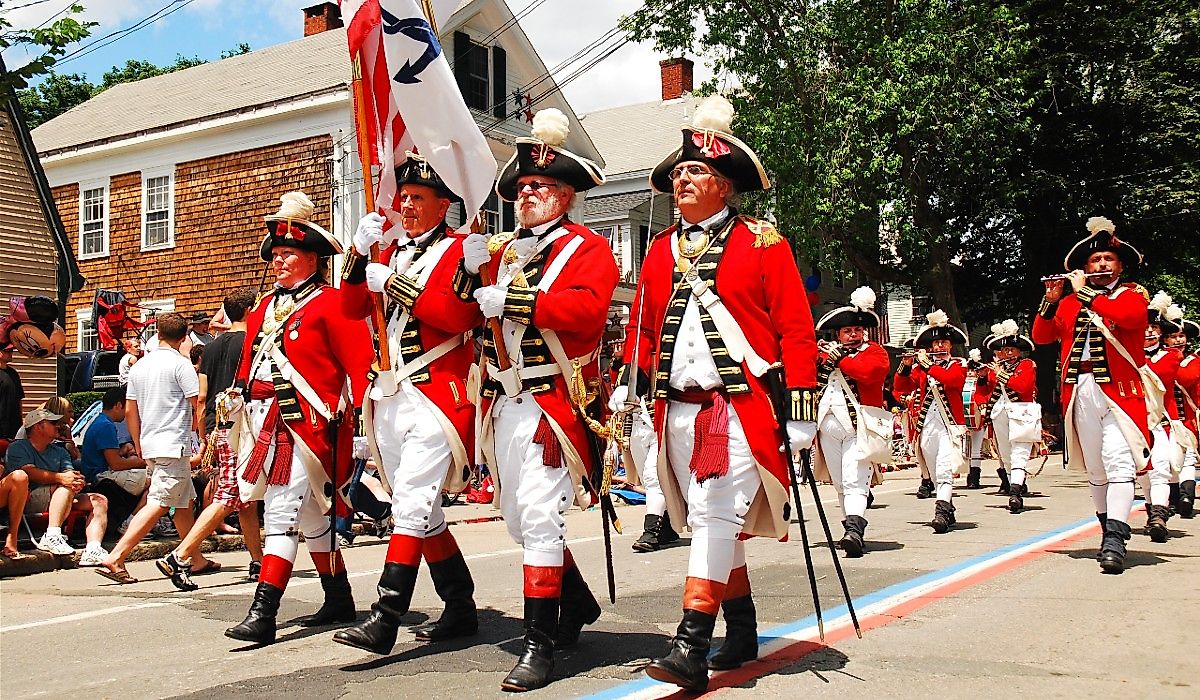
The byway starts in Warren near where Main Street and Child Street intersect, stretches south through Bristol, and ends at the Mount Hope Bridge. Many attractions along the way are open year-round, though several keep limited hours in winter. Bristol also runs one of the country's oldest and longest Independence Day celebrations, with events throughout June and July and a parade tradition dating to 1785. Visitors driving the byway in those two months can expect larger crowds and seasonal fireworks, parades, and carnivals; the rest of the year is quieter.
Start the Morning in Warren

Coffee Depot makes a good first stop at the north end of the byway, with seasonal lattes, pastries, and breakfast sandwiches. From there, travelers can park on Railroad Avenue to reach part of the 14.5-mile East Bay Bike Path. It takes about 15 minutes to walk from the path entry point to Warren Town Beach, a quiet spot to sit by the water before the next destination.
Driving south, the Audubon Nature Center and Aquarium is a worthwhile next stop. The 28-acre refuge offers walking trails, a pollinator garden, a quarter-mile boardwalk over fresh and saltwater marshes, and Narragansett Bay views. Inside, visitors can explore exhibits and a nature shop whose proceeds support the Audubon Society of Rhode Island.
Spend the Afternoon in Bristol

Bristol offers several waterfront lunch options, including The Beach House and Thames Waterside Bar and Grill, both serving raw-bar oysters, lobster rolls, fish and chips, and American classics. Continue along the byway to Linden Place, a Federal-style mansion built in 1810 by George DeWolf. The DeWolfs were the largest slave-trading family in US history, and the fortune that raised this house and much of Bristol's historic waterfront came from that trade; today, the mansion operates as a historic house museum that addresses that history directly. Just behind the estate, inside its 1867 carriage house, the Bristol Art Museum shows a permanent collection focused on New England subjects such as lighthouses and the coast, along with rotating exhibitions.
About a block away, downtown Bristol invites visitors to browse galleries and shops like Wink Gift Store and Jesse-James Antiques. Farther south on Hope Street, the Herreshoff Marine Museum opens a window onto Rhode Island's maritime history. Dedicated to the Bristol-born Herreshoff Manufacturing Company, it features historic boats, nearly 500 model boats, and a research library.
End the Day By the Bay

A couple of minutes south sits Blithewold Manor, Gardens, and Arboretum. Built as the Van Wickle family's summer home in the 1890s, the Queen Anne-style mansion now serves as a museum overlooking Narragansett Bay. Visitors can wander the 33-acre property, where gardens, seasonal blooms, rare plants, and the arboretum make a good place to slow down before the byway ends.
Just farther south, the Bristol Ferry Lighthouse guided boats through the Mount Hope and Narragansett Bay area for decades after it was first lit in 1855. It sits just below the Mount Hope Bridge, which offers wide views of the bay and one of the area's best sunset spots. Before heading home, travelers can stop for a final Bristol meal at the Portside Tavern, a cozy restaurant serving Rhode Island staples like clam cakes and chowder alongside sandwiches, rice bowls, and other entrees.
More Than Just a Six-Mile Drive

The Revolutionary Heritage Byway packs a full day into six miles, trading long stretches of highway for museums, gardens, waterfront views, and local businesses that longer routes tend to skip. Each stop carries a piece of the story the byway was named to preserve, whether it is the 1778 raid that scarred both towns, the surviving colonial houses, or the fortunes, honorable and otherwise, that shaped Bristol's waterfront. That mix of coastal scenery and hard local history is what makes the short drive worth taking slowly.