This Chesapeake Bay Scenic Byway Is The Road Trip Of A Lifetime
Being designated an All-American Road by the U.S. Secretary of Transportation is a big deal. The highest possible level of recognition within the National Scenic Byways Program, only 37 of the program’s 150 recognized byways get the accreditation. And one of the best is focused on the amazing Chesapeake Bay.
Given the honor in 2021, Maryland’s Chesapeake Country Scenic Byway easily satisfied each of the qualifying criteria required for the designation. National significance? Check. Unique features? Again, yes. And can it be considered a "destination unto itself? Of course! As you’re about to discover, this scenic byway provides a bucket-list-worthy travel experience that’s centered on the highway itself.
Zigzagging through Maryland's Eastern Shore for 419 miles along some of the prettiest roads in the Mid-Atlantic, it follows roads that have been connecting communities since the first settlers arrived in the Bay area in the 1600s. Sure, you’ll find yourself backtracking in places, but that’s okay: this road trip of a lifetime is meant to be taken slowly.
The Route

It’s worth noting that the Chesapeake Country Scenic Byway isn't your typical “A-to-B” scenic drive. Running north-south through the Eastern Shore, it features multiple sideroads branching off to waterfront communities, historic sites, and nature reserves, all of them also waiting to be explored.
It all makes perfect sense when you consider the Eastern Shore's unique geography. The long strip of land separating Chesapeake Bay from the Atlantic Ocean, the Delmarva Peninsula, has been shaped by 15 major rivers and hundreds of creeks, creating a landscape where water has pretty much defined everything you see. So, while you might drive the same stretch of the road several times during your journey, rest assured, each time will reveal something new.
It also means you can tackle the byway in sections over multiple trips rather than doing it all at once. Weekend warriors might focus on the northern section, while week-long road trippers can explore the entire network.
Chesapeake City

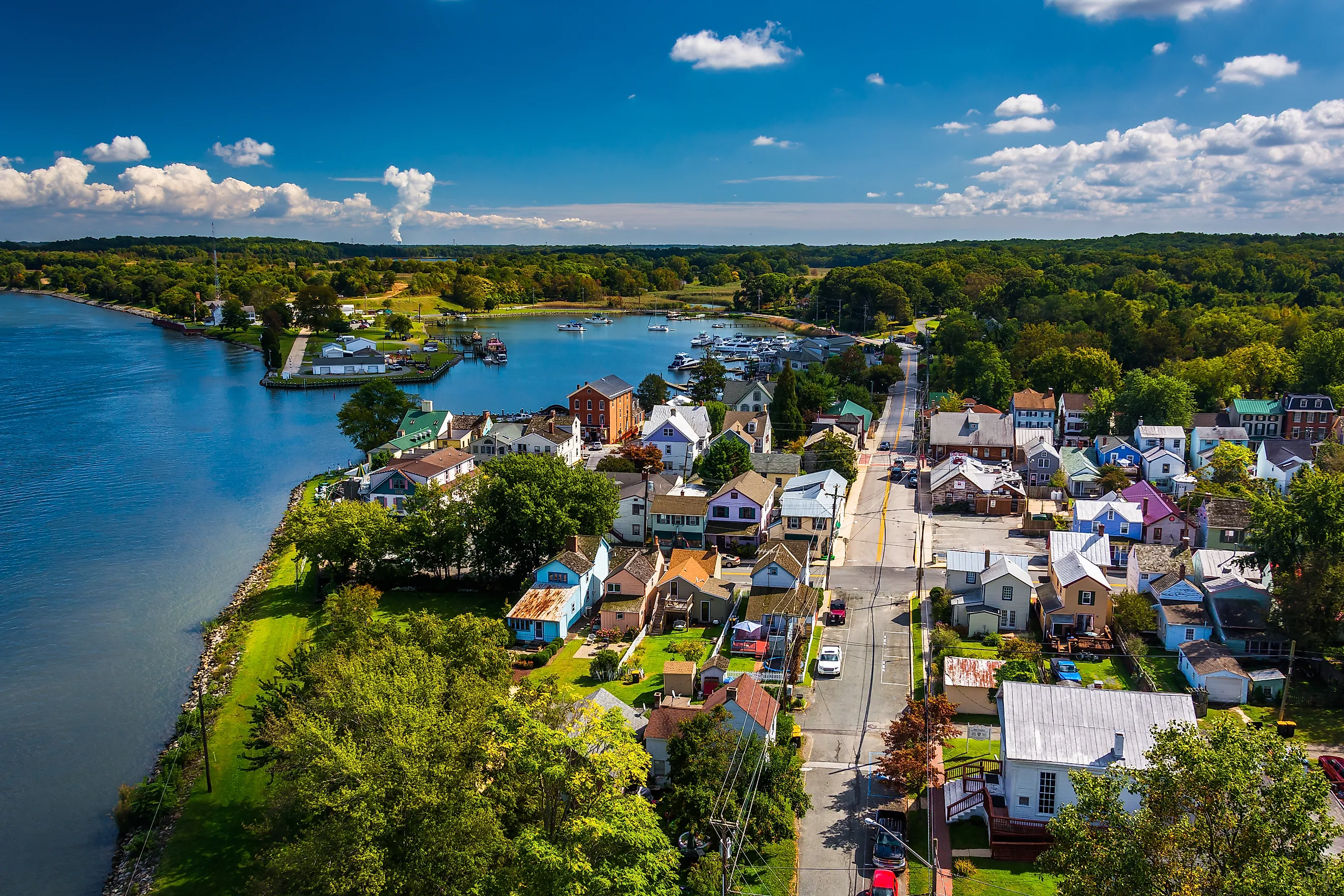
If you’re starting at the byway’s northernmost reaches, your first stop will be Chesapeake City. Home to the Chesapeake and Delaware Canal, the town has seen boat traffic travel between the Delaware River and Chesapeake Bay since 1829.
Dissected by the C&D Canal into north and south sections connected by an impressive bridge, the town thrived when steam-powered vessels needed provisions such as coal during their canal passage. The C&D Canal Museum does a superb job of telling this important part of Maryland’s history. Set in the original pump house that once lifted millions of gallons daily to fill the canal's locks before today's sea-level waterway was created, its collections and displays make it well worth a visit.

From Chesapeake City, Route 213 forms the route's first major section, running 30 miles south through Cecil and Kent counties. The two-lane road winds through cornfields and soybean plots, crossing streams that have powered grist mills since the 1700s, with frequent signs pointing toward the Bay, never more than a few minutes away.
Georgetown To Chestertown
The first significant stop south of Chesapeake City, Georgetown is where the Sassafras River creates a natural boundary between Cecil and Kent counties.
Kitty Knight House (now the Kitty Knight Inn) on the south shore still stands thanks to its namesake, Catherine Knight, who persuaded British Admiral George Cockburn to spare her home during the War of 1812. When Cockburn's forces burned down both Georgetown and Fredericktown on the river’s other bank in 1813, Knight charmed the admiral into leaving her property intact (legend has it she invited him to dinner as a thank you).

A side trip leads west from here to the Sassafras River Natural Resource Management Area. Stop at the Sassafras NRMA Visitor Center to learn more about the bald eagles that nest here, and maybe even rent a kayak to explore the river.
Chestertown

Back on the main route, you’ll pass through miles of farmland before hitting Chestertown, one of America's most intact 18th-century ports. It’s also here you’ll find Washington College. One of the oldest colleges in the country, it’s named after the first president who personally supported it.
You’ll see more of the town’s connection to water at the Custom House on Water Street. It was here that the tobacco and wheat shipments that built the many Georgian-era mansions lining High Street were processed. Also check out the Schooner Sultana, a reconstruction of an 18th-century patrol vessel used by the British. It sails from the town dock and offers several cruise options.
Rock Hall And The Bay Front

From Chestertown, head west to Rock Hall, an 18-mile journey leading to a working fishing harbor. This quaint town has been sending seafood to markets such as Baltimore and Philadelphia since the 1700s, a story that’s told at the Waterman's Museum through its antique tools and old boats, including a genuine skipjack vessel and oyster tongs that required two men to operate.
Rock Hall Harbor remains a going commercial concern, with charter fishing boats aplenty coming and going to nearby fishing spots. Meanwhile, you’ll see crabbers checking their lines in the shallows, later sending their catches to the town's two seafood processing plants, where they still pick crabmeat by hand.
Queen Anne's County

Returning to Chestertown, the route continues south to Centreville. Stop for a peek at the attractive Queen Anne's County Courthouse. Maryland's oldest courthouse has been in continuous use since 1792. Nearby Lawyers Row, with its well-preserved collection of 19th-century law offices, is also worth seeing.
Multiple sideroads fan out from Centreville, too. One of the best, Route 18 heads westwards to Queenstown and Grasonville, toward Kent Island and the Chesapeake Bay Bridge (though you won’t be crossing it… unless, of course, you want to). Stop at the Chesapeake Bay Environmental Center with its 500 acres of marshland and forest trails, where ospreys nest on tall platforms visible from the visitor center.
Alternatively, take Route 304 southeast from Centreville and you’ll wind up in Tuckahoe State Park. The park's 60-acre lake and 20 miles of trails follow pathways that were used by the Underground Railroad to move freedom seekers northward.
Easton And The Middle Peninsula

South of Centreville, Route 50 leads to Easton. If you stop here, check out the Avalon Theatre, a 1921 Art Deco venue restored to its former Jazz Age glory.
A popular diversion from the main byway leads to St. Michaels and Tilghman Island. Famous as "the town that fooled the British" during the War of 1812, it was in St. Michaels that residents hung lanterns in trees to misdirect British naval cannon fire. You can learn more about this fascinating moment in history at the Chesapeake Bay Maritime Museumwith its working boatyards, historic vessels, and the unique Hooper Strait Lighthouse.
Cambridge To Hooper Island

Route 50 continues to Cambridge, the byway's southern terminus. Highlights include the Harriet Tubman Underground Railroad Visitor Center, which tells the story of the most famous “conductor” on the trail to freedom. The surrounding countryside has changed little since Tubman's time, with fields bordered by dense forest and maze-like waterways that helped freedom seekers evade capture.
From Cambridge, Route 16 creates a spectacular sidetrack through Taylors Island to Hooper Island, a 35-mile journey through increasingly narrow strips of land between vast marshes. In places, the road crosses bridges that seem to float above the wetlands, reaching communities accessible only by this single route. At Hooper Island, watermen still tong oysters in winter and run crab trotlines in summer, so be sure to pick some fresh catch-of-the-day up to take home with you.
The Final Word
Whether you do it all at once or (the better choice) take your time, there’s no denying that the Chesapeake Country Scenic Byway deserves its All-American Road designation. Not only does it provide an authentic encounter with American history, it’s also a great introduction to Maryland and its wonderful Eastern Shore region.