The Highest Interstate Highway In America
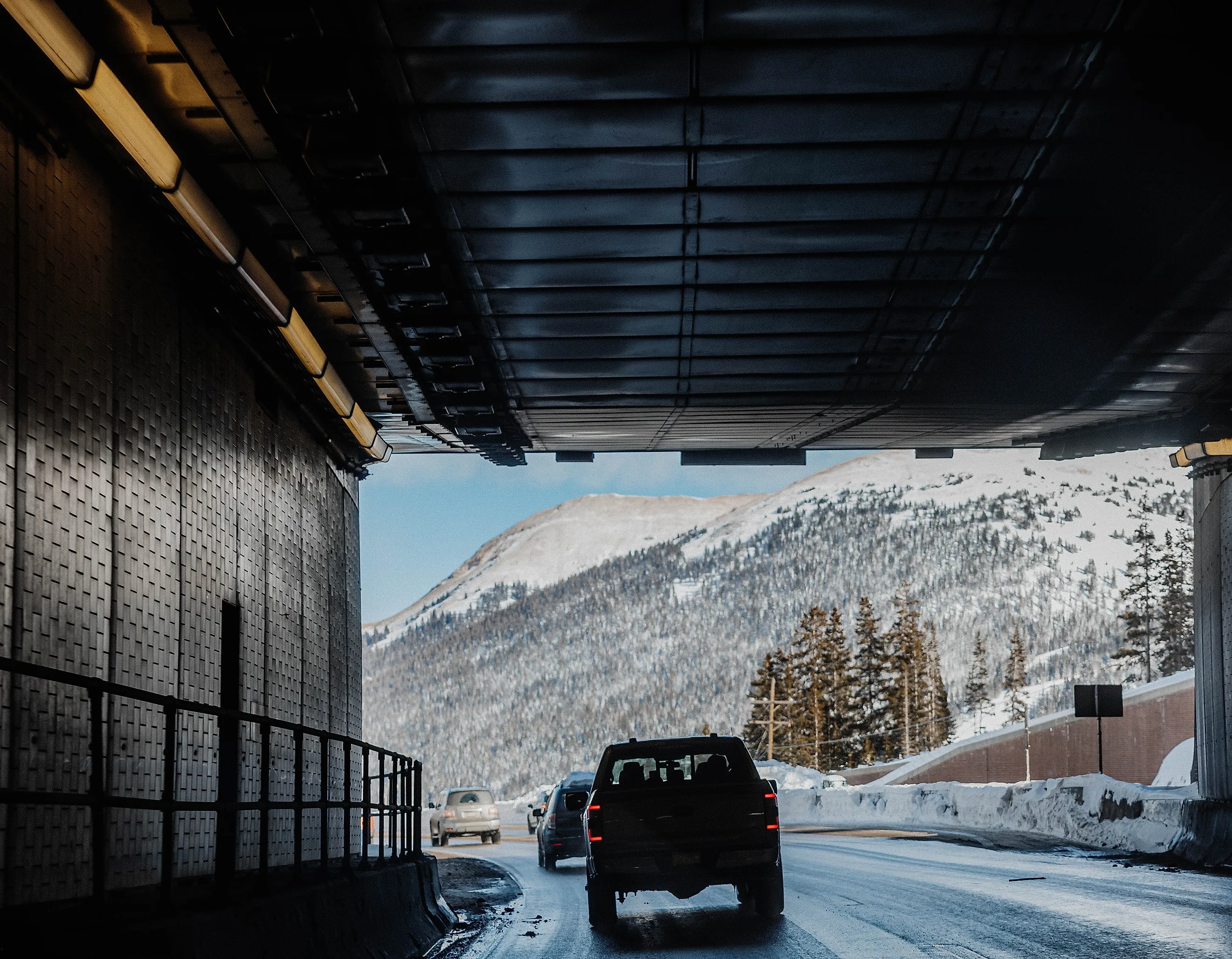
The highest point on America's roughly 48,000-mile Interstate Highway System is not a scenic mountaintop with a photo pullout and a bronze plaque. It is a hole. You reach the literal summit of the entire interstate network by driving straight into the side of a mountain at 11,158 feet above sea level, while your car quietly wonders what it did to deserve this. Ladies and gentlemen, meet the Eisenhower Tunnel, the strangest high point in American road-tripping.
The Eisenhower Tunnel, Colorado

Officially the Eisenhower-Johnson Memorial Tunnel, this twin-bore passage carries Interstate 70 under the Continental Divide about 60 miles west of Denver, and at 11,158 feet it is the highest point on the entire United States Interstate system. For good measure, it is also the longest mountain tunnel on the interstates, and when it opened, it was the highest vehicular tunnel on the planet. It is named for President Dwight D. Eisenhower, the man who signed the interstate highways into existence in 1956, which is a fitting little joke of history: the guy who gave America its highways got stuck with the highest one.
Under the Continental Divide

Here is the part that never stops being funny. The highest point on the American interstate system is not on top of anything. It is inside a mountain. You cross the Continental Divide, the great spine of North America where a single raindrop landing on one side flows to the Atlantic and on the other side to the Pacific, not by heroically cresting it but by burrowing a mile and a half beneath it. So the crowning achievement of American road elevation is, in practice, a fluorescent-lit concrete tube, and the much-hyped "view from the summit" is a tiled tunnel wall whizzing past your window.
The Thin Air

The air up here is thin enough that your engine notices. At over 11,000 feet, a normal gas engine can lose roughly a third of its power, so the long, lung-busting climb toward the tunnel, a grade of around 7 percent, leaves a reliable trail of cars overheating, wheezing, and limping onto the shoulder. Humans get lightheaded too. Enormous ventilation fans run constantly inside the tunnel just to flush out the exhaust so nobody's motor suffocates on its own fumes. And every ski weekend, thousands of people bound for Vail and Breckenridge sit in dead-stop traffic at 11,000 feet, higher than most of the mountains they are about to ski, glumly admiring the concrete.
The Loveland Pass Alternative

The tunnel was built for a very good reason: the alternative is worse. Before it existed, everybody had to grind over Loveland Pass on US 6, an 11,990-foot ribbon of hairpin switchbacks and unguarded drop-offs that could swallow an hour of your life. The tunnel mercifully skips all of that. With one spectacular exception. Trucks hauling hazardous materials are banned from the tunnel year-round, so roughly 200 of them a day, loaded with the single most dangerous cargo on the American road, get sent up and over Loveland Pass instead. That is correct: the flammable, explosive, and toxic stuff takes the terrifying high road while everyone else gets the safe tunnel. The logic is completely airtight.
How It Was Built

None of this was easy, or cheap, or safe. When crews started drilling in 1968, they immediately slammed into unstable, crumbling granite and hidden fault zones the surveys had somehow missed, which flooded the works with hundreds of gallons of water a minute and promptly bankrupted the first contractor. Cave-ins were a constant menace, the project ran years behind and grotesquely over budget, with one bore estimated at $42 million ballooning to about $108 million, and, most soberingly of all, seven workers died building it. An engineer reportedly summed up the entire miserable saga by grumbling that the mountain simply did not want a tunnel in it. The mountain, in the end, lost.
So the next time you find yourself inching through a concrete tube in the Colorado Rockies, cursing the ski traffic and wondering why your ears just popped, take a breath of that filtered mountain air and savor the moment. You are, right then, sitting at the highest point on the entire American Interstate Highway System, roughly 11,158 feet up, buried inside a mountain, staring at a wall. It is, without a shred of doubt, the most gloriously anticlimactic summit in America.