Busiest Train Stations in the United States
The United States has the largest rail network in the world, yet most of those tracks carry freight rather than passengers. Intercity passenger service is concentrated in a handful of corridors, above all the Northeast Corridor connecting Washington, Baltimore, Philadelphia, New York, and Boston, alongside the commuter systems that serve the largest metro areas. That shapes what counts as a busy station. Measured by total passengers, the list is led by New York's commuter-heavy terminals; measured by intercity ridership, it follows Amtrak's busiest stops, most of them on the Northeast Corridor. The stations below stand out on both counts, and the table near the end ranks Amtrak's ten busiest.
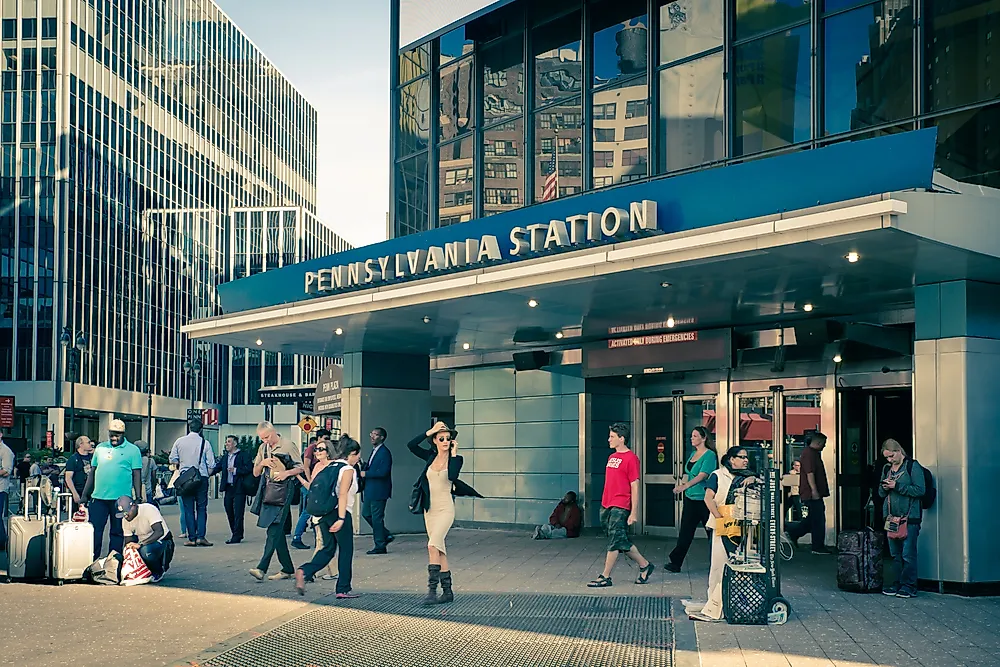
New York Penn Station

Penn Station is the busiest train station in the Western Hemisphere, and it is not close. Sitting beneath Madison Square Garden in Midtown Manhattan, it handles Amtrak, the Long Island Rail Road, and NJ Transit, plus several subway lines, moving well over half a million people on a typical weekday across 21 tracks fed by seven tunnels. It is also Amtrak's single busiest station, with more than 13 million intercity passengers in fiscal year 2025 alone.
The grand 1910 Beaux-Arts station that once stood here was demolished in 1963, a loss that helped launch the modern preservation movement, and for decades travelers made do with cramped underground concourses. That changed in 2021 with the opening of Moynihan Train Hall across Eighth Avenue, a light-filled Amtrak and LIRR concourse built inside the old James A. Farley Post Office beneath a 92-foot glass skylight. The two halls now operate as one complex, the busiest transit hub in the country.
Grand Central Terminal

A few blocks east stands Grand Central Terminal, the city's other great station and, once its commuter crowds are counted, one of the busiest in the country. Opened in 1913, it covers 48 acres and has 44 platforms serving 67 tracks on two underground levels, more platforms than any other station in the world. Its Beaux-Arts main concourse, with a painted celestial ceiling and a four-faced brass clock, is one of the most recognizable interiors in America and a destination in its own right.
Grand Central is a commuter station rather than an intercity one. Amtrak rerouted its trains to Penn Station in 1991, leaving the terminal to Metro-North Railroad, which carries huge daily crowds to the northern suburbs. In 2023 the Long Island Rail Road arrived as well, opening the Grand Central Madison terminal in a new cavern beneath the existing tracks and giving Long Island commuters a direct route to the East Side of Manhattan for the first time.
Washington Union Station

Washington Union Station is the southern anchor of the Northeast Corridor and Amtrak's second-busiest station, with about 6 million intercity passengers in fiscal year 2025. Opened in 1907 and designed by Daniel Burnham, its Beaux-Arts main hall, ringed by a coffered, gold-leafed vault and lined with statues, is one of the grandest public rooms in the capital.
Beyond Amtrak's Acela and Northeast Regional trains, the station handles long-distance routes toward the South and Midwest, MARC and Virginia Railway Express commuter trains, and the Washington Metro, making it one of the busiest transportation centers in the region. Amtrak took over management of the station in 2024 as part of a long-term plan to modernize and expand it.
Philadelphia's 30th Street Station

Officially the William H. Gray III 30th Street Station, Philadelphia's main rail hub is Amtrak's third-busiest, with more than 5.5 million intercity passengers in fiscal year 2025. The neoclassical building opened in 1933 as the Pennsylvania Railroad's flagship station in the city, and its travertine concourse, lit by Art Deco fixtures and anchored by a soaring war memorial sculpture, remains a working landmark.
The station sits on the Northeast Corridor and the Keystone line to Harrisburg, but its Amtrak traffic is only part of the picture. Each year it also serves more than 12 million SEPTA and NJ Transit commuters, and a multiyear redevelopment is reworking its concourses and retail while preserving the historic head house.
Chicago Union Station

Chicago Union Station is the great rail crossroads of the Midwest and Amtrak's fourth-busiest station, with more than 3 million intercity passengers in fiscal year 2025. It is owned by Amtrak, not by the commuter agency Metra as is sometimes assumed, and is shared by Amtrak's long-distance and regional trains and the Metra commuter network. From here the California Zephyr, Empire Builder, and other famous routes fan out across the West, which makes Chicago the hinge of the national passenger map.
The station opened in 1925 and is the last of Chicago's grand downtown terminals still in service. Its Beaux-Arts Great Hall, a marble room beneath a 219-foot barrel-vaulted skylight that was restored in 2019, was named one of America's Great Places by the American Planning Association in 2012. A short walk away, the Ogilvie Transportation Center handles the city's other major commuter flows and ranks second in Chicago behind Union Station.
Los Angeles Union Station
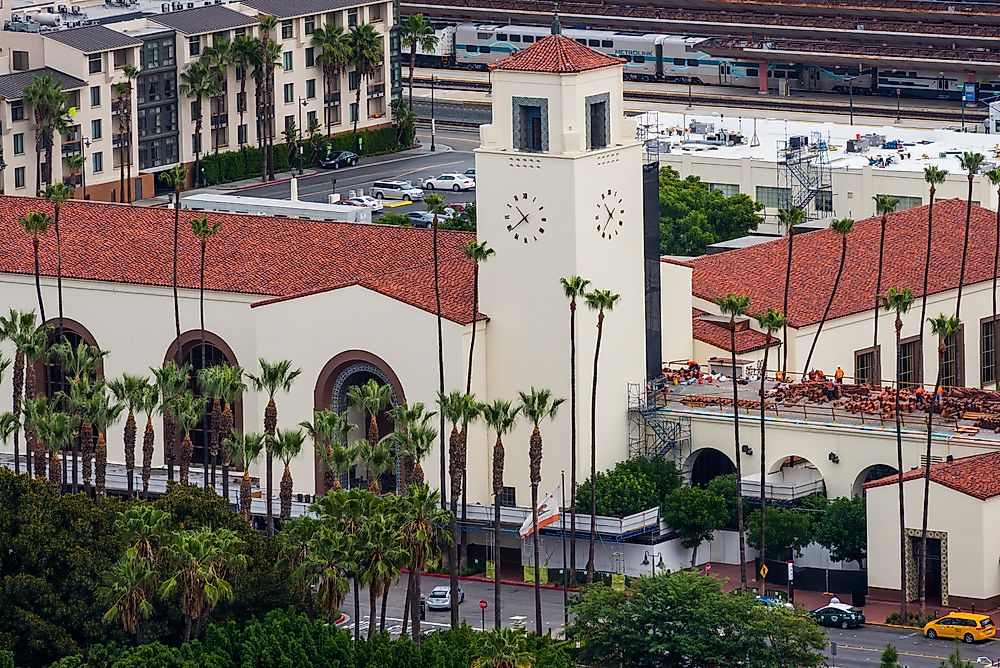
Los Angeles Union Station is the busiest rail hub in the western United States and Amtrak's sixth-busiest nationally, with just over a million intercity passengers in fiscal year 2025. Opened in 1939, it was the last of the great American passenger terminals built before air travel reshaped intercity transportation, and its blend of Spanish Colonial Revival and Art Deco design, complete with a 125-foot clock tower and tiled courtyards, has made it a frequent film location.
Today the station is a true intermodal center, joining Amtrak's long-distance and state-supported trains with Metrolink commuter rail, the Los Angeles Metro subway and light rail, and regional buses. It anchors a fast-growing district just north of downtown and is the focus of a major expansion meant to let trains run straight through rather than reverse out, with an eye toward future high-speed service.
Other Busy Hubs
Several more stations carry heavy traffic. Boston South Station is Amtrak's fifth-busiest and the northern end of the Northeast Corridor, shared with the MBTA's commuter rail. Baltimore Penn Station is another Corridor stop, recently renovated, while Albany-Rensselaer serves as the gateway to upstate New York. The biggest commuter story, though, is in Queens: Jamaica Station, the Long Island Rail Road interchange where most LIRR branches converge, moves roughly 200,000 riders on a typical weekday and connects to the AirTrain to JFK Airport. It rarely appears on Amtrak rankings because Amtrak does not stop there, a reminder that the busiest stations and the busiest Amtrak stations are not the same list.
The Busiest Amtrak Stations By Ridership
The ten busiest stations in Amtrak's national network, by total boardings and alightings in fiscal year 2025:
| Rank | Station | Location | Ridership (FY2025) |
|---|---|---|---|
| 1 | New York Penn Station | New York City | 13,037,414 |
| 2 | Washington Union Station | Washington, D.C. | 6,010,221 |
| 3 | 30th Street Station | Philadelphia | 5,586,174 |
| 4 | Chicago Union Station | Chicago | 3,175,856 |
| 5 | South Station | Boston | 1,884,275 |
| 6 | Baltimore Penn Station | Baltimore | 1,333,185 |
| 7 | Los Angeles Union Station | Los Angeles | 1,066,614 |
| 8 | Albany-Rensselaer | Rensselaer, NY | 920,779 |
| 9 | BWI Thurgood Marshall Airport | Baltimore | 911,275 |
| 10 | Back Bay Station | Boston | 894,548 |
Freight Still Rules America's Railroads
For all the attention passenger stations attract, freight is what keeps American railroads running. The country moves a larger share of its freight by rail than almost any other developed nation, with coal, grain, chemicals, and intermodal containers traveling tens of thousands of miles of privately owned track. Passenger service depends heavily on those same lines outside the Northeast Corridor, where most Amtrak trains run on tracks owned by freight railroads. Even so, intercity ridership has rebounded sharply: Amtrak carried a record 32.8 million passengers in fiscal year 2024 and broke the record again with 34.5 million in fiscal year 2025, helped by federal infrastructure funding now flowing into the Northeast Corridor and the stations on this list.