8 Best Places To Retire In New Mexico
If you're planning a New Mexico retirement in the next few years, the math here is friendlier than most western states. Social Security is largely exempt from state income tax under standard thresholds; qualifying homeowners 65 and older can lock in their property-tax valuation through the senior property valuation freeze; and the state has no estate or inheritance tax. Beyond the tax structure, the trade-off you'll actually be making town to town is climate, elevation, and access to specialty medical care. The eight places below cover the realistic range, from a $177,500 median home in a desert spa town to a $762,500 median in Santa Fe.
Las Cruces

Las Cruces is the state's second-largest city (about 113,000 people) and probably the best entry point if you want a real urban infrastructure without Santa Fe prices. Cost of living runs roughly 16 percent below the US average by recent estimates, the climate is warm and dry (average July high about 95°F, January low about 28°F), and the Organ Mountains rise to nearly 9,000 feet directly east of town. White Sands National Park is 50 miles east across the basin.
For healthcare, you've got Memorial Medical Center as the local anchor, plus MountainView Regional Medical Center and the Las Cruces VA Clinic for veterans. For specialty care that's not on the local menu, El Paso is 45 miles south and has the major academic medical infrastructure. The cultural calendar runs through New Mexico State University and its roughly 14,000 students (which keeps the median age lower than other towns on this list), and the Saturday morning farmers market on Main Street is regularly rated one of the best in the country. Residents aged 60 and above make up about 22 percent of the population.
Albuquerque

Albuquerque is the only place in New Mexico where you can get full specialty medical care without leaving the metro. The University of New Mexico Hospital is the state's only academic medical center; Presbyterian Hospital is the other major system. If you anticipate complex medical needs in retirement, Albuquerque is the practical answer. The city sits at 5,312 feet in elevation, so the dry air takes some adjusting, but winters are mild (average January high about 49°F, low about 26°F) and annual snowfall averages around ten inches.
The lifestyle here mixes urban amenities with serious access to the outdoors. The Sandia Mountains rise to 10,679 feet directly east of the city, reached by the Sandia Peak Tramway (2.7 miles, 4,000-foot vertical, one of the longest aerial trams in North America). The Rio Grande Bosque runs a 16-mile linear park through the heart of the city. Median home prices in recent estimates run around $375,000, which is the most affordable major metro in the Southwest with comparable medical infrastructure. Residents aged 60 and above make up about 26 percent of the population.
Taos

Taos is for retirees who want cultural depth and mountain views and are willing to plan around the elevation and the medical-care geography. The town sits at about 7,000 feet, with Wheeler Peak at 13,167 feet (the highest point in New Mexico) immediately east. If you've been at sea level your whole life, give your body a few months to acclimate; high-altitude living is a real adjustment for cardiovascular health, and some people find the elevation never quite agrees with them. Taos Ski Valley, founded in 1955, is the state's most established alpine resort.
The cultural calendar runs deep: Taos Pueblo is a UNESCO World Heritage Site continuously inhabited for more than 1,000 years, the Harwood Museum of Art and the Millicent Rogers Museum anchor the downtown arts scene, and the Taos community includes a long-running cohousing community at Valverde Commons and a more traditional retirement village. Healthcare-wise, Holy Cross Medical Center provides local services, but for anything complex you're looking at a 90-minute drive south to Santa Fe (CHRISTUS St. Vincent) or longer to Albuquerque. Residents aged 60 and above make up about 38 percent of the population, the median listing home price runs about $670,000, and the cultural payoff for the price tag is substantial.
Santa Fe

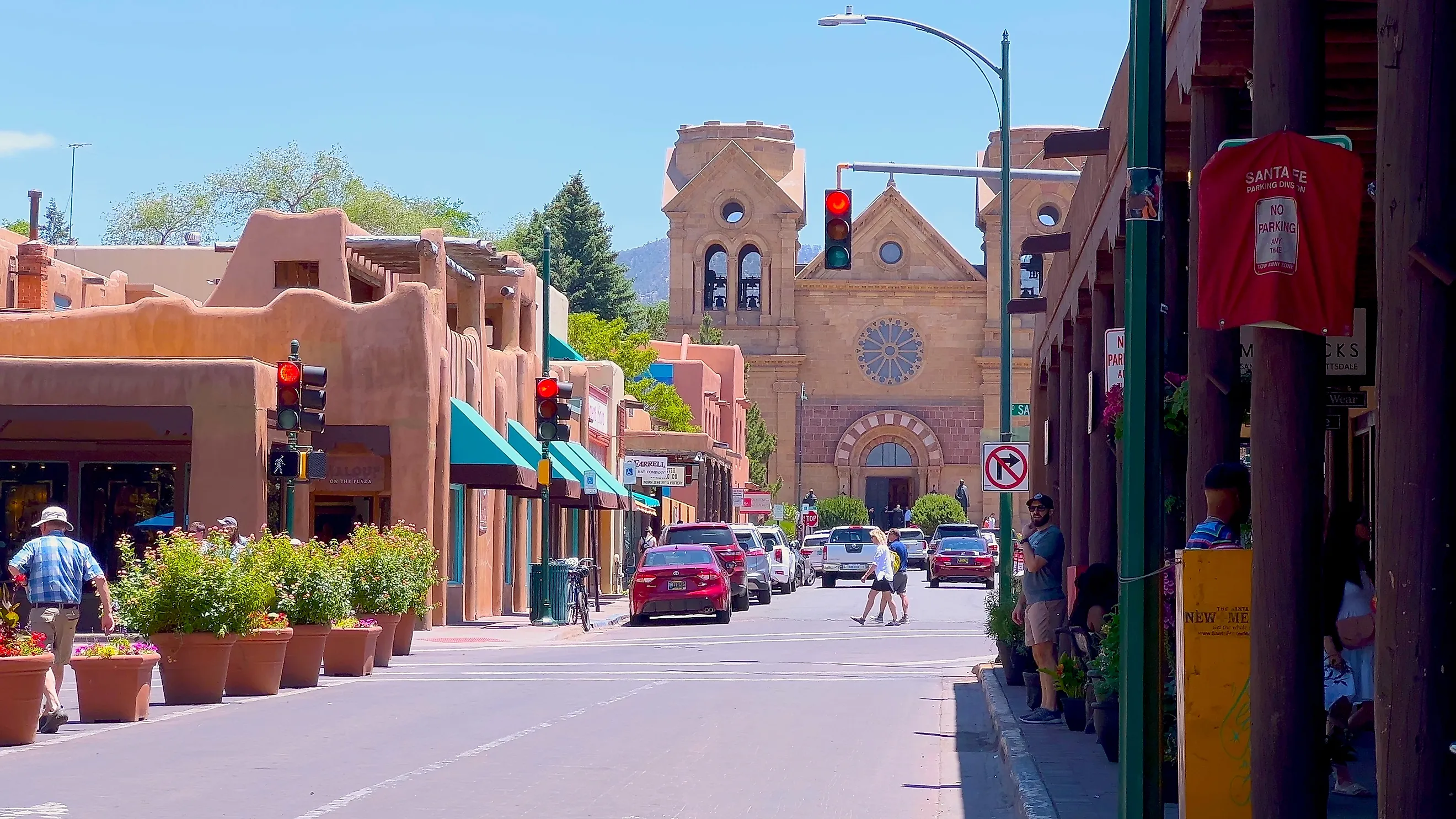
Santa Fe is where you land if budget is not the primary constraint and you want the state's deepest cultural infrastructure. Founded in 1610 by Spanish governor Pedro de Peralta, it is the oldest state capital in the United States, and the art scene reflects that history. Canyon Road concentrates roughly 100 galleries within a half-mile stretch; the Santa Fe Opera (since 1957) and the Santa Fe Chamber Music Festival (since 1973) anchor the summer performing arts calendar. The Museum of International Folk Art holds one of the largest cross-cultural folk art collections in the world.
At 7,200 feet of elevation with about 300 days of sun a year, the climate is dry and the air is thin. CHRISTUS St. Vincent Regional Medical Center is the local healthcare anchor, with specialty care available through partnerships with Albuquerque academic centers about an hour south. The Albuquerque International Sunport is the closest major airport. Residents aged 60 and above make up about 33 percent of the population. The median listing home price in recent estimates is about $762,500, the highest on this list, and that number is the trade-off you make for the cultural depth and the climate.
Corrales

Corrales is the choice if you want a small-village character with the full medical infrastructure of Albuquerque 15 to 20 minutes away. The village of about 8,500 sits along the Rio Grande just northwest of Albuquerque and has held onto its agricultural character of vineyards, orchards, and small farms while the rest of the metro built out. The Corrales Bosque Preserve runs along the river with walking trails through the cottonwood gallery forest, and the Sunday morning Corrales Growers Market (April through October) is the village's social anchor.
The community demographic skews notably older than most New Mexico places. The median age is 56, and residents aged 60 and above make up about 43 percent of the population, the highest share on this list. That means the cultural calendar, the public meetings, and the local programming reflect what older residents want. Elevation runs about 5,000 feet, temperatures span January lows around 21°F and July highs around 94°F, and the median listing home price in recent estimates is about $735,000. If the Santa Fe price tag is steep but you still want full medical access, Corrales offers a reasonable alternative.
Truth or Consequences

Truth or Consequences is the most affordable place on this list and the warmest in winter. The town of about 6,200 sits along the Rio Grande in south-central New Mexico and got its current name in 1950 when the village of Hot Springs renamed itself for the popular Ralph Edwards radio quiz show in exchange for the broadcast being held there. The defining feature is the cluster of geothermal springs that has run a dozen-plus bathhouses downtown for over a century, including Riverbend Hot Springs and the Sierra Grande Lodge & Spa. The walkable Hot Springs Historic and Commercial District concentrates the bathhouses, galleries, and restaurants along Broadway.
The median listing home price in recent estimates is about $177,500, the lowest on this list by a wide margin. For local healthcare, you have Sierra Vista Hospital for emergency and outpatient care; for anything complex you're looking at about 75 miles south to Las Cruces. Elephant Butte Lake State Park is ten miles north and Caballo Lake State Park is 20 miles south, both on Rio Grande impoundments. Residents aged 60 and above make up about 32 percent of the population. The community is small and the social fabric runs on the bathhouses and the artist galleries; if that fits, the price is hard to beat.
Silver City

Silver City is the southwestern New Mexico option for retirees who want small-town affordability with substantial outdoor access. The town of about 9,400 sits at 5,895 feet in the foothills of the Pinos Altos Range, with the 3.3-million-acre Gila National Forest extending north and west. The downtown, on the National Register since 1979, dates to the 1870s silver-mining boom and runs along Bullard Street with restaurants, galleries, and the Silver City Museum housed in the 1881 Ailman House. Western New Mexico University, founded in 1893, brings a small-college calendar of lectures and athletics to the community.
The healthcare picture takes some planning here. Gila Regional Medical Center is the 68-bed acute care hospital in town; for anything complex you're driving about three hours to Las Cruces or to Tucson, Arizona. That distance is the trade-off for the prices and the outdoor access. Day-trip terrain includes the Catwalk National Recreation Trail about 65 miles northwest and Lake Roberts 30 miles north. The median listing home price in recent estimates is about $347,000, and residents aged 60 and above make up about 26 percent of the population.
Ruidoso

Ruidoso needs a clear-eyed conversation before you put it on your shortlist. The mountain village of about 7,600 at 6,920 feet of elevation in the Sacramento Mountains is the only ski-town retirement option in the state outside of Taos, with Sierra Blanca Peak rising to 11,981 feet immediately west. The community here is the appeal: Ski Apache on the Mescalero Apache Reservation, Grindstone Lake, the Cedar Creek and Ruidoso River trails, and a downtown built around the Río Ruidoso.
The disaster context, however, is real. The South Fork Fire and Salt Fire (both ignited June 17, 2024 on the adjacent Mescalero Apache Reservation) destroyed more than 1,400 structures across the village area. Monsoon-season flash flooding through the burn scars has caused additional damage through 2024 and 2025, and the village is still rebuilding infrastructure with more than $22 million in federal disaster assistance through FEMA, the SBA, and the National Flood Insurance Program. If you're considering Ruidoso for retirement, talk to your insurance broker about wildfire and post-fire flood exposure before signing anything. Lincoln County Medical Center, in operation since 1949, provides local healthcare. Residents aged 60 and above make up about 33 percent of the population, and the median listing home price in recent estimates is about $439,000, though current values vary widely by neighborhood depending on fire and flood exposure.
Weighing The Trade-Offs
The honest answer on where to retire in New Mexico is that you're picking among real trade-offs. Las Cruces and Truth or Consequences give you the lowest costs and warmest winters but limit your specialty medical care to a drive. Santa Fe and Taos give you the deepest culture and the most expensive real estate, plus the elevation that some bodies handle well and others do not. Corrales and Albuquerque pair urban-adjacent living with full medical infrastructure at a more moderate price. Silver City offers small-town affordability with serious outdoor access but the longest drive for complex healthcare. Ruidoso offers mountain living with active wildfire and flood risk you'll want to underwrite carefully. The state's retiree-friendly tax structure (Social Security largely exempt under standard thresholds, senior property valuation freeze, no estate or inheritance tax) applies in all of them. Pick the climate, pick the elevation, and pick the medical-care driving distance you're willing to live with.