7 Snake Infested State Parks In West Virginia
West Virginia’s reputation for wild country is earned in steep ridgelines, shaded hollows, and river-cut gorges. The state's quick change in temperature and cover is exactly what snakes prefer. The Mountain State has many nonvenomous species that quietly do important work, especially controlling rodents and balancing food webs. Only two native snakes are venomous: the timber rattlesnake and the northern copperhead. Encounters remain uncommon when visitors stay alert, keep to established trails, and give wildlife space to move away.
State wildlife references document around 20 snake species or subspecies in West Virginia, which explains why most park sightings involve nonvenomous snakes that hunt rodents, insects, amphibians, and fish, then retreat to cover. The two venomous species matter most for awareness because they blend into leaf litter, rock, and trail-edge vegetation, so hikers usually notice them only when they stop near sunny rocks or brushy transitions. Keeping eyes on the ground, staying on established paths, and giving any snake space to move away prevents most problems.
Blackwater Falls State Park

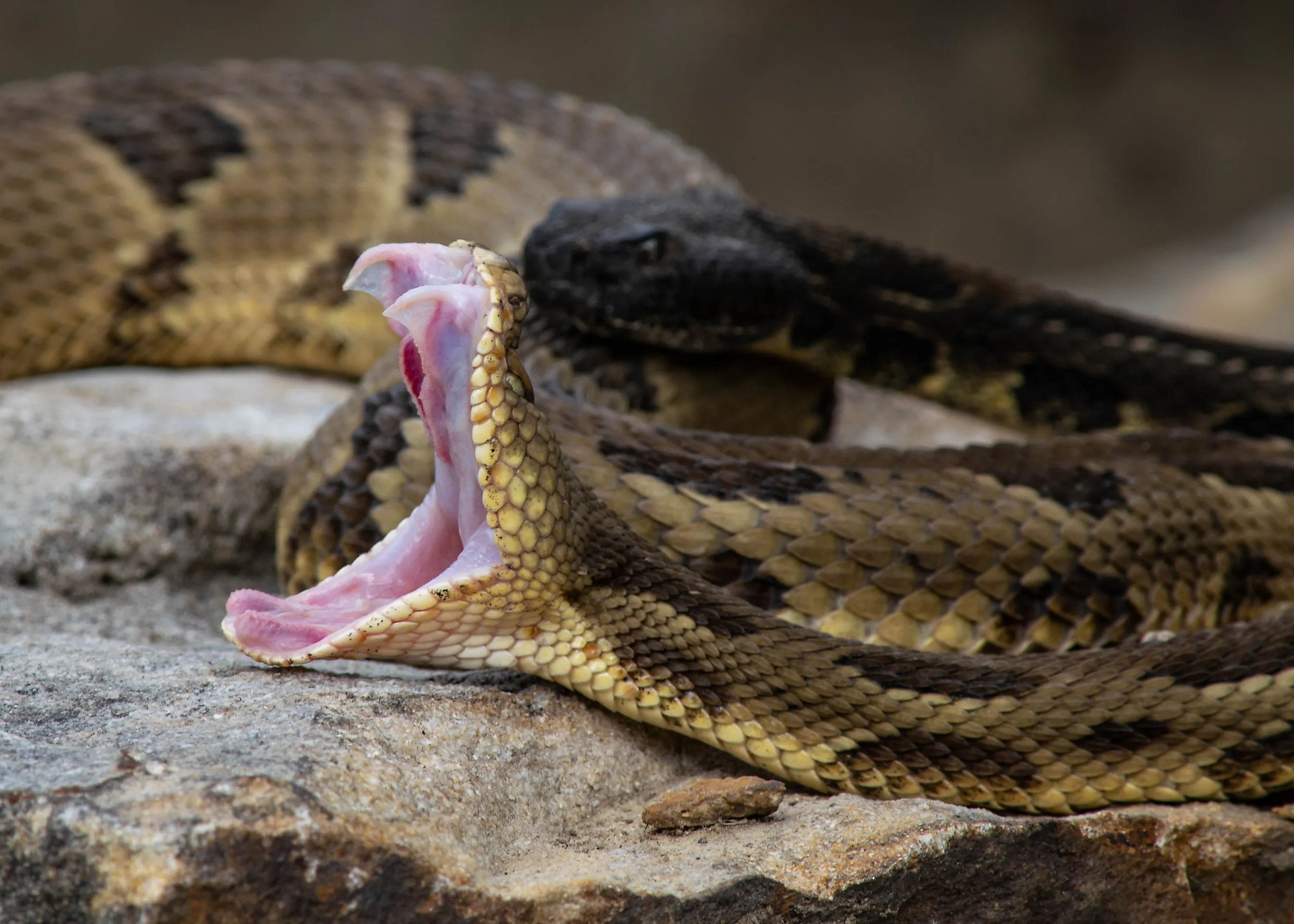
Blackwater Falls State Park is centered on the Blackwater River, which plunges over the park’s iconic waterfall before continuing north through the Allegheny Mountains. The Blackwater River eventually flows into the Cheat River (via the Black Fork), and the Cheat then continues north to join the Monongahela River downstream, as part of the larger Ohio River watershed. So, while the park feels remote and highland in character, it is ultimately part of the larger Ohio River drainage system. With moist ground, thick leaf litter, and frequent edge zones where the woods open near overlooks and trails, reptiles can slip between cover and warmth without being seen for long. The park’s setting in the broader Appalachian Mountains also means plenty of hiding structure, including downed logs, rock pockets, and heavy ground cover that holds heat after a sunny stretch. In West Virginia’s rugged terrain, timber rattlesnakes are the venomous species most associated with rocky slopes and broken ground where crevices and ledges provide denning space, quick shelter, and reliable basking surfaces. They can appear in several color phases with patterns that allow them to vanish into their background, especially on rock-strewn hillsides and leaf-littered edges. Copperheads often use similar cover-rich forest settings, but timber rattlesnakes are the species that best match the dramatic mountain imagery many people associate with West Virginia’s steep landscapes.
Snake sightings also include nonvenomous species that thrive in forest-and-edge habitat. Ring-necked snakes stay small and secretive, often turning up under cover, while eastern ratsnakes (often called black rat snakes) patrol woods and forest margins for rodents. On warmer days, a northern watersnake can also appear near wet areas, and it sometimes gets mistaken for something more dangerous because of its banding. Timber rattlesnakes use rugged, rocky terrain in West Virginia, but visitors are far more likely to notice the harmless species that blend into leaf litter and brush.
Babcock State Park

Babcock State Park’s mix of wooded slopes, stream corridors, and trail edges creates the kind of in-between habitat snakes use best. River-cut valleys in this region connect into the larger drainage network of the Kanawha River, West Virginia’s largest inland waterway, and serve as a tributary of the Ohio River, where riparian edges and wooded corridors can concentrate small prey. Even when the forest canopy is thick, the park still offers sun pockets along paths, along roadside margins, and in open areas where the ground warms enough for reptiles to regulate their body temperature. These are the places where a quick, quiet crossing is most likely: a snake uses the warmth, then disappears into cover before most visitors register what happened.
In a park like this, the most realistic species list leans heavily toward nonvenomous species. Eastern gartersnakes move through grass and low vegetation, hunting small prey, while Dekay’s brownsnakes and red-bellied snakes stay close to leaf litter and damp ground. If the park has wetter pockets near creeks, northern watersnakes can turn up as well. The northern copperhead is one of West Virginia’s two venomous snakes, and it often uses forested hillsides with ample cover, but it still avoids people and relies on stillness and camouflage rather than confrontation.
Pipestem Resort State Park

Pipestem Resort State Park’s defining features are its dramatic elevation change and long views over river country, which also signal varied microhabitats. In this part of the state, river systems feed into major waterways like the Kanawha River and ultimately the Ohio River, creating long, brushy travel corridors along the water. When a park stacks rocky slopes, wooded benches, and brushy transitions into one landscape, snakes can find both the heat they need and the concealment they depend on. The most active snake zones are rarely in the middle of a wide trail. They are the edges where stones meet vegetation, where fallen branches collect, or where a sunny opening meets shade.
Species diversity here can include eastern gartersnakes near open areas, ring-necked snakes under cover, and larger hunters like eastern ratsnakes, which help keep rodent populations in check. If the park’s terrain includes rocky outcrops, timber rattlesnakes can use similar rugged features elsewhere in West Virginia, often associated with steep ledges and broken rock. That said, visitors most often notice nonvenomous snakes because they are more widespread and active across many habitat types.
Watoga State Park

Watoga State Park sits in a forested slice of the Appalachian Mountains, within the eastern highlands shown on the West Virginia map. These interior mountain valleys connect into larger regional watersheds, which is one reason warm trail edges near streams can feel surprisingly active during peak summer months. The park’s appeal lies in its deep woods feel and its long stretches of forest that seem to go on forever. That type of setting supports snakes that prefer cover, moisture, and reliable hiding places, including leaf litter, log piles, and thick ground vegetation. When the sun breaks through in patches, those warm spots become short-term basking areas, especially near trail margins where the ground heats faster than the interior forest floor.
The nonvenomous lineup in a forest-heavy park can be surprisingly diverse. Eastern milksnakes turn up around cover and edge habitat, and they can bluff by vibrating their tails in dry leaves. Ring-necked snakes stay small and secretive, while eastern gartersnakes remain common wherever small prey is active. Watoga also sits in a state where only two venomous snakes occur, and both rely on careful camouflage; the timber rattlesnake is especially associated with rugged terrain and rocky features, while copperheads are the more frequent source of venomous bites statewide.
Canaan Valley Resort State Park

Canaan Valley Resort State Park sits in the high Appalachian Mountains Plateau of northern West Virginia, where streams like the Blackwater River and Dry Fork feed into the Cheat River, part of the broader Ohio River watershed. High valleys like this tend to create sharp temperature swings between sun and shade, which can influence when snakes bask and when they retreat into cover. This park feels wide-open compared to many West Virginia parks, with meadow-like spaces, wet ground, and a strong edge effect where field meets forest. Those transitions matter. They concentrate on small prey, create travel lanes, and provide the cover that snakes use to move without being exposed. On warm days, the most plausible sightings happen where tall grass borders paths, where brushy margins begin, or where wet ground meets a slightly higher, drier bank.
This is a good park for highlighting variety beyond the usual two. Garter snakes and milksnakes fit, but so do ribbon snakes near wetter edges, greensnakes that disappear into vegetation, and watersnakes around shoreline or marsh-like pockets. Copperheads occur in West Virginia and can use forested cover, but valley parks typically produce far more nonvenomous sightings than venomous ones. The bigger story here is how the valley’s mix of moisture, ground cover, and sun pockets supports many harmless species that most visitors never notice until one glides across a path.
Tygart Lake State Park

Tygart Lake State Park sits along the shores of Tygart Lake in north-central West Virginia, where wooded hills fold down toward the water and the terrain feeds into the broader Appalachian watershed. The lake is formed by the Tygart Valley River, which joins the West Fork River at Fairmont to form the Monongahela River, which ultimately flows into the Ohio River system. That layered river network helps explain why the park blends forest, shoreline, and brushy transition zones so effectively, creating the kind of edge habitat that can hide movement until the last second. Shorelines draw frogs, fish, and small mammals, and they also create ideal hiding structures in driftwood, reeds, low brush, and sun-warmed banks. That combination lets snakes hunt, bask, and retreat quickly. The lake also makes sightings feel sudden. A snake can be invisible in shoreline cover and then appear for a moment along a sunny edge.
Expect the most realistic encounters to involve nonvenomous species: northern watersnakes near the waterline, gartersnakes in grassy margins, and milksnakes in nearby cover. Copperheads are one of the state’s two venomous snakes. They can be found in habitats with abundant cover and prey, but they remain reclusive and are rarely seen by visitors. The practical emphasis stays the same: watch footing near brushy shoreline transitions, do not place hands into unseen crevices, and let any snake move off on its own.
Hawks Nest State Park

Hawks Nest State Park overlooks the New River, one of West Virginia’s most important waterways. The park sits along a dramatic stretch of the New River Gorge, where the river cuts through steep ridges of the Appalachian Mountains. The New River flows northward (which is unusual for a major river in the region) before joining the Gauley River at Gauley Bridge to form the Kanawha River. The Kanawha then continues northwest until it empties into the Ohio River at Point Pleasant. It sits in classic gorge country, where steep slopes, rocky ledges, and forest edges create a high-density patchwork of snake habitat. This is also New River country, where cliffs, talus-like rock pockets, and sunbaked surfaces can warm quickly even when nearby woods stay cool. Visitors tend to pause at overlooks and scenic points, which means more time spent near rocky edges where reptiles can be present, even if they stay hidden.
Hawks Nest’s terrain is well-suited to timber rattlesnakes, which are strongly associated with rugged, rocky settings in the region, but it also supports a long list of nonvenomous snakes that use the gorge’s edges and wood cover. Ratsnakes hunt rodents along forest margins, ring-necked snakes keep to hidden cover, and watersnakes stay near wet zones. West Virginia’s venomous species count stays low, but the habitat quality stays high, which is why “snake-infested” reads more like a reminder to stay observant than a warning to stay away.
Sharing the Trail with Wildlife
A big reason snake stories get exaggerated is misidentification. West Virginia’s nonvenomous snakes can look intense at first glance, especially when a watersnake is patterned, defensive, and close to a shoreline. The best approach is to assume a snake is there to warm up, hunt, or move through cover, and then let it pass. Staying on the main track, watching where feet land near rock or driftwood, and not reaching into unseen crevices prevents nearly every bad outcome while also letting these animals quietly remove rodents and other small prey from the landscape.
Snake awareness in West Virginia means paying attention to transition zones like the sunny edge of a trail beside tall grass, a rocky step where heat collects, a driftwood-strewn shoreline, or a brushy seam between forest and open ground. These are the places snakes can travel and warm up while staying close to cover. West Virginia has many nonvenomous species, and only two venomous ones, so the best approach is steady, practical behavior rather than fear. Stay on established paths, watch where feet land, keep hands out of unseen crevices, and give any snake a wide margin to leave.