4 Old-Timey General Stores In Alaska
Four Alaska general stores have outlasted gold rushes, earthquakes, pipeline booms, and the slow attrition of the highway. They sit roughly along a south-to-north line up the state, from a Kenai Peninsula crossroads through downtown Anchorage to the Susitna Valley and finally the end of the Dalton Highway at the Arctic Ocean. Each is still selling groceries, gear, or both to the people who actually live nearby. Read in geographic order, they sketch the spine of inhabited Alaska in four stops.
Estes Brothers Grocery, Moose Pass

Estes Brothers sits at Mile 29.5 of the Seward Highway on the Kenai Peninsula. The grocery itself has operated continuously since the 1930s. The Estes family, pioneer settlers in this stretch of the peninsula, bought the store in the years that followed and built up its electricity and infrastructure: they wired Moose Pass for power before any utility did. Leora Estes Roycroft became Moose Pass's first postmaster in 1928.

The present building is two structures joined together. One half was an old roadhouse, and the current store counter began life as the roadhouse bar. Local lore claims a regular died on a stool there and never quite left; the resident ghost is reported to be friendly. The Estes family rolled the building to its current location on logs in the winter of 1938. They have run it through four generations. Whether they make it to a fifth is now uncertain. In June 2025, the Alaska Department of Transportation confirmed that the building lies inside the corridor of a planned Seward Highway widening, scheduled for summer 2027, and that the store and adjoining cafe are slated for demolition. For now, the grocery section, the deli, the espresso bar, and the ten-foot waterwheel out back (rebuilt by Ed Estes and his sons in 1980 as a tribute to the original) all remain. Travelers along the Seward Highway stop in for soup nights, sandwiches, and the historical photos on the back-room walls.
The Kobuk, Anchorage

The Kimball Building at 500 West 5th Avenue in downtown Anchorage was built in 1915 by Irving L. Kimball, a fur trader and merchant who had traded across Arctic Alaska since 1897. The two-storey wood-frame building opened as Kimball's Dry Goods and is the only commercial structure still standing on its original site from Anchorage's 1915 townsite. It was added to the National Register of Historic Places on July 24, 1986, and is protected from demolition by the Anchorage City Charter.

Kimball's stayed open until February 2002, when Decema Kimball Andresen Slawson, Irving and Della Kimball's daughter, died at age 95. From 1915 to 2002, the Kimball family ran the oldest continuously operated business in Anchorage. The Kobuk Coffee Company, owned by the Bonito family, had been renting space in the building since 1964 or 1965 (initially as Gold Pan Gifts). The Bonitos bought the building from the Kimball heirs in 2002 and now operate The Kobuk out of the entire space. So while the building's pioneer-era character has been deliberately preserved, the business itself is a separate family enterprise that grew up under the same roof. Today The Kobuk sells whole-bean coffees, loose-leaf teas, espresso drinks, soups and sandwiches, Alaskan-made gifts, and a counter of old-fashioned donuts that has become the shop's signature.
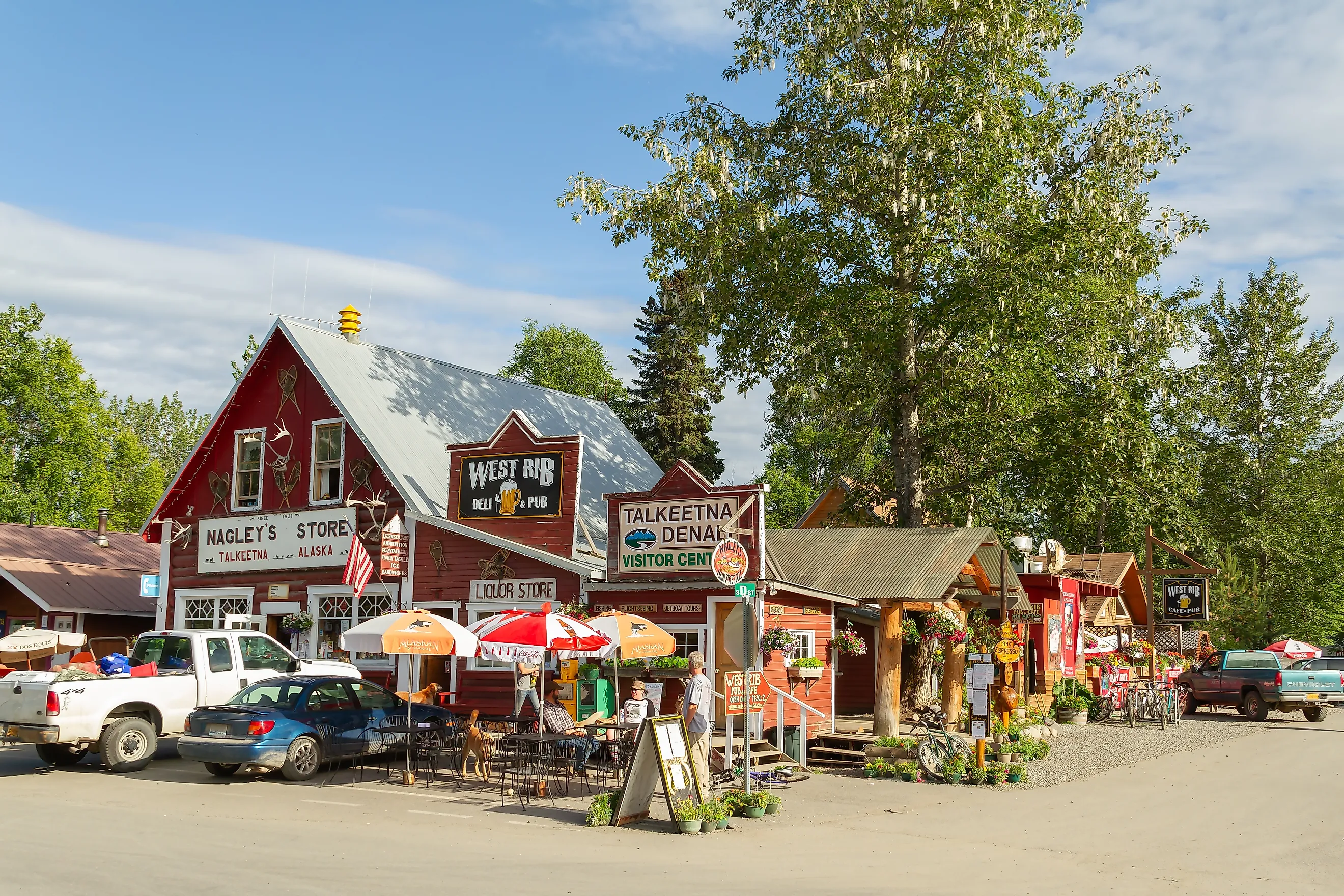
Nagley's Store, Talkeetna

Talkeetna sits 115 miles north of Anchorage at the confluence of three glacier-fed rivers, the Susitna, the Chulitna, and the Talkeetna. Population at the 2020 census: 1,055. Most years the seasonal population is several times that, because Talkeetna is the staging base for climbing expeditions on Denali. The town's historic district is on the National Register, and most of the early-1900s buildings on Main Street still serve their original functions.

Nagley's is the oldest of them. Horace W. Nagley pitched a tent store in Talkeetna in 1916, built the log core of the present structure around 1917, and consolidated his full general store at the corner of Main and B Street by about 1920 or 1921. He sold to Don Barrett in 1947 and the name flipped to B&K Trading Post for half a century. A 1997 fire nearly destroyed the building; vigilant lookouts watched it for several days afterward because the smouldering sawdust-and-moss insulation kept reigniting. The store was rebuilt that spring with as much of the original log material as possible, and the same year the name was changed back to Nagley's in honour of Horace and Jessamine. Stubbs the cat then arrived as a kitten and held the unofficial mayoralty of Talkeetna for the next twenty years (1997-2017). Aurora has held the post since 2017. Below the moose antlers nailed above the front door, the store sells groceries, hand-scooped ice cream, hot coffee, Alaskan curios, and beer and spirits through the adjoining liquor side.
Prudhoe Bay General Store, Prudhoe Bay

The northernmost general store in the United States accessible by road sits at the top of the Dalton Highway, 414 miles north of Fairbanks, in the oilfield service settlement of Deadhorse. It opened in 1982, the year the Colville Company founded Brooks Range Supply, the larger industrial outfit that the general store occupies the upper floor of. Downstairs sells industrial-scale Arctic hardware to oilfield workers; upstairs is for the rest. Both are open year-round, the general store from 6 a.m. to 9 p.m. The building also houses the Prudhoe Bay post office, which opened with the town's first zip code on June 3, 1982.

The store's stock reflects the town it serves. Heavy-duty Arctic clothing and boots. Sunglasses for the long summer light. Electronics, music, books, magazines, and a section of adult magazines. Snacks, sundries, smokes, and Alaska-roasted coffee beans. Alaska Native arts and crafts for the road-trippers who have just driven 414 miles up an unsealed road past the last gas pump for the previous 240. Most stop for a photo at the sticker-covered "Welcome to Deadhorse, Alaska, end of the Dalton Highway" sign outside the door before they head back south. Deadhorse itself has no direct access to the Arctic Ocean (the bay is 10 miles further, on oilfield land that requires a permitted tour). The general store is, for most travelers, the end of the road. The store is also pretty much the only place a tourist in Prudhoe Bay can legally hang around in.
What These Four Have in Common
None of these stores is a museum piece. They sell groceries to people who live a long way from anywhere else and tourist supplies to people who have just travelled a long way to get there. Three of the four (Estes Brothers, Nagley's, the Kobuk building) predate Alaska statehood by decades; the fourth is the same age as the oilfield it serves. Estes Brothers may not be standing in three years. The other three have already lasted through the 1964 earthquake, multiple fires, a hundred-plus winters, and the long shift across gold-rush, railroad, and oil-boom eras. Each is worth the stop for what it actually does: keep a small Alaska community supplied, year after year.