10 Amazing Texas Day Trips That Are Worth The Drive
Texas is made for road trips. For example, in Houston, you can stroll through one of the most visited museums in America and then head out for an enriching hike across a diverse bayou environment. From Dallas/Fort Worth, you can spend a day perusing the best of American art or take photos of ancient dinosaur footprints. San Antonio, meanwhile, is home to what is perhaps the most famous and well-known of all Texan landmarks (and it's completely free to visit). If you're heading Soth to Texas soon, make sure the trips below are on your itenerary.
Houston
Houston Zoo (Within the City)

The Houston Zoo is filled with rare creatures that will delight animal lovers, both young and old, coming to Houston. It is divided between native Texan environments, such as wetlands, and international ecosystems for African, Asian, and other animals.
In the African section, visitors can see an African Painted Dog, Spurred Tortoise, and Lion. The zoo's Reptile and Amphibian House contains some of the most venomous snakes in the world, which you can view from a safe distance, such as the King cobra and black mamba. The Texas Wetlands exhibit in the zoo houses the official bird of America: the bald eagle.
For families who want to get closer to the animals, the zoo provides multiple animal encounters, ranging from the Elephant Bath Experience, Penguins, and a Sea Lion Encounter. The most current exhibit in the zoo celebrates cryptids and creatures of legend, through its Mythical Realms encounter, with artistic sculptures of the Kraken, Pegasus, and Xolotl from Aztec mythology.
Houston Museum of Natural Science (Within the City)

First opened in 1909 in the Museum District of Houston, the Houston Museum of Natural Science is one of the most visited museums in the U.S., with an average of 1.5 million visitors annually. These visitors come to experience the museum's one-of-a-kind travelling exhibitions. Its most recent exhibit on display is on Terracotta Warriors, a vast collection of warrior figures which were placed inside the tomb of the Chinese emperor Qin Shi Huang in the 200s BCE.
Its collection of permanent exhibits provides insights into many different elements of the sciences, such as advanced quantum insights at the Matter & Motion: Quantum Chemistry to Astrophysics exhibit, to the Farish Hall of Texas Wildlife, celebrating the state's biomes, and endangered species that call the Lone Star state home.
Armand Bayou Nature Center (35-Minute Drive)

Speaking of nature, one of Texas's wetlands is just a short drive away from Houston in Pasadena: the Armand Bayou Nature Center. At 4,000 acres of wetlands, forests, prairies, and marshes, it's one of the largest urban wilderness preserves in the country, as befitting Texas, where everything is bigger. There are more than 370 species of animals living in the center, such as red-tailed hawks, American alligators, banded water snakes, and many others.
As for activities here, start at the Hana Ginzbarg Welcome Center and make your way across the Discovery Loop on a boardwalk journey past a John P. McGovern Children's Discovery Center, a Prairie Platform observation deck, and a historic farm site. After that, you can venture out into the center's more than 5 miles of trails for wildlife viewing on your own terms.
Sam Houston National Forest (1-Hour Drive)

To the north of Houston is Sam Houston National Forest, named after one of Texas's founders and the president of the Lone Star Republic before Texas joined the United States. At more than 163,000 acres, it's the largest national forest in Texas, offering a mixture of pine and hardwood forests and grasslands. The largest trail here is the 129-mile Lone Star Hiking Trail, which goes all the way from the outskirts of Cleveland, Texas, to Richards, Texas.
Thankfully, the forest has plenty of short hikes and recreational opportunities for folks coming here for a day trip. For example, there's the Big Creek Scenic Area Trailhead and the Double Lake Recreation Area, with a 5-mile one-way trail, and a lake with bass, bream, and catfish to catch. Boaters can get out onto the western side of Lake Conroe via the Scott's Ridge Boat Ramp.
Dallas-Fort Worth Metropolitan Area
Fort Worth Water Gardens (Within the City)

Starting in the city of Fort Worth, you might want to relax after a long flight or walk through the airport. One great spot to do that is to feel the cool water spray at the Fort Worth Water Gardens in downtown Fort Worth.
Constructed in 1974, the 4.3-acre park has three pools of water, a Quiet Pool surrounded by cypress trees, the Aerated Pool with water-spray features, and the Active Pool, which emulates a waterfall as the water falls down 38 feet through terraces. Visitors can walk right down to the active pool with a series of tiered steps descending down. The park was set up by the Amon G. Carter Foundation to provide an "oasis" in the hot metro area of Fort Worth. The park has a lawn and stage on site for special performances and events.
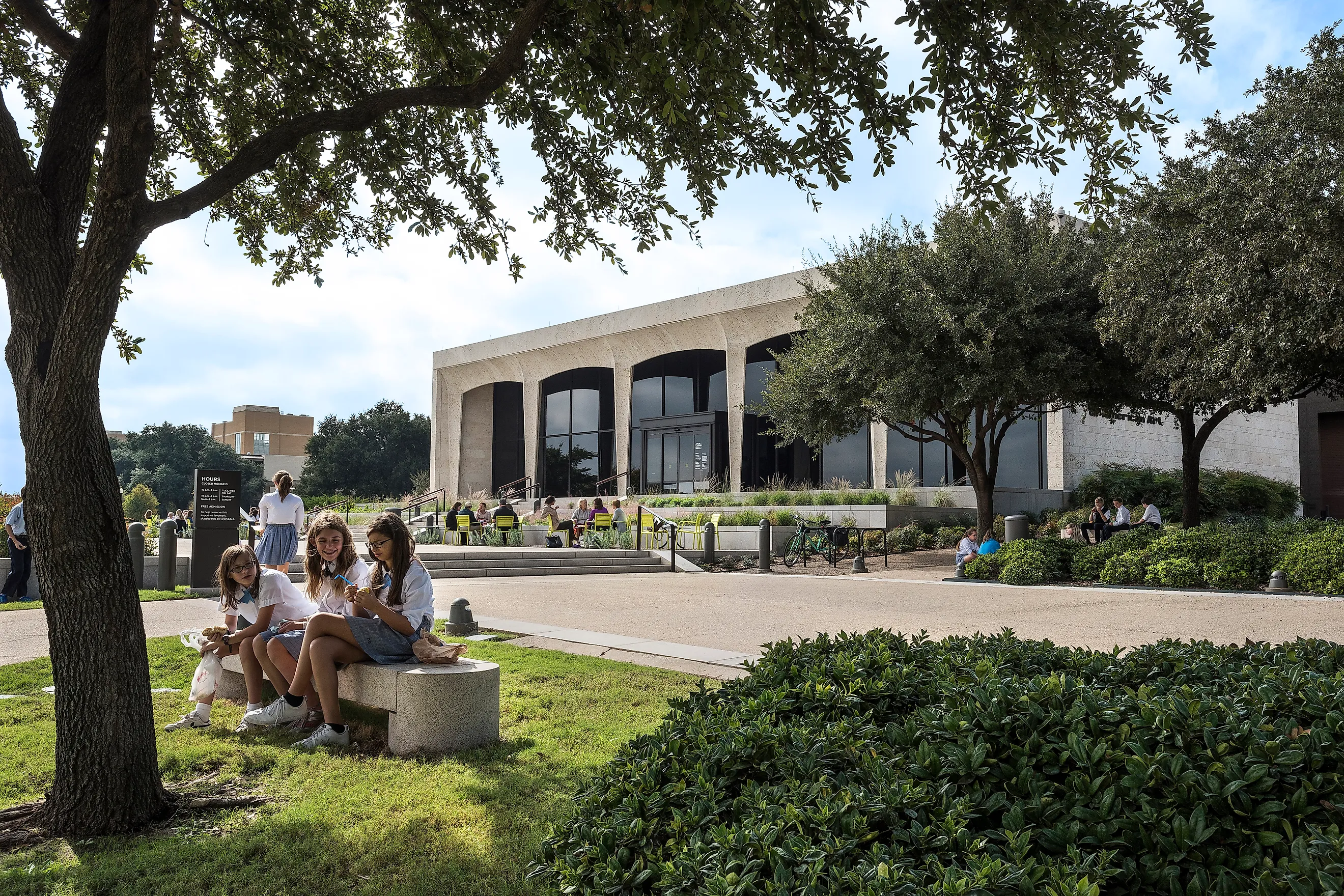
Amon Carter Museum of American Art (Within the City)

Amon Carter is a well-known figure in Fort Worth, as the publisher of the Fort Worth Star-Telegram and a philanthropist. For that reason, Fort Worth's primary art museum was named in his honor: the Amon Carter Museum of American Art. Its initial collection came from his private art collection, but has since expanded to many other types of American art.
As befitting a journalist, some of its exhibits shine a light on photojournalism, with its most recent exhibit celebrating the work of more than 60 African American photographers called "Black Photojournalism." Another exhibit showcases the many different contemporary ways that artists have chosen to depict the western United States through the New Horizons: The Western Landscape exhibit. Every second Thursday of the month, Carter puts on a fun social gathering to allow you to drink cocktails with art lovers and local artists alike.
Dinosaur Valley State Park (90-Minute Drive)

The dinosaurs didn't just leave behind fossils; they also left an imprint on the earth with their massive footsteps. By taking a roughly 90-minute drive to the Dinosaur Valley State Park, you can see well-preserved dinosaur tracks. Around 113 million years ago, the area was covered by an ocean, and several theropods and sauropods left footprints on the mud shores. Today, these footprints can be viewed on the bed of the Paluxy River as you hike through the park.
The footprints might not always be visible depending on water conditions, but you can still explore 20 miles of trails, such as the Limestone Ledge Trail going over the Paluxy River, or the Rocky Ridge Trail going up to overlooks of the park. The park has two statues of the most famous theropod (a Tyrannosaurus rex) and a sauropod (the Brontosaurus) designed by sculptor Louis Paul Jonas for the 1964 New York World's Fair.
Fort Richardson State Park, Historic Site, and Lost Creek Reservoir State Trailway (90-Minute Drive)

This historic destination once served as a military fort from 1867 to 1878 during the height of the Old West. Its main purpose was to guard settlers against Native American raids, who were trying to chase the settlers out. At its heyday, it held the largest garrison of officers and soldiers of any military installation in the nation, according to the Texas State Historical Association. Today, visitors can either walk to some of the surviving buildings from the era, such as a hospital, or get in touch with a ranger to give a more thorough tour of the grounds.
Other than the historic sites, the park's main feature is the 9-mile Lost Creek Reservoir Trailway, which follows the creek onto the shores of Lake Jacksboro. From here, you can take a kayak out or go swimming at the sandy beach. It's worth being aware that this lake has no lifeguards on staff, and you'll need a Texas fishing license to fish here.
San Antonio
The Alamo (Within the City)

Out of all the sites in San Antonio, the Alamo is undoubtedly the most iconic; it's part of the San Antonio Missions, the only UNESCO World Heritage Site in Texas. This stone structure was originally a Spanish mission in 1718, used by Catholic missionaries to preach and convert the local Native Americans. Later on, it was transformed into a fortress and renamed the Alamo — which means cottonwood tree in Spanish.
Texian forces took control of the Alamo during the early days of the Texas Revolution. In 1836, the Mexican army under Antonio López de Santa Anna launched a decisive attack, known as the Battle of the Alamo, in which nearly all of the defenders lost their lives. The battle cry "Remember the Alamo!" is the most iconic Texan phrase. Visitors to the Alamo can walk the grounds of the fort for free or purchase a guided tour for a more in-depth explanation of the Texan Revolution and how this fort became a household name in America.
Government Canyon State Natural Area (40-Minute Drive)

By taking a 40-minute drive to the northern section of San Antonio, you'll run into the 13,000-acre Government Canyon State Natural Area. This area was opened in 2005 to protect critical canyons and hills of the Texas Hill Country. The topography here is mainly karst canyons, which hide multiple endangered creatures found only here, such as the Government Canyon Bat Cave meshweaver spider (Cicurina vespera), an invertebrate troglobite (an organism that only lives in the dark).
Other animals call this land home as well, ranging from the iconic armadillos to white-tailed deer and ringtails. Although the area's primary purpose is conservation, it also has more than 40 miles of hiking trails through the canyons and grasslands. Children can play at a playscape, a playground made of natural materials.
Short Trips in a Big State
It's not just the state itself that's big; Texas knows how to put on a big performance no matter where you go. Whether that's touring the grounds of the Alamo, visiting the biggest Old Western military installation, or taking a photo of one of China's greatest treasures at the Houston Museum of Natural Science, you'll find larger-than-life attractions in all of these day trips (quite literally in the case of the dinosaur footprints near Fort Worth). In addition, almost all of these destinations let you decide whether to explore them at your own pace or be accompanied by an experienced tour guide within these natural, historic, and scientific attractions.