10 Amazing North Carolina Day Trips That Are Worth The Drive
North Carolina offers an incredible range of scenery, from misty mountain peaks and dense Appalachian forests to barrier island beaches and rolling Piedmont countryside. You can hike among some of the oldest mountains in the country in Great Smoky Mountains National Park, and stand atop Mount Mitchell, the highest point east of the Mississippi River. Along the coast, destinations like the Outer Banks reveal wide Atlantic beaches and towering sand dunes shaped by constant winds. Together, these places and more make North Carolina an ideal state for memorable day trips within easy reach of its major cities.
Great Smoky Mountains National Park

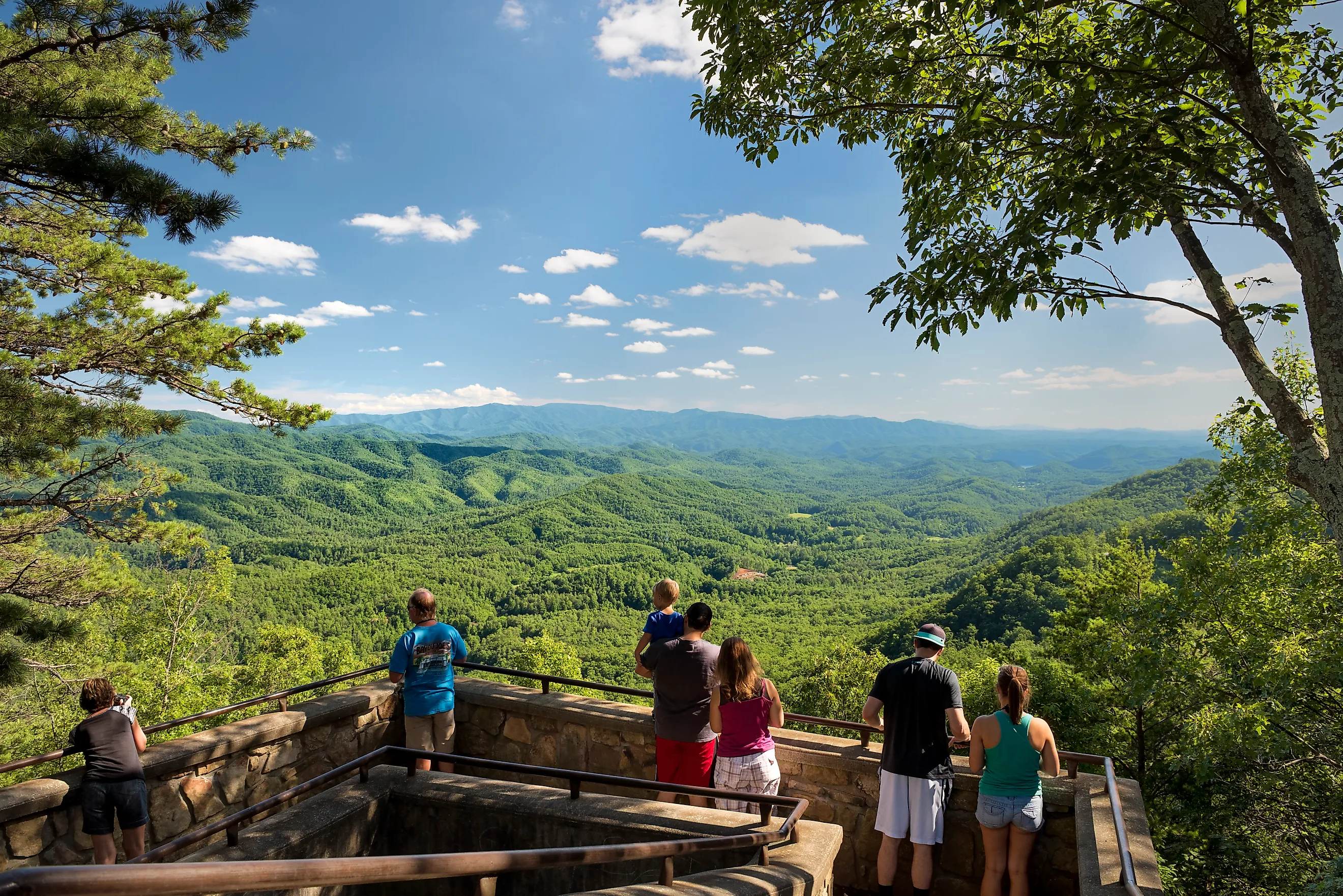
Covering 522,427 acres, almost evenly divided between Tennessee and North Carolina, Great Smoky Mountains National Park is consistently the most visited national park in the country. In 2024, the park drew 12 million visitors, and it isn’t hard to see why. A vast foggy expanse of dense hardwood forest, rushing rivers, cascading waterfalls, and some of the oldest mountains in the country, the area feels otherworldly, but is only three hours away from Charlotte.
While recreational opportunities abound in the mystical mountain climes of the Smokies, a perfect day trip can be as simple as driving the scenic Newfound Gap Road from Cherokee, North Carolina, through the center of the park to Gatlinburg, Tennessee. The 31-mile route takes about an hour and a half to drive one way and is an excellent introduction to the beauty of the park if time is a limiting factor. The road takes you by several park highlights including Kuwohi, the highest point in the Smokies, gorgeous high-elevation views from Newfound Gap, and trailheads for incredible day hikes like the Alum Cave Trail to Mount LeConte.
Biltmore Estate

The former home of George Washington Vanderbilt II, the Biltmore Estate is the premier indoor attraction in western North Carolina. The enormous mansion is still owned by the Vanderbilt family and is a prominent example of Gilded Age architecture and opulence. Located in Asheville, just a two-hour drive from Charlotte Douglas International Airport, the estate is well-worth a visit. The focal point, of course, is the 175,000-square foot French Renaissance chateau, which contains 35 bedrooms, 43 bathrooms, and 65 fireplaces. The house also showcases a vast art collection assembled by George Washington Vanderbilt II, including works by artists such as Claude Monet and Pierre-Auguste Renoir.
The sprawling grounds feature 75 acres of picturesque gardens, as well as 22-miles of trails for a range of outdoor activities like hiking, biking and horseback riding. The estate is also the home of the Biltmore Winery, the most visited winery in America. A range of their award-winning wines are available for purchase at the estate shops, and the winery offers complimentary tastings included in the price of admission to the Biltmore estate.
Mount Mitchell State Park

Mount Mitchell State Park in Yancey County, is about 30 miles outside of Asheville in the heart of Pisgah National Forest. Located along the winding Blue Ridge Parkway in the Black Mountain subrange of the Appalachians, the park is less than a three-hour drive from the Charlotte area and a must-visit outdoor destination. The park was the first of North Carolina’s state parks, founded in 1915 for the protection and preservation of Mount Mitchell. At 6,684 feet, it is the highest peak in mainland North America east of the Mississippi River.
The summit can be reached on foot from several trails, the most popular of which is the 11.3-mile round trip Mount Mitchell Trail that begins in Black Mountain Campground. If you aren’t up for almost 4,000 feet of elevation gain, you can drive to the summit parking lot via North Carolina Highway 128 off the Blue Ridge Parkway, where a short, paved trail will take you the rest of the way to the observation deck at the top. The surrounding Fraser-fir forest is also great for birdwatching, serving as the home for several kinds of warblers and nuthatches as well as rarer species like peregrine falcons and red crossbills.
North Carolina Zoo

About equidistant from the Raleigh-Durham and Charlotte areas in Asheboro, the North Carolina Zoo is a perfect day trip for the whole family, just an hour and a half away from the state’s two largest cities. Spanning 2,800 acres, it is the largest natural habitat zoo in the world and the home of more than 1,700 animals. The zoo is divided into two main sections, North America and Africa, and each features several distinct ecosystems from grasslands, where you can view rhinos and antelopes, to cypress swamps, where cougars and alligators lurk among the trees.
There are several Meet the Keeper events scheduled throughout the day, where visitors can see animal feedings and training sessions. Ride-and-a-Guide programs are offered for small groups Monday through Friday, allowing visitors to experience the zoo with a professional guide for a more in-depth educational experience. The zoo also features an impressive botanical garden that contains southeastern native and exotic plants, as well as a collection of original artwork that ranges from murals to animal sculptures spread across the entire park.
North Carolina Museum of Natural Sciences

Just 20 minutes from the Raleigh-Durham International Airport in the heart of downtown Raleigh, this museum is the oldest in the state and the largest natural history museum in the southeastern US. The massive exploration and research facility has been around since the late 1800s and hosts over a million visitors every year. The Raleigh campus is split between two buildings connected by a breezeway. The Nature Exploration Center contains exhibits that detail the range of natural diversity in North Carolina. Here you can view enormous whale skeletons hanging from the ceiling in the Coastal North Carolina exhibit or take a trip to the underground to see precious gems in the Underground exhibit.
Meet “The Terror of the South,” one of the most complete arcocanthosaurus skeletons in the world or marvel at some of the megafauna that roamed prehistoric North Carolina. Across the street in the Nature Research Center, you can watch scientists conducting research in state-of-the-art laboratories, participate in hands-on educational opportunities, and view living collections of fish, reptiles, amphibians, and butterflies. The SECU Daily Planet on the ground floor is an iconic North Carolina landmark which houses a three-story theater that hosts presentations from visiting and in house scientists throughout the year.
Wright Brothers National Memorial

In 1903, two brothers from Ohio successfully flew their Wright Flyer on a windswept stretch of sand near the fishing community of Kill Devil Hills on the Outer Banks, marking the first controlled and sustained flight of a powered, heavier-than-air aircraft. Today, the Wright Brothers National Memorial, about three hours from Raleigh, commemorates this landmark in aviation. The site, managed and maintained by the National Park Service, is the perfect blend of sun, sand, history.
The centerpiece of Wright Brothers National Memorial is the Wright Brothers Monument, a 60-foot-tall granite obelisk that stands atop historic Kill Devil Hill overlooking the site of the Wright brothers’ groundbreaking aviation experiments. You can also walk the exact 120-foot path of the first flight, which lasted exactly 12 seconds, and view reconstructions of the Wright brothers’ workshop, living quarters, and the hangar where the Wright Flyer was stored.
The Visitor Center contains the park store and museum. Inside, visitors will find a replica of the 1903 Wright Flyer and several hands-on exhibits that bring the brothers' experiments to life. If you’re feeling inspired after exploring the memorial, you can experience your own glider flight at nearby Jockey’s Ridge State Park in Nags Head, which offers hang gliding lessons through Kitty Hawk Kites.
Alligator River National Wildlife Refuge

Spanning 152,000 acres on the Albemarle Peninsula about three hours east of Raleigh, the Alligator River National Wildlife Refuge is one of the best spots for wildlife viewing in the entire state. Established in 1984 to preserve the rare pocosin wetland ecosystem and its associated wildlife, the refuge protects a landscape of peat wetlands, swamp forest, and marsh that supports species such as the American black bear, waterfowl, river otter, and American alligator. It's also part of the recovery area for the endangered red wolf.
On Wednesday nights from June to August, park staff conduct “howling tours” where visitors can hear the protected species’ distinctive calls in distance. The park offers several other daytime interpretive programs including birding walks, open air tram tours, and guided canoe expeditions. If you prefer to explore on your own, the Murphy Peterson Wildlife Drive provides an introduction to this unique ecosystem and two half-mile, universally accessible walking trails allow visitors access to beautiful, secluded overlooks and plenty of wildlife viewing opportunities. The best way to explore the park is via the more than 15 miles of clearly marked paddling trails on Milltail Creek and Sawyer Lake.
Sarah P. Duke Gardens

If you prefer a more manicured outdoor experience, there are few places better in the state than the Sarah P. Duke Gardens on the campus of Duke University in Durham. Less than half an hour away from downtown Raleigh, the botanic garden has expanded to cover 55 acres since it was dedicated in 1939 and features four distinct sections and 5 miles of paths and trails, all of which are free and open to the public. The Historic Gardens, which still feature the iconic Italianate-style terraces and Cindy Brodhead Pergola designed by the pioneering landscape architect Ellen Biddle Shipman, are where the gardens began almost a century ago.
Since that time, new features like the Mary Duke Biddle Rose Garden and historic Roney Fountain, have been added to complement the original area. The H.L. Blomquist Garden of Native Plants provides a comprehensive representation of the diverse flora of the southeastern US, while the W.L. Culberson Asiatic Arboretum is dedicated to showcasing the plant life of east Asia, including cherry trees, Japanese maples, and irises. The newest section, the Doris Duke Center Gardens, contains the Virtue Peace Pond and the Angle Amphitheater, which hosts several performances and special events throughout the year.
Grandfather Mountain

Grandfather Mountain is a perfect day trip from anywhere in the Piedmont Triad, the metropolitan region anchored by the cities of Winston-Salem, Greensboro, and Highpoint. The 5,964-foot mountain is about two-and-a-half hours from the Piedmont Triad International Airport and its dramatic elevation changes result in 16 different ecological communities ranging from fragrant Appalachian spruce-fir forest to desolate boulder fields.
The mountains most famous attraction is the Mile High Swinging Bridge, the highest suspension footbridge in the country. The 228-foot bridge crosses an 80-foot chasm and has provided visitors with panoramic views of the surrounding scenery and access to Linville Peak since 1952. The Blue Ridge Parkway winds its way by the eastern side of the mountain, making for an excellent scenic drive featuring several trailheads and scenic stops including Green Mountain Creek Falls and the Yohnalossee Overlook.
The area also hosts the annual Grandfather Mountain Highland Games every July. The celebration of Celtic heritage is one of the largest in the country and draws thousands of visitors to the McRae Meadows for a weekend of Scottish music, dancing, food, and field games.
Battleship North Carolina

A must-see destination for military history enthusiasts, the Battleship North Carolina is a history museum housed aboard a decommissioned World War II-era battleship, the USS North Carolina. Moored in the Cape Fear River as it flows through downtown Wilmington, the battleship participated in every major naval offensive in the Pacific Theater, accumulating 15 battle stars during its service. Today, it is a fully and authentically restored National Historical Landmark and the official World War II Memorial for the state of North Carolina.
Visitors can explore the ship's nine levels, gun turrets, and computer systems, as well as view the areas where the 2,000 men who served aboard lived, ate, and worked. The museum also offers guided tours and special events throughout the year, many of which are included in the price of admission. The SECU Walkway around the exterior of the ship allows for an appreciation of the sheer size and power of the vessel and the nearby Battleship Park provides picnic areas with views of the Cape Fear River and historic downtown Wilmington.
On the Road in North Carolina
No matter what kind of destination you prefer to explore, chances are you can find it in North Carolina. Historical, cultural, and natural attractions abound and some of the state's finest are easily reachable from major population centers. So, whether you prefer to wander through public gardens or natural history museums within the city limits or brave the highest suspension footbridge in the country over a mile above sea level, these North Carolina day trips make for perfect excursions for any visitor to the state.