The National Parks With The Most Species of Bats
More than 50 bat species live across U.S. national parks, according to the National Park Service (NPS), but that diversity is nowhere near evenly spread. A handful of desert and canyon parks, where rock crevices, abandoned mines, caves, and river corridors all sit within a short distance of one another, account for a disproportionate share.
Grand Canyon National Park and Big Bend National Park lead the list, each having 22 species documented. Five more parks host 16 or 17 species. By sheer numbers alone, no park comes close to Carlsbad Caverns, where a single colony has been counted in the hundreds of thousands but these parks rank in the number of species.
Grand Canyon National Park

Extending across nearly a vertical mile of elevation, Grand Canyon National Park supports 22 documented bat species, which the NPS describes as one of the highest bat diversities anywhere in the United States. The habitat behind that number runs from desert scrub and along the bank of the Colorado River up to high-elevation ponderosa pine forest. Abandoned copper, gold, and uranium mines predating the park's founding now double as elevated perches for sleeping and settling called roosting sites.
The canyon bat, once known as the western pipistrelle, is usually the first bat visitors see. Along the South Rim, including Grand Canyon Village, it is often out skimming for insects at dusk, well before the rest of the park's species emerge after full darkness.
Big Bend National Park

Decades of field surveys have cataloged 22 bat species in Big Bend, which the NPS credits to a habitat gradient running from the Rio Grande floodplain through Chihuahuan Desert lowlands to the high forests of the Chisos Mountains. The first structured effort, led by David Easterla of Northwest Missouri State University from 1967 to 1971, captured 2,670 bats and documented 18 species. Loren Ammerman of Angelo State University has led annual surveys since 1996, and the current total of 22 comes out of that work.
Rangers commonly point visitors toward the Chisos Basin and the river corridor, where desert scrub meets river vegetation and bats come out to feed at dusk.
Big Bend also holds the only known roosting colony of the endangered Mexican long-nosed bat in Texas, in a cave on Emory Peak in the Chisos. It is one of just two known roosting sites in the United States where the species has also been recorded in southwestern New Mexico.
The bats arrive in summer and feed on the nectar of blooming century plants before returning to Mexico. Between them, Big Bend's 22 species account for all but about five of the roughly 27 bat species known across the Chihuahuan Desert on both sides of the border.
Sequoia and Kings Canyon National Parks

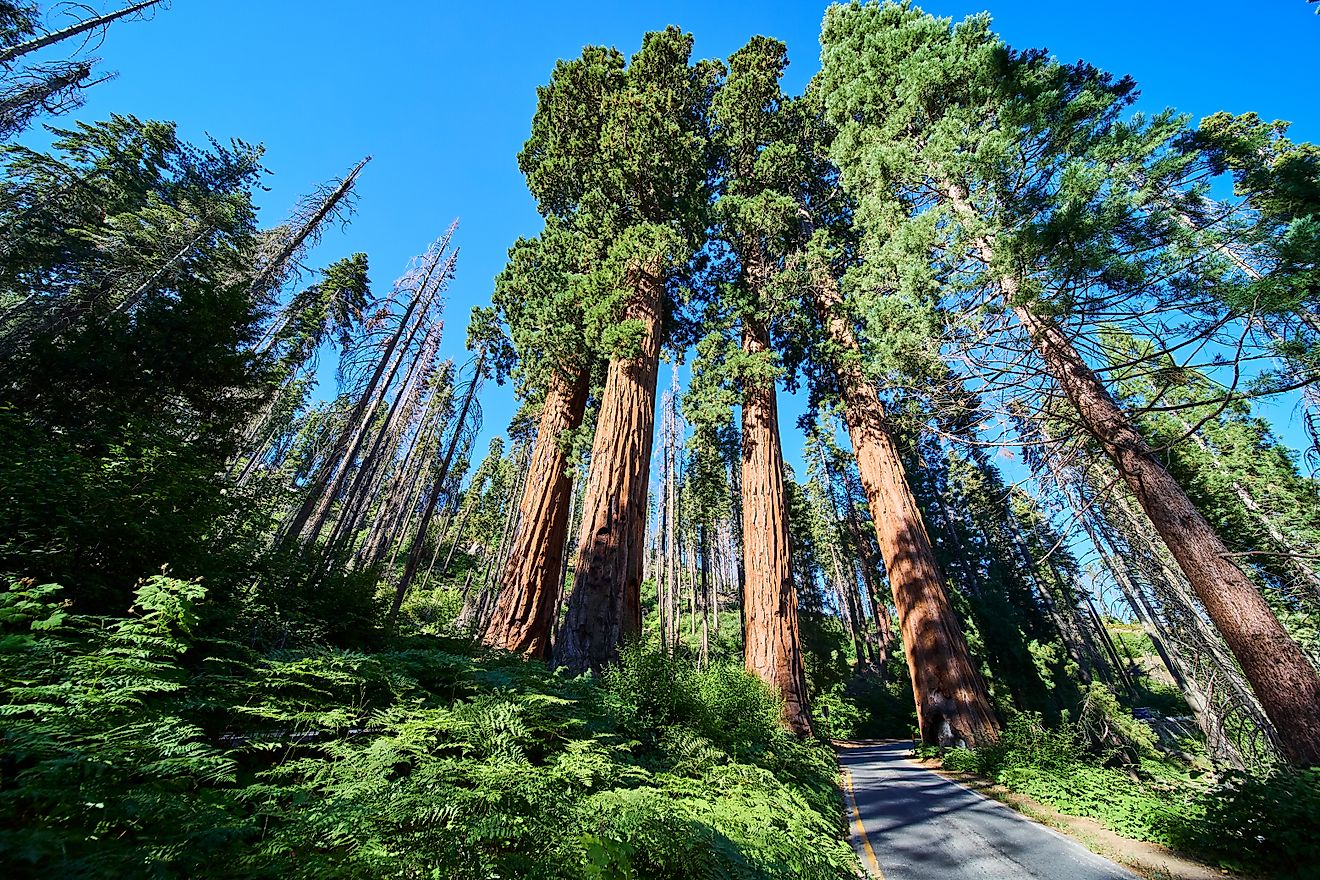
Seventeen bat species range across the steep Sierra Nevada elevation gradient of Sequoia and Kings Canyon, two separate national parks administered jointly. One out of every five mammal species in the parks is a bat, out of 72 mammal species in total, according to NPS.
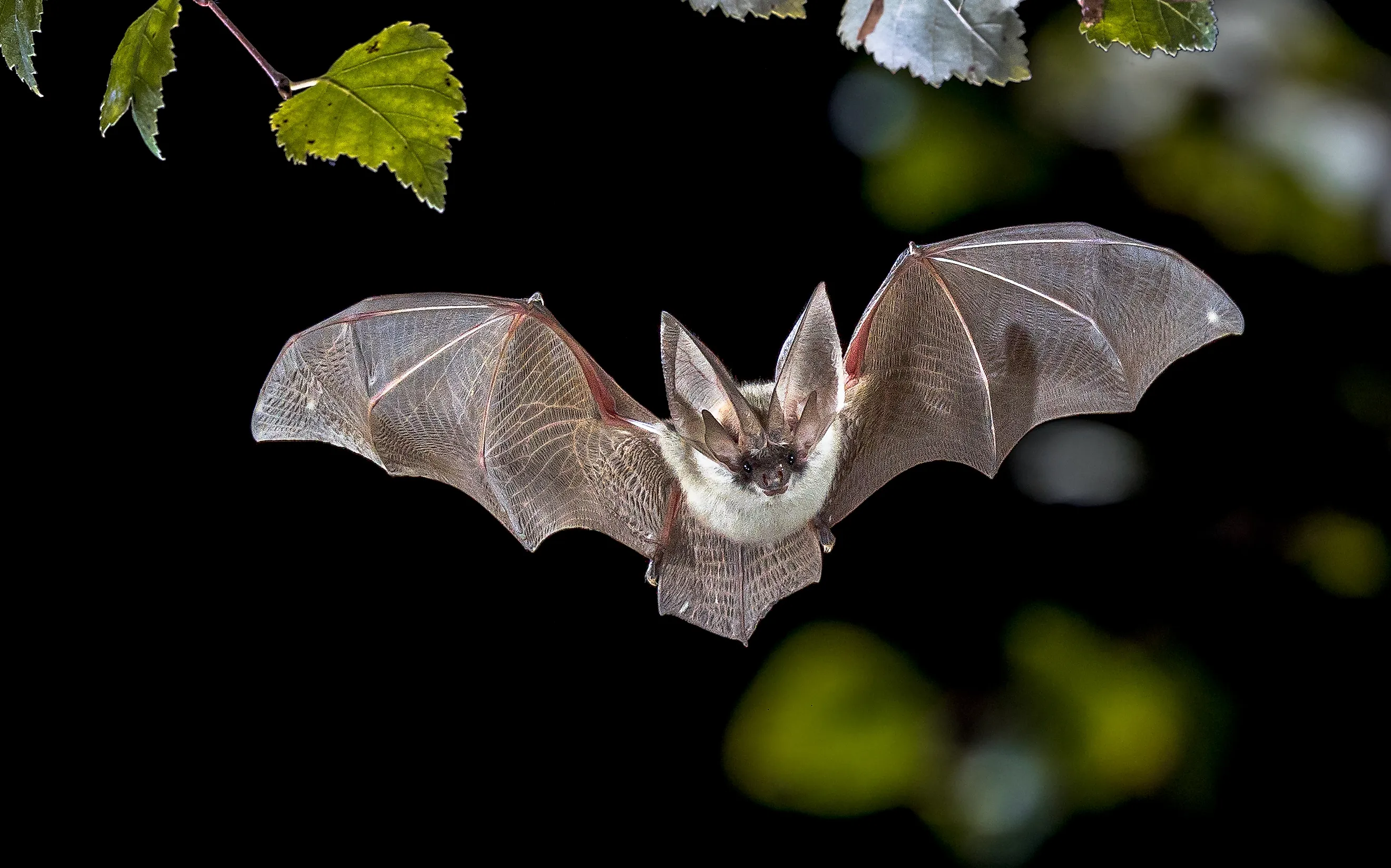
Bats turn up from the lowest elevations to above 10,000 feet. Three of the species emit calls audible to the human ear without any equipment, among them the spotted bat and the western mastiff bat, whose calls are low enough in frequency for humans to hear.
Several of the parks' bats are species of concern, including Townsend's big-eared bat, the pallid bat, the spotted bat, the western mastiff bat, and the western red bat, with risk levels ranging from moderate up to critically imperiled.
To look for them, head toward Crescent Meadow and the Giant Forest, where insects concentrate over the canopy and tall grass after dark.
Carlsbad Caverns National Park

Carlsbad Caverns is best known for one bat. The Brazilian free-tailed bat, also known as, the Mexican free-tailed bat, pours out of the natural entrance each evening in numbers with the NPS only documenting roughly 400,000 in a resident summer colony and as high as 793,000 during migration.
The park runs its Bat Flight Program at the cave entrance amphitheater from late May through October, and rangers note that August and September tend to produce the biggest flights, when pups and migrating bats join in.
Seventeen species live in the park in total, and only three of them roost inside the cavern itself: the Brazilian free-tailed bat, the cave myotis, and the fringed myotis. The rest use surface habitat, roosting in trees, canyons, and rock cliffs across terrain that sits where the northern Chihuahuan Desert, the southern Rockies, and the southwestern Great Plains converge.
Zion National Park

Seventeen bat species share the canyon environments of Zion National Park through what the park calls niche partitioning: species hunt at different times and in different places to avoid competing for the same prey, and some will even jam a rival's echolocation calls.
The park identifies the canyon bat, the smallest bat in North America at roughly the weight of a nickel, as the one visitors are most likely to see, and typically the first in the evening sky.
Zion's Big Wall Bats program, run with the Zion Forever Project and Bat Conservation International, began research in the winter of 2019 and trains recreational rock climbers to help document bat hibernation on the park's sandstone cliff faces. The work produced the first documented cases of bats hibernating directly on Zion's cliffs, a behavior almost nothing was known about. Climbers' observations also feed into monitoring for white-nose syndrome, the fungal disease that has killed millions of hibernating bats across the continent.
Emerging bats are frequently visible at dusk along the Virgin River corridor on Zion Canyon's lower trails, including around the Emerald Pools.
Guadalupe Mountains National Park

Guadalupe Mountains National Park spans an ecological profile from arid desert to high-elevation conifer forest, and protects 16 bat species within it. The park sits just southwest of Carlsbad Caverns and shares much of the same Chihuahuan Desert setting and cave-riddled limestone. Species including the cave myotis, Townsend's big-eared bat, and fringed myotis depend on those karst habitats to roost and hibernate away from disturbance.
Others, among them the big brown bat and the silver-haired bat, roost in the high-elevation douglas fir and ponderosa pine canopy, and descend at night to forage over the desert floor. With the park's caves and rock shelters are closed to ordinary visitor entry, they remain intact as breeding, hibernating, and pup-rearing sites.
Joshua Tree National Park
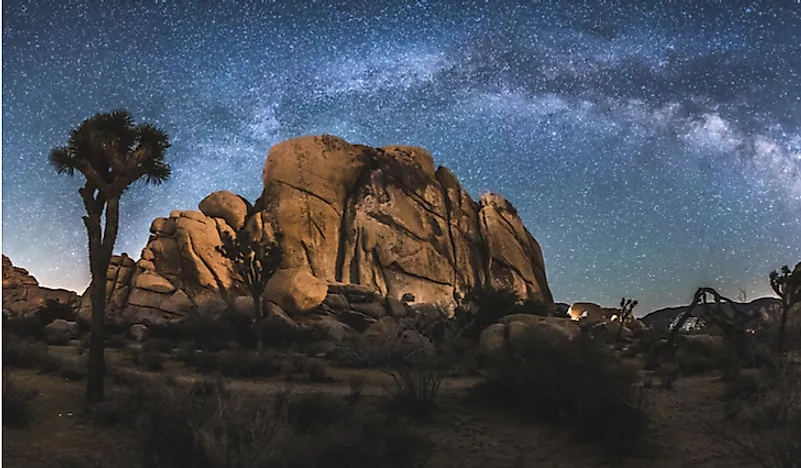
Sixteen bat species are known from Joshua Tree National Park, in the Mojave Desert. Nine of the 16 carry a federal or state species-of-concern designation on the park's list, including the California leaf-nosed bat, Townsend's big-eared bat, and the spotted bat.
Depending on the species, the park's bats use abandoned mines, cliffs, rock formations, trees, and palm oases as roosts. Fortynine Palms Oasis and Cottonwood Spring both draw bats to forage over open water at dusk, which makes the oases among the more reliable places to watch them.
Much of what is known comes from bat blitzes, coordinated surveys in which NPS and partner-agency staff gather as much data as possible at one location over a few nights. Joshua Tree is one of the parks where the Mojave Desert Network runs them, alongside Death Valley, Great Basin, Lake Mead, Mojave National Preserve, and Parashant.
Where the Most Bat Species Are in U.S. National Parks
These seven entries cover eight national parks with little in common on the surface, but each one stacks several kinds of roosting habitats close together: abandoned mines, sandstone cliffs, limestone caves, river corridors, and steep elevation gradients. Where those overlap, bat diversity across the park system reaches its documented peak and in every one of them, the window is the same. Go at dusk.