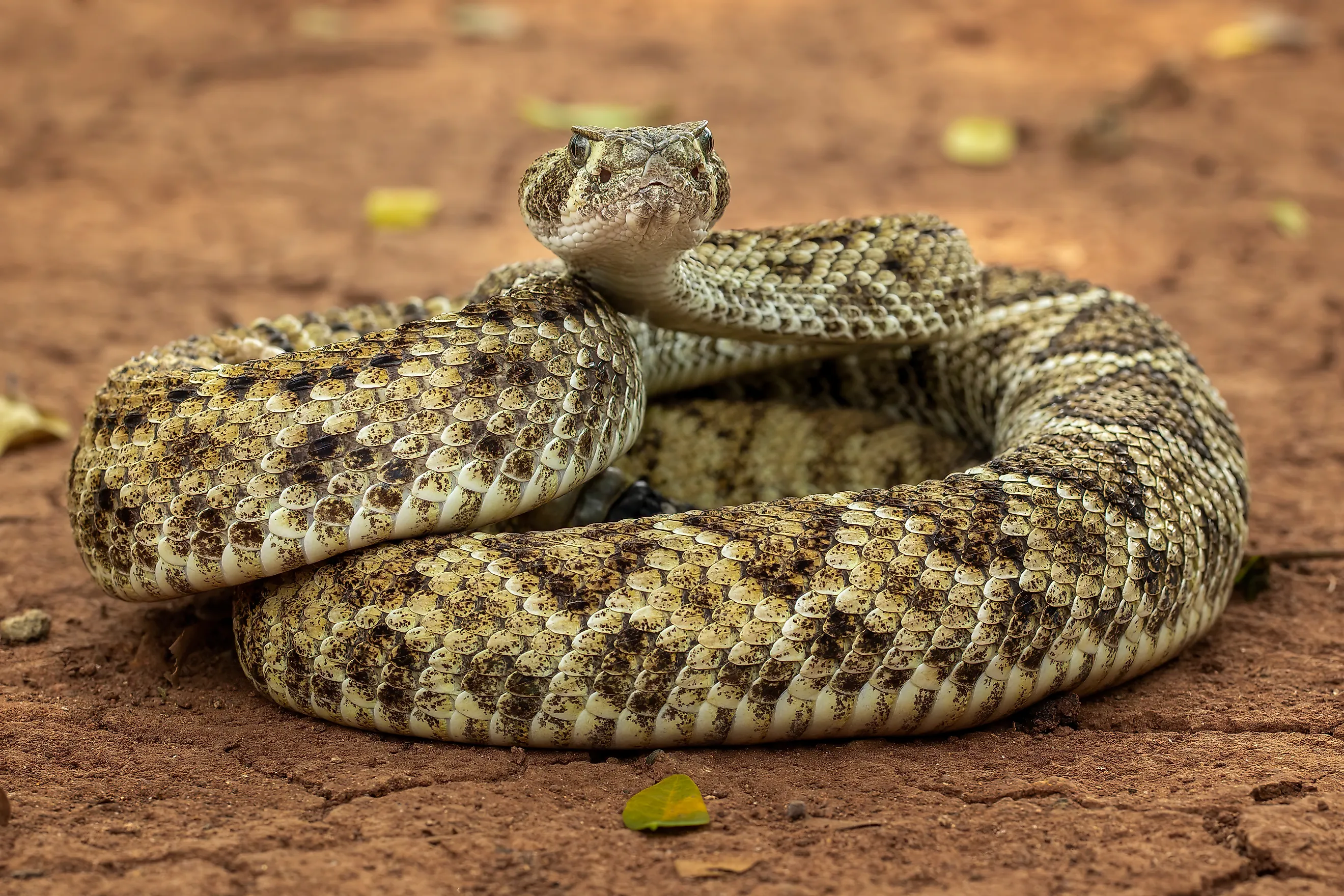
The Western Mountains With The Most Rattlesnakes
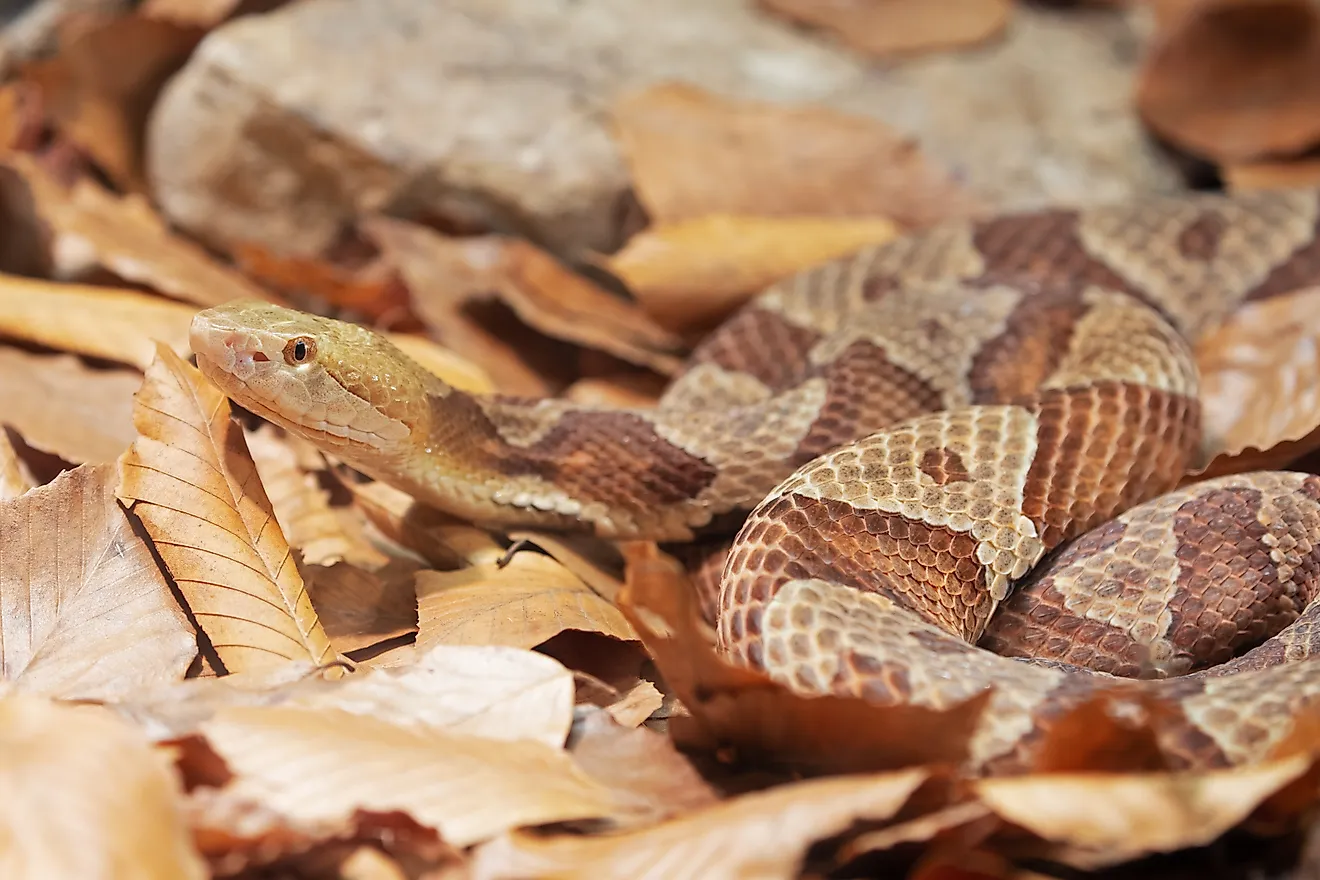
Arizona has 13 kinds of rattlesnakes, more than any other state, and nine of them can be found in Cochise County, on the Mexican border. The mountains there, known as sky islands, climb out of the desert into pine-oak woodland, and each level of the climb has its own rattlesnakes. Western diamondbacks and Mojave rattlesnakes keep to the desert foothills. Small mountain species, some found in only a few U.S. ranges, live in the talus and forest near the summits. Where one range has both, the species count climbs fast. The same pattern carries east through southwestern New Mexico to the mountains of the Chihuahuan Desert in West Texas.
Santa Rita Mountains, Arizona

South of Tucson, Madera Canyon climbs into the Santa Rita Mountains from the Santa Cruz Valley toward Mount Wrightson, the range's high point at 9,453 feet. Some 27 kinds of snakes live between the valley and the peaks, according to Friends of Madera Canyon, and seven of them are rattlesnakes: the western diamondback, Mojave, black-tailed, tiger, twin-spotted, banded rock, and Arizona ridge-nosed.
Western diamondbacks, Mojaves, and tiger rattlesnakes are possible on the bajada, the long apron of desert that slopes from the mountains toward the valley, up to the Proctor parking area near the canyon mouth. Farther up, the black-tailed rattlesnake is the snake hikers meet most often in Madera Canyon, and it can be on any trail from Proctor well up into the Mount Wrightson Wilderness. Like most of the canyon's rattlesnakes, it is out by day in the mild weather of spring and fall and shifts to nighttime as summer heat builds. The humid weeks after monsoon rains often bring a burst of activity.
Higher in the canyon live three small montane rattlesnakes. The twin-spotted rattlesnake keeps mainly to rocky talus piles on the highest slopes, where it hunts by day and eats mostly lizards. The Arizona ridge-nosed rattlesnake favors well-vegetated, rocky canyon bottoms with seasonal streams in oak and pine woodland. The banded rock rattlesnake lives on rocky ground from the top edge of the grassland up through the oak woodland.
Huachuca Mountains, Arizona

In the Huachuca Mountains, the next range to the southeast, the Hamburg Trail follows Ramsey Creek up Ramsey Canyon, where The Nature Conservancy's Ramsey Canyon Preserve counts the ridge-nosed rattlesnake among its southwestern specialties, along with Apache and Chihuahua pines and the elegant trogon. The upper canyon lies in the Miller Peak Wilderness, and its trails connect to Brown Canyon and upper Carr Canyon.
All three of Madera Canyon's mountain rattlesnakes were first described from Huachuca specimens. The Arizona ridge-nosed came from the middle branch of Ramsey Canyon in the summer of 1900 and has been Arizona's state reptile since 1986. The banded rock rattlesnake was described from neighboring Carr Canyon in 1930, and the twin-spotted's type locality is listed simply as the Huachuca Mountains. The range runs about 20 miles, and desert rattlesnakes come in at its south end, where Coronado National Memorial has the Mojave and western diamondback along with the black-tailed and banded rock. That makes six kinds of rattlesnake recorded in the range and its foothills. At the memorial, they are most active from April through October. The memorial lies in the overlap of the Chihuahuan Desert and the Sonoran Desert with the Rocky Mountains, the Sierra Madre Occidental, and the Great Plains. Its upper elevations hold sky-island species with small U.S. ranges, the banded rock rattlesnake among them.
Chiricahua Mountains, Arizona

Silver Creek Canyon runs out of the eastern foothills of the Chiricahua Mountains, the largest of Arizona's sky islands, about 2 miles northwest of the village of Portal. Biologists began following black-tailed rattlesnakes there in 1988, and by 1999 they had tracked 39 of them, some for a few weeks and some for more than eight years. The researchers also routinely took calls to move rattlesnakes away from houses in the area.
The study laid out a black-tail's year in the foothills. After a litter is born, the mother stays with her young until they complete their first shed, about 8 to 10 days later, when they are better able to defend themselves. The snakes keep hunting until mid-October, and by early December they have moved to winter refuges.
Chiricahua Peak, the top of the range, reaches 9,759 feet. Near that height lives the twin-spotted rattlesnake, found higher than any other rattlesnake in Arizona, and from 1997 to 2000 researchers captured, measured, and marked 127 of them in the Chiricahuas at roughly 8,300 to 9,500 feet. It is one of five rattlesnakes recorded at Chiricahua National Monument, along with the black-tailed, western diamondback, banded rock, and Mojave. The twin-spotted is protected in Arizona, and a Coronado National Forest order in effect from April 2024 through April 2028 bars entry to parts of the Barfoot area, high in the Chiricahuas, during certain periods of the snake's active season.
Peloncillo Mountains, Arizona and New Mexico

Tom Jones of the Arizona Game and Fish Department describes ridge-nosed rattlesnake habitat in the Peloncillo Mountains, which straddle the Arizona-New Mexico line, as a bit lower and drier. The snake here is the New Mexico ridge-nosed rattlesnake, federally listed as threatened since 1978, and in Arizona this range is its only home. It is known from just three of the roughly 57 sky island ranges. Its average home range of about 17 acres is small for a North American rattlesnake, and its movements stay within a single sky island.
The tiger rattlesnake, a Sonoran Desert species of rocky canyons and foothills, reaches the range from the desert side. New Mexico's few confirmed tiger rattlesnakes all come from the Peloncillos. Banded rock rattlesnakes live here from the upper edge of the semi-desert grassland up through oak woodland, and a hybrid of a rock rattlesnake and a ridge-nosed rattlesnake has been found on the New Mexico side.
Forest Road 63, known as the Geronimo Trail, crosses the range and can be reached from either state. Western black-tailed rattlesnakes turn up along it, and Mojave rattlesnakes are commonly encountered near Rodeo, in the San Simon Valley at the range's western foot.
Animas Mountains, New Mexico

The New Mexico ridge-nosed rattlesnake's only other home in the United States is the Animas Mountains, east of the Peloncillos, and its third population lives across the border in Mexico's Sierra San Luis. The Animas rise from the former Gray Ranch, 321,000 acres that support about 50 kinds of reptiles and amphibians and at least four rattlesnake species, the banded rock rattlesnake among them. The ridge-nosed generally lives above 6,000 feet, in the range's pine-oak woodland. Ranchers reported seeing small grayish rattlesnakes near the summit in 1953, and the first specimens were collected in upper Indian Creek Canyon in 1957. West Fork Canyon and Indian Creek have both served as study sites, and in the late 1990s one team found the snakes by walking the slopes and tapping rocks and logs with long sticks.
Guadalupe Mountains, Texas and New Mexico

Across the Chihuahuan Desert to the east, not one of the millions of hikers in the first 40 years of Guadalupe Mountains National Park had been bitten by a rattlesnake, park ranger Michael Haynie said in 2017. The park sits where the Guadalupe Mountains cross the Texas-New Mexico line and rise to 8,749 feet, the highest point in Texas, and its hikers share the range with three confirmed rattlesnakes. The western diamondback, the region's most abundant, lives in the desert, where park records list the Mojave as probably present too. Mottled rock and black-tailed rattlesnakes live in the rocky canyons, and the black-tailed also reaches the region's highest ground, among the pines and Douglas firs that cover the mountaintops more than 3,000 feet above the desert.
At the New Mexico end of the same mountains, Carlsbad Caverns National Park lies in the Chihuahuan Desert but contains elements of Sierra Madrean, Rocky Mountain, and Great Plains origin among its steep limestone canyons. The park's reptile survey found the mottled rock rattlesnake, which New Mexico lists as threatened.
Chisos Mountains, Texas

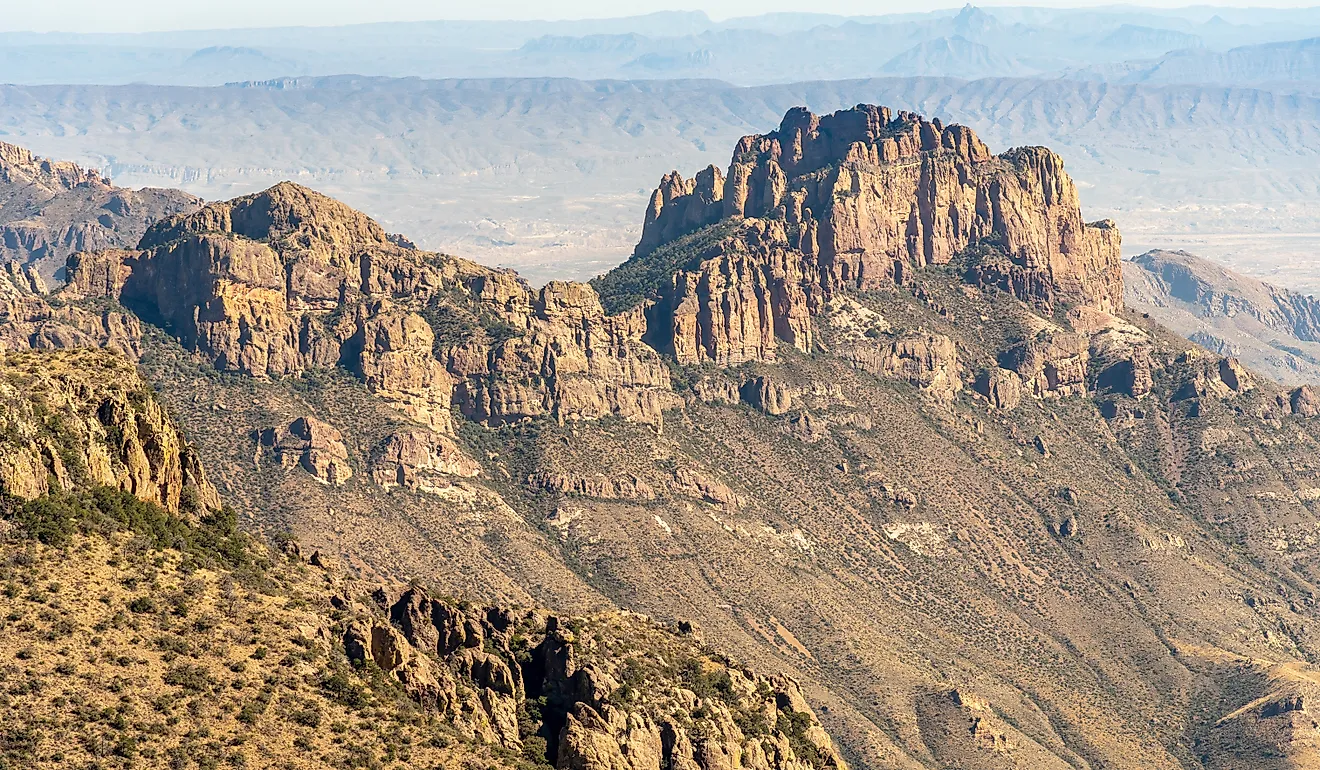
South of the Guadalupes, in Big Bend National Park on the Rio Grande, the Lost Mine Trail starts in woodland and grassland about 5 miles up the Chisos Basin Road. It climbs 1,100 feet over its 4.8-mile round trip, much of it steeply in and out of juniper-oak-pine forest in the Chisos Mountains. Two of the park's four rattlesnakes are found mainly in the Chisos and their foothills. The black-tailed prefers mountains, canyons, and rock outcrops. The mottled rock rattlesnake spends most of its life in rocky outcrops and talus slopes and depends on its coloring for cover, seldom rattling unless provoked.
The park's other two rattlesnakes keep to lower ground. Western diamondbacks, the most common rattlesnakes in Big Bend, range from the Rio Grande floodplain up to the Chisos foothills at about 4,500 feet. The Mojave, the least often encountered, reaches about 4,000 feet in low desert and creosote flats. A few rattlesnake bites have occurred in Big Bend, and the park's visitor guide tells anyone bitten to contact a ranger promptly, since permanent damage can occur within 12 hours.
The small mountain rattlesnakes in these ranges belong to pine-oak and conifer country that reaches north out of the Mexican Highlands, the region with the highest diversity of small-bodied rattlesnakes in the world. Southeastern Arizona is the northern end of the twin-spotted rattlesnake's range, and in the United States it lives only in the Chiricahua, Pinaleño, Huachuca, and Santa Rita Mountains. Desert rattlesnakes reach the same mountains from the flats below, so a range with pine-oak summits and desert foothills ends up with both sets of snakes. Away from the border, the count drops quickly. Great Basin National Park in eastern Nevada has a single rattlesnake. It can live as high as 11,000 feet, though it is more common below 8,000, and across those elevations the one thing its habitat has in common is rock.